
Insulated Packaging Market Share, Trends, & Industry Analysis Report, 2025 - 2034
REPORT DETAILS
Insulated Packaging Market Summary
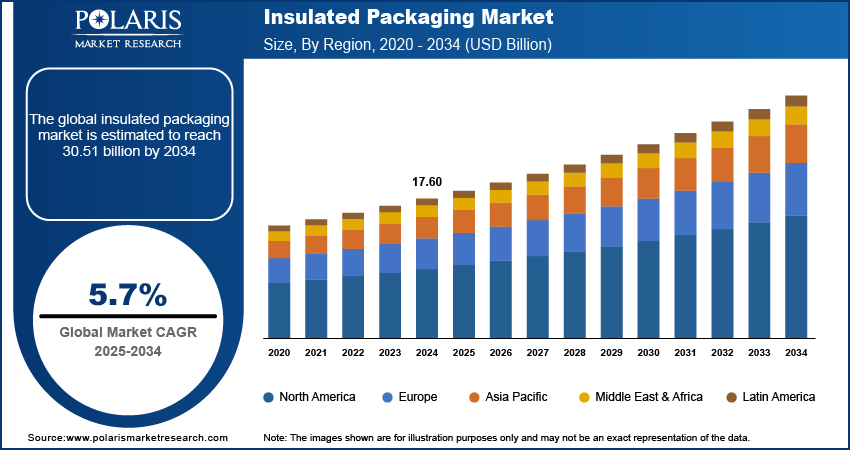
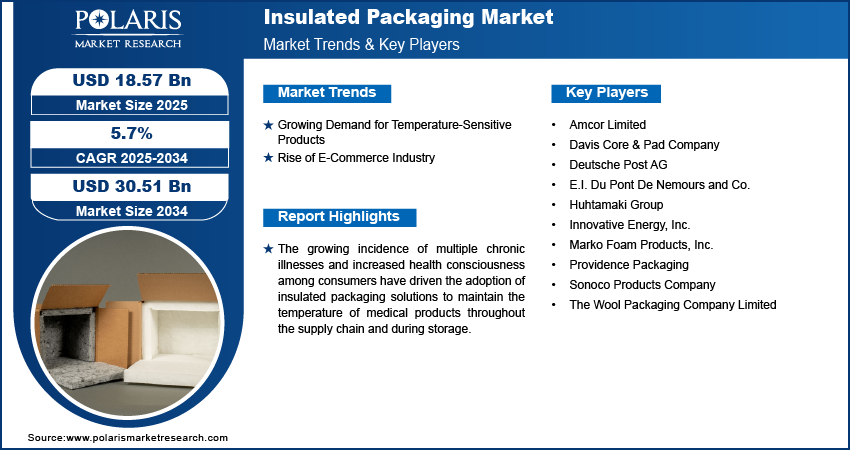
The global insulated packaging market size was valued at USD 16.53 billion in 2025. The market is projected to grow from USD 17.61 billion in 2026 to USD 29.55 billion by 2034, at a CAGR of 6.7% from 2026 to 2034.
Market Statistics
Key Takeaways
- Asia Pacific led the insulated packaging market with a 35.84% revenue share in 2025, driven by rapid urbanization, industrial expansion, and increasing demand for temperature-controlled packaging.
- Latin America is projected to record the fastest growth, expanding at a CAGR of 7.80% during 2026–2034, supported by growing pharmaceutical, food-delivery, and cold-chain operations.
- By type, the rigid segment held the largest share of 42.20% in 2025, owing to its broad application across temperature-sensitive packaging formats.
- The flexible segment is expected to grow significantly at a CAGR of 7.40% during 2026–2034, driven by its lightweight structure, storage efficiency, and lower transportation costs.
- By material, corrugated cardboard accounted for the largest share of 30.60% in 2025, supported by its structural strength, recyclability, cost-effectiveness, and suitability for cold-chain shipments.
- The plastic segment is forecast to witness the highest growth at a CAGR of 7.60% during 2026–2034, owing to its moisture resistance, durability, insulation performance, and flexibility in packaging design.
Industry Dynamics
- Rising demand for temperature-sensitive foods and medical supplies drives insulated packaging adoption during storage and transportation.
- Expanding e-commerce increases demand for insulated packaging across food, pharmaceutical, and beverage shipments.
- Growing consumption of processed and packaged foods boosts demand for shelf-life extending insulated packaging solutions.
- High material and logistics costs restrain insulated packaging adoption, especially in price-sensitive markets.
Insulated packaging protects the temperature of packaged contents from extreme external temperatures. It is used to transport and store temperature-sensitive products, such as food, pharmaceuticals, and organs, to ensure their quality and integrity. Insulated packaging is part of a cold chain that helps maintain the freshness and efficacy of products. It is important to preserve the condition and appearance of food products, as well as the chemical composition of pharmaceuticals. A few of the common insulating materials are polyurethane, expanded polystyrene, and polyethylene insulating panels.
What is Insulated Packaging?
Insulated packaging refers to temperature-controlled packaging materials and containers designed to maintain consistent product temperatures during storage and transportation. It is widely used for pharmaceuticals, food, beverages, biologics, chemicals, and e-commerce deliveries to preserve product freshness, safety, efficacy, and integrity throughout the cold chain.
How Insulated Packaging Works?
Insulated packaging works by placing products inside temperature-controlled containers and adding insulation layers to minimize heat transfer. Refrigerants or phase change materials (PCMs) are inserted to maintain the required temperature during storage and transit. Temperature conditions are monitored throughout delivery to ensure product freshness, safety, and integrity upon arrival.
Insulated Packaging vs Traditional Packaging
| Parameters | Insulated Packaging | Traditional Packaging |
| Thermal protection | Maintains required temperature range during storage and transit | Provides limited or no temperature control |
| Shelf-life extension | Extends shelf life of temperature-sensitive products | Limited ability to preserve product freshness |
| Cold chain compatibility | Designed for cold chain and temperature-controlled logistics | Not suitable for cold chain applications |
| Material Cost | Higher due to insulation materials and refrigerants | Lower due to simpler packaging materials |
| End-use Industries | Pharmaceuticals, food, beverages, biologics, chemicals, e-commerce | Consumer goods, apparel, electronics, household products |
Source: Polaris Market Research Analysis
To Understand More About this Research: Download Sample Report
Insulated packaging works by minimizing the loss of heat from the product by restricting heat flow through conduction, convection, and radiation along with keeping the product at a consistent temperature to prevent deterioration during transit. Insulated packaging can be customized to fit the specific needs of the product, such as the thickness of the insulating layer and the type of material used. Some aspects of green thermal packaging are recyclable, but the materials may vary depending on the manufacturer and the content being shipped.
Different factors influencing the insulated packaging market demand include a rise in urbanization, an increase in the need for convenience, and enhanced product shelf life. The rising demand for temperature-sensitive packaging and strong demand from the food & beverage industries support the market growth rate. Growing demand from industries such as pharmaceuticals, healthcare, chemicals, and cosmetics, rising disposable income, and changing lifestyles have contributed to the insulated packaging market expansion. The increasing prevalence of various chronic diseases and rising health awareness among consumers have spurred the use of insulated packaging solutions to maintain the temperature of medical products across the supply chain and storage. Various factors, such as the rising need for fresh products, expanding pharmaceutical industry, increasing penetration of e-commerce, and growing demand from emerging nations, are predicted to provide growth prospects for the insulated packaging business during the forecast period.
Market Dynamics
Growing Demand for Temperature-Sensitive Products
Import and export activities between nations across the world are rising due to rapid globalization. Various temperature-sensitive products such as frozen foods, fish, meat, vegetables, fruits, and medical supplies require insulated packaging during transportation and storage to maintain a consistent temperature inside the container regardless of external conditions. Demand for processed and packaged food is rising in urban areas as they are easier to make and take less cooking time, which saves time and efforts of working population. The food is temperature sensitive and requires insulated packaging to increase its shelf life. Therefore, the rising demand for temperature-sensitive products boosts the insulated packaging market growth.
Rise of E-Commerce Industry
E-commerce often involves shipping goods across larger geographical areas, which increases the time products spend in transit, making temperature control crucial. E-commerce packaging needs to be designed for efficient space utilization within shipping boxes while maintaining temperature stability. The rise of e-commerce has significantly increased the demand for insulated packaging, particularly for products that require temperature control during transit, like food, pharmaceuticals, and beverages, as it requires reliable packaging to maintain product quality throughout long-distance shipping, leading to substantial growth in the insulated packaging market. Foam boxes, phase change materials (PCMs), reusable thermal bags, and vacuum sealed pouches are among few of the examples of insulated packaging materials being used in e-commerce.
Source: Polaris Market Research Analysis
Segment Insights
Market Outlook by Type
Based on type, the insulated packaging market is segmented into flexible, rigid, and semi-rigid. rigid segment held the largest share of 42.20% in 2025. Paperboard, fiberboard, corrugated cardboard, plastics, and paper are among the materials used to make rigid packing items. Adhesives, tapes, and staples are used to seal rigid goods. The goods can be produced using a variety of color printing designs and radio-frequency identification. Rigid packaging items such as cases, trays, bottles, cans, cups, pots, and cartons are made with these rigid packaging materials. During the forecast period, the flexible segment is estimated to register a significant CAGR. Ply and plastic films are often used to make flexible packaging products. To seal these types of packaging materials, heat & pressure are usually employed.
Market Assessment by Material
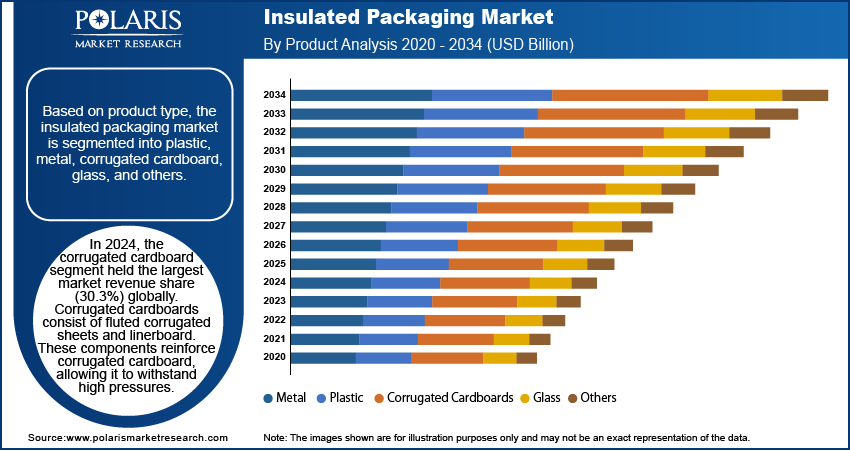
Based on product type, the insulated packaging market is segmented into metal, plastic, corrugated cardboard, glass, and others. Corrugated cardboard accounted for the largest share of 30.60% in 2025. Corrugated cardboards are made of fluted corrugated sheets and linerboard. These elements strengthen and enable corrugated cardboard to endure high pressures. High impact, bending, tear, and burst strength are all exhibited by the cardboard. Typically, flute lamination machines, sometimes referred to as corrugators, are used to create corrugated cardboard. The plastic segment is forecast to witness the highest growth at a CAGR of 7.60% during 2026–2034. Products that need to be stored under controlled pressure and temperature are packaged in plastic. Additionally, meats can be packed in plastic and preserved and dry-aged for a number of months to years.
Source: Polaris Market Research Analysis
Regional Insights
The insulated packing market report provides region-specific insights on North America, Europe, Asia Pacific, Latin America, the Middle East, and Africa.
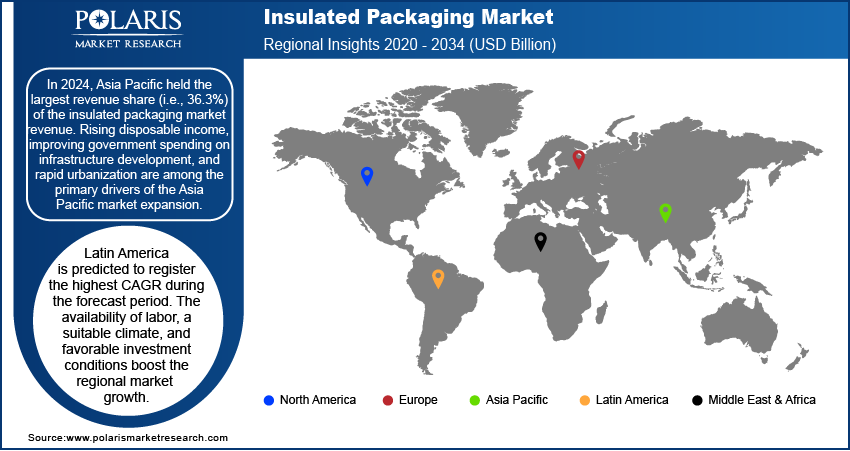
Asia Pacific led the insulated packaging market with a 35.84% revenue share in 2025. Public-Private Partnerships (PPPs) have been formed by governments to expand the region's automotive and electronics sectors. A few main factors driving the expansion of the insulated packaging industry in Asia Pacific are rising disposable income, improving government spending on infrastructure development, and rapid urbanization. The insulated packaging business is being driven by the concerted efforts made by different governments to supply effective modern electronics.
Latin America is projected to record the fastest growth, expanding at a CAGR of 7.80% during 2026–2034. Government programs are propelling the expansion of Mexico's industrial sectors. The main motivating elements are anticipated to be the availability of labor, a conducive climate, and good investment conditions. Owing to these initiatives, the region is rapidly becoming more industrialized. The insulated packing market in Latin America is anticipated to be favorably driven by the developed smart packaging sector and the regional government's attempts to supply technologically sophisticated packing solutions.
Source: Polaris Market Research Analysis
Key Players and Competitive Insights
Market leaders in the insulated packaging sector are launching innovative goods to meet the rising demand from customers. The market for insulated packaging is competitive and diverse, with the presence of many multinational companies as well as local and regional players. Businesses are significantly spending on research and development to create advanced packaging solutions that meet the expanding needs of diverse end consumers. A considerable proportion of mergers and acquisitions are also viewed as a step in the direction of expanding market share.
Amcor Limited; Providence Packaging; E.I. Du Pont De Nemours and Co.; Davis Core & Pad Company; Innovative Energy, Inc.; Sonoco Products Company; Deutsche Post AG; Marko Foam Products, Inc.; Huhtamaki Group; and The Wool Packaging Company Limited are among the major companies mentioned in the insulated packaging market research report. To grow their clientele, increase their brand awareness, and gain a larger portion of the market, multinational corporations are venturing into emerging economies.
List of Key Players
- Amcor Limited
- Cold Ice Inc.
- Davis Core & Pad Company
- Deutsche Post AG AG
- E.I. Du Pont De Nemours and Co.
- Huhtamaki Group
- Innovative Energy, Inc.
- MARKO Foam Products
- Marko Foam Products, Inc.
- Providence Packaging
- Sonoco Products Company
- The Wool Packaging Company Limited
- TP Solutions GmbH
Future Outlook
Future market growth will be driven by the expansion of pharmaceutical cold chains and rapid growth of e-commerce grocery delivery services. Rising demand for sustainable packaging materials and innovations in smart thermal monitoring technologies will support market development. Increasing investments in eco-friendly insulation solutions and global healthcare logistics infrastructure will continue positioning insulated packaging as a critical component of temperature-sensitive supply chains worldwide.
Insulated Packaging Industry Developments
June 2026, Cold Chain Technologies expanded its EcoFlex reusable parcel shipper portfolio across Europe for temperature-sensitive pharmaceutical deliveries. (Source: coldchainplatform.com)
March 2026, Intelsius introduced its 100% recyclable GreenTherm insulated shipper, replacing conventional foam with paper-based thermal packaging for pharmaceutical cold-chain applications. (Source: intelsius.com)
In December 2025, FUJIFILM launched ZEMATES, polyimide-based photosensitive insulating materials for semiconductor back-end processes, highlighting innovation and reliability. (Source: fujifilm.com)
In August 2025, Hydropac introduced Wool Thermal Postal Pockets made from sheep wool, replacing plastic for temperature-controlled delivery in food, retail, and pharmaceuticals. (Source: packagingstrategies.coms)
In June 2025, Panasonic Corporation launched rental and overseas transport services for its VIXELL Container, a vacuum-insulated cooling box that keeps cargo refrigerated for up to 10 days without power. The container supports multiple pallet sizes, minimizes temperature excursions, and allows remote monitoring through real-time data loggers. (Source: .panasonic.com)
In February 2025, Mondi Group, a sustainable packaging and paper company, announced a three-year delay in its partnership with the UN World Food Programme, which provides food aid to communities affected by conflict, disasters, and climate change. (Source: mondigroup.com)
Insulated Packaging Market Segmentation
By Type Outlook
- Flexible
- Rigid
- Semi-Rigid
By Material Outlook
- Metal
- Plastic
- Corrugated Cardboards
- Glass
- Others
By Application Outlook
- Pharmaceutical
- Food & Beverages
- Cosmetic
- Industrial
- Others
By Regional Outlook
- North America
- US
- Canada
- Europe
- Germany
- France
- UK
- Italy
- Spain
- Netherlands
- Russia
- Rest of Europe
- Asia Pacific
- China
- Japan
- India
- Malaysia
- South Korea
- Indonesia
- Australia
- Rest of Asia Pacific
- Middle East & Africa
- Saudi Arabia
- UAE
- Israel
- South Africa
- Rest of Middle East & Africa
- Latin America
- Mexico
- Brazil
- Argentina
- Rest of Latin America
Insulated Packaging Market Report Scope
| Report Attributes | Details |
| Market Size Value in 2024 | USD 17.60 billion |
| Market Size Value in 2025 | USD 18.57 billion |
| Revenue Forecast by 2034 | USD 30.51 billion |
| CAGR | 5.7% from 2025 to 2034 |
| Base Year | 2024 |
| Historical Data | 2020–2023 |
| Forecast Period | 2025–2034 |
| Quantitative Units | Revenue in USD and CAGR from 2025 to 2034 |
| Report Coverage | Revenue Forecast, Market Competitive Landscape, Growth Factors, and Trends |
| Segments Covered |
|
| Regional Scope |
|
| Competitive Landscape |
|
| Report Format |
|
| Customization | Report customization as per your requirements with respect to countries, regions, and segmentation. |
Source: Polaris Market Research Analysis
Insulated Packaging Market FAQ's
The insulated packaging market size is expected to reach USD 29.55 billion by 2034 from USD 16.53 billion in 2025.
The market is expected to exhibit a CAGR of 6.7% during the forecast period.
Asia Pacific led the insulated packaging market with a 35.84% revenue share in 2025
Amcor Limited; E.I. Du Pont De Nemours and Co.; Providence Packaging; Davis Core & Pad Company; Sonoco Products Company; Innovative Energy, Inc.; Deutsche Post AG; Marko Foam Products, Inc.; Huhtamaki Group; and The Wool Packaging Company Limited are amongst the key players in the insulated packaging market.
By type, the rigid segment held the largest share of 42.20% in 2025, owing to its broad application across temperature-sensitive packaging formats.
By material, corrugated cardboard accounted for the largest share of 30.60% in 2025, supported by its structural strength, recyclability, cost-effectiveness, and suitability for cold-chain shipments.
Download Sample Report of Insulated Packaging Market
Please fill out the form to request a customized copy of the research report.


