
Medical Tourism Market Future Insights, Trends Analysis 2026-2034
REPORT DETAILS
Medical Tourism Market Summary
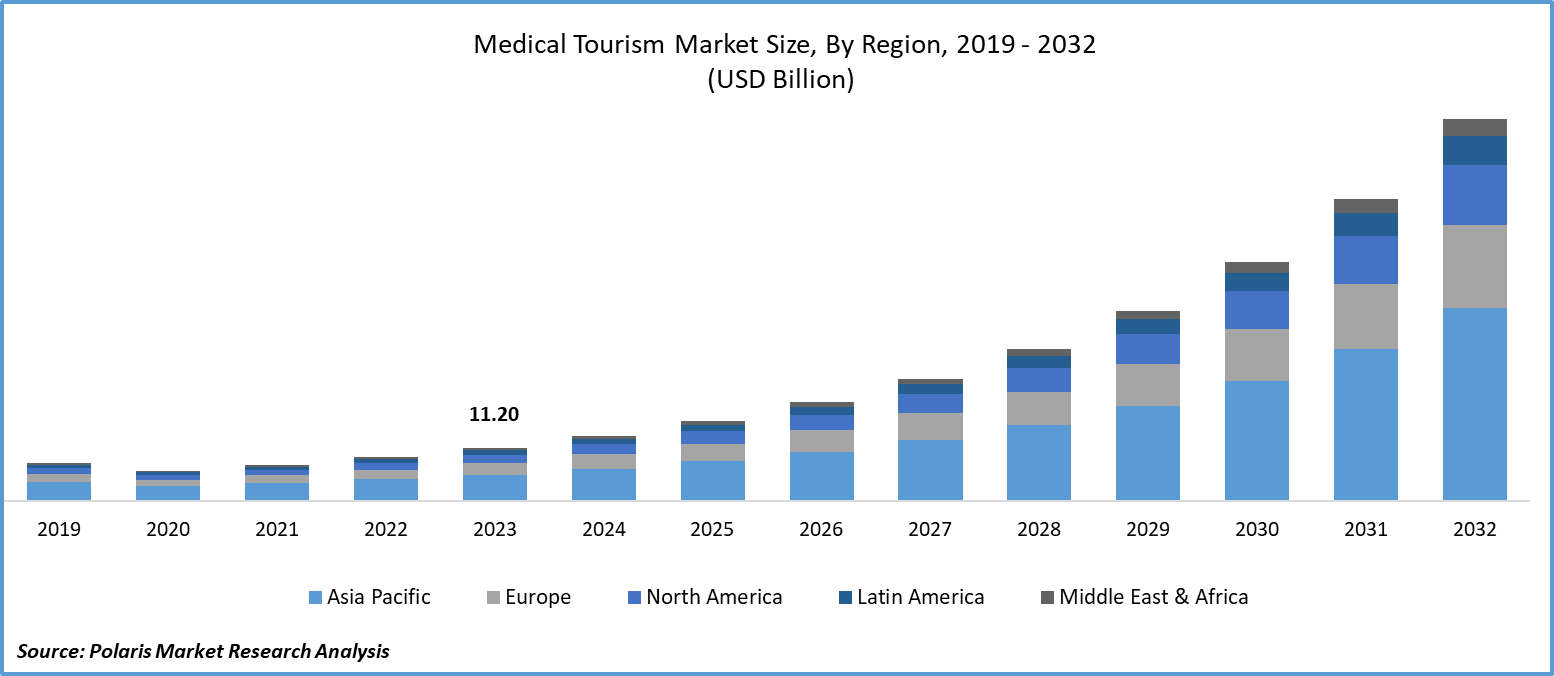
The global medical tourism market was valued at USD 65.62 billion in 2025 and is projected to grow at a CAGR of 11.80% from 2026 to 2034. Growth is supported by increasing demand for affordable and high-quality healthcare services abroad. Growing demand for specialized treatments and robust government support are anticipated to foster the industry expansion.
Market Statistics
Key Takeaways
- Asia Pacific dominated the global market with a 32.0% share in 2025. This is because medical care in Asia Pacific is significantly cheaper than in private healthcare facilities in the U.S.
- The North America industry is expected to hold a significant revenue share of 18.0% during the forecast period. With numerous facilities holding international accreditation, patient trust in medical procedures has significantly increased. This has contributed to the growth of regional markets.
- The cosmetic treatment segment led the industry with a substantial revenue share of 24.0% in 2025. The segment is growing due to increasing patient awareness and the high cost of cosmetic implants in developed countries.
- The private segment accounted for the largest share of 55.0% in 2025. The segment is experiencing rapid growth due to advancements in healthcare technologies and the availability of privately owned, internationally recognized, and accredited providers.
- The dental treatment segment is projected to register the fastest CAGR of 10.8% during the forecast period. The high cost of complex dental procedures in many countries prompts medical tourists to seek dental care abroad.
*Note: Figures and projections outlined in this report are the result of Polaris Market Research’s proprietary analytical processes, grounded in the latest available datasets and market observations.
Industry Dynamics
- The unavailability of insurance coverage for some treatments in various nations drives the industry growth.
- Elevated medical expenses in advanced economies propel the market expansion.
- Rising concerns regarding medical tourism from medical and ethical perspectives hinder the industry expansion.
- Increasing advancements in healthcare technology are expected to provide opportunities during the forecast period.
AI Impact on Medical Tourism Market
- Artificial intelligence (AI)-enabled chatbots offer 24/7 multilingual support. It helps foreign patients with appointment scheduling, procedural queries, and travel logistics. These tools reduce administrative burdens. Also, they offer a seamless experience across borders, regardless of language barriers and different time zones.
- The technology analyzes historical data, facilitating proactive care and better resource allocation. It helps healthcare providers predict complications and post-treatment requirements. These benefits enhance patient safety and reduces the risk of adverse events, which is essential for building trust in overseas healthcare.
- Sentiment analysis and virtual facility tours powered by generative AI are used to elevate marketing effectiveness. Targeted digital marketing on social media platforms such as TikTok, Instagram, and YouTube, help providers attract international patients.
Source: Polaris Market Research Analysis
Medical tourism enables patients to travel abroad for treatment rather than enduring long waiting times for care in their home country. Consequently, many international patients opt for medical tourism, seeking procedures promptly in nations offering expedited services to save time and prevent the worsening of their medical conditions. Furthermore, numerous national governments are employing diverse strategies to promote health and wellness tourism within their borders. Thus, robust government support is anticipated to foster the medical tourism market expansion.
Why Patients Travel for Medical Tourism?
People opt to go abroad for medical treatment because of the low prices, access to advanced technology in health care, and the presence of highly skilled physicians. Some people prefer to receive services that may not be present in their own countries. Others like to include tourism as part of their trip to maximize benefits.
What is the Impact of Government Regulations on the Medical Tourism Market?
Governments across the world are imposing stringent regulations on the medical tourism industry to ensure patient safety and enhance service quality. India, Thailand, Türkiye, Malaysia, and other countries introduced structured medical tourism policies. They are also emphasizing hospital accreditation requirements and mandatory licensing frameworks to standardize care for international patients. Many governments are focusing on creating healthcare facilities that meet global benchmarks, such as JCI or national quality standards. Some governments are enforcing data reporting, patient-rights protection, and malpractice oversight. These regulations protect patients and help destination countries build trust. Market players focus on complying with government laws and regulations on medical tourism. It helps them in ethical marketing and strengthening their competitiveness in the global medical travel ecosystem.
| Country | Regulatory Body/Key Rule or Policy | Description |
| India | National Strategy & Roadmap for Medical & Wellness Tourism by the Ministry of Tourism |
|
| Thailand | Ministry of Public Health/Medical Council Oversight (Thai licensing & facility standards). |
|
| Malaysia | Ministry of Health & Malaysia Healthcare Travel Council (MHTC) |
|
| Singapore | Ministry of Health (MOH Singapore) — professional standards & patient protection. |
|
| Türkiye (Turkey) | Regulation on International Health Tourism and Tourist Health, Ministry of Health. (official regulation) |
|
| South Korea | Act on Supporting Overseas Expansion of Medical Services & Attraction of International Patients, MOHW. |
|
| Mexico | Secretaría de Turismo/Secretaría de Salud, official tourism & health regulations (standards & complaint procedures). |
|
| United Arab Emirates (UAE) | Ministry of Health & Prevention (MoHAP) and local DOHs Focus on licensing, quality frameworks, and reporting (Jawda/performance guidance). |
|
Source: Polaris Market Research Analysis
Further, medical tourism market growth is fueled by a rising number of individuals seeking medical care abroad, advancements in healthcare technology, escalating healthcare costs, and an increasing demand for specialized treatments. The primary catalyst for medical tourism market expansion is the exorbitant healthcare expenses in individuals' home countries. Furthermore, the surge in demand for non-insurance procedures such as dental reconstruction, cosmetic surgery, reproductive therapy, and gender reassignment surgeries is contributing to the sector's development.
For instance, in March 2024, Bumrungrad International Hospital, led by CEO David Boucher, is in healthcare with over 1.1 million patients from 190 countries in 2023 and innovative services in Phuket.
Due to travel bans, supply chain disruptions, movement restrictions, and other factors, such as the COVID-19 pandemic, have had a major negative impact on the medical tourism industries, including well-known medical tourism destinations such as China, India, and other growing nations. India's medical tourism industry suffered during the first two years of the pandemic due to travel restrictions.
For example, according to Fortis Healthcare's annual report, travel restrictions had a significant influence on the medical tourism market development in 2021 as the number of patients from adjacent countries stopped traveling.
Market Dynamics
Elevated Medical Expenses in Advanced Economies
In underdeveloped nations, individuals can access high-quality medical care at a fraction of the cost compared to developed nations. Despite the affordability of medical treatments in these countries, quality is upheld as resources are available at relatively lower prices. This factor prompts people to relocate to these countries to avail themselves of healthcare services.
For instance, while the average cost of an Angioplasty operation in the United States ranges between $55,000 to $57,000, the same procedure in Malaysia costs between $2,500 to $3,500. Consequently, individuals from the United States and other European nations opt to travel to Thailand, Singapore, India, and Malaysia for medical treatment, saving between 55 to 70 percent of the total cost of care.
Absence of Insurance Coverage in Nations
In the United States, insurance providers typically exclude coverage for many elective surgeries, such as weight loss, cosmetic, and certain dental procedures. This lack of coverage or limited availability prompts individuals to seek medical treatment in countries like Malaysia and Thailand. Since most cosmetic procedures are considered elective in many countries, they are not covered by medical insurance, leading patients to explore treatment options abroad. By seeking treatment in locations where medical procedures are more affordably priced, patients can save money.
For instance, while the cost of a breast augmentation procedure in the United States ranges from $5,000 to $8,000, the same procedure in Malaysia costs between $3,000 to $4,000.
Market Restraints
Concerns Regarding Medical Tourism from Medical and Ethical Perspectives
The medical tourism market is expanding, yet it also presents possible medical risks. Instances of nosocomial infections and hospital-acquired infections are heightened when individuals travel for medical treatment. Risks include the transmission of noroviruses, often causing severe gastroenteritis, infections from multidrug-resistant organisms, and mycobacterial infections following cosmetic procedures.
Additionally, there's a concern for public health in the tourists' home countries as they may bring back infections not commonly encountered locally. In the last twenty years, there has been a noticeable increase in transplant tourism, leading to higher rates of tissue rejection post-surgery. Variations in medical ethics between nations are also apparent.
For instance, a treatment such as stem cell therapy, deemed experimental in one country, may be routinely administered to international patients at private hospitals. However, by taking appropriate precautions when seeking medical treatment overseas, these risks can be mitigated.
Source: Polaris Market Research Analysis
Report Segmentation
The market is primarily segmented based on treatment type, service provider, and region.
| By Treatment Type | By Service Provider | By Region |
|
|
|
Source: Polaris Market Research Analysis
To Understand the Scope of this Report: Request Customization
Treatment Types and Benefits
| Type of treatment | Benefits | Destination Advantage |
| Cosmetic surgery | Aesthetic improvement at low costs | High quality private hospitals |
| Dentistry | Cost-effective quick treatments | Skilled dentists |
| Heart Surgery | Specialist advanced heart surgery services | Hospitals specialized for heart surgery |
| IVF treatment/ fertility treatment | Greater chances of success | Hospitals with advanced reproductive technologies |
| Orthopedics surgery | Faster treatment | Lower cost recovery programs |
Source: Polaris Market Research Analysis
Segmental Analysis
By Treatment Type Analysis
- The dental treatment segment is projected to grow at the fastest CAGR of 10.8% during the market forecast period. Dental treatments can be costly in numerous countries, particularly for complex procedures, prompting medical tourists to seek dental care abroad for substantial savings, even after factoring in travel expenses. Countries renowned for dental tourism, such as Thailand, Mexico, and Hungary, boast well-established dental facilities providing top-notch care. Patients benefit from treatment by experienced professionals utilizing modern equipment and techniques. Dental procedures often entail multiple visits spread over an extended period. Still, some countries offer accelerated treatment options, enabling patients to complete their dental care in a shorter duration, a feature appealing to medical tourists.
- The cosmetic treatment segment led the industry market with a substantial revenue share in 2025. The market is growing due to increasing patient awareness, a greater demand for anti-aging therapies, and the high cost of cosmetic implants in developed countries. Thailand is a top destination for cosmetic and bariatric surgery, offering procedures such as hair transplantation, liposuction, cool sculpting, laser tattoo removal, and breast augmentation. On the other hand, surgeries such as hip replacements, gastric bypass, and knee replacements are cheaper in India compared to other wealthy nations such as the UK and the US.
By Service Provider Analysis
- The private segment accounted for the largest market share of 24.0% in 2025 and is likely to retain its position throughout the medical tourism market forecast period. The segment is experiencing rapid growth due to advancements in healthcare technologies and the availability of privately owned, internationally recognized, and accredited providers. Additionally, the private sector offers more privacy and faster services compared to the public sector. To gain access to international buyer networks and healthcare insurance, healthcare facilities in underdeveloped nations are seeking international recognition from regulatory bodies. Insurance companies in wealthy countries are adding health tourism coverage to their medical plans to encourage individuals to seek medical care abroad. Moreover, an increasing number of people without insurance or with inadequate coverage are driving travelers in need of medical attention to seek affordable healthcare services and treatments in underdeveloped countries.
-
The public segment is expected to grow at a significant growth rate of 10.3% over the upcoming years. Public healthcare facilities in many countries are known for providing cost-effective medical services, which appeal to individuals seeking affordable healthcare options. Moreover, some governments actively promote medical tourism to bolster their healthcare sector and economy, often offering incentives to public hospitals to accommodate international patients. These efforts contribute to the growth of the public segment in the medical tourism market development. Additionally, public hospitals in certain countries have gained renown for delivering high-quality medical care, particularly in specialized fields like organ transplantation and cancer treatment, attracting patients from around the globe.
Source: Polaris Market Research Analysis
Regional Insights
Asia Pacific Dominated the Global Market with the Largest Market Share in 2025
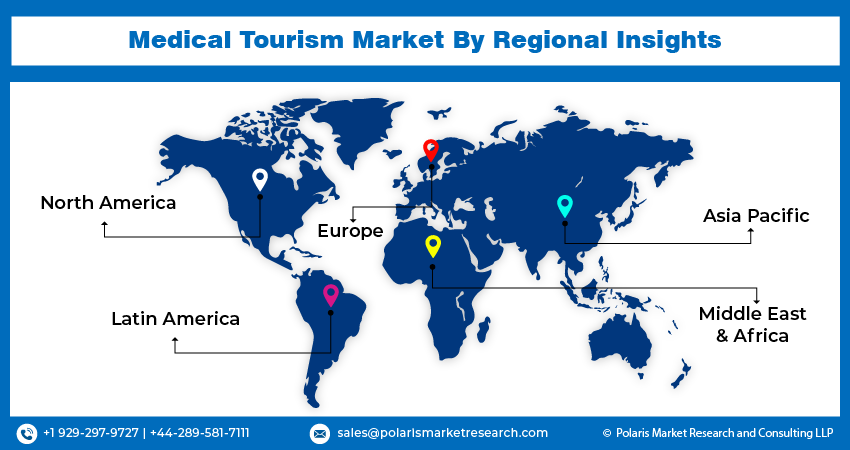
The Asia Pacific region dominated the global market with the largest market share of 32.0% in 2025 and is expected to maintain its dominance over the anticipated period. In the region, medical care is more than 90% cheaper than in private healthcare facilities in the United States. For instance, according to the Malaysia Healthcare Travel Council, the cost of coronary artery bypass graft surgery in the US can be as high as USD 92,000, while in India, it costs less than USD 10,000. Additionally, the most favored tourist destinations are distributed across several countries in the region. Malaysia, Singapore, and Thailand are popular choices for medical tourists due to their abundance of attractions for recovering patients, relatively inexpensive cost of living, welcoming locals, and quality healthcare services.
Various countries in the region highlight medical tourism as a significant revenue source for their economies. For instance, the tourism ministries of Thailand, Malaysia, and India have actively promoted medical tourism. Furthermore, investors and private hospital chains see the Asia Pacific medical tourism sector as a profitable opportunity and invest in infrastructure, personnel, technology, and services.
The North America region is expected to hold a significant revenue share of 18.0% during the medical tourism market forecast period. Countries such as the US and Canada have maintained stringent healthcare standards for a long time. With numerous facilities holding international accreditation, patient trust in medical procedures has significantly increased. These nations emerge as prime offshore medical travel destinations, boasting advanced medical technology and a wide array of medical services. These factors contribute to the growth of regional markets.
Source: Polaris Market Research Analysis
The medical tourism market is fragmented and anticipated to face heavy competition due to several players' presence. Major service providers in the market are constantly upgrading their technologies to stay ahead of the competition and to ensure integrity, efficiency, and safety. These players focus on partnership, services upgrades, and collaboration to gain a competitive edge over their peers and capture a significant market share.
Key Players and Competitive Insights
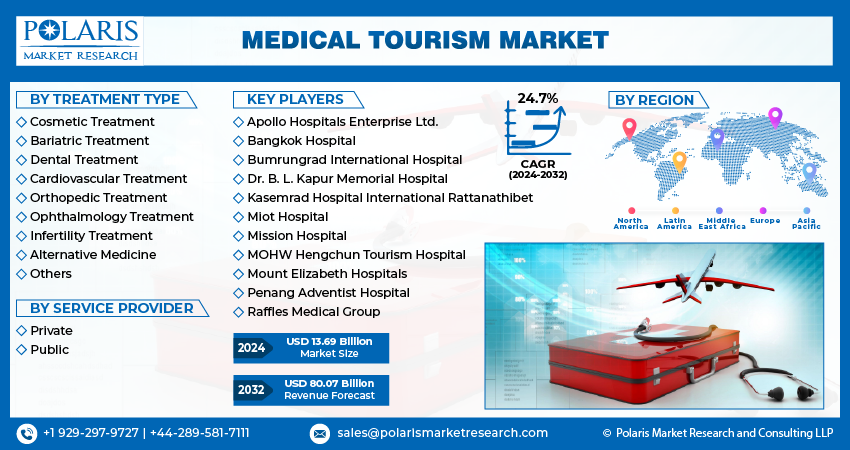
- Apollo Hospitals Enterprise Ltd.
- Bangkok Hospital
- Bumrungrad International Hospital
- Dr. B. L. Kapur Memorial Hospital
- Kasemrad Hospital International Rattanathibet
- Miot Hospital
- Mission Hospital
- MOHW Hengchun Tourism Hospital
- Mount Elizabeth Hospitals
- Penang Adventist Hospital
- Raffles Medical Group
Recent Developments
- February 2026: The Government of India announced the establishment of five Regional Medical Tourism Hubs in the country. The hubs will be developed in partnership with the private sector. They aim to offer integrated healthcare to both international and domestic visitors. (source: pib.gov.in)
- March 2025: Iran launched a nationwide medical tourism management system after completing a successful pilot in the Khorasan Razavi province, with the objective of enhancing coordination, transparency, and operational efficiency across the country’s health tourism industry. (source: tvbrics.com)
- December 2025: Island Hospital became the official winner of the Malaysia Healthcare Travel Council’s (MHTC’s) very first Flagship Medical Tourism Hospital (FMTH) Programme. This strategic initiative aims to create new benchmarks for technologically advanced hospitals. (source: mhtc.org.my)
- November 2024: Resorttrust Group and Mitsubishi Corporation collaborated to explore medical tourism opportunities, forming a joint venture to promote Japan's advanced healthcare services globally. The partnership aims to attract international patients through medical screenings, leveraging both companie's expertise in healthcare and tourism. (source: mitsubishicorp.com)
- February 2024: Egypt’s Ministry of Tourism announced the launch of a unified platform for health and tourism that offers both medical and healing services. (Source: sis.gov.eg)
- January 2024: PT JCB, Indonesia, a part of JCB International Co., Ltd. (JCB), and Sunway Healthcare Group collaborated and agreed to introduce the services of Sunway Healthcare Group to more than 156.0 million JCB card membership holders globally in order to promote medical tourism. (Source: global.jcb)
Future of Medical Tourism Market
The medical tourism industry is projected to grow as healthcare costs rise and demand for more affordable treatment options increases. With the help of digital health technology and AI-powered patient matching, there would be better access to healthcare globally. Governments are also investing in healthcare facilities in order to attract foreign patients. The expansion of accredited hospitals and telemedicine follow-ups is expected to further support cross-border healthcare services worldwide.
Report Coverage
The medical tourism market report emphasizes key regions across the globe to understand the product to the users better. It also provides market insights into recent developments and trends and analyzes the technologies that are gaining traction around the globe. Furthermore, the report covers an in-depth qualitative analysis pertaining to various paradigm shifts associated with the transformation of these solutions.
Report Scope
| Report Attributes | Details |
| Market Size in 2025 | USD 65.62 billion |
| Market Size in 2026 | USD 73.27 Billion |
| Revenue Forecast by 2034 | USD 176.90 billion |
| CAGR | 11.80% from 2026 to 2034 |
| Base Year | 2025 |
| Historical Data | 2021–2024 |
| Forecast Period | 2026–2034 |
| Quantitative Units | Revenue in USD Billion and CAGR from 2026 to 2034 |
| Report Coverage | Revenue Forecast, Competitive Landscape, Growth Factors, and Industry Trends |
| Segments Covered |
|
| Regional Scope |
|
| Competitive Landscape |
|
| Report Format |
|
| Customization | Report customization as per your requirements with respect to countries, regions, and segmentation. |
Source: Polaris Market Research Analysis
Medical Tourism Market FAQ's
key companies in Medical Tourism Market are MOHW Hengchun Tourism Hospital, Apollo Hospitals Enterprise Ltd., Bumrungrad International Hospital, Mount Elizabeth Hospitals
Medical tourism market exhibiting the CAGR of 11.80% during the forecast period
The key segments covered by the medical tourism market report are treatment type, service provider, and region.
The elevated medical expenses in advanced economies are driving the medical tourism market growth
The global medical tourism market size is expected to reach USD 176.9 billion by 2034
People opt for medical tourism due to the reduced cost, quality healthcare, and reduced wait time. They also choose it due to access to unique healthcare services.
These procedures include cosmetic surgery, dental procedures, heart-related surgery, reproductive health, and orthopedic treatment.
These include India, Thailand, Singapore, Turkey, Mexico, and South Korea.
Download Sample Report of Medical Tourism Market
Please fill out the form to request a customized copy of the research report.


