
Natural Beta Carotene Market Demand, Analysis Growth, 2026-2034
REPORT DETAILS
Natural Beta Carotene Market Summary
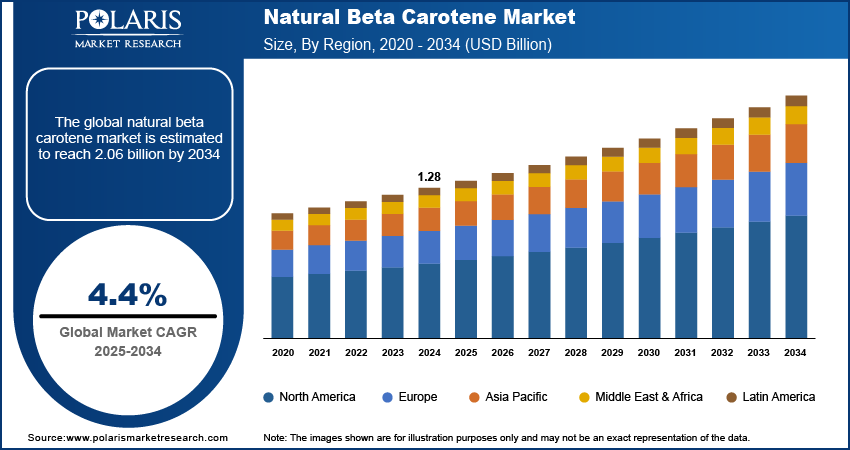
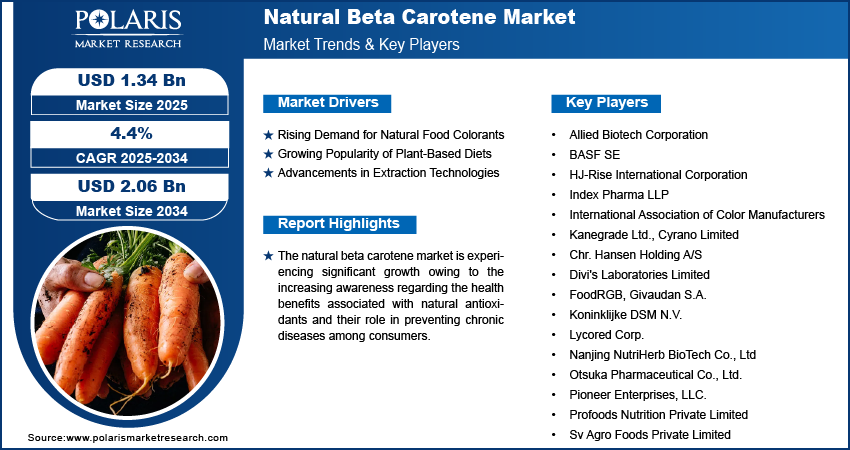
The natural beta carotene market size was valued at USD 1.34 billion in 2025. The market is projected to account for a CAGR of 4.9% between 2026 and 2034. The market for natural beta carotene is primarily driven by the rising demand for natural food colorants. It is also benefiting from the rising popularity of plant-based diets.
Market Statistics
Key Takeaways
- Europe led the natural beta carotene market with a 34.6% revenue share in 2025. The regional market is driven by the increased demand for natural and organic products across various sectors.
- Asia Pacific is projected to grow at a 5.4% CAGR. Increasing health awareness and a growing middle-class population drive the regional market growth.
- The algae segment dominated the market with a 41.8% share of the revenue in 2025. This is owing to its high carotenoid content and sustainable cultivation methods.
- The cosmetic additives segment is projected to witness the highest CAGR of 5.7%. This is due to the shift of the beauty & personal care industry toward natural and organic formulations.
Industry Dynamics
- Advancements in extraction technologies have helped improve the efficiency and purity of the final product. This, in turn, is contributing to the market development.
- The natural beta carotene market is benefiting from evolving consumer preferences and a shift towards natural colorants.
- The surge in vegan and plant-based diets is presenting several market opportunities.
- High production costs and complex extraction may hinder market growth.
Natural beta carotene is a pigment present in alage and fruits and vegetables. It is one of the main sources of vitamin A in humans. Beta carotene plays an important role in human nutrition. It supports functions such as eyesight, immunity, and antioxidants.
The natural beta carotene market is gradually expanding due to rising consumer preference for natural and clean-label ingredients. In addition, regulations on artificial preservatives in developed markets are tightening, and companies are increasingly seeking more natural options. This shift away from artificial colorants towards natural ones is gaining increasing popularity across the food, nutraceutical, and cosmetic sectors. Therefore, there is increased demand for naturally derived beta carotene.
Improvements in extraction methods, such as supercritical CO2 extraction and fermentation, have made the production process more efficient and cost-effective, resulting in greater availability of natural beta carotene on the market. In addition, its applications have expanded to include usage in functional foods, dietary supplements, and high-end skin care products, contributing to its development.
Source: Polaris Market Research Analysis
To Understand More About this Research:Download Sample Report
Natural Beta Carotene Market Dynamics
Rising Demand for Natural Food Colorants
With an increase in consumer awareness about the health risks associated with artificial colors, there has been a surge in the consumption of natural food colorants. Natural beta carotene has found extensive use in beverages, milk products, confectionery, and packaged foods for their enhanced appearance and nutritive value. Clean-label products are becoming increasingly popular worldwide. This is due to companies' efforts to improve their product lines by eliminating artificial components. It has led to increased use of beta carotene as a colorant that meets these requirements. This is particularly true for regions like Europe and North America.
Growing Popularity of Plant-Based Diets
Consumers have shown increased interest in natural beta carotene, as there is an increase in vegan or plant-based dietary preferences. This is creating increased consumption of carotenoid sources as consumers increasingly prefer plant-based ingredients. Beta carotene, derived from algae and vegetables, fits well within the sustainability goals. Moreover, such sources of carotene meet increased demands for transparency. Thus, the rising popularity of plant-based diets is one of the major natural beta carotene market drivers.
Advancements in Extraction Technologies
Technological advancements have enhanced the isolation and purification of natural beta carotene. Innovations in biotechnological processes, including microbial fermentation and controlled algae cultivation systems, have facilitated an improvement in efficiency and effectiveness. Moreover, these advancements in technology are also helping in reducing costs, which may assist in minimizing the price gap between natural and synthetic beta carotene.
Natural Beta Carotene Market Pricing Analysis
Natural beta carotene remains costly when compared with its synthetic alternatives due to complicated processing technologies, as well as a reliance on raw materials. The difference in natural vs synthetic pricing is gradually closing owing to innovations in technology, as well as the rise in production. At the same time, consumer demand for clean labels also contributes to keeping the beta carotene price trends stable in the natural category.
Value Chain Analysis
The value chain for natural beta-carotene consists of raw material acquisition, extraction, formulation, distribution, and end use.
- Production Process Raw Materials: algae, carrots, palm oil
- Processing Steps: extraction and purification
- Distribution Channels: business-to-business supply chain
- End Users: food industry, pharmaceuticals, cosmetics
Vertical integration is becoming increasingly common among businesses as a way to improve beta carotene supply chain efficiency and reduce reliance on outside suppliers.
Source: Polaris Market Research Analysis
Segment Analysis
By Source Insights
Based on source, the natural beta carotene market is segmented into algae, fruit & vegetable, fungi, and palm oil. The algae segment dominated the market with a 41.8% revenue share in 2025. This is owing to its richness in carotenoids and environmentally friendly farming practices. The growing consumer preference for clean-label and plant-based foods, beverages, and dietary supplements has played a crucial role in the expansion of the algae segment. Cultivating algae requires minimal land and water resources. This makes it environmentally friendly amid rising environmental consciousness. In addition, the use of advanced algae cultivation technologies such as closed photobioreactors has contributed to its leading market position.
The fruit & vegetable segment is projected to lead the market. This is due to growing consumer inclination towards recognizable sources of essential nutrients. Carrots, sweet potatoes, and leafy green vegetables have a high content of beta carotene, which is popular among health-conscious consumers. The current preference for functional foods and beverages with natural colorants and antioxidants is also contributing to the demand in this segment. In addition, the prevalence of organic farming and non-GMO foods aligns with consumer demand, ensuring robust growth in the future.
By Application Insights
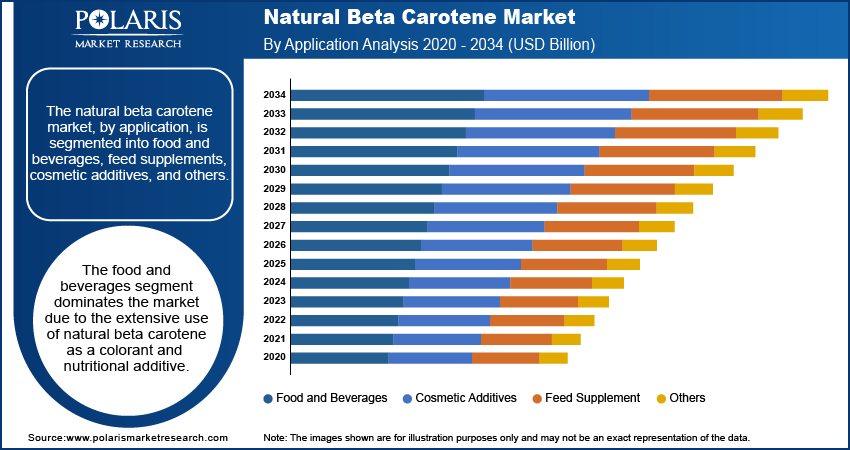
Based on application, the natural beta carotene market segmentation includes food and beverages, feed supplement, cosmetic additives, and others. The food and beverages segment led the market in 2025. This is attributed to the widespread application of natural beta-carotene as a coloring and nutritional agent. The reason for its rising prominence can be attributed to consumers' growing preference for natural compounds in their food products, which not only makes the product look appealing but also provides additional nutritional benefits. The focus on producing clean label products within the food and beverages industry has contributed to the segment’s leading market position.
The cosmetic additives segment is projected to witness the highest growth rate of 5.7%. With the beauty & personal care industry moving towards the use of natural and organic substances, the requirement for natural beta carotene in skincare and cosmetic applications is rising at a rapid pace. It is due to the presence of antioxidants in beta carotene, which are considered vital in anti-aging and skin care products. Consumers are increasingly preferring cosmetics that do not contain artificial chemicals and have natural components. This is further contributing to the segment’s rapid growth.
Source: Polaris Market Research Analysis
Regional Analysis
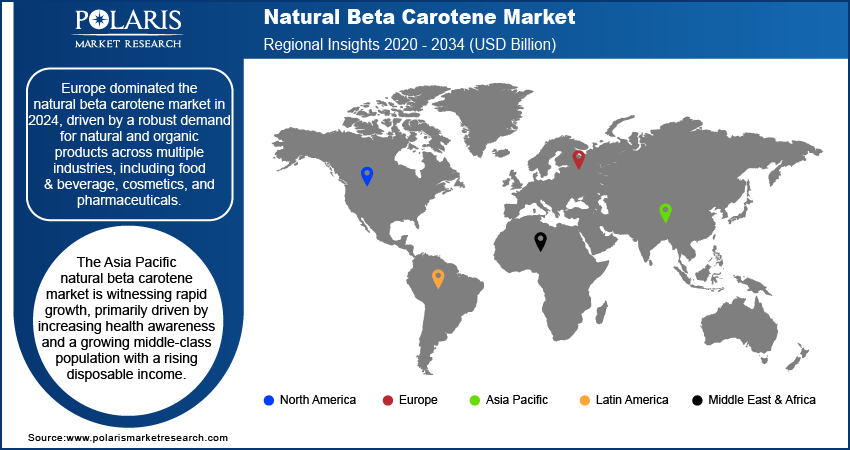
By region, the study provides natural beta carotene market insights into North America, Europe, Asia Pacific, Latin America, and the Middle East & Africa. Europe dominated the market with a 34.6% revenue share in 2025. This is due to a robust demand for natural and organic products across multiple industries, including food & beverage, cosmetics, and pharmaceuticals. The strict rules on synthetic additives in the region have driven a trend toward natural products, and natural beta carotene is a popular option due to its label-friendly nature. Moreover, the importance placed on health and well-being in Europe has been beneficial to the market due to the various advantages of natural beta carotene, which is renowned for its antioxidative properties. The Europe carotene market has been driven by countries such as Germany, France, and the United Kingdom, with the flourishing food processing and cosmetics industry aiding its growth.
The natural beta carotene market in the Asia Pacific is projected to grow at a 5.4% CAGR. The main factors driving this regional market are rising health consciousness levels and a growing middle class with increased disposable income. The food and beverage market in countries like China, India, and Japan is experiencing rapid growth, thus creating high demand for natural colorants and nutraceuticals. Apart from this, the thriving cosmetics industry in the Asia Pacific, along with consumers' preferences for organic cosmetic ingredients, is boosting the market growth for natural beta carotene. Increasing agricultural output in the Asia Pacific is also supporting demand for natural beta carotene.
Source: Polaris Market Research Analysis
Regulatory Landscape
The regulatory framework surrounding beta-carotene varies from region to region. In Europe and North America, there are strict guidelines that govern safety, labeling, and dosage for foods and supplements, with the government closely controlling them. This ensures high-quality products and consumer safety. Regulations are less stringent in developing nations. But they are gradually becoming more stringent to align with international standards. Increasing emphasis is placed on naturalness, transparency, and clean-label claims. In summary, beta carotene regulation changes have pushed companies to adopt standard procedures to ensure safety and traceability throughout the supply chain.
Sustainability Trends
Sustainability is becoming increasingly important within the natural beta carotene market. Companies are making efforts to ensure sustainability by employing environmentally sustainable practices. Beta carotene production is becoming increasingly environmentally sustainable because it is now being produced using algae and fermentation. This is reducing reliance on conventional agriculture.
Manufacturing firms are also working towards becoming water- and energy-efficient. Focus is on the responsible sourcing of raw materials. At the same time, sustainability and clean labeling are influencing consumer preferences.
Key Players and Competitive Insights
The natural beta carotene market is highly competitive. There are several key players actively contributing to its growth and development. Notable companies in this market are Allied Biotech Corporation, BASF SE, HJ-Rise International Corporation, Index Pharma LLP, International Association of Color Manufacturers, Kanegrade Ltd., Chr. Hansen Holding A/S, colorMaker, Inc., Cyrano Limited, Divi's Laboratories Limited, FoodRGB, Givaudan S.A., Koninklijke DSM N.V., Lycored Corp., Nanjing NutriHerb BioTech Co., Ltd, Otsuka Pharmaceutical Co., Ltd., Pioneer Enterprises, LLC., Profoods Nutrition Private Limited, Sv Agro Foods Private Limited.
These firms have adopted several strategies like mergers and acquisitions, development of products, and expansions to enhance their market positions in view of the rising demand for natural beta carotene.
BASF SE is one of the leading companies in the natural beta carotene market due to its diverse product range and excellent global distribution. BASF SE has captured a substantial share of the industry due to its ongoing innovations and compliance with regulatory requirements, especially in markets such as Europe and North America.
Lycored Ltd. and Chr. Hansen Holding A/S has also acquired a significant market share, specializing in high-quality natural beta carotene sourced from ingredients such as tomatoes and algae. Customers and other businesses have well-received the emphasis they have placed on sustainability and sourcing natural ingredients.
List of Key Companies
- Allied Biotech Corporation
- BASF SE
- Chr. Hansen Holding A/S
- Cyrano Limited
- Divi's Laboratories Limited
- FoodRGB, Givaudan S.A.
- HJ-Rise International Corporation
- Index Pharma LLP
- International Association of Color Manufacturers
- Kanegrade Ltd.
- Koninklijke DSM N.V.
- Lycored Corp.
- Nanjing NutriHerb BioTech Co., Ltd
- Otsuka Pharmaceutical Co., Ltd.
- Pioneer Enterprises, LLC.
- Profoods Nutrition Private Limited
- Sv Agro Foods Private Limited
Industry Developments
June 2025: SM-Firmenich expanded its distribution agreement with Brenntag Specialties Pharma to Poland and the Czech Republic. Brenntag now distributes over 40 vitamins and carotenoids, including A, B-complex, C, D3, E, K1, and beta-carotene, for pharmaceutical applications.
June 2024: BASF SE announced plans to expand its manufacturing capabilities to boost production of natural beta carotene. This strategic decision underlined its commitment to meeting consumers' growing demand for sustainable products.
April 2024: DSM announced a strategic alliance to enhance its sustainability initiatives in natural ingredients. This strategic decision reinforced its dominance within the market.
Analyst Insights & Future Outlook
The global natural beta carotene market is expected to grow at a consistent rate, owing to the emergence of advancements in production technologies and an increase in the trend of usage of sustainable ingredients. The rising popularity among consumers for natural and organic foods is also playing its part in contributing to the growth of the global market for natural beta carotene. Scalability of the production process will also contribute positively to the development of the global market.
Market Segmentation
By Source Outlook (Revenue – USD Billion, 2021–2034)
- Algae
- Fruit & vegetable
- Fungi
- Palm Oil
By Form Outlook (Revenue – USD Billion, 2021–2034)
- Oil
- Powder
By Application Outlook (Revenue – USD Billion, 2021–2034)
- Food and Beverages
- Feed Supplement
- Cosmetic Additives
- Others
By Regional Outlook (Revenue, USD Billion, 2021–2034)
- North America
- US
- Canada
- Europe
- Germany
- France
- UK
- Italy
- Spain
- Netherlands
- Russia
- Rest of Europe
- Asia Pacific
- China
- Japan
- India
- Malaysia
- South Korea
- Indonesia
- Australia
- Vietnam
- Rest of Asia Pacific
- Middle East & Africa
- Saudi Arabia
- UAE
- Israel
- South Africa
- Rest of Middle East & Africa
- Latin America
- Mexico
- Brazil
- Argentina
- Rest of Latin America
Natural Beta Carotene Market Report Scope
| Report Attributes | Details |
| Market Size in 2025 | USD 1.34 billion |
| Market Size in 2026 | USD 1.40 billion |
| Revenue Forecast by 2034 | USD 2.06 billion |
| CAGR | 4.9% |
| Base Year | 2025 |
| Historical Data | 2021–2024 |
| Forecast Period | 2026–2034 |
| Quantitative Units | Revenue in USD billion, and CAGR from 2026 to 2034 |
| Report Coverage | Revenue Forecast, Market Competitive Landscape, Growth Factors, and Trends |
| Segments Covered |
|
| Regional Scope |
|
| Competitive Landscape | Natural Beta Carotene Industry Trend Analysis (2025) Company profiles/industry participants profiling include company overview, financial information, product/service benchmarking, and recent developments |
| Report Format | PDF + Excel |
| Customization | Report customization as per your requirements with respect to countries, regions, and segmentation. |
Source: Polaris Market Research Analysis
Natural Beta Carotene Market FAQ's
The market for natural beta carotene stood at USD 1.34 billion in 2025. It is projected to reach USD 2.06 billion by 2034.
The market is anticipated to account for a CAGR of 4.9% between 2026 and 2034.
The market is primarily driven by the rising demand for clean-label ingredients and plant-based diets. It also benefits from regulatory support.
Europe accounted for the largest market share in 2025. This is due to a robust demand for natural and organic products across multiple industries in the region.
Key trends shaping the market include increased emphasis on sustainability and innovation.
Yes. This is due to higher consumer preference and regulatory acceptance.
Beta carotene is widely extracted through algae cultivation. Solvent extraction and fermentation may also be used.
Natural beta carotene is widely used in food products and supplements. It also finds applications in cosmetics.
Beta carotene can help with vision health and immunity. It also has antioxidant properties.
China, India, the U.S., and Germany are a few of the major countries producing beta carotene.
Download Sample Report of Natural Beta Carotene Market
Please fill out the form to request a customized copy of the research report.


