
Peptide and Oligonucleotide CDMO Market Size, Report, 2026-2034
REPORT DETAILS
Peptide and Oligonucleotide CDMO Market Summary
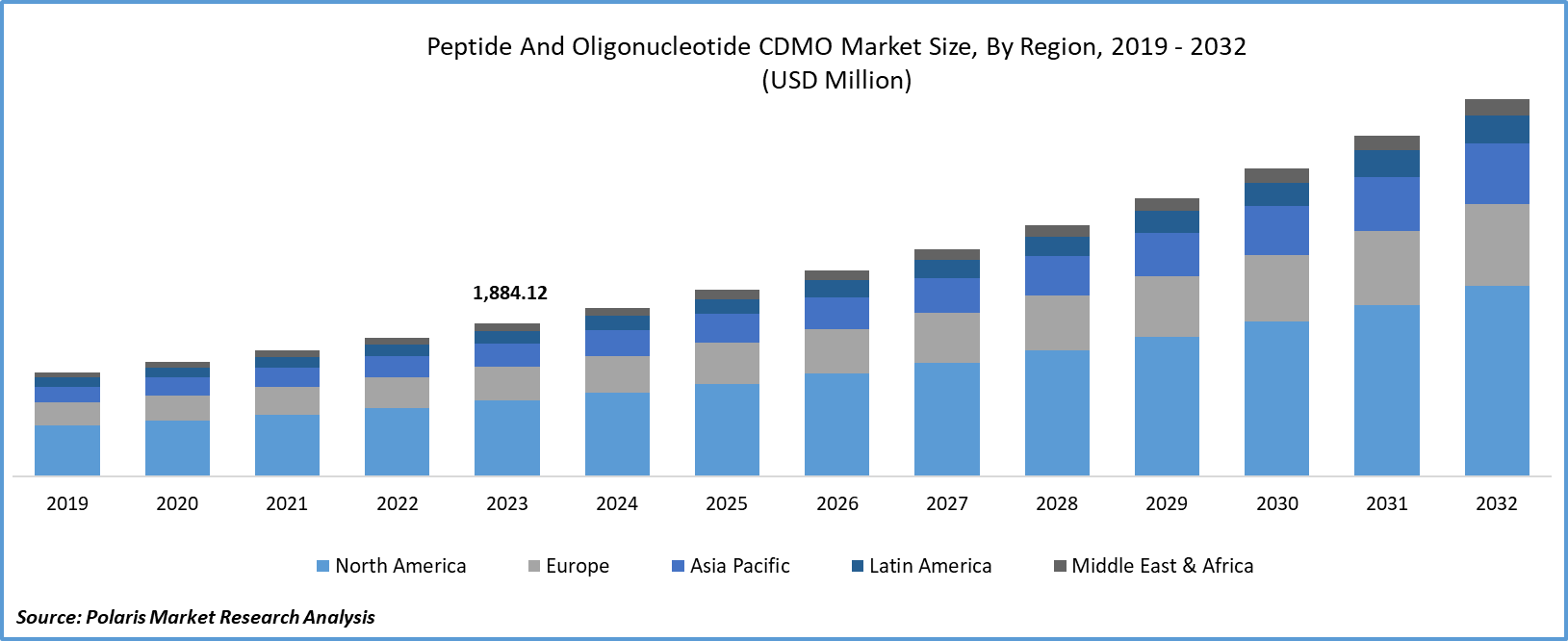
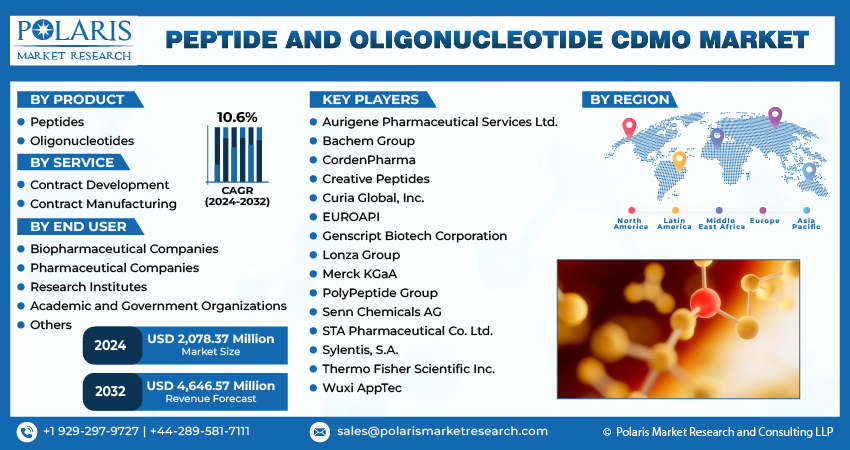
The Peptide and Oligonucleotide CDMO Market is forecast to reach USD 2.29 billion in 2025, growing at a CAGR of 10.70% through 2034. Rising demand for custom synthesis, surge in biologic drug development, and outsourcing trends in pharma R&D are accelerating growth.
Market Statistics
Key Takeaways
- In 2025, North America dominated the global Peptide and Oligonucleotide CDMO market with 41.9% revenue share. The region's leading position is driven by the expanding biopharmaceutical sector, strong outsourcing trends, and continuous R&D activities in genomics and personalized medicine.
- The Asia Pacific peptide and oligonucleotide CDMO market is expected to register the highest CAGR of 14.8% during the forecast period. Growth is attributed to increasing investments in the biopharmaceutical and life sciences industries, expanding manufacturing capabilities, and favorable government support for biotechnology.
- The Peptides segment accounted for a substantial 63.5% market share in 2025. Ongoing therapeutic discoveries, rising adoption of peptide-based drugs, and growing awareness of peptide therapeutics for chronic diseases continue to drive segment growth.
- The Contract Manufacturing segment held the largest market share of 68.2% in 2025. The segment benefits from scalable production capabilities, cost efficiency, regulatory compliance, and the ability to accelerate commercialization for pharmaceutical and biotechnology companies.
- The Biopharmaceutical Companies segment led the market with 54.7% revenue share in 2025. CDMOs enable biopharmaceutical companies to shorten development timelines, expand global market access, optimize manufacturing costs, and reduce operational risks, thereby supporting the segment's dominance.
Note: Figures and projections outlined in this report are the result of Polaris Market Research’s proprietary analytical processes, grounded in the latest available datasets and market observations.
Industry Dynamics
- Rising demand for peptide therapeutics and nucleic acid-based medicines is driving the market expansion.
- Growing prevalence of chronic and rare diseases across the world propels the market growth.
- High cost of peptide and oligonucleotide CDMO hinders the growth of the market.
- Expansion of precision medicine programs will offer lucrative market opportunities during the forecast period.
- Regulatory support for advanced therapeutics would emerge as a major trend in the market in the future.
AI Impact on Peptide and Oligonucleotide CDMO Market
- Predictive Quality Control: AI-enabled tools are used to continuously monitor production data. The tools detect anomalies, predict deviations, and maintain consistent product quality. AI adoption also helps reduce batch failures.
- AI Tools for Manufacturing Processes: These are used to conduct an analysis on formulation, purification, and scaling up processes. They help in reducing the manufacturing process development cycle.
- Inventory Management: AI-based tools predict the raw material needs and optimize inventory management.
- Demand Forecasting and Capacity Planning: The adoption of the technology will allow CDMOs to study demand trends and assess manufacturing capacity.
Source: Polaris Market Research Analysis
To Understand More About this Research: Download Sample Report
Peptide & Oligonucleotide CDMOs in Simple Terms
A peptide and oligonucleotide contract development and manufacturing organization (CDMO) is a specialist entity. Drug development and manufacturing requires high investments, advanced setup, and adherence to regulatory requirements. CDMOs are equipped with advanced expertise and equipment. These organizations help pharmaceutical companies develop and manufacture complex drugs made with peptides or genetic material. Thus, instead of building their own facilities, drug developers outsource development and manufacturing activities to CDMOs.
Market Introduction
Peptide and oligonucleotide contract development and manufacturing organizations (CDMOs) are seeing substantial expansion in the worldwide biopharmaceutical market. Specialized services provided by CDMOs are in greater demand as biopharmaceutical operations spread internationally. These firms streamline the development and manufacture of peptides and oligonucleotides while fulfilling the varying needs of pharmaceutical companies across several areas. Through their skillful management of diverse regulatory environments, these CDMOs are positioned as essential collaborators in the booming biopharmaceutical industry, promoting mutual success and progress.
In addition, companies operating in the market are concentrating on expanding their manufacturing capabilities to cater to the growing market demand.
- For instance, in May 2023, GenScript Biotech Corporation extended its main manufacturing facility in Zhenjiang, Jiangsu, China, focusing on oligonucleotide and peptide production. The enhanced capability in oligonucleotide synthesis now provides a diverse range of products, including qPCR oligos, NGS oligos, RNA oligos, and DNA oligos. This expansion is designed to support various applications, spanning from molecular diagnostics and RNA interference to genome editing.
Elevated investment in research and development is propelling the peptide and oligonucleotide contract development and manufacturing organization market. Pharmaceutical enterprises are dedicating considerable funds to investigate pioneering therapeutic peptides and oligonucleotides, fostering creativity and broadening the range of products in the pipeline. The increasing collaboration between research and development initiatives and CDMOs lays the groundwork for the market to grow consistently and assume a crucial role in advancing novel treatments.
Difference Between In-House Manufacturing vs. CDMO Outsourcing
| Factor | In-House Manufacturing | CDMO Outsourcing |
| Capital Investment | Very high capital investment due to high facility and equipment costs. | Pay-for-service model requires lower upfront investments. |
| Technical Expertise | Need dedicated internal specialists | Access to peptide and oligonucleotide experts with high experience |
| Scalability | Slow and expensive capacity expansion | Flexible scaling from clinical to commercial production |
| Time-to-Market | Longer due to facility setup and process development | Faster through established manufacturing platforms |
| Regulatory Support | In-house regulatory teams are required to handle regulatory compliance. | Comprehensive GMP, CMC, and global regulatory expertise |
| Core Business Focus | Resources are divided between R&D and manufacturing | With CDMO outsourcing, pharmaceutical companies can emphasize drug discovery and product commercialization |
Source: Polaris Market Research Analysis
How Peptide & Oligonucleotide CDMOs Operate
- Client brings the molecule, CDMO builds the process. A biopharma company hands over a target sequence or peptide design; the CDMO works out how to actually make it at scale.
- Development starts small. Early batches are made in gram quantities for pre-clinical and Phase I work, using synthesis routes that can later be scaled up without redesigning from scratch.
- Once a molecule clears early trials, production moves from lab-scale synthesis to pilot batches. Then to full GMP manufacturing runs.
- Purification and testing happen in parallel. Each batch goes through purification, analytical testing, and documentation before it's released. This is where most of the timeline actually goes.
- The CDMO stays involved through commercial launch. Many contracts don't end at approval; the same facility often continues supplying commercial-scale drug substance for years.
Growth of Peptide Therapeutics: The GLP-1 Effect
The rising use of GLP-1 receptor agonists for obesity and diabetes management propels the demand across the peptide CDMO landscape. It is pushing sponsors to secure external manufacturing capacity faster than in-house facilities can scale.
- Surging Demand for GLP-1: New treatment approaches of obesity and diabetes result in increased order volume for peptide APIs. Thus, in-house production is under pressure at originator companies.
- Expanding metabolic disease pipeline: Pharma companies are focusing on advancing many peptide candidates through clinical trials. They are targeting obesity, diabetes, and related metabolic conditions.
- Peptide synthesis improvements: Advancements in solid-phase and hybrid synthesis methods lower production costs and shorten batch cycle times for large-volume peptide APIs.
Expansion of Oligonucleotide-Based (RNA) Therapeutics
With peptide growth, oligonucleotide therapeutics are becoming a core CDMO growth driver. Antisense and RNA interference (RNAi) platforms are moving from niche rare-disease applications toward broader therapeutic use.
- Antisense oligonucleotide (ASO) growth: Preference for ASO therapies is increasing to manage neurological, metabolic, and rare genetic disorders. Rising prevalence of these conditions propels the demand for specialized oligonucleotide manufacturing.
- RNAi drug development: RNA interference platforms are moving beyond initial approvals for rare diseases. They are including more chronic disease applications. They need scalable, GMP-compliant production.
- Delivery technology advances: Companies are focusing on improving nucleic acid delivery systems. For example, there are more innovations in lipid nanoparticles and conjugation methods. Such advances are broadening the range of viable oligonucleotide drug candidates.
- Rare disease pipeline expansion: The prevalence of rare diseases is rising across the world. It propels the demand for effective disease diagnostics and management. Rising number of oligonucleotide candidates in rare disease pipelines will create long-term requirement for specialized, small-batch manufacturing.
Industry Growth Drivers
-
Growth in personalized medicine is projected to spur the product demand
The growth of personalized medicine drives the nucleic acid therapeutics CDMO market growth. The surge in precision medicine strategies, tailoring treatments to individual patient characteristics, has sparked a heightened demand for customized therapeutic solutions, especially peptides and oligonucleotides. These molecular entities are pivotal in targeted therapies, specifically addressing distinct genetic markers and diverse patient profiles. As pharmaceutical companies intensify endeavors to craft personalized treatments for conditions such as cancer and genetic disorders, the dependence on specialized CDMOs for manufacturing and development escalates.
-
Technological advancement is expected to drive peptide and oligonucleotide CDMO market industry outlook report growth
Technological advancements in peptide and oligonucleotide CDMOs encompass automated synthesis, solid-phase peptide synthesis (SPPS), and continuous flow methods for enhanced efficiency. Next-Generation Sequencing (NGS) ensures comprehensive oligonucleotide characterization. Cell-free synthesis is employed for flexible peptide production. RNA synthesis advances support the development of RNA-based therapeutics. Innovative delivery systems, like nanoparticle-based approaches, aim to improve bioavailability. Integrated analytical platforms, combining various techniques, ensure thorough product characterization and quality control in the dynamic landscape of CDMOs.
Industry Challenges
-
Regulatory Compliance Challenges likely to impede the market growth
Regulatory compliance challenges serve as a barrier to the expansion of the Peptide CDMO (Pharmaceutical) market. Stringent regulatory requirements demand substantial investments in quality assurance and regulatory affairs. The evolving regulatory landscape, characterized by dynamic updates, creates uncertainty and necessitates continuous adaptation. Complex approval processes, coupled with the risk of delays, impede product development timelines and market entry. Global variability in compliance standards and the need for meticulous documentation and reporting further intensify the challenges. Overcoming these hurdles is imperative for unlocking the full growth potential of the market cap.
Source: Polaris Market Research Analysis
Report Segmentation
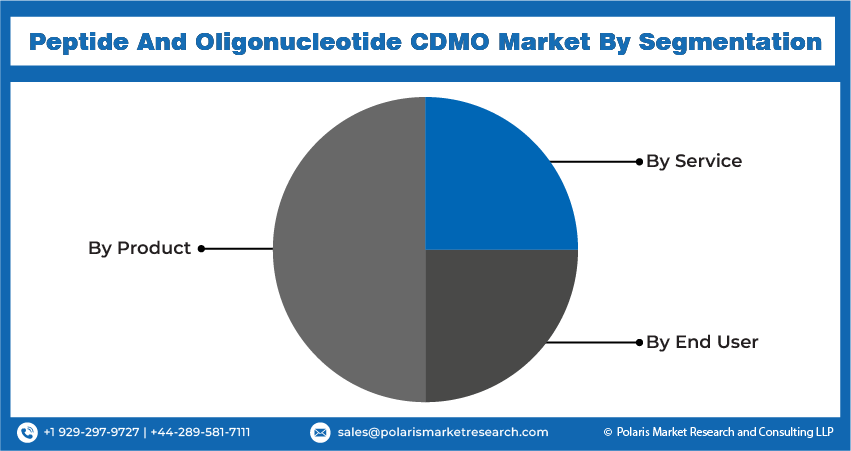
The market is primarily segmented based on product, service, end user, and region.
| By Product | By Service | By End User | By Region |
|
|
|
|
Source: Polaris Market Research Analysis
By Product Analysis
-
Peptides segment accounted for substantial market share in 2025
The peptides segment accounted for a substantial market share in 2024. Demand for peptides is rising in several industries for a variety of reasons. Peptides are essential for targeted therapy in biopharmaceuticals, including conditions such as cancer and metabolic diseases. Their increasing importance in sophisticated diagnostics is improving the precision of biomarker identification. Peptides are essential to skincare and are used in anti-aging and collagen-synthesizing formulas. The nutraceutical industry uses peptides for their antibacterial and antioxidant properties. Peptides are crucial research instruments for biological investigations. Advances in peptide synthesis technology enable affordable, mass manufacture, expanding the uses of these molecules. The demand for peptides is further driven by ongoing medicinal discoveries and increased consumer awareness.
By Service Analysis
-
Contract manufacturing segment accounted for consequential market share in 2025
The contract manufacturing segment accounted for a consequential market share in 2024. Contract manufacturing for peptide and oligonucleotide involves outsourcing to specialized CDMOs, ensuring precision in biopharmaceutical development. CDMOs offer tailored solutions, aligning production with individual project intricacies and therapeutic goals. This cost-efficient approach allows access to cutting-edge facilities without extensive in-house investments. The flexibility of scalable production meets varying project volumes, while strict adherence to regulatory standards ensures compliance. Accelerated timelines and risk mitigation are inherent benefits, as CDMOs streamline processes with specialized expertise. Global market access is expanded, and innovation integration guarantees adherence to industry advancements.
By End User Analysis
-
Biopharmaceutical companies segment held significant market revenue share in 2025
The biopharmaceutical companies segment held a significant market revenue share in 2024. Peptide and Oligonucleotide, contract development and manufacturing organizations offer highly specialized services to biopharmaceutical firms. These include personalized solutions made to meet the specific therapeutic objectives of each client and offer complete support from early-stage research to large-scale commercial production. CDMOs use cutting-edge technologies, guarantee stringent regulatory compliance, provide scalability and flexibility, and offer affordable options for efficient development. Working together with CDMOs speeds up timeframes, increases global market access, and mitigates risk. This collaboration highlights how important CDMOs are to the timely, accurate, and regulatory-driven advancement of biopharmaceutical ventures.
Real-World Use Cases
- GLP-1 peptide therapies for obesity and diabetes: Bachem is a developer and manufacture of peptide and oligonucleotide. It supplies peptide active pharmaceutical ingredients (APIs) to Novo Nordisk.
- GLP-1 peptide therapies: CordenPharma announced investment of nearly USD 1 billion in peptide manufacturing expansion. It would meet increasing demand for GLP-1 therapeutics. The expansion strategy supports projects for large pharma players, including Eli Lilly. In January 2023, Corden Pharma signed a multi-year partnership with an undisclosed company for peptide manufacturing.
Manufacturing Technologies & Capacity Investments
Peptide and oligonucleotide CDMOs can't just add more staff to keep up with demand. The molecules are complex enough that most of the real capacity gain has to come from better processes. That's pushed a lot of investment in automation and continuous manufacturing over the past few years, rather than simply building bigger versions of the same batch systems.
| Technology/Investment | What It Actually Does |
| Solid-phase peptide synthesis (SPPS) | Builds peptide chains one residue at a time on a solid support. It is still the backbone method for most commercial peptide production |
| Automated oligonucleotide synthesizers | Cuts down manual handling errors and keeps runs consistent when producing ASO or RNAi drug substance at scale |
| Continuous manufacturing | Lets facilities run production more or less non-stop instead of batch-by-batch, which shortens overall turnaround |
| High-throughput purification | Speeds up the downstream cleanup step, which is often the actual bottleneck, not synthesis itself |
| AI-assisted process optimization | Helps predict yield and catch process issues earlier, before they show up in a failed batch |
| GMP facility expansions | New commercial-scale plants built specifically for peptide or oligo output, not retrofitted from older biologics lines |
Source: Polaris Market Research Analysis
Lonza, CordenPharma, and EUROAPI have all announced facility expansions aimed squarely at peptide and oligonucleotide capacity in the past two years — a sign of how much capital is chasing this demand curve through 2034.
Source: Polaris Market Research Analysis
Regional Insights
-
North America region dominated the global market in 2025
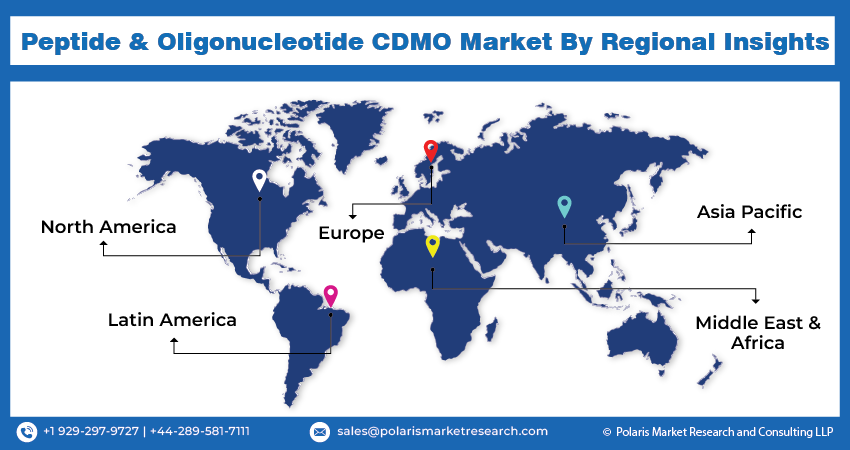
In 2023, the North American region dominated the global market. North America's Peptide and Oligonucleotide CDMO market growth landscape is flourishing due to a burgeoning biopharmaceutical sector and technological strides in synthesis. Continuous R&D activities, particularly in genomics and personalized medicine, propel demand for specialized CDMO services. The market is marked by strategic collaborations among providers to enhance competitiveness. Fierce competition drives innovations, optimizing processes and service offerings. Adherence to stringent regulatory standards is imperative, ensuring quality and safety. Greater focus on personalized medicine fosters the need for tailored manufacturing processes. Substantial investments in advanced infrastructure underscore the region's commitment to meeting evolving market demands.
Asia-Pacific's market size is expected to experience rapid growth owing to robust investments in the biopharmaceutical and life sciences industries. Emerging markets such as China and India play pivotal roles in the global landscape. Supportive government initiatives and favorable regulations foster industry growth. With increasing outsourcing from global biopharmaceutical companies, Asia's CDMO market focuses on innovation and meeting the growing demand for peptides and oligonucleotides in therapeutic applications.
Regional Market Trends
| Region | Market Position | Emerging Trends |
| North America | Dominating with largest revenue share |
|
| Europe | Second-largest Market |
|
| Asia Pacific | Market with highest CAGR |
|
| Latin America | Emerging Market |
|
| Middle East & Africa | Emerging Market |
|
Source: Polaris Market Research Analysis
Source: Polaris Market Research Analysis
Key Market Players & Competitive Insights
The peptide and oligonucleotide CDMO market demonstrates a segmented landscape, and the competition is anticipated to escalate due to the involvement of multiple players. Prominent service providers in the market continually upgrade their technologies to sustain a competitive edge, giving priority to efficiency, integrity, and safety. These entities underscore the significance of partnerships, improvements in products, and collaborative endeavors as strategic moves to surpass their peers, with the objective of substantial peptide and oligonucleotide CDMO market share.
Some of the major players operating in the global peptide and oligonucleotide CDMO market include:
- Aurigene Pharmaceutical Services Ltd.
- Bachem Group
- CordenPharma
- Creative Peptides
- Curia Global, Inc.
- EUROAPI
- Genscript Biotech Corporation
- Lonza Group
- Merck KGaA
- PolyPeptide Group
- Senn Chemicals AG
- STA Pharmaceutical Co. Ltd.
- Sylentis, S.A.
- Thermo Fisher Scientific Inc.
- Wuxi AppTec
Recent Developments
- In July 2026, Samsung Biologics announced an all-cash offer to acquire PolyPeptide Group for approximately CHF 1.46 billion, a move aimed at strengthening its peptide API and CDMO capabilities across the U.S., Europe, and India. (Samsung Biologics newsroom)
- In March 2025, Viking Therapeutics signs major manufacturing agreement with CordenPharma for oral obesity drug VK2735
- In August 2023, EUROAPI revealed its acquisition of BianoGMP, a strategic move aimed at enhancing its capabilities in the Contract Development and Manufacturing Organization (CDMO) within the rapidly growing oligonucleotide market. The forthcoming expansion of EUROAPI's Frankfurt facility's oligonucleotide capacity in 2025 will synergize with Biano's proficiency in early-phase operations, facilitating the undertaking of more extensive projects.
Future Outlook of the Peptide and Oligonucleotide CDMO Market
The global market is expected to experience robust growth in the coming years. The rising demand for peptide therapeutics, RNA-based medicines, and precision medicine would boost market growth. Pharmaceutical companies will outsource complex manufacturing activities to specialized CDMOs. It will help them accelerate development timelines and reduce costs. Further, there are increasing investments in GMP facilities, automation, and advanced synthesis technologies. They will strengthen long-term market growth.
Report Coverage
The peptide and oligonucleotide CDMO market segment analysis emphasizes on key regions across the globe to provide better understanding of the product to the users. Also, the report provides market insights into recent developments, trends and analyzes the technologies that are gaining traction around the globe. Furthermore, the report covers in-depth qualitative analysis pertaining to various paradigm shifts associated with the transformation of these solutions.
The report provides detailed analysis of the market while focusing on various key aspects such as competitive analysis, products, services, end users, and their futuristic growth opportunities.
Peptide and Oligonucleotide CDMO Market Report Scope
| Report Attributes | Details |
| Market size value in 2025 | USD 2.29 billion |
| Market size value in 2026 | USD 2.53 billion |
| Revenue forecast in 2034 | USD 5.71 billion |
| CAGR | 10.70% from 2025 – 2034 |
| Base year | 2025 |
| Historical data | 2021 – 2024 |
| Forecast period | 2026 – 2034 |
| Quantitative units | Revenue in USD billion and CAGR from 2026 to 2034 |
| Segments covered |
|
| Regional scope |
|
| Competitive Landscape |
|
| Report Format |
|
| Customization | Report customization as per your requirements with respect to countries, region and segmentation. |
Source: Polaris Market Research Analysis
Explore the 2025 market share, size, and revenue growth rate statistics in the field of Peptide and Oligonucleotide CDMO Market, meticulously compiled by Polaris Market Research Industry Reports. This comprehensive analysis encompasses a market forecast outlook extending to 2034, along with an insightful historical overview. Experience the depth of this industry analysis by obtaining a complimentary PDF download of the sample report.
Browse Our Top Selling Reports:
Rye Market Size, Share 2024 Report
Packaged Salad Market Size, Share 2024 Report
Coworking Spaces Market Size, Share 2024 Report
Peptide and Oligonucleotide CDMO Market FAQ's
key companies in Peptide and Oligonucleotide CDMO Market are Bachem Group, CordenPharma, Creative Peptides, EUROAPI, Merck KGaA
Peptide and Oligonucleotide CDMO Market exhibiting the CAGR of 10.70% during the forecast period.
The Peptide and Oligonucleotide CDMO Market report covering key segments are product, service, end user, and region.
key driving factors in Peptide and Oligonucleotide CDMO Market are Growth in personalized medicine is projected to spur the product demand
The global Peptide and Oligonucleotide CDMO market size is expected to reach USD 5.71 Billion by 2034
In July 2026, Samsung Biologics announced an all-cash offer to acquire PolyPeptide Group for approximately CHF 1.46 billion, strengthening its peptide API and CDMO capabilities across the U.S., Europe, and India
Oligonucleotide therapeutics are nucleic acid-based drugs. They are designed to regulate gene expression. These drugs include antisense oligonucleotides, siRNA, and mRNA therapies. Oligonucleotide therapeutics are preferred to treat genetic, chronic, and rare diseases.
Peptide manufacturing CDMOs offer contract development and contract manufacturing services. These services consist of process development, peptide synthesis, analytical testing, GMP manufacturing, formulation, and fill-finish. CDMOs also help with regulatory support and commercial-scale production for pharmaceutical and biotechnology companies.
North America dominated the global market with 10.70% share. The leading position is driven by its robust biopharmaceutical industry and advanced manufacturing infrastructure.
Download Sample Report of Peptide and Oligonucleotide CDMO Market
Please fill out the form to request a customized copy of the research report.


