
Pharmacogenomics Market Size, Share, Trends & Forecast, 2026-2034
REPORT DETAILS
Pharmacogenomics Market Summary
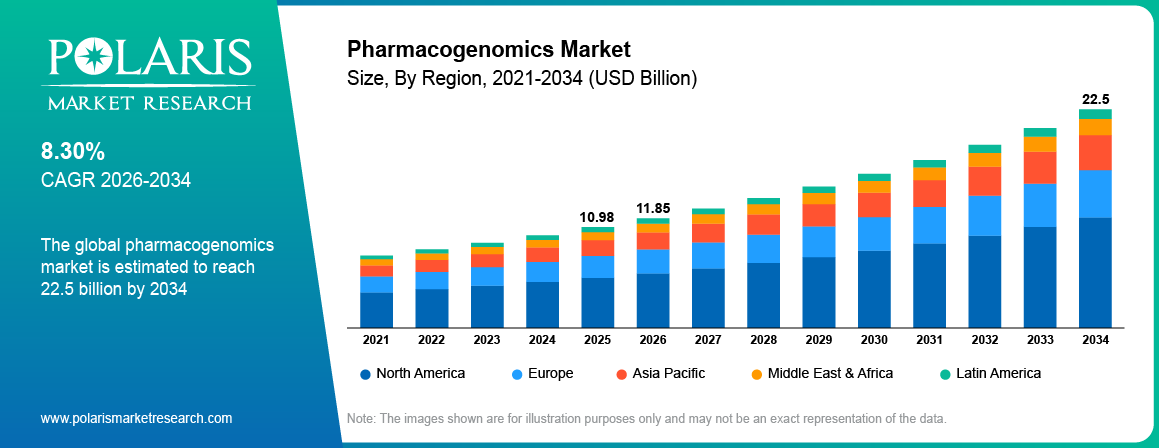
Global pharmacogenomics market size was valued at USD 4.75 billion in 2025. The market is anticipated to grow from USD 5.13 billion in 2026 to USD 9.63 billion by 2034, exhibiting the CAGR of 8.16% during the forecast period.
Market Statistics
Pharmacogenomics Market Key Takeaways
- North America dominated the global market with 39.47% share in 2025. It is attributed to the presence of major pharmaceutical companies and research organizations.
- The U.S. led the North American market with 78.3% share in 2025. This is due to the rising demand for personalized medicine approaches, including pharmacogenomics.
- The Asia Pacific pharmacogenomics market is expected to register the highest CAGR of 12.8% during the forecast period. Growing healthcare industry and rising investments in advanced healthcare technologies fuel the market growth.
- The sequencing segment held the largest market share of 38.6% in 2025. Growing use of sequencing technologies in the comprehensive analysis of an individual's genetic makeup supports the dominance.
- The personalized medicine segment is expected to record the highest CAGR of 8.7% during the forecast period. Increasing preference for personalized medicine in chronic disease management fuels the segment growth.
Note: Figures and projections outlined in this report are the result of Polaris Market Research’s proprietary analytical processes, grounded in the latest available datasets and market observations.
What Is Pharmacogenomics Definition, Pharmacogenetics Difference & Clinical Role
Pharmacogenomics is the branch that studies how a person’s genes affect his reaction to medicines. It is a combination of genomics and pharmacology. Pharmacogenomics assists health professionals in identifying which drug is best for a patient. It minimizes adverse drug reactions. The treatment enhances the results due to personalized medicine.
Pharmacogenomics Market Trends: Pre-emptive Testing, Precision Medicine, AI & Clinical Decision Support
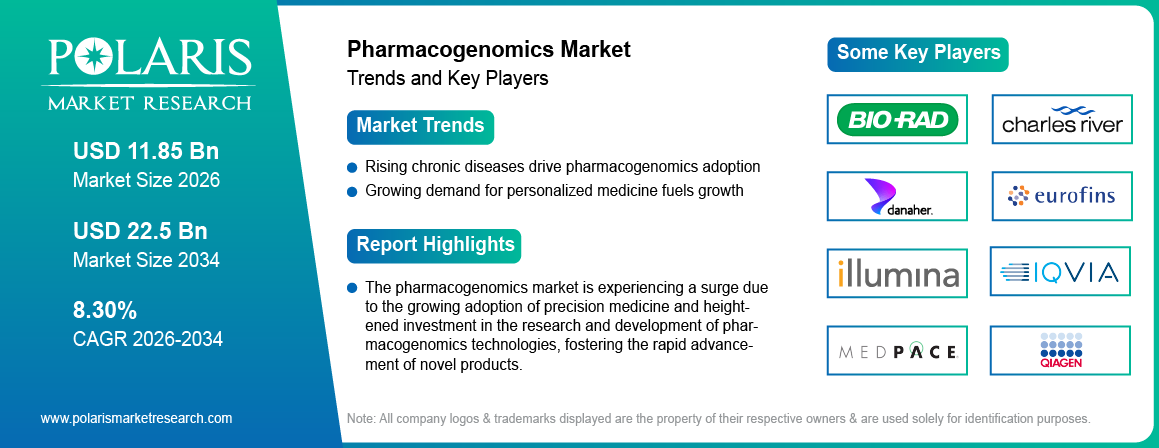
The pharmacogenomics market is experiencing a surge due to the growing adoption of precision medicine and heightened investment in the research and development of pharmacogenomics technologies, fostering the rapid advancement of novel products. Additionally, the market is being propelled by the increasing prevalence of adverse drug reactions worldwide. The emphasis on precision medicine is expected to bolster the pharmacogenomics market further, given its objective of integrating genetic and environmental data to customize treatments for various diseases.
However, with continuous advancements in digital technologies and biology, significant growth is forecasted for the pharmacogenomics market. Digital innovations can assist pharmaceutical companies in expediting their time-to-market and enhancing patient experiences, thus contributing to the market's lucrative expansion.
Source: Polaris Market Research Analysis
To Understand More About this Research: Download Sample Report
Moreover, the uptick in research and development spending is driving the adoption of pharmacogenomics, with initiatives like the Israel Precision Medicine Partnership (IPMP) allocating substantial funds to research projects on personalized medicine across various diseases. This surge in R&D investment is anticipated to propel pharmacogenomics market growth in the coming years.
- For instance, In February 2024, according to the National Library of Medicine, Haplotype phasing of CYP2D6 involves determining the specific genetic variants present in an individual's CYP2D6 gene, which plays a crucial role in metabolizing a wide range of drugs. The allelic ratio method using Agena MassARRAY data is a technique used to analyze genetic data obtained from the Agena MassARRAY platform to identify and quantify different alleles present in the CYP2D6 gene.
Pharmacogenomics plays a crucial role in cancer treatment, improving patient survival rates and reducing unnecessary treatment costs for non-responsive patients. Despite these promising prospects, challenges related to reimbursement and issues associated with detecting gene variations affecting drug responses may pose obstacles to market growth during the forecast period.
How Does Pharmacogenomic Testing Work Sample Collection, Genotyping, Interpretation & Prescribing
- Collection of Patient DNA Sample: The sample of DNA is collected from patient's blood or saliva to conduct the test.
- Test of Genetic Markers: Tests are performed in the laboratory to assess the appropriate genetic markers.
- Identification of Drug-Responsive Genes: Appropriate genes related to drug-response are identified.
- Test of Medication Compatibility: Genetic data is assessed for the compatibility with medications.
- Treatment Recommendations: Treatment recommendations are made on the basis of patient’s genetic assessment.
- Optimization of Therapy: Prescriptions of medicines and their dosage are made according to the genetic makeup of the patient.
- Assessment of Patient Treatment Results: Patient's treatment results are evaluated and therapy is adjusted accordingly, if needed.
Pharmacogenomics vs Pharmacogenetics vs Companion Diagnostics
| Feature | Pharmacogenomics | Traditional Drug Prescribing |
| Treatment Selection | Gene-based | Population-based |
| Drug Effectiveness | Higher precision | Variable |
| Adverse Reactions | Reduced risk | Higher risk |
| Personalization | High | Limited |
| Clinical Outcomes | Optimized | Standardized |
Source: Polaris Market Research Analysis
Role of Pharmacogenomics in Advancing Precision Medicine
Pharmacogenomics is essential in the use of precision medicine. Clinicians will be enabled to shift from prescribing general drugs to providing personalized medicine to patients. With pharmacogenomics, which entails the study of effects of genetic differences on drug absorption, efficacy and toxicity, clinicians will be in position to identify the correct drug, dosage and patient.
- Personalized treatment plans based on genetic profiles
- Patient-specific drug selection and dosing
- Improved therapeutic outcomes across disease areas
- Reduced treatment failures and switch-overs
- Enhanced overall healthcare system efficiency
Pharmacogenomics Market Dynamics
Driver: Rising Chronic Disease Burden and Need for Safer Personalized Prescribing
The rising prevalence of various disorders, including cardiovascular diseases, cancer, neurological disorders, and psychiatric conditions, among others, is a major driver for the Pharmacogenomics Market. As these disorders become more prevalent globally, there is a growing need for more effective and personalized treatment approaches to address the diverse genetic factors influencing individual responses to medications.
Many disorders have a genetic component that influences disease susceptibility, progression, and response to treatment. Pharmacogenomics aims to understand how genetic variations impact drug metabolism, efficacy, and safety, thereby guiding personalized treatment decisions. As our understanding of the genetic basis of diseases expands, the importance of pharmacogenomics in tailoring treatments to individual patients becomes increasingly evident.
Pharmacogenomics enables healthcare providers to optimize drug therapy by identifying genetic factors that may influence drug response. This approach allows for the selection of medications and dosages that are most likely to be effective and safe for individual patients, due to improved treatment outcomes and reduced adverse drug reactions.
Pharmacogenomics Market Restraints: Cost, Reimbursement, Evidence & Clinical Integration
The high costs associated with research and development (R&D) efforts impact the pharmacogenomics market. These costs encompass the investment required for developing and refining pharmacogenomics technologies and solutions, which can be substantial and prohibitive for some market players. Additionally, a lack of awareness and inadequate infrastructural facilities in underdeveloped and backward economies present challenges for market penetration and adoption. Moreover, concerns regarding the side effects of drugs on health, coupled with the time involved in treatment and the adverse conditions arising from the COVID-19 outbreak, further impede market growth. The slow rate of approval for drugs and inhibitors, along with increasing cases of patent expiry, pose additional challenges to market expansion. These factors collectively contribute to restraining the growth rate of the Pharmacogenomics Market, highlighting the need for strategic interventions and solutions to mitigate these barriers and foster market advancement.
Reducing Adverse Drug Reactions Through Pharmacogenomic Testing
Preventing adverse drug reactions (ADRs) is one of the most significant clinical and economic benefits of pharmacogenomic testing. The discovery of genetic mutations that influence drug metabolism allows clinicians to prescribe medications, which will not lead to adverse effects, thus reducing the risk for patients as well as health care costs.
- Drug metabolism analysis prior to prescribing
- Genetic risk identification for high-risk drug classes
- Personalized dosing to minimize toxicity
- Improved patient safety across care settings
- Reduced healthcare costs from ADR-related hospitalizations
Regulatory & Clinical Guidelines Shaping the Market
Regulatory bodies and clinical guideline organizations play a growing role in shaping pharmacogenomics adoption. Agencies such as the FDA increasingly require or recommend pharmacogenomic labeling on drugs where genetic variation meaningfully affects response, while companion diagnostic approvals continue to formalize the link between genetic testing and treatment decisions. Clinical practice guidelines from bodies like the Clinical Pharmacogenetics Implementation Consortium further support standardized, genomics-informed prescribing across healthcare systems.
- FDA pharmacogenomic drug labeling requirements
- Companion diagnostic approval pathways
- National precision medicine policy initiatives
- Clinical practice guidelines for genomics-informed prescribing
Genomic testing quality and lab standards
Source: Polaris Market Research Analysis
Report Segmentation
The market is primarily segmented based on disease area, product & service, technology, application, end use, and region.
| By Disease Area | By Product & Service | By Technology | By Application | By End Use | By Region |
|
|
|
|
|
|
Source: Polaris Market Research Analysis
Pharmacogenomics Market by Technology
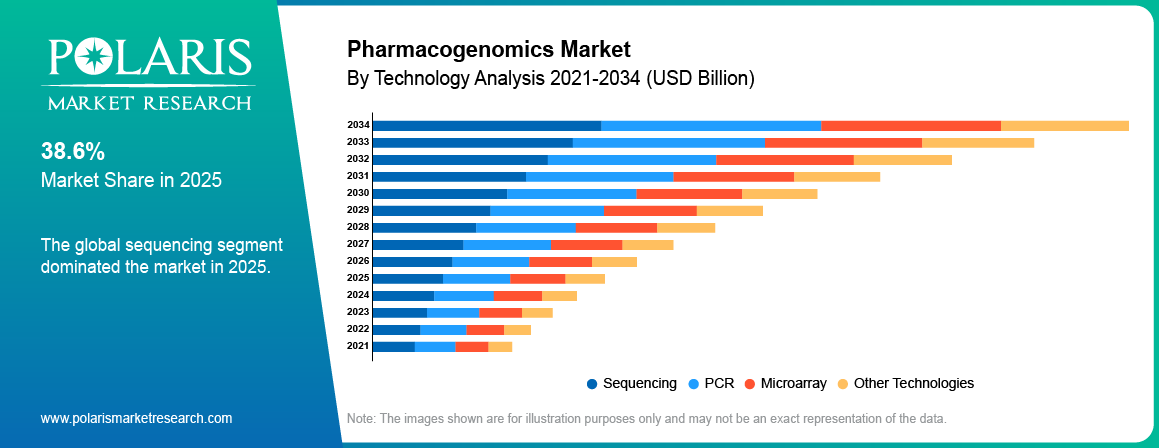
Based on technology analysis, the market is segmented on sequencing, PCR, microarray, and other technologies. The sequencing segment held the largest market share of 38.6% in 2025.Sequencing technologies, such as next-generation sequencing (NGS), play a crucial role in pharmacogenomics by enabling the comprehensive analysis of an individual's genetic makeup. This analysis helps identify genetic variations that influence drug responses, guiding personalized medication regimens.
Sequencing techniques offer high accuracy and precision in identifying genetic variations, including single nucleotide polymorphisms (SNPs), insertions, deletions, and structural variants. This level of detail is essential for understanding how genetic variations impact drug metabolism and response. Sequencing allows for the simultaneous analysis of multiple genes or genetic regions relevant to pharmacogenomics. This comprehensive approach provides a holistic view of an individual's pharmacogenetic profile, allowing healthcare providers to make informed decisions about drug selection, dosage, and treatment strategies.
Pharmacogenomics Market by Application
Based on application analysis, the market has been segmented on the basis of personalized medicine, clinical research, drug discovery & preclinical development. The personalized medicine segment is expected to record the highest CAGR of 13.7% during the forecast period. The personalized medicine segment is anticipated to exhibit the fastest Compound Annual Growth Rate (CAGR) during the forecast period within the Pharmacogenomics market for several compelling reasons. Personalized medicine, also known as precision medicine, represents a paradigm shift in healthcare, wherein treatments are tailored to the individual characteristics of each patient, including their genetic makeup, lifestyle, and environmental factors.
As healthcare systems worldwide increasingly prioritize personalized treatment strategies to improve patient outcomes and minimize adverse drug reactions, the demand for pharmacogenomics-based solutions is expected to surge. Moreover, advancements in sequencing technologies, bioinformatics, and data analytics have enhanced our understanding of the genetic basis of drug response variability, enabling more precise and targeted therapeutic interventions.
Oncology: The Leading Application Area in Pharmacogenomics
Pharmacogenomics remains to be the largest and most advanced field in terms of applications in oncomics. The reason behind this is the common practice of selecting treatment based on biomarkers in oncological cases. With genomic profiling of tumors, oncologists select appropriate targeted medicines for the patient. These companion diagnostics, usually developed simultaneously with the drug, ensure the patient's eligibility for therapy. This close connection between diagnostics and therapies has set a standard for using pharmacogenomics in other disease areas.
- Targeted cancer therapies matched to genetic markers
- Biomarker-guided treatment selection
- Companion diagnostics supporting drug eligibility
- Tumor genomic profiling for treatment planning
- Personalized cancer medicine protocols
Real-World Examples of Pharmacogenomics
- Cancer Drug Selection: Genetic profiling can help determine those patients who may react well to target therapy and certain chemotherapy regimens. This results in better drug efficacy.
- Antidepressant Therapy Optimization: With the help of pharmacogenomics, genes responsible for metabolizing drugs can be determined. This makes it possible to select antidepressants which will work well and have good patient tolerance.
- Cardiovascular Medication Dosing: Genes which influence patient's response to anticoagulant and antiplatelet therapy, can be used to develop optimal dosage of medication.
- Pain Management Treatment Planning: Genetic analysis shows differences in how patients metabolize pain medication. This enables the selection of personalized analgesics and adjustments in dosage.
- Rare Disease Therapy Selection: Genomic insights help identify targeted therapies for patients with rare genetic disorders. It improves treatment precision.
Source: Polaris Market Research Analysis
Pharmacogenomics Market by Region
North America
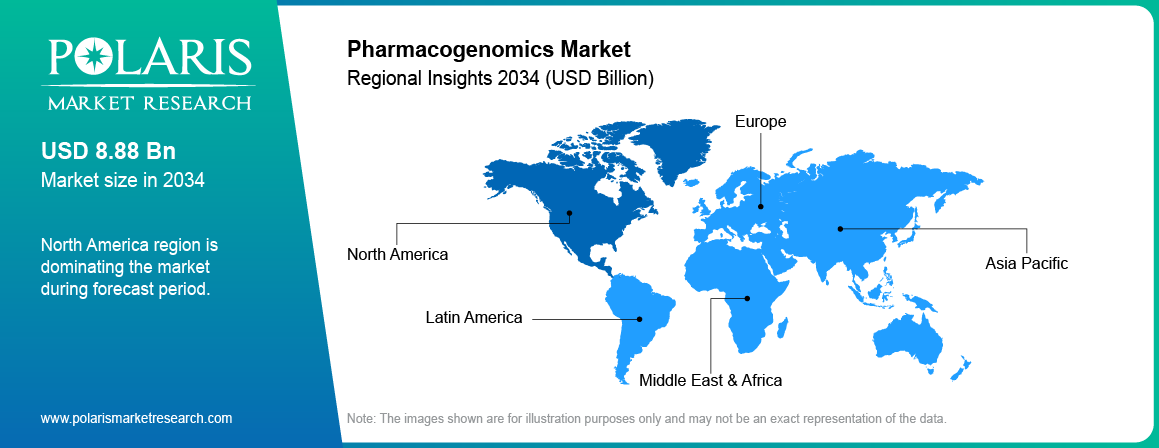
North America dominated the global market with 39.47% share in 2025.North America boasts advanced healthcare infrastructure, including well-established research institutions, pharmaceutical companies, and healthcare facilities, which have contributed to the early adoption and integration of pharmacogenomics technologies into clinical practice. Additionally, the region has a strong regulatory framework and favorable reimbursement policies that support the implementation of pharmacogenomics-based interventions.
North America has a robust ecosystem of genomic research and development, with significant investments in the biotechnology and pharmaceutical industries. These investments have propelled innovations in sequencing technologies, bioinformatics, and data analytics, enhancing the efficiency and accuracy of pharmacogenomics testing and analysis. Furthermore, the high prevalence of chronic diseases and genetic disorders in North America has increased the demand for personalized medicine approaches, including pharmacogenomics.
Asia Pacific
The Asia Pacific pharmacogenomics market is expected to register the highest CAGR of 12.8% during the forecast period.The Asia Pacific region is home to a significant portion of the global population, including diverse ethnicities and genetic backgrounds. This genetic diversity presents a unique opportunity for pharmacogenomics research, as variations in drug response genes may vary among different populations. Rapid economic development and urbanization in countries across the Asia Pacific region have led to increased healthcare expenditure and investment in advanced healthcare technologies, including pharmacogenomics. As healthcare systems in the region strive to enhance patient care and outcomes, there is growing interest in personalized medicine approaches, including pharmacogenomics, to tailor treatments to individual patients' genetic profiles.
Moreover, the Asia Pacific region is witnessing a rise in chronic diseases, such as cardiovascular diseases, cancer, and diabetes, which require long-term medication management. Pharmacogenomics holds promise in optimizing drug therapy, reducing adverse drug reactions, and improving treatment efficacy for these conditions, driving its adoption in clinical practice. Additionally, advancements in sequencing technologies, bioinformatics, and data analytics have made pharmacogenomics testing more accessible and cost-effective in the Asia Pacific region. This has facilitated the integration of pharmacogenomics into routine clinical care and has spurred the establishment of pharmacogenomics research initiatives and collaborations across the region.
Source: Polaris Market Research Analysis
Pharmacogenomics Competitive Landscape & Leading Companies
The Pharmacogenomics Market showcases fragmentation, characterized by a plethora of players competing within the sector. Key service providers in this field continually upgrade their technologies to sustain a competitive advantage, prioritizing reliability, efficiency, and safety. In their pursuit of a significant market share, these entities underscore the importance of strategic collaborations, continuous product improvements, and partnership initiatives to outperform their industry counterparts.
Leading pharmacogenomics participants include sequencing/assay platforms, clinical PGx laboratories, CROs and genomic software providers.
- Bio-Rad Laboratories, Inc.
- Charles River Laboratories
- Danaher Corporation
- Eurofins Scientific
- Illumina, Inc.
- IQVIA Inc
- Laboratory Corporation of America Holdings
- Medpace
- Mesa Labs, Inc.
- Novogene Co., Ltd.
- PacBio
- Personalis Inc.
- QIAGEN
- Roche Diagnostics
- SOPHiA GENETICS
- Thermo Fisher Scientific Inc.
Pharmacogenomics Market Recent Developments: PGx Testing, Regulation, Reimbursement, M&A & Clinical Implementation
- July 2026: Tempus AI, Inc. announced the national launch of its OneOme pharmacogenomics (PGx) testing solution. It will provide advanced genetic insights to enhance medication safety, dosing, and toxicity risk assessment.(Source: investors.tempus.com)
- In August 2025, the FDA approved a once-weekly subcutaneous maintenance dosing regimen for Leqembi (lecanemab-irmb) to treat early Alzheimer’s disease. The therapy follows a personalized treatment approach that takes genetic factors into account, including ApoE ε4 carrier status.
- In June 2025, Agilent Technologies unveiled its Hybrid Multisampler and LC Single Quadrupole Mass Spectrometers at the HPLC 2025 conference. These systems are designed to improve analytical performance for therapeutic peptides and proteins, supporting drug discovery and development efforts.
Future Outlook of Pharmacogenomics Market
The pharmacogenomics industry is expected to experience substantial growth during the forecast period. Healthcare systems increasingly adopt precision medicine and personalized treatment approaches. The industry has experienced numerous innovations in next generation sequencing (NGS), companion diagnostics, AI-powered genomics analysis, and bioinformatics tools. These technologies will keep increasing their clinical applicability. The demand for safe and efficient treatments is growing. This is why pharmacogenomics will become an integral part of future drug discovery and management.
Pharmacogenomics Market Report Coverage, Scope & Methodology
The Pharmacogenomics market report emphasizes on key regions across the globe to provide better understanding of the product to the uses. Also, the report provides market insights into recent developments, trends and analyzes the technologies that are gaining traction around the globe. Furthermore, the report covers in-depth qualitative analysis pertaining to various paradigm shifts associated with the transformation of these solutions.
The report provides detailed analysis of the market while focusing on various key aspects such as competitive analysis, disease area, product & service, technology, application, end use, and their futuristic growth opportunities.
Pharmacogenomics Market Report Scope, Segmentation, Inclusions & Exclusions
| Report Attributes | Details |
| Market size value in 2025 | USD 4.75 Billion |
| Market size value in 2026 | USD 5.13 Billion |
| Revenue forecast in 2032 | USD 9.63 billion |
| CAGR | 8.16% from 2026 – 2034 |
| Base year | 2025 |
| Historical data | 2021 – 2024 |
| Forecast period | 2026 – 2034 |
| Quantitative units | Revenue in USD billion and CAGR from 2026 to 2034 |
| Segments covered | By Disease Area, By Product & Service, By Technology, By Application, By End Use And By Region |
| Regional scope | North America, Europe, Asia Pacific, Latin America; Middle East & Africa |
| Customization | Report customization as per your requirements with respect to countries, region and segmentation. |
Source: Polaris Market Research Analysis
Pharmacogenomics Market FAQ's
Pharmacogenomics Market Size Worth $ 9.63 Billion By 2034
Key players in the market are Bio-Rad Laboratories, Inc., Charles River Laboratories, Danaher Corporation, Eurofins Scientific, Illumina, Inc
North America contributed notably to the global Pharmacogenomics Market, dominating the market with a 39.47% share in 2025.
Pharmacogenomics Market exhibiting the CAGR of 8.16% during the forecast period.
The Pharmacogenomics Market report covering key segments are disease area, product & service, technology, application, end use, and region.
Pharmacogenomics involves the identification of genetic factors within the patient and the tumor which can affect the response to therapy. The information provided through pharmacogenomics will help doctors choose appropriate medications and decrease toxicity.
Yes. Pharmacogenomics helps in decreasing the occurrence of adverse effects due to drugs. Pharmacogenomics helps in identifying those genetic differences that affect the metabolism or increase the susceptibility to toxicity. Thus, doctors can choose safe drugs and adjust dosages.
Download Sample Report of Pharmacogenomics Market
Please fill out the form to request a customized copy of the research report.


