
Picture Archiving and Communication Systems (PACS) Market Research Report, 2026-2034
REPORT DETAILS
Picture Archiving and Communication Systems (PACS) Market Summary
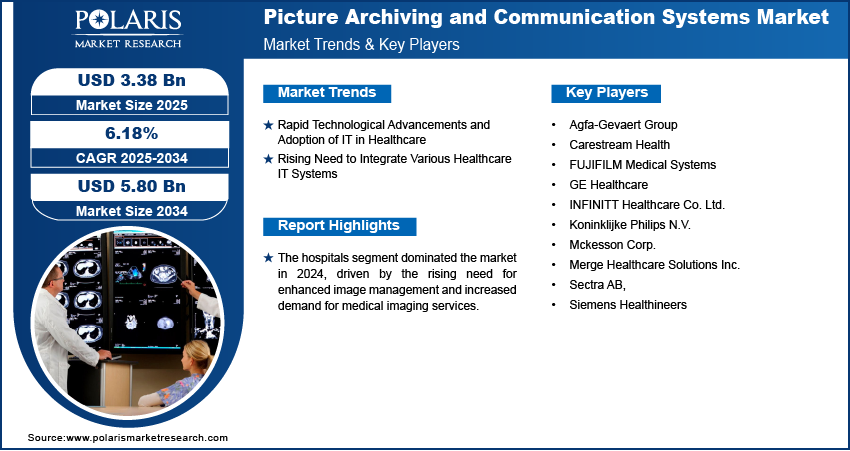
The global picture archiving and communication systems (PACS) market size was valued at USD 3.39 billion in 2025, growing at a CAGR of 6.18% from 2026 to 2034. The market demand for PACS is primarily driven by the rising aging population globally and the growing prevalence of chronic conditions.
Market Statistics
Key Takeaways
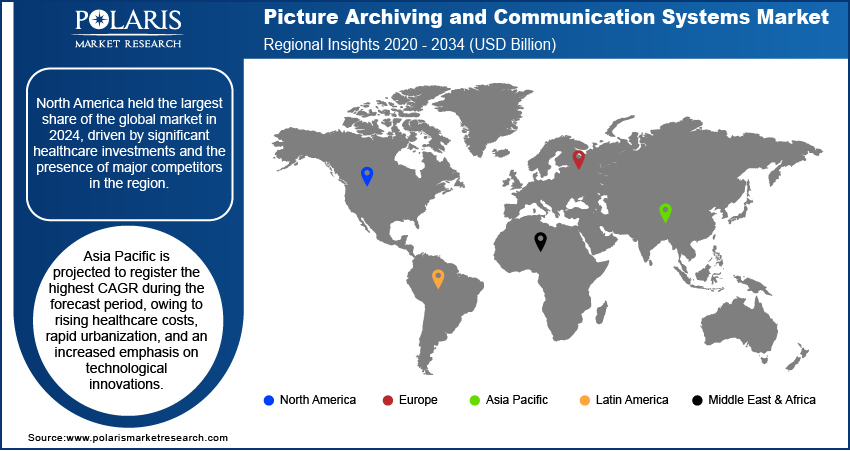
- North America dominated the market with a share of 41.2% in 2025, driven by significant healthcare investments and the presence of major competitors in the region.
- Asia Pacific is projected to register the highest CAGR of 6.8%, during the projection period, driven by rising healthcare costs and increased emphasis on innovation in the healthcare sector.
- The cardiology segment led with 23.6% share of the market in 2025, driven by the growing incidence of cardiac conditions and technological advancements in cardiac PACS systems.
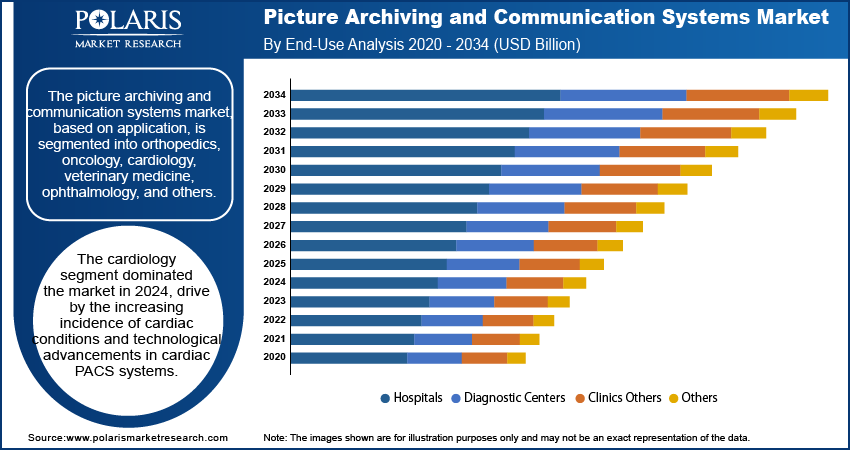
- The hospitals segment accounted for the largest revenue share of 46.9% in 2025, driven by the need for easy access to medical imaging across hospitals owing to their numerous departments and specialties.
Industry Dynamics
- Technological advancements in PACS, which have improved patient care and streamlined workflow, are driving market expansion.
- The rising need for the integration of various healthcare IT systems, which is seamlessly facilitated by PACs, is fueling market demand.
- Growing emphasis on efficient healthcare data management is anticipated to provide various market opportunities in the coming years.
- The high initial implementation costs may present challenges to market growth.
AI Impact on Picture Archiving and Communication Systems (PACS) Market
- The use of AI accelerates image analysis within PACS. It enables faster diagnosis by prioritizing critical cases and highlighting abnormalities.
- Machine learning algorithms enhance image compression and retrieval. This improves storage efficiency without compromising quality.
- The use of AI supports automated annotation and tagging of medical images, streamlining workflows and reducing radiologist workload.
- Integration with AI enables predictive analytics and decision support tools, turning PACS into a more proactive and intelligent diagnostic platform.
-Market.png)
Source: Polaris Market Research Analysis
A picture archiving and communication (PACS) system is a digital system that stores, retrieves, and shares medical images and reports. It is used in healthcare organizations to improve patient care and diagnosis. PACS acquires images from medical imaging devices such as computed tomography (CT scans), magnetic resonance imaging (MRI) scans, and ultrasound, stores the images in a centralized computer system, and transmits the images to physicians digitally. With PACS, physicians can access images on multiple workstations simultaneously.
PACS provides several advantages over conventional systems, such as time savings, enhanced system reliability, space efficiency, reduced staff and consumable costs, improved data management, better picture accessibility, and educational benefits. The aging population globally and the increasing prevalence of chronic illnesses are driving the picture archiving and communication market growth. The rising need for effective data storage and archive technologies and the development of cloud-based PACS systems are also contributing to the market expansion.
The rising number of government initiatives, including favorable reimbursement policies, to promote the adoption of advanced health information technology is driving the PACS market development. The growing need to integrate patient photographs with electronic medical records and health information exchange platforms is expected to provide various market opportunities in the coming years. Additionally, the introduction of innovative products and expansion of R&D activities is impacting the market growth favorably.
Market Dynamics
Rapid Technological Advancements and Adoption of IT in Healthcare
Technological advancements in Picture Archiving and Communication Systems (PACS) include integration with RIS, DICOM-based images, and integration with EHR. These advancements have improved patient care, streamlined workflow, and enhanced collaboration. The adoption of IT in healthcare, such as artificial intelligence (AI) and cloud computing, is helping the Picture Archiving and Communication System (PACS) market grow. The picture archiving and communication system (PACS) market is being driven by the increased use of diagnostic imaging to identify a variety of ailments, as well as the expanding use of healthcare IT infrastructure. The increasing use of cloud-based technologies in an integrated healthcare system to enhance digital processes lends more confidence to this.
Rising Need to Integrate Various Healthcare IT Systems
Data sharing and the integration of different healthcare IT systems are important in healthcare to provide comprehensive and patient-centered care. The seamless integration of PACS with electronic health records (EHRs) and radiology information systems (RISs) ensures a more efficient and productive workflow. PACS eliminates complex data groups that could affect timely decision-making, enhancing patient data and medical imaging accessibility. Additionally, the interoperability of PACS systems makes it easier for healthcare networks to share information. As more healthcare professionals recognize the need to have complete patient data, there is a growing demand for PACS that can readily integrate with several systems. This, is turn, is driving the picture archiving and communication systems market expansion.
Source: Polaris Market Research Analysis
Segment Insights
Picture Archiving and Communication Systems Market Evaluation by Application Insights
The picture archiving and communication system market, based on application, is segmented into orthopedics, oncology, cardiology, veterinary medicine, ophthalmology, and others. The cardiology segment led the market with a 23.6% revenue share in 2025. Cardiology PACS can integrate with various systems, including cath lab hemodynamics systems, cardiac imaging systems, patient electronic medical records (EMR), and electrocardiogram (ECG). This enables healthcare professionals to compile all images and cardiac patient data in one place. The increasing incidence of cardiac conditions and technological advancements in cardiac PACS systems contribute to the segment’s leading position in the market.
The oncology segment is anticipated to register the highest CAGR of 8.9% during the forecast period, driven by the growing prevalence of cancer cases. As the number of cancer patients rises, there is a greater need for dependable and effective systems to manage medical images related to oncology, including pathology slides, radiology scans, and other diagnostic imaging modalities. PACS offers a secure and centralized platform for storing, retrieving, and sharing these images across healthcare facilities, thereby driving the segment’s robust growth.
Picture Archiving and Communication Systems Market Assessment by End Users Insights
Based on end users, the picture archiving and communication systems market is segmented into diagnostic centers, hospitals, clinics, and others. The hospitals segment accounted for the largest revenue share valued at 46.9% in 2025. Hospitals need easy access to medical imaging because of their numerous departments and specialties. Hospitals are actively adopting and utilizing the technology to manage and access medical imaging data digitally, leading to improved workflow efficiency, faster diagnosis, and enhanced patient care, thereby driving market demand for PACS systems across the healthcare industry. Furthermore, the requirement for these systems to manage and store substantial amounts of high-resolution images has increased due to developments in imaging technology, such as 3D imaging and 4D imaging.
Source: Polaris Market Research Analysis
Regional Analysis
By region, the report offers the picture archiving and communication systems market insights into North America, Europe, Asia Pacific, Latin America, and the Middle East and Africa. North America led the global market with a 41.2% revenue share in 2025. This is primarily attributed to significant healthcare investments and the presence of major competitors in the region. In addition, rising consumer spending and technological advancements in medical imaging technology contribute to the regional market dominance.
Asia Pacific is projected to register the highest CAGR of 6.8%, during the forecast period due to its rising healthcare costs, rapid urbanization, and increasing emphasis on innovations in the healthcare sector. Other factors contributing to the regional market growth are the rising demand for digital solutions and improving healthcare infrastructure in emerging economies. The implementation of favorable government programs to enhance healthcare delivery and the increasing use of cloud-based solutions by healthcare providers further drive the market expansion in the region.
Source: Polaris Market Research Analysis
Key Players and Competitive Insights
The leading players are introducing innovative products in the PACS market to cater to the growing demand for consumers. Also, they are entering new markets in developing regions to expand their customer base, strengthen their market presence, and increase their market share. To expand and survive in a more competitive environment, market participants must offer innovative solutions.
In recent years, the market has witnessed several technological and innovation breakthroughs, with key players seeking to provide advanced solutions that help meet sustainability goals. The leading players in the market include Carestream Health, FUJIFILM Medical Systems, Agfa-Gevaert Group, Merge Healthcare Solutions Inc., INFINITT Healthcare Co. Ltd., Mckesson Corp., GE Healthcare, Koninklijke Philips N.V., Sectra AB, and Siemens Healthineers.
List of PACS Market Key Players
- Agfa-Gevaert Group
- Carestream Health
- FUJIFILM Medical Systems
- GE Healthcare
- INFINITT Healthcare Co. Ltd.
- Koninklijke Philips N.V.
- Mckesson Corp.
- Merge Healthcare Solutions Inc.
- Sectra AB
- Siemens Healthineers
Future of PACS Market
The picture archiving and communication system (PACS) market is expected to experience rapid expansion in the future. The growth will be driven by the growing adoption of AI-powered diagnostic tools that enhance image interpretation and support faster clinical decision-making. Cloud-based PACS solutions offer scalability, remote accessibility, and lower infrastructure costs. They facilitate improved data sharing across healthcare networks. Thus, Cloud-based PACS solutions will gain strong momentum. There will be rising integration with broader healthcare IT ecosystems, including Electronic Health Records (EHR), Radiology Information Systems (RIS), and Vendor Neutral Archives (VNA). It will strengthen operational efficiency and interoperability. Predictive analytics in radiology is also expected to transform the market. It enables proactive diagnosis, personalized treatment planning, and improved patient outcomes.
Picture Archiving and Communication Systems Industry Developments
- march 2026: Siemens Healthineers (Germany) announced a partnership with a top AI company to create advanced imaging algorithms to improve cancer diagnostics. This move shows Siemens’ focus on using new technology in its products, likely setting higher standards in healthcare. The partnership may give Siemens a competitive advantage by offering providers more accurate and faster diagnostic tools, improving patient care. (Source: siemenshealthineers.com)
- April 2026: GE Healthcare (US) introduced a cloud-based platform to make sharing imaging data across healthcare networks easier. This step reflects GE’s plan to boost interoperability and teamwork among providers. By giving quick access to imaging data, GE positions itself as a leader in digital health, helping improve efficiency and patient care. (Source: gehealthcare.com)
- November 2025: Philips Healthcare (Netherlands) launched new imaging tools in collaboration with Cortechs.ai that use AI analytics to help radiologists interpret difficult cases. This launch shows Philips’ focus on innovation and addresses the need for smarter tools as imaging volumes grow. By supporting radiologists, Philips can strengthen its market role and attract facilities aiming to improve diagnostic accuracy. (Source: philips.com)
Picture Archiving and Communication Systems Market Segmentation
By Product Outlook
- Mid End PACS
- Enterprise PACS
- Mini PACS
By Deployment Outlook
- Cloud-Based
- Web-Based
- On-Premise
By Application Outlook
- Orthopedics
- Oncology
- Cardiology
- Veterinary Medicine
- Ophthalmology
- Others
By End User Outlook
- Diagnostic Centers
- Hospitals
- Clinics
- Others
By Regional Outlook
- North America
- US
- Canada
- Europe
- Germany
- France
- UK
- Italy
- Spain
- Netherlands
- Russia
- Rest of Europe
- Asia Pacific
- China
- Japan
- India
- Malaysia
- South Korea
- Indonesia
- Australia
- Rest of Asia Pacific
- Middle East & Africa
- Saudi Arabia
- UAE
- Israel
- South Africa
- Rest of Middle East & Africa
- Latin America
- Mexico
- Brazil
- Argentina
- Rest of Latin America
Picture Archiving and Communication Systems Market Report Scope
| Report Attributes | Details |
| Market Size Value in 2025 | USD 3.39 billion |
| Market Size Value in 2026 | USD 3.59 billion |
| Revenue Forecast by 2034 | USD 5.81 billion |
| CAGR | 6.18% from 2026 to 2034 |
| Base Year | 2025 |
| Historical Data | 2021–2024 |
| Forecast Period | 2026–2034 |
| Quantitative Units | Revenue in USD billion and CAGR from 2026 to 2034 |
| Report Coverage | Revenue Forecast, Market Competitive Landscape, Growth Factors, and Trends |
| Segments Covered |
|
| Regional Scope |
|
| Competitive Landscape |
|
| Report Format |
|
| Customization | Report customization as per your requirements with respect to countries, regions, and segmentation. |
Source: Polaris Market Research Analysis
Picture Archiving and Communication Systems (PACS) Market FAQ's
The picture archiving and communication systems market was valued at USD 3.39 billion in 2025 and is projected to grow to USD 5.81 billion by 2034.
The market is projected to register a CAGR of 6.18% between 2026–2034.
North America held the largest market share in 2025.
Carestream Health, Agfa-Gevaert Group, FUJIFILM Medical Systems, Merge Healthcare Solutions Inc., Mckesson Corp., INFINITT Healthcare Co. Ltd., GE Healthcare, Koninklijke Philips N.V., Sectra AB, and Siemens Healthineers are a few of the key players in the market.
The cardiology segment dominated the market in 2025.
The hospitals segment dominated the market in 2025.
Picture archiving and communication system (PACS) is a medical imaging technology. The technology is used for storing, retrieving, managing, distributing, and presenting diagnostic images electronically. It eliminates the need for physical film. PACS enables healthcare professionals to access images such as X-rays, CT scans, MRIs, and ultrasounds digitally across multiple departments and locations.
PACS capture medical images from imaging modalities such as CT, MRI, ultrasound, and digital radiography systems. These images are stored in a secure digital archive. They are transmitted through a network to radiologists and physicians for review. PACS can be integrated with hospital information systems (HIS) and radiology information systems (RIS). It helps streamline workflow and improve patient care.
PACS focuses on the storage, retrieval, and sharing of medical images. Radiology Information System (RIS) manages patient scheduling, reporting, billing, and radiology workflow. PACS handles image data, whereas RIS handles administrative and operational data. Both systems are often integrated to improve radiology department efficiency.
Cloud-based PACS stores imaging data on remote servers managed by third-party providers. Cloud-based systems offer scalability, remote accessibility, and lower upfront infrastructure costs. On-premise PACS stores data within the healthcare facility’s own servers. They provide greater control and customization. On-premise services require higher capital investment and IT maintenance.
PACS improves diagnostic efficiency by providing quick access to medical images, reducing reporting time, and enabling remote consultations through teleradiology. It also lowers film storage costs, enhances image sharing, supports better clinical decision-making, and improves overall patient management through faster diagnosis and treatment planning.
Download Sample Report of Picture Archiving and Communication Systems (PACS) Market
Please fill out the form to request a customized copy of the research report.


