
Prime Editing Market Size, Share, Trends & Forecast, 2026–2034
REPORT DETAILS
Prime Editing Market Summary
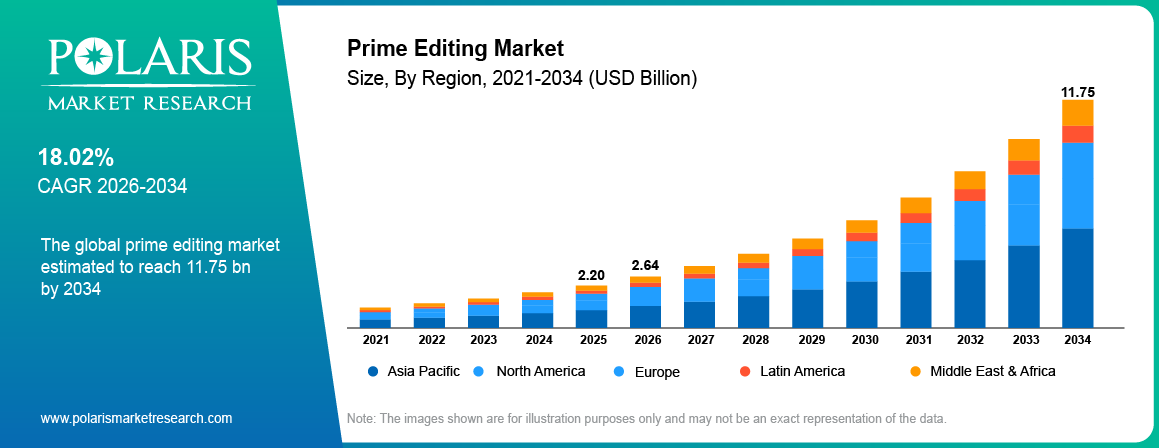
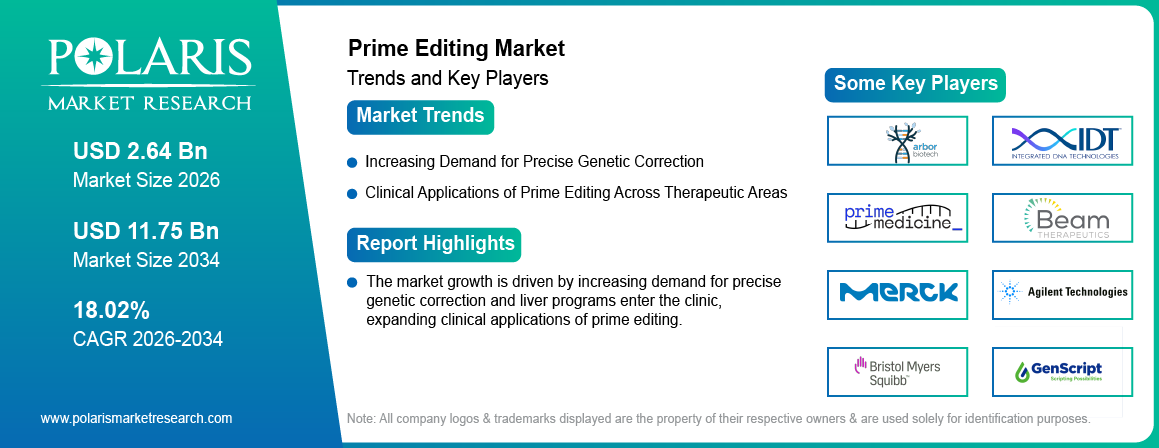
Prime editing market size was valued at USD 2.20 billion in 2025 and is projected to reach USD 11.75 billion by 2034, growing at a CAGR of 18.02% from 2026 to 2034. Market growth is driven by increasing demand for precise genetic correction, and the entry of liver programs into the clinic, which is expanding clinical applications of prime editing. Prime Medicine holds the only human prime editing data, from two patients treated with PM359 (Phase 1/2, NCT06559176), and its liver programs are entering the clinic, with PM577a dosing its first patient in October 2026 and PM647 cleared by the FDA in September 2026. The planned biologics license application for PM359 in the first half of 2027 is the next event expected to change the market forecast.
Market Statistics
Key Takeaways
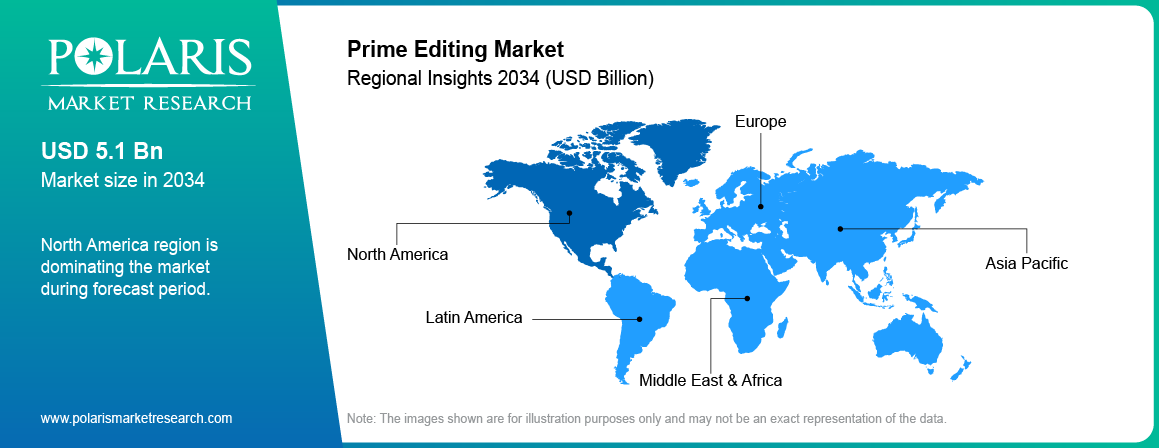
- The North America prime editing market accounted for 45.62% of the global share in 2025. The dominance is driven by strong biotechnology research capabilities and the growing development of advanced gene-editing technologies.
- The market in Asia Pacific is expected to exhibit a 21.45% CAGR during the forecast period. The growth is supported by growing biotechnology research and increasing investment in advanced genetic technologies.
- Prime editors and reagents segment accounted for a major market share of 48.23% in 2025. The leading share is fueled by their essential role in enabling precise genetic modifications.
- The drug discovery and research tools segment to record a 17.20% CAGR during the projected period, driven by increasing demand for precise genetic modification tools in biomedical research.
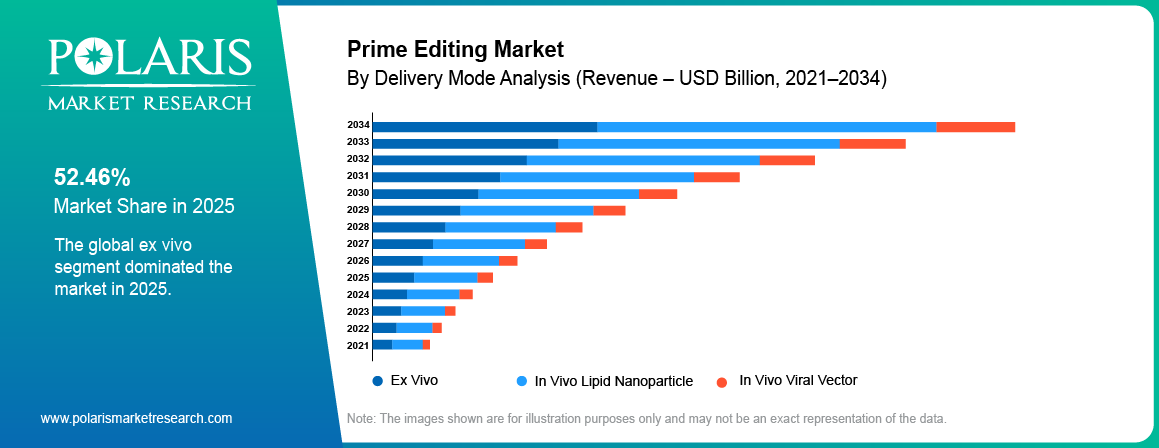
- The ex vivo segment dominated the market with a share of 52.46% in the base year driven by precise genetic modifications and controlled editing conditions.
- The pharmaceutical and biotechnology companies segment held 46.72% of the market in 2025, as sponsors fund the prime editing therapeutics market pipeline, while contract research and manufacturing organizations are expected to register the fastest CAGR of 21.08% during the forecast period.
- Rivalry in the market is concentrated among Prime Medicine, Bristol Myers Squibb, GenScript Biotech Corporation and Integrated DNA Technologies, Inc., with positions set by control of clinical data and catalog supply.
Note: Figures and projections outlined in this report are the result of Polaris Market Research’s proprietary analytical processes, grounded in the latest available datasets and market observations.
Prime Editing Market Definition
Prime editing is an advanced gene-editing technology that allows scientists to make precise changes to DNA. The prime editing market includes technologies and tools used to modify genetic sequences for research and therapeutic development. It uses a targeted approach to correct or replace specific DNA sequences. This technology enables the study of hereditary conditions and the development of potential treatments. It also helps researchers explore new approaches to genetic modification. The method was first described in a 2019 Nature paper by David R. Liu and colleagues at the Broad Institute of MIT and Harvard.
The prime editing market comprises gene-editing systems which are used in biomedical research and therapeutic development. The systems employ CRISPR gene editing to locate particular sequences of DNA and introduce changes as desired. Prime editing uses a modified Cas9 enzyme and a specially designed guide RNA to guide DNA editing. The system uses reverse transcriptase to turn the desired genetic changes into the target sequence, allowing double strand break free editing without the need to cut both strands of DNA on purpose. Base editing and Cas9 nuclease editing fall outside the scope of this report.
Increasing research on genetic conditions and progress in gene modification technologies are expected to drive the market growth. David R. Liu, co-inventor of prime editing, was key in developing this technology for precise genetic modifications. Scientists are exploring prime editing to correct genetic changes that lead to disease. Improvements in editing precision and delivery methods are also supporting further development. Reverse transcriptase plays an important role in introducing the desired genetic changes, expanding research into more precise genetic treatments. Prime Medicine licenses the technology from the Broad Institute, including US patent 11,447,770, which expires in 2040.
Drug Pipeline Analysis
| Candidate | Company | Mechanism | Phase | Trial Identifier | Status |
| PM359 | Prime Medicine | Ex vivo prime edited autologous CD34+ stem cells, correcting the NCF1 delGT variant in p47phox chronic granulomatous disease | Phase 1/2, enrolling by invitation | NCT06559176 | Two patients treated, with data published in the New England Journal of Medicine; RMAT (June 2026), Fast Track, Orphan Drug and Rare Pediatric Disease designations; BLA planned first half of 2027 |
| PM577a | Prime Medicine | In vivo lipid nanoparticle prime editor for the ATP7B H1069Q variant in Wilson disease | Phase 1/2, recruiting | NCT077NA48403 | New Zealand CTA cleared June 2026, FDA IND cleared July 2026, first patient dosed October 2026, Rare Pediatric Disease designation granted to PM577, initial data expected 2027 |
| PM647 | Prime Medicine | In vivo lipid nanoparticle prime editor correcting the E342K (PiZ) variant in alpha 1 antitrypsin deficiency | Phase 1/2 planned, FDA IND cleared | Not applicable | FDA IND cleared September 24, 2026; adults with lung-only disease to enroll first, followed by a liver disease cohort; initial clinical data expected in 2027 |
| Cystic fibrosis program | Prime Medicine | In vivo prime editing, supported by the Cystic Fibrosis Foundation | Preclinical | Not applicable | Disclosed program backed by Cystic Fibrosis Foundation funding, no filing guidance |
| Prime edited CAR T products | Prime Medicine with Bristol Myers Squibb | Ex vivo prime edited T cells for hematology, immunology and oncology | Preclinical | Not applicable | Partnership with Bristol Myers Squibb announced September 2024, with USD 110 million upfront consideration and up to USD 3.5 billion in potential milestones |
Source: Prime Medicine, Inc. company disclosures; ClinicalTrials.gov; Polaris Market Research Analysis
The prime editing therapeutics market is progressing through clinical development, with Prime Medicine leading the current pipeline. No prime editing therapy has received regulatory approval worldwide. All three clinical-stage assets discussed here belong to Prime Medicine. The company's programme focuses on genetic diseases with defined molecular targets. PM359 is the most advanced candidate, followed by PM577a and PM647. Their clinical and regulatory milestones are important indicators to assess future commercial opportunities.
PM359 targets chronic granulomatous disease, a rare genetic condition affecting immune function. Two patients have received the therapy. For instance, in 2026, the FDA granted PM359 Regenerative Medicine Advanced Therapy (RMAT) designation. Prime Medicine plans to submit a Biologics License Application (BLA) in the first half of 2027. This planned filing places PM359 at the forefront of the pipeline. STAT described the filing as a test of the FDA's flexibility in evaluating treatments supported by early clinical evidence (Source: primemedicine.com).
PM577a targets Wilson disease, a genetic disorder that causes copper accumulation in the body. Its clinical development has advanced through trial clearances in New Zealand and the United States, and the first patient was dosed in the global Phase 1/2 study in October 2026. PM647 targets alpha 1 antitrypsin deficiency, an inherited condition affecting the lungs and liver. The FDA cleared its investigational new drug application in September 2026, allowing clinical development to proceed.
PM647 is a competitor to Beam Therapeutics’ base-editing candidate BEAM-302, which has entered a pivotal clinical cohort. Both programs are aimed at using genetic editing to address inherited diseases. For example, an arbitration decision in July 2026 found PM647 was within Prime Medicine’s contractual field and no damages due to Beam (Source: globenewswire.com).
Prime Medicine’s first approval will be a key commercial milestone for market sizing. Forecasts should take into account the planned PM359 filing in 1H 2027. They should also include a scenario for a delayed or rejected Biological License Application (BLA) and this approach ties projected revenue to regulatory progress and provides a more balanced basis for estimating market growth.
Clinical and Regulatory Catalyst Timeline
| Timing | Milestone | Program | Why It Matters |
| October 2026 | First patient dosed in global Phase 1/2 study | PM577a | First clinical study of an in vivo prime editing therapy from Prime Medicine |
| First half of 2027 | BLA submission planned | PM359 | First prime editing filing; rests on data from two patients |
| 2027 | Initial clinical data expected | PM577a and PM647 | First human readout for in vivo, liver-directed prime editing |
| After BLA filing | FDA review and decision | PM359 | Determines whether the first prime editing therapy reaches the market |
Source: Prime Medicine, Inc. company disclosures; Polaris Market Research Analysis
Market Dynamics
Driver Impact Analysis Snapshot
| Factor | Type | Impact | Time Horizon | Most Affected Segments |
| Increasing demand for precise genetic correction | Driver | High | Medium to long term | Therapeutic development; pharmaceutical and biotechnology companies |
| Clinical applications across therapeutic areas | Driver | High | Short to medium term | In vivo lipid nanoparticle; therapeutic development |
| Licensing friction and sole-sponsor concentration | Restraint | Medium | Short to medium term | All segments; new entrants |
| FDA plausible mechanism pathway | Opportunity | Medium | Medium term | Therapeutic development; in vivo delivery |
| Commercial prime editing tools and reagent catalogs | Opportunity | Medium | Short term | Prime editors and reagents; academic and research institutes |
Source: Polaris Market Research Analysis.
Driver: Increasing Demand for Precise Genetic Correction Is Supporting Prime Editing Market Growth
The growing need to treat disease-causing genetic alterations is driving increasing interest in advanced genome-editing technologies. For example, the World Health Organization (WHO) reported that genetic conditions and congenital abnormalities affect approximately 2%–5% of live births and are responsible for about 30% of hospital admissions in children. The disease burden highlights the need for precise genetic correction strategies that tackle the root DNA abnormalities and speed up the development of innovative treatments for inherited diseases. Prime editing is a versatile method to accurately edit the genome without double-strand breaks that may be useful for treating inherited disease and precision medicine (Source: who.int).
The increasing demand to correct disease-causing mutations is motivating pharmaceutical companies and research institutions to study advanced genome editing technologies. With prime editing, DNA changes are targeted and could be used for research on inherited diseases and development of therapies. More work on accuracy of editing and ways of delivery is reinforcing its role in genetic research. These advances are fueling demand for prime editing technologies in both biotech research and drug development. The first filing for PM359, planned for the first half of 2027 after FDA granted RMAT designation in June 2026, would turn prime editing from a research method into a regulated product category.
Driver: Clinical Applications of Prime Editing Across Therapeutic Areas
Advancement of prime editing liver programs into clinical development is supporting market growth by bringing genetic correction approaches closer to therapeutic applications. Liver diseases due to specific gene mutations are important targets for the assessment of these technologies. For example, a 2024 report from the US National Library of Medicine says that approximately 1 in 784 live births is affected by an inherited metabolic disorder. This disease burden emphasizes the opportunities for the in vivo prime editing market (Source: nih.gov).
Liver-targeted programs advancing into the clinic are strengthening the genetic medicine development pipeline. Researchers are examining approaches that target mutations that cause disease and have the potential to deliver long-term therapeutic benefits. Such efforts are driving investment in delivery technologies, for example, lipid nanoparticle delivery, that help get editing components into target cells. Ongoing clinical advancement may broaden the use of prime editing in a spectrum of inherited liver diseases and usher in the era of precision genetic therapies. PM577a dosed its first patient in October 2026, and the FDA cleared the PM647 IND in September 2026, with both programs relying on a universal liver lipid nanoparticle.
Restraint: Licensing Friction and Sole Sponsor Concentration are Limiting Market Adoption
Intellectual property rights & licensing agreements impact prime editing market share. Rights to the technology are held under Broad Institute licenses, and the July 2026 arbitration between Prime Medicine and Beam Therapeutics showed how contested those field rights can be, which impacts development timelines and raises the costs for companies entering the space. These challenges make it difficult to form partnerships and slow the spread of prime editing programs. Companies must secure the right rights before they can move their therapies forward. This further complicates the planning requirements for developers wishing to commercialize prime editing technology. The tribunal declared PM647 within Prime Medicine’s licensed field and awarded no damages to Beam Therapeutics, but the dispute stayed open for more than a year.
The market is also heavily reliant on prime medicine leading the current clinical-stage pipeline. This concentration links future market growth to one company’s clinical progress and regulatory decisions. Other developers face technical and licensing barriers when they build competing programs. Prime editing also needs pegRNA, which is engineered to guide the desired genetic change accurately. These requirements add further complexity to development and impact the pace at which new therapies move into clinical trials and commercialization.
Opportunity: Advancements in Regulatory Pathways for Prime Editing Therapies is Creating Opportunity
The FDA’s plausible mechanism pathway provides a chance for the prime editing market by backing the creation of personalized treatments for serious genetic disorders. FDA outlines approach to assess some therapies for ultra-rare diseases, including genome-editing treatments, in draft guidance issued in February 2026. This regulatory framework could help developers generate evidence of safety and effectiveness, supporting efforts to advance promising prime editing therapies toward regulatory review.
That could encourage biotech firms to throw resources at prime editing, by setting clearer expectations for the evidence needed for customized genetic therapies. For example, the FDA’s Rare Disease Evidence Principles are relevant to eligible therapies targeting genetic defects in populations typically less than 1,000 patients in the US, where there is no adequate alternative treatment. These regulatory initiatives may provide support to the prime editing industry forecast, but approval is still contingent on product-specific evidence of safety and effectiveness (Source: fda.gov).
Opportunity: Growing Commercial Potential of Prime Editing Tools and Reagent Catalogs
The availability of commercially listed prime editing reagents creates an opportunity for suppliers to serve research laboratories without requiring them to develop every component internally. GenScript lists prime editing guide RNA at USD 240 for 2 nmol, with larger quantities available at published prices. This demonstrates an existing commercial channel for essential editing components and supports opportunities in the prime editor reagents market (Source: genscript.com).
A major opportunity for expansion is the addition of optimized guide RNAs and validated editing components to catalogs. Reliable reagents are needed for researchers to test editing efficiency, compare experimental outcomes, and improve genetic modification protocols. These needs can be met by suppliers through the availability of PEmax-compatible components, custom pegRNA designs and standard reagent kits. Such products could simplify experimental workflows and provide additional commercial opportunities as prime editing research progresses toward therapeutic applications. GenScript holds a Broad Institute license to make and sell prime editing components, and Integrated DNA Technologies supports pegRNAs of up to 150 nucleotides.
Prime Editing Market Segmentation Analysis
The report provides a comprehensive prime editing market analysis by product and service type, application, delivery mode, end user, and region to identify the leading revenue-generating segments and emerging growth opportunities.
Product and Service Type Insights
Prime editors and reagents accounted for the largest share of 48.23% in the base year due to their crucial role in enabling precise genetic modifications. These are the components required for prime editing, both in research and therapeutic applications. Prime editing is a new technology that uses a prime editing guide RNA (pegRNA) to induce specific genetic modifications without inducing double-strand DNA breaks. Laboratories and biotech firms developing state-of-the-art gene-editing technologies are increasingly applying them. Growing genetic disorder research and improving editing accuracy is supporting demand for such components. For example, GenScript lists a 110 to 150 nucleotide pegRNA at USD 240 for 2 nmol and USD 1,600 for 100 nmol, which shows how catalog pricing shapes the prime editor reagents market.
Services segment is projected to record the fastest CAGR of 20.90% during the forecast period. Its growth is supported by increasing demand for specialized expertise in prime editing research and development. Service providers assist researchers with experimental design, editing optimization, validation and analysis of genetic modifications, including pegRNA design and synthesis. These services allow biotech companies and academia to troubleshoot technical problems with minimal dependence on in-house capabilities. The adoption of them is increasing with the increasing applications of prime editing in drug discovery, functional genomics, and therapeutic development. Growing research collaborations and investments in innovative gene-editing technologies will lead to an increase in demand for specialized prime editing services in the biotech industry.
Application Insights
The therapeutic development segment accounted for the largest share of the prime editing technology market at 44.28% in 2025, owing to increasing research on genetic conditions and development of specific therapies. Prime editing allows for specific changes to DNA without cleaving the double strands and may help in designing possible therapies for inherited diseases. Researchers use this approach to fix some genetic changes and study their therapeutic potential. For example, in 2025, Prime Medicine reported that its investigational prime editing therapy, PM359, achieved DHR positivity in 58% of neutrophils at Day 15 and 66% at Day 30 in the first patient treated for chronic granulomatous disease (Source: crisprmedicinenews.com).
The drug discovery and research tools segment is expected to register the significant CAGR of 17.20% during the forecast period. The rising demand for accurate genetic modification tools in biomedical research is driving the segment. Prime editing allows scientists to make targeted genetic changes and observe their impact on cellular processes. It helps to identify mechanisms of disease, and evaluate possible drug targets. Its uses in functional genomics are expanding as researchers look for more accurate ways to investigate genetic variation. The rising demand for advanced laboratory tools and the increasing investment in biotechnology research are expected to boost the segment growth over the forecast period.
Delivery Mode Insights
The ex vivo segment dominated the market with a 52.46% market share in 2025 due to precise genetic alterations and controlled editing conditions. This approach allows editing of cells outside the body and assessment of editing before administration, providing more control of the editing process. Growing research into regenerative medicine and immune cell therapies is increasing the demand for ex vivo stem cell editing in genetic disease research and therapeutic development.
The in vivo lipid nanoparticles segment is expected to grow at the fastest CAGR of 20.55% during the forecast period. This is a growth area because it can deliver prime editing components directly into target cells without having to remove cells. The formulations are flexible and the potential for targeted delivery makes it useful for applications in genetic disease research. The growing investments into gene therapies and the enhancements in delivery efficiency in the lipid nanoparticle delivery are supporting the prime editing applications. GenScript’s ReadyEdit LNP formulations are an example of catalog delivery products, while in vivo viral vector delivery remains the least documented mode in current clinical disclosures.
End User Insights
The pharmaceutical and biotechnology companies accounted for the largest market share of 46.72% in the base year, due to investments in gene-editing technologies and targeted treatments. Prime editing enhances the precision of genetic modification and facilitates research on genetic disorders, cell and gene therapy contract research, and the development of advanced treatments. Growing investments in biotech research, and the need for accurate genetic correction are driving adoption in therapeutic R&D activities.
The academic and research institutes segment is estimated to grow with the significant CAGR of 15.82% during the forecast period, owing to the increasing research on genetic disorders, gene function and genome-editing techniques. Prime editing allows for precise genetic changes with fewer unintended changes than traditional methods. Academic institutions and genetic research programs are also seeing adoption driven by increased research funding and partnerships with biotechnology companies and contract research organizations. Nonprofit funders such as the Cystic Fibrosis Foundation, which supports Prime Medicine’s cystic fibrosis program, fall under the Others segment.
Regional Analysis
The prime editing market regional analysis comprises North America, Europe, Asia Pacific, Latin America, and Middle East and Africa. This segmentation is based on growing investments in genetic research, increasing prevalence of genetic disorders, expanding biotechnology research, and rising development of advanced gene-editing technologies. The prime editing industry forecast is supported by growing investment in genetic research and the development of advanced gene therapies. Increasing collaboration between biotechnology companies and research institutions is further supporting market growth.
North America Prime Editing Market Trends
North America held the largest share of the prime editing market at 45.62% in 2025, attributed to high biotechnology research capabilities and the increasing advancement of sophisticated gene-editing technologies. The US is the leading regional market, due to the well-established biotechnology industry and well-developed research infrastructure. For instance, in 2025, Prime Medicine announced additional funding of USD 24 million from the Cystic Fibrosis Foundation to further prime-editing treatments for cystic fibrosis. The investment will support therapeutic research and further establish North America as a leader in the prime editing market (Source: bioworld.com).
Biotech companies are partnering with research institutions to strengthen North America’s position in the prime editing market. Researchers are looking at new ways to use prime editing to improve genetic correction and create targeted treatments. Universities are looking at how it could be used to look at how diseases work, and how genes work. Pharmaceutical companies also are eyeing prime editing to treat specific genetic alterations. Ongoing investment and research collaborations are expected to expand the applications of the technology in therapeutic and experimental settings during the forecast period. The US also hosts the regulatory events that define the field, including the FDA IND clearances for PM577a and PM647 and the RMAT designation for PM359.
Europe Prime Editing Market Trends
Europe held a significant market share of 27.18% in the base year, by region, owing to its well-established biotechnology sector and a strong focus on genetic research. The region has a robust research infrastructure that allows development of advanced gene-editing technologies. With the growing precision medicine interest, researchers are examining prime editing for genetic disease research. Regional capabilities are also being enhanced by the presence of biotechnology companies and academic institutions. These factors are supporting the prime editing industry forecast and creating opportunities for further technological development across Europe.
The market growth is expected to be driven by the continued investment in genomic research and development of advanced genetic therapies in Europe. Europe’s leading research ecosystem for editing is receiving targeted funding to develop state of the art genetic editing technologies. For example, the EdiGenT project, which aims to improve the efficiency of prime-editing and develop non-viral delivery systems, received an investment of approximately USD 4.93 million from the European Innovation Council. This investment will strengthen regional capabilities in genetic research and advanced genetic therapies, and will reinforce Europe’s position in the emerging prime editing market (Source: europa.eu).
Asia Pacific Prime Editing Market Trends
Asia Pacific is expected to witness the highest CAGR of 21.45% during the forecast period, owing to growing biotechnology research and increasing investment in advanced genetic technologies. Countries in the region are building their capacities in genomic research and gene-editing development. Increasing incidence of birth defects in the region is promoting research for innovative genetic treatments. For example, in 2026, the World Health Organization (WHO) reported that the proportion of under-five deaths due to birth defects increased from 3% to 11% in South Asia between 2000-2023. Further, cooperation between research organizations and biotechnology companies strengthens the regional market outlook (Source: who.int).
Moreover, the region has an increasing research activity related to genetic conditions and precision gene correction. Prime editing gives researchers a targeted way to make exact genetic changes, and less of the unwanted changes. This capability is enabling it to explore disease modeling and therapeutics research. The burgeoning interest in developing gene therapies is creating more opportunities in prime editing applications. Collaborative projects are also broadening genome-editing research within academic institutions. The expansion of biotechnology infrastructure has created more opportunities for research organizations to pursue advanced genetic techniques. These developments are expected to drive broader adoption of prime editing in research and therapeutic applications across the Asia Pacific region. Prime editing market analysis points to a near-term role for the region as a clinical trial site and reagent supply base, as seen in New Zealand’s June 2026 clearance of the PM577a clinical trial application and GenScript Biotech’s catalog position.
Middle East and Africa Prime Editing Market Trends
The Middle East and Africa prime editing market is expected to grow at 19.10% during forecast period, due to increasing interest in biotechnology and advanced genetic research. The precise gene-editing technologies are driven by the rising focus on genetic diseases. The region’s growing healthcare research capabilities are creating opportunities for prime editing applications. Universities and biotechnology research centers are exploring advanced methods to study genetic mutations. The prime editing market report highlights the importance of research infrastructure and scientific collaboration in supporting regional market development. However, adoption depends on research funding and access to specialized laboratory facilities.
Continuous investment in newborn screening and life sciences research is anticipated to aid the regional market. For example, in 2025 Oman’s Ministry of Health expanded its newborn screening program to include 62 genetic and metabolic diseases, improving early detection of inherited conditions. The project shows the importance of early identification of genetic conditions and increased access to preventative healthcare. The increasing government attention to genetic disease detection supports research opportunities for prime editing and other genome-editing techniques that have the potential to correct specific disease-causing genetic alterations. No prime editing clinical program has been disclosed in the region so far, so near-term demand is expected to come from research use (Source: moh.gov.om).
Latin America Prime Editing Market Trends
Latin America segment held 3.45% share in the prime editing market in 2025, owing to the increasing interest in genetic research and the development of advanced gene therapies. Biotechnology companies and research institutions are exploring precise genome editing techniques to study genetic diseases. Prime editing provides a more accurate method to correct specific DNA sequences. There is growing interest across the region in its possible uses in disease modeling and therapeutic research. The prime editing industry forecast is propelled by increasing focus on precision medicine and growth of biotechnology research capabilities. Further progress in genomic research is likely to contribute to the regional market development.
Rising biotechnology research will create opportunities for prime editing solutions across Latin America. Research organizations are looking into state-of-the-art genome-editing methods to gain a better understanding of disease mechanisms. And prime editing enables the creation of experimental models to test potential treatments. Collaboration with academic institutions and biotechnology companies can help to build research capabilities. But for broad acceptance, you need specialized laboratory infrastructure and skilled researchers.
Prime Editing Market Competitive Landscape
Vendor Landscape Snapshot
| Vendor | Headquarters | Market Position | Role in the Prime Editing Market |
| Prime Medicine, Inc. | United States | Leader | Clinical-stage prime editing developer with PM359, PM577a and PM647 |
| GenScript Biotech Corporation | China | Leader (reagents) | Catalog pegRNAs, editor mRNA and proteins, LNP formulations; Broad Institute licensee |
| Integrated DNA Technologies, Inc. | United States | Challenger | Custom guide RNA supplier supporting pegRNAs up to 150 nucleotides |
| Bristol Myers Squibb | United States | Strategic Partner | Partner on prime edited CAR T products |
| Thermo Fisher Scientific Inc. | United States | Challenger | Genome editing tools and reagent supplier |
| Merck KGaA | Germany | Challenger | Genome editing reagents and CRISPR licensing through MilliporeSigma |
| Agilent Technologies, Inc. | United States | Niche Player | Guide RNA and oligonucleotide supplier |
| Synthego Holdings LLC | United States | Niche Player | CRISPR reagent and synthesis provider |
| Takara Bio Inc. | Japan | Niche Player | Genome editing tools supplier |
| ToolGen, Inc. | South Korea | Niche Player | CRISPR technology developer and licensor |
| Beam Therapeutics Inc. | United States | Adjacent Competitor | Base editing developer; BEAM-302 competes with PM647 |
| Tessera Therapeutics, Inc. | United States | Emerging Player | Gene writing platform developer |
| Arbor Biotechnologies, Inc. | United States | Emerging Player | Genome editing developer |
Source: Company disclosures; Polaris Market Research Analysis. Market position reflects analyst assessment of clinical progress, catalog presence and scope fit.
The prime editing market competitive landscape focuses on improving genome-editing precision and expanding applications in genetic research and therapeutic development. Companies are developing technologies that enable targeted DNA modifications with fewer unwanted changes. Competition is defined by editing efficiency, delivery approaches, research applications and the capacity to correct diverse genetic changes. Developers are also working to enhance editing performance and make it applicable to a wider range of biotechnology research and drug development.
Prime Medicine holds every disclosed clinical-stage prime editing program, while Beam Therapeutics competes from the adjacent base editing field. Competitive position is based on technology capabilities, intellectual property, research partnerships and progress in therapeutic development. Individual participants’ share of the prime editing market depends on the research pipelines and the ability to translate the lab findings into potential treatments. Partnerships with academic institutions and biotechnology companies also give companies the ability to expand their research capabilities and to explore new applications. Bristol Myers Squibb’s collaboration with Prime Medicine on prime edited CAR T products is a notable example.
One distinguishing feature is their ability to make precise genetic corrections with the fewest off-target effects. Developers are concerned about editing efficiency, delivery systems, safety and consistency across target cells. Intellectual property protection and access to specialized research infrastructure are also factors that influence competition. Preclinical studies and progress in clinical development could advance a company’s situation. Finding effective collaborations and demonstrating promising therapeutic applications will continue to be important for advancing prime editing technologies and broadening their commercial potential. Beam Therapeutics is tracked as an adjacent competitor because BEAM-302 is a base editing candidate that competes directly with PM647, while CRISPR Therapeutics and Intellia Therapeutics, built on Cas9 nuclease and base editing platforms, fall outside the scope of this report.
Prime Editing Market Technology and Innovation Landscape
Technology and Innovation Landscape Snapshot
| Technology Area | What It Does | Latest Development | Commercial Relevance |
| Prime editor architecture | Nickase Cas9 fused to reverse transcriptase writes edits without double-strand breaks | PEmax, PE6b, PE6c, PE6d and PE7 variants | Core product of the prime editor reagents market |
| pegRNA engineering | Guides the editor and carries the edit template | ePegRNA designs with tevopreQ1; La protein fusions to stabilize the 3’ end | Longer pegRNAs move from catalog to inquiry pricing |
| Lipid nanoparticle delivery | Non-viral in vivo delivery of editor mRNA and pegRNA | 49% average editing in mouse liver (June 2026); nearly 70% with densely modified pegRNAs (September 2026) | Enables liver programs such as PM577a and PM647 |
| Ex vivo stem cell editing | Edits patient cells outside the body before reinfusion | PM359 holds the only human prime editing data, from two patients | Established path for blood disorders |
| AI-guided design | Predicts pegRNA performance and redesigns enzymes | OptiPrime model (August 2026); AI-guided reverse transcriptase redesign (May 2026) | Reduces lab screening time and cost |
| Large DNA insertion | Extends prime editing to large DNA fragments | Prime Assembly from Harvard Medical School (September 2026) | Widens the range of gene therapy use cases |
Source: Peer-reviewed publications; company disclosures; Polaris Market Research Analysis
Prime editing employs a nickase Cas9 protein linked to a reverse transcriptase enzyme. The system employs a prime editing guide RNA (pegRNA) to find a specific DNA target and perform the desired genetic change with an RNA template. This strategy allows precise genome editing without the induction of DNA double-strand breaks. A 2024 structural study showed in detail how the reverse transcriptase copies the pegRNA template, which explains the mechanism at the molecular level.
Engineering of the pegRNA remains important because the instability of the 3’ end of the pegRNA can limit the editing efficiency. Researchers are investigating La protein fusions to improve pegRNA stability and function. Furthermore, modified pegRNAs reduce the by-products of the scaffold, resulting in more efficient editing and enhancing the reliability of prime editing systems in experimental applications.
Prime editing has been developed into several editor variants, such as PE6b, PE6c, PE6d, PE7, and PEmax. The engineered versions are designed to enhance editing efficiency and performance for a variety of applications. Another approach to optimize editing outcomes and extend the scope of prime editing technologies is to design engineered pegRNAs, including ePegRNA designs that incorporate tevopreQ1.
Delivery remains a major challenge for prime editing, and developers are looking to gene therapy delivery platforms and lipid nanoparticle delivery technologies. GenScript reported editing efficiency of up to 80% in HEK293T cells using its LNP formulations. This is a research-stage result and does not establish equivalent performance in animals or humans. In June 2026, Broad Institute researchers reported lipid nanoparticle prime editors that reached 49% average editing in mouse liver after a single dose, and a September 2026 study reported nearly 70% editing in mouse liver using densely modified pegRNAs.
Prime editing vs base editing comes down to how each modifies DNA sequences. Prime editing can insert, delete and substitute any base using a template. Conversely, base editing is a method that doesn’t require template-directed rewriting to change one DNA base into another, making each of the two methods useful for different types of genetic modification.
Prime Editing Market Use Case Analysis
Prime editing enables precise DNA edits and can therefore aid genetic research and the development of therapies. Drug companies are exploring therapies for inherited diseases, and universities are testing the editing techniques. Contract research organizations support experimental testing and development. This prime editing market report examines key applications across therapeutic research and laboratory settings.
Pharmaceutical and Biotechnology Companies: PM359 in p47phox Chronic Granulomatous Disease
PM359 is an investigational prime-editing therapy developed to address p47phox chronic granulomatous disease, an inherited immune disorder caused by mutations affecting the NCF1 gene. The approach seeks to correct the fundamental genetic defect in a patient’s blood-making stem cells. This application demonstrates the potential for ex vivo stem cell editing in developing targeted treatments for genetic diseases. Similar approaches can be used by pharmaceutical and biotechnology companies to explore precise mutation correction. Studies of chronic granulomatous disease also illustrate how prime editing may help develop therapies that target disease mechanisms, rather than just managing symptoms. Clinical evaluation is needed to confirm safety and efficacy.
Pharmaceutical and Biotechnology Companies: PM577a and PM647 in Liver Disease
Genetic correction has the potential application to inherited liver disorders, as shown by the prime editing programs PM577a and PM647. These programs focus on developing approaches for conditions that are associated with disease-causing genetic variants. Wilson disease is caused by an impaired copper metabolism, while alpha 1 antitrypsin deficiency is caused by variants in the SERPINA1 gene. Prime editing research is looking at whether targeted changes to DNA can address the root causes of such disorders. These programs can be used by pharmaceutical and biotechnology companies to assess the precision of editing and therapeutic feasibility. Further development will depend on progress in delivery technologies and preclinical evaluation. These applications suggest opportunities for genetic medicines for inherited liver diseases.
Academic and Research Institutes: Validating a Prime Edit with Catalog Controls
Academic and research institutes use established laboratory controls to assess prime-editing performance. Researchers can use reference samples to compare the changes they’re trying to make, to see how accurate the editing is and whether there are any unintended changes,” he said. A pegRNA guides the prime-editing machinery to a specific DNA sequence and helps specify the desired edit. Catalog controls and standardized reagents help ensure experimental consistency among research laboratories. This creates demand in the prime editor reagents market, especially for tools used in method development and validation. Research institutions also study editing efficiency in various cell models. Reliable controls help researchers interpret experimental results and improve reproducibility before advancing promising editing approaches into further studies.
Contract Research and Manufacturing Organizations and Others: Analog Case and a Funder
Contract research and manufacturing organizations support prime-editing programs through laboratory testing, process development, and analytical services. Their capabilities help biotechnology developers evaluate editing performance before advancing candidates into later research stages. Organizations can contribute to guide design, delivery optimization, and quality assessment. Funding organizations also have an important role to play in supporting early stage research and the development of new genetic medicines. These activities are relevant to the in vivo prime editing market, where researchers look at delivering editing components directly into the body. Progress depends on efficient delivery, accurate genetic correction and acceptable safety profiles. Specialized service providers can help developers address technical challenges throughout preclinical development.
Prime Editing Market Entry Barriers
Delivery Challenges: Delivery remains a major barrier to prime editing market expansion. Clinical experience is concentrated in ex vivo editing and liver-targeted lipid nanoparticles. A 2026 review highlights delivery costs, low in vivo editing efficacy and immune responses as major barriers. These factors hinder the development of treatments and broader clinical applications.
pegRNA Stability and Synthesis: The stability and synthesis of prime editing guide RNA (pegRNA) create technical challenges for commercial development. pegRNAs exceeding 110 nucleotides can be difficult to synthesize and maintain reliably. These limitations affect editing efficiency and manufacturing consistency. Improvements in the prime editor reagents market are essential to support scalable production and reliable therapeutic development.
Intellectual Property and Licensing: Intellectual property rights and licensing agreements are barriers to entry for players in the prime editing market. The Broad Institute’s licensing agreements affect access to important technologies and pathways to commercial development. The 2026 arbitration between Prime Medicine and Beam Therapeutics, decided in Prime Medicine’s favor, showed how field-of-use rights under licensing agreements can be contested. Companies need to evaluate the risks of intellectual property prior to the development and commercialization of a product.
Regulatory Uncertainty: Regulatory uncertainty limits the commercial development of prime editing therapies. The first planned regulatory filing relies on clinical evidence from only two patients, restricting the available evidence base. Meanwhile, the FDA's plausible mechanism framework remains a draft. Developers must generate stronger clinical evidence and establish safety before advancing treatments toward broader approval.
High Treatment Costs: High treatment costs are a major hurdle to the adoption of prime editing. Similar gene therapies are priced at $2.2 million to $3.1 million, raising serious affordability and reimbursement challenges. These costs reflect the complexity of manufacture and specialized treatment delivery. The wider gene therapy market gives a good sense of the pricing pressures and commercial access challenges facing new genetic therapies.
Regulatory and IP Landscape Snapshot
| Area | Development | Status | Implication |
| FDA RMAT designation | PM359 designated in June 2026 | Granted | Expedited FDA guidance ahead of the planned BLA |
| FDA plausible mechanism framework | Draft guidance issued February 2026 | Draft | Alternative evidence route for individualized therapies; statutory approval standards still apply |
| FDA IND clearances | PM577a (July 2026) and PM647 (September 2026) | Cleared | Opens US participation in the Phase 1/2 liver programs |
| New Zealand clinical trial authorization | PM577a cleared by Medsafe in June 2026 | Cleared | First clinical authorization for an in vivo prime editor from Prime Medicine |
| Broad Institute licensing | Licenses to Prime Medicine and GenScript; US 11,447,770 expires in 2040 | In force | Sets the terms of access for new entrants |
| Prime Medicine and Beam Therapeutics arbitration | Tribunal declared PM647 within Prime Medicine’s field in July 2026 | Resolved | Removes a near-term barrier for PM647 |
Source: U.S. FDA; Prime Medicine, Inc. company disclosures; Polaris Market Research Analysis
Prime Editing Market Premium Insights and Forward Outlook
The Plausible Mechanism Pathway Lowers the Evidence Bar for Bespoke Prime Editors
The FDA’s draft framework could support bespoke prime editing therapies for rare genetic disorders. By linking genetic correction with disease biology, developers may establish a clearer rationale for treatment. This approach could influence the in vivo prime editing market by supporting the development of targeted therapies. However, safety evaluation and clinical validation remain essential.
Delivery, Not the Editor, Sets the Commercial Ceiling
The plausible mechanism pathway may support regulatory development, but delivery remains a major commercial challenge for prime editing. Delivery efficiency, immune responses and manufacturing complexity influence treatment feasibility. Therapeutic applications could be expanded by advances in lipid nanoparticles and targeted delivery systems. Progress in editing accuracy without reliable delivery will not lead to widespread clinical adoption.
Key Players in the Prime Editing Market
- Agilent Technologies, Inc.
- Arbor Biotechnologies, Inc.
- Beam Therapeutics
- Bristol Myers Squibb
- GenScript Biotech Corporation
- Integrated DNA Technologies, Inc.
- Merck KGaA
- Prime Medicine
- Synthego Holdings LLC
- Takara Bio Inc.
- Tessera Therapeutics, Inc.
- Thermo Fisher Scientific Inc.
- ToolGen, Inc.
Industry Developments
- October 2026: Prime Medicine dosed the first patient in its global Phase 1/2 clinical trial of PM577a for H1069Q-mutated Wilson disease, and the FDA granted Rare Pediatric Disease designation to PM577. (Source: investors.primemedicine.com)
- September 2026: The U.S. Food and Drug Administration cleared the Prime Medicine’s Investigational New Drug application for PM647 in Alpha-1 Antitrypsin Deficiency. (Source: investors.primemedicine.com)
- September 2026: Harvard Medical School researchers introduced Prime Assembly, a genome-engineering method that builds on prime editing to insert large DNA fragments into targeted locations without double-strand breaks, expanding its potential for gene therapy. (Source: harvard.edu)
- September 2026: Researchers reported in Nature Biomedical Engineering that densely modified pegRNA motifs delivered in lipid nanoparticles achieved nearly 70% prime editing in mouse liver after a single injection. (Source: nature.com/articles/s41551-026-01787-4)
- August 2026: Beam Therapeutics dosed the first patient in the global pivotal cohort of its BEAM-302 trial for alpha-1 antitrypsin deficiency (AATD). (Source: investors.beamtx.com)
- August 2026: Scientist at Broad Institute developed OptiPrime, a machine learning model that predicts prime editing guide RNA performance, eliminating costly, and time-consuming steps in the lab. (Source: broadinstitute.org)
- July 2026: The FDA cleared Prime Medicine’s Investigational New Drug application for PM577a in Wilson disease, opening the global Phase 1/2 study to patients in the United States. (Source: biospace.com)
- July 2026: An arbitration tribunal declared that PM647 falls within Prime Medicine’s licensed field under its 2019 agreement with Beam Therapeutics and that Prime Medicine owes no damages. (Source: sec.gov)
- June 2026: Broad Institute scientists reported lipid nanoparticle prime editing systems that achieved 49% average editing in mouse liver with a single dose, published in Nature Nanotechnology. (Source: nature.com/articles/s41565-026-02200-6)
- February 2026: The FDA issued draft guidance on the Plausible Mechanism Framework, which focuses on genome editing and RNA-based therapies for individualized treatment of ultra-rare diseases. (Source: hhs.gov)
Prime Editing Market Report Segmentation
By Product and Service Type (Revenue, USD Billion, 2021–2034)
- Prime Editors and Reagents
- Delivery Systems
- Services
By Application (Revenue, USD Billion, 2021–2034)
- Therapeutic Development
- Drug Discovery and Research Tools
- Disease Modeling
- Agricultural Research
By Delivery Mode (Revenue, USD Billion, 2021–2034)
- Ex Vivo
- In Vivo Lipid Nanoparticle
- In Vivo Viral Vector
By End User (Revenue, USD Billion, 2021–2034)
- Pharmaceutical and Biotechnology Companies
- Academic and Research Institutes
- Contract Research and Manufacturing Organizations
- Others
By Regional Outlook (Revenue, USD Billion, 2021-2034)
- North America
- US
- Canada
- Europe
- Germany
- France
- UK
- Italy
- Spain
- Netherlands
- Russia
- Rest of Europe
- Asia Pacific
- China
- Japan
- India
- Malaysia
- South Korea
- Indonesia
- Australia
- Vietnam
- Rest of Asia Pacific
- Middle East & Africa
- Saudi Arabia
- UAE
- Israel
- South Africa
- Rest of Middle East & Africa
- Latin America Prime Editing Market Trends
- Mexico
- Brazil
- Argentina
- Rest of Latin America
Report Scope
| Report Attributes | Details |
| Market Size in 2025 | USD 2.20 Billion |
| Market Size in 2026 | USD 2.64 Billion |
| Revenue Forecast by 2034 | USD 11.75 Billion |
| CAGR | 18.02% from 2026 to 2034 |
| Base Year | 2025 |
| Historical Data | 2021–2024 |
| Forecast Period | 2026–2034 |
| Quantitative Units | Revenue in USD Billion and CAGR from 2026 to 2034 |
| Report Coverage | Revenue Forecast, Competitive Landscape, Growth Factors, and Industry Trends |
| Segments Covered |
|
| Regional Scope |
|
| Competitive Landscape |
|
| Report Format |
|
| Customization | Report customization as per your requirements with respect to countries, regions, and segmentation. |
Source: Polaris Market Research Analysis
Why Choose Polaris Market Research
Polaris Market Research & Consulting, Inc. combines company analysis with technology assessment, application mapping, and competitive benchmarking. The methodology assesses advancements in the prime editing technology market, which includes therapeutic research, genetic correction, and genome editing applications. It also includes analysis of research investments, technological developments and market trends to give a clear picture of the market opportunities and competitive landscape. It helps clients assess nascent applications and pinpoint the factors driving technology adoption in the pharmaceutical, biotech and academic research sectors.
Clients can request customized analysis by application, end user, region, or technology development stage. Additional analysis can cover genetic disorder research, therapeutic development, laboratory applications, and emerging delivery approaches. The prime editing market report can also provide competitive benchmarking based on company capabilities, research pipelines, intellectual property positions, and technology development. This approach helps clients evaluate market participants, understand competitive positioning, and identify potential growth opportunities across the global prime editing industry. If your decision needs a cut this report does not show, such as a single indication or a single delivery route, Polaris Market Research & Consulting, Inc. will scope a custom study.
Research Methodology
The study uses five phases: market definition and scope control, secondary evidence collection, primary validation, model construction and triangulation, and analyst review. Secondary sources prioritize company disclosures, clinical trial registries, scientific publications, patent filings, and regulatory documents. The methodology supports consistent prime editing market analysis across technologies, applications, regions, and end-user segments.
Biotechnology researchers, pharmaceutical companies, academic institutions, clinical specialists, and genome-editing technology providers form the primary research base. Interviews assess editing efficiency, delivery methods, development costs, clinical progress, licensing requirements, and technology adoption. The analysis also evaluates pegRNA design, prime editor reagents, and therapeutic applications across genetic research and drug development.
Five Phase Research Methodology
| Phase | Activity | Primary evidence in this report |
| Scoping | Boundary against base editing, nuclease editing and the CRISPR & Cas Genes Market | Scope definition and exclusions |
| Secondary research | SEC filings, ClinicalTrials.gov, FDA, peer reviewed journals, supplier catalogs | Company disclosures and regulatory filings |
| Estimation | Reagent revenue sizing and pipeline probability weighting | Polaris Market Research analysis |
| Validation | Pricing benchmarks and expert input | Cost and Pricing Benchmarks table |
| Quality review | Senior analyst review and 40 item checklist | Senior analyst sign-off |
Source: Polaris Market Research Analysis
Prime Editing Market FAQ's
• The prime editing market was valued at USD 2.20 billion in 2025 and is projected to reach USD 11.75 billion by 2034. Increasing demand for precise genetic correction is driving the market growth.
• The market is expected to grow at a CAGR of 18.02% from 2026 to 2034. The growth will be driven by the FDA plausible mechanism pathway.
• North America dominated the prime editing market by region in 2025, driven by strong biotechnology research capabilities and the growing development of advanced gene-editing technologies.
• Prime editors and reagents accounted for the highest share in the base year due to their essential role in enabling precise genetic modifications.
• Prime editing is a new genome-editing technology that makes precise changes to DNA by correcting, inserting or deleting genetic sequences without the need for double-strand DNA breaks.
• Prime editing can substitute, insert or delete DNA in a targeted way without causing double-strand breaks. Regular old CRISPR-Cas9 usually cuts DNA at a target site and lets the cell do its thing. Base editors change specific bases in DNA without cutting both strands.
• As of October 2026, no prime-editing therapy has been approved by regulatory bodies for commercial use. PM359 is still in development and Prime Medicine hopes to file it with the FDA in 2027.
• Prime editing therapeutics target chronic granulomatous disease (PM359), Wilson disease (PM577a), alpha-1 antitrypsin deficiency (PM647) and cystic fibrosis, along with prime edited CAR T products developed with Bristol Myers Squibb.
• The primary patent holders for prime editing are the Broad Institute of MIT and Harvard, the institutions associated with the David Liu laboratory, and multiple biotech companies. Licensing rights are distributed through licensing agreements.
• Depending on the therapy and manufacturing requirements, genetic editing therapies can cost millions of dollars per patient. At GenScript, a 2 nmol pegRNA of 110 to 150 nucleotides lists at USD 240, while no prime editing therapy has a price because none is approved.
• The key prime editing companies include Agilent Technologies, Inc., Beam Therapeutics, Bristol Myers Squibb, GenScript Biotech Corporation, Integrated DNA Technologies, Inc., Prime Medicine, Inc. and others.
• Prime Medicine leads prime editing clinical trials in 2026. PM359 has treated two patients in a Phase 1/2 trial (NCT06559176) with a BLA planned for the first half of 2027, PM577a dosed its first patient in October 2026 (NCT07748403), and the FDA cleared the PM647 IND in September 2026.
Increasing demand for precise genetic correction and the entry of liver programs into the clinic are the main growth drivers. PM577a dosed its first patient in October 2026, and the FDA cleared the PM647 IND in September 2026.
Licensing friction and reliance on a single clinical-stage sponsor limit market adoption. Delivery challenges, pegRNA synthesis difficulty and limited clinical evidence add to the barriers for new entrants.
Download Sample Report of Prime Editing Market
Please fill out the form to request a customized copy of the research report.


