
Rare Disease Genetic Testing Market Size, Share Analysis Report, 2026-2034
REPORT DETAILS
Rare Disease Genetic Testing Market Summary
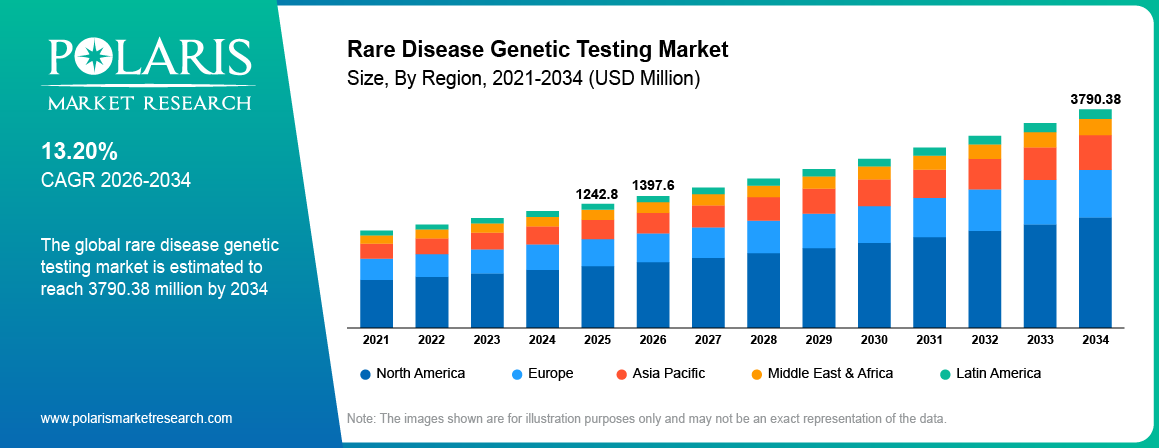
The global rare disease genetic testing market size was valued at USD 1242.8 million in 2025 and is expected to reach USD 1397.6 million by 2026 and 3,790.38 million by 2034, exhibiting a CAGR of 13.20% during 2026–2034.
Market Statistics
Rare Disease Genetic Testing Market Key Takeaways
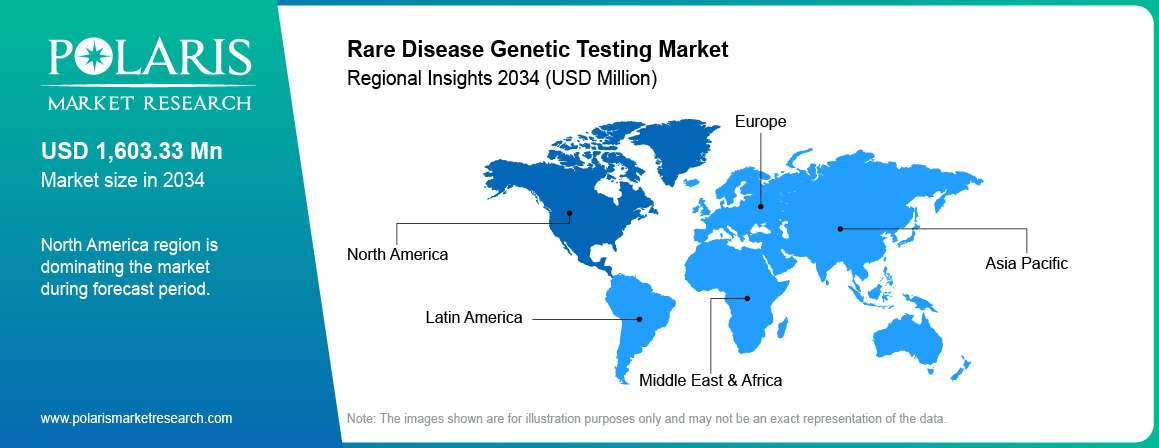
- In 2025, North America dominated the global market with 42.3% revenue share. This leading position is attributed to the rising demand for personalized genetic testing services.
- The Asia Pacific rare disease genetic testing market is expected to register the highest CAGR of 14.2% during the forecast period. Increasing healthcare investments drive the regional market expansion.
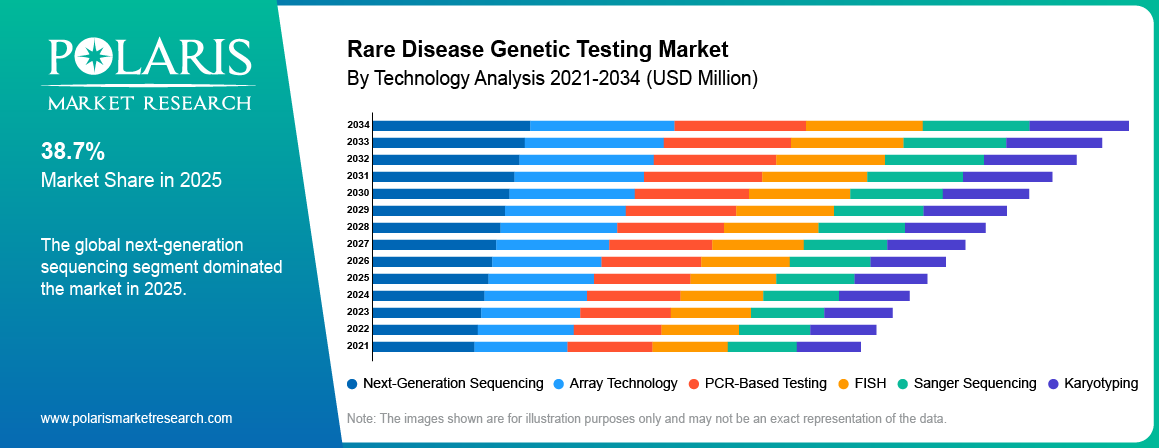
- In 2025, the next-generation sequencing (NGS) segment led with 38.7% share. This is fueled by its widespread adoption in diagnosing various rare conditions.
- Molecular genetic tests held a significant share of 52.4% in 2025. Growing awareness of rare genetic disorders propels the segment growth.
- The diagnostic laboratories segment is expected to exhibit the highest CAGR of 13.8% during the forecast period. This is due to rising demand for precise and early detection of rare genetic disorders.
Note: Figures and projections outlined in this report are the result of Polaris Market Research’s proprietary analytical processes, grounded in the latest available datasets and market observation
What Is Rare Disease Genetic Testing?
Rare disease genetic testing is used to examine a person’s DNA. The testing helps identify genetic changes linked to rare diseases. It helps clinicians understand the cause of a condition and confirm diagnosis. The testing assist in making effective treatment decisions. It supports personalized healthcare planning.
The rare disease genetic testing market focuses on diagnostic tests and technologies. The tests are applied in determining the genetic mutations that cause rare or hereditary diseases. Genetic analysis of DNA, genes, and chromosomes is achieved through advanced sequencing techniques. This facilitates early diagnosis and treatment of the disease.. It also helps in personalized treatment decisions and precision medicine approaches. The technique is preferred for patients suffering from rare genetic conditions.
The rare disease genetic testing market growth is attributed to factors such as rising technological advancements, the increasing prevalence of chronic disorders, and the development of customized testing kits designed to treat specific therapeutics. Moreover, with the growing number of clinical studies, a large number of testing practices are performed annually, which is promoting the demand for rare disease genetic testing. For instance, Centogene N.V. integrates genetic testing with metabolomics and proteomics to improve data analysis precision. Furthermore, the launch of new systems has made sample collection easy, thereby leveraging convenience and encouraging broader adoption of genetic tests, ultimately driving market revenue.
Governments in emerging economies are offering and supporting research institutes by providing funding and incentives to conduct studies on rare diseases. For instance, India’s Nation next-generation sequencingal Policy for Rare Diseases (NPRD), launched in March 2021, provides financial assistance of up to USD 0.066 million for patients diagnosed with rare conditions listed under the Centre of Excellence (COE). Therefore, such initiatives from governments are expected to create new rare disease genetic testing market opportunities during the forecast period. Moreover, in the oncology segment, genetic testing plays a crucial role in identifying tumor-driving mutations, which enhances the development of targeted therapies. The early and accurate identification of specific genetic markers helps the patients undergo better treatment and enables precision medicine.
Source: Polaris Market Research Analysis
To Understand More About this Research: Download Sample Report
AI in Rare Disease Genetic Testing: Variant Interpretation, Reanalysis & Diagnostic Workflows
- AI-based automated systems help rapidly identify and classify genetic variants with improved accuracy.
- The technology is used to analyze complex genomic datasets. It helps detect disease-causing mutations.
- AI-tools accelerate genetic data interpretation, reducing diagnostic time.
- Predictive analysis through AI makes it possible to predict disease risks and outcomes from genomic information.
- AI-assisted tools help doctors to give precise diagnosis and treatments.
How Does Rare Disease Genetic Testing Work?
- During consultation, patients’ clinical history and symptoms are reviewed.
- Blood, saliva, or tissue samples are collected.
- The genetic material is isolated from the sample.
- DNA analysis is performed using state-of-the-art testing technologies.
- Mutations and abnormalities in the genetic material are identified.
- Analysis is interpreted using genetic and clinical databases.
- The results are used by clinicians for diagnosis, prognosis, and treatment planning.
Gene Panel vs WES vs WGS for Rare Disease Diagnosis
| Factor | Traditional Diagnosis | Genetic Testing |
| Approach | Symptoms and clinical evaluation | DNA-based analysis |
| Detection | Disease indicators | Genetic mutations |
| Accuracy | May require multiple tests | Identifies molecular causes |
| Application | Disease management | Diagnosis + personalized treatment |
Source: Polaris Market Research Analysis
Another driving force behind the rare disease genetic testing market expansion is the role of genetic testing in early cancer detection and risk assessment. According to the National Cancer Institute, ∼1,777,566 new cancer cases were diagnosed in the US in 2021, with genetic mutations accounting for 5% to 10% of all cancer cases. The growing incidence of cancer worldwide has prompted healthcare providers to adopt advanced screening techniques, thereby increasing market demand for genetic testing solutions. Moreover, the integration of genetic testing into routine clinical workflows enhances disease prediction and significantly improves morbidity and mortality rates. Consequently, as the prevalence of genetic-linked disorders keeps rising, the demand for genetic diagnostics will fuel market growth and revenue expansion in the coming years.
Market Dynamics
Early Rare Disease Diagnosis and Genomic Screening Are Expanding Testing Demand
Early detection of diseases allows for timely treatment and intervention, which helps manage conditions or improve a patient’s life. Early diagnosis allows individuals to initiate medical treatment at the initial stage, potentially preventing the development of diseases. Also, technological advancements in genetic testing have significantly improved disease detection, particularly for conditions such as cancer and rare genetic disorders. Therefore, genetic testing plays a crucial role in addressing this challenge by identifying disease risks early, enabling better medical planning and preventive measures.
In February 2023, Minnesota became the first US state to implement universal newborn screening for congenital cytomegalovirus (cCMV). Upon the implementation of screening, the Minnesota Department of Health screened 60,115 infants, out of which 184 cases (0.31%) of cCMV were detected at the initial stage. Thus, early detection through this program has proved to be beneficial in initiating timely interventions, thereby preventing potential long-term health issues in affected infants. Hence, increasing emphasis on early disease detection and prevention boosts the rare disease genetic testing market growth.
Precision Medicine and Therapy Eligibility Increase Rare Disease Genetic Testing Adoption
Over the past decade, scientific advancements have significantly improved the early diagnosis and treatment of numerous diseases, particularly cancers. These developments have helped doctors to customize therapies, enhancing drug effectiveness and reducing side effects. Therefore, by identifying specific genetic variations based on an individual's unique biology, personalized medicine can be initiated, leading to better patient results. In October 2023, the UK's National Health Service (NHS) began utilizing liquid biopsies, ultra-sensitive blood tests that can detect tiny fragments of tumor DNA, which is useful for monitoring breast cancer mutations. Thus, this approach has enabled healthcare providers to provide more precise treatments to the patient, ultimately improving patient care.
Factors such as the increasing prevalence of genetic diseases and cancer have necessitated the demand for personalized therapies, which drives the rare disease genetic testing market expansion. Factors including expanding access to genetic testing and advancements in personalized medicine will enable more patients to receive targeted and effective treatments. For instance, companies such as GeneDx are working to make genetic testing more accessible, aiming to offer tests for every newborn to promptly identify and treat potential diseases before symptoms arise. This proactive approach will lead to early, accurate diagnoses, significantly improving patient outcomes and potentially reducing healthcare costs.
Source: Polaris Market Research Analysis
Rare Disease Genetic Testing Market Segment Insights
Rare Disease Genetic Testing Market Assessment by Technology Outlook
The global rare disease genetic testing market segmentation, by technology, includes next-generation sequencing, array technology, PCR-based testing, FISH, sanger sequencing, and karyotyping. In 2025, the next-generation sequencing (NGS) segment led with 38.7% share due to its widespread adoption in diagnosing various conditions, including cancer, neurological diseases, cardiovascular disorders, pediatric conditions, and psychiatric disorders. The segment's growth is being propelled by the increasing availability of NGS-based gene panels, which enable rapid and precise genetic testing. Additionally, strategic collaborations among key industry players have contributed to the expansion of NGS applications. In June 2022, Avesthagen Ltd. partnered with Wipro Ltd. to commercialize its genetic testing offerings, further accelerating the adoption of NGS technology in clinical diagnostics.
The market for NGS-based rare disease diagnostics is witnessing growth due to the declining costs of sequencing technologies, allowing these tests to be more accessible for patients. Continuous advancements in NGS platforms have improved efficiency, accuracy, and throughput, enabling the detection of rare genetic variants with greater precision. As a result, healthcare providers are increasingly integrating genetic testing into diagnostics to identify rare disorders at early stage and initiate personalized treatment approaches. Increasing global research efforts, such as collaborations between academic institutions, biotech firms, and patient advocacy groups, have accelerated gene discovery, driving the demand for NGS-based solutions.
Rare Disease Genetic Testing Market Evaluation by Speciality Outlook
The global rare disease genetic testing market, based on speciality, is divided into molecular genetic tests, chromosomal genetic tests, and biochemical genetic tests. Molecular genetic tests held a significant share of 52.4% in 2025 due to the rising adoption of advanced diagnostic techniques, increasing awareness of genetic disorders, and the growing application of precision medicine in healthcare.
Molecular genetic tests have become an essential component of modern diagnostics, providing critical insights into genetic variations and disease inclinations. These tests analyze DNA, RNA, or proteins at a molecular level, enabling the detection of inherited disorders, mutations, and responses to medications. One of the key drivers of market growth is the rapid advancement of sequencing technologies, particularly next-generation sequencing (NGS), which offers high accuracy at a reduced cost. Additionally, the availability of unbiased testing methods, such as genome sequencing, has been widely in use in both clinical and research sectors, further fueling market expansion. Therefore, the decreasing costs of sequencing tests have led to the easy availability of molecular genetic testing, allowing for broader application in diagnosing rare and ultra-rare diseases.
Rare Disease Genetic Testing Market Outlook by End Use Outlook
The global rare disease genetic testing market, based on end use, is segregated into research laboratories & CROs, hospitals & clinics, and diagnostic laboratories. The diagnostic laboratories segment is expected to exhibit the highest CAGR of 13.8% during the forecast period due to advancements in genetic sequencing technologies, growing awareness among healthcare professionals, and supportive government initiatives. These laboratories are equipped with specialized tools to conduct molecular, chromosomal, and biochemical genetic tests, allowing them to treat rare diseases. Moreover, the growing demand for precise and early detection of genetic disorders has fueled the rare disease genetic testing market development within diagnostic laboratories.
The rise in research and development investments in rare disease genetic testing has accelerated market growth. Governments across the globe are implementing policies to support genetic research, making testing more accessible and cost-effective. Additionally, increased patient awareness and the need for personalized medicine have contributed to the expansion of the segment. As genetic testing is becoming more important in rare disease diagnosis, diagnostic laboratories are set to experience substantial growth during the forecast period.
Applications of Rare Disease Genetic Testing
| Application | Description |
| Diagnosing Inherited Genetic Disorders | Identifies genetic mutations responsible for inherited rare diseases. |
| Identifying Causes of Unexplained Symptoms | Helps determine the genetic basis of complex or undiagnosed conditions. |
| Detecting Rare Childhood Diseases | Enables early diagnosis of genetic disorders in infants and children. |
| Supporting Personalized Treatment Selection | Guides targeted therapies based on an individual's genetic profile. |
| Family Genetic Risk Assessment | Evaluates inherited disease risks for family members and future generations. |
| Prenatal and Newborn Screening | Detects genetic abnormalities before birth or shortly after delivery. |
| Clinical Research and Drug Development | Supports discovery of disease mechanisms and development of precision therapies. |
Source: Polaris Market Research Analysis
Source: Polaris Market Research Analysis
Importance of Genetic Counseling in Rare Disease Testing
The role of counseling is crucial in rare disease testing. Counselors assist in selecting effective tests. They help patients and families interpret complex test results. counselors also provide emotional support. There are rising number of tests being carried out in diagnostics laboratories and hospitals. Thus, the task of genetic counselors becomes more prominent.
- Interpretation of test results: Translating complex genomic findings into clear, clinically relevant explanations for patients and physicians
- Family risk assessment: Analyzing inheritance patterns to determine at-risk family members. Guidance of preventive screening is provided.
- Informed healthcare decisions: Assisting patients in making effective decisions concerning therapy or reproductive options based on test results
- Patient Education: Information about the scope, limitation and accuracy of genetic tests prior to consent
- Pre and Post Testing Support: Giving psychological and practical guidance during the entire process of diagnosis.
Genetic Testing in Pediatric Rare Diseases
The pediatric segment contributed a significant share of rare disease genetic testing demand. Early identification of inherited and congenital conditions directly shapes treatment pathways and long-term outcomes. There is an increasing number of newborn and pediatric screening tests conducted by diagnostic centers and hospitals. In turn, this is emphasizing the position of this segment within the market.
- Early diagnosis of childhood disorders: Early identification of rare disorders before progressing to critical stages
- Developmental disorder detection: Diagnosis of neurological and intellectual disability disorders
- Congenital disease identification: Detecting structural and metabolic abnormalities present at birth
- Faster treatment planning: Enabling clinicians to initiate targeted interventions sooner
- Improved patient outcomes: Reducing diagnostic delays that are common in rare pediatric disease pathways
Rare Disease Genetic Testing Market by Region
By region, the study provides rare disease genetic testing market insights into North America, Europe, Asia Pacific, Latin America, and the Middle East & Africa. In 2025, North America dominated the global market with 42.3% revenue share. This dominance is attributed to the increasing demand for personalized genetic testing services and the rising prevalence of chronic and genetic disorders. Further, the rising role of government agencies such as the US Food and Drug Administration, which is actively participating in providing approval and launch of new genetic testing products, is fueling the regional market growth. In December 2023, the FDA approved Guardant Health’s Shield blood test, a multi-cancer early detection (MCED) test, which enables the detection of various cancers through a blood sample, thus allowing early diagnosis and treatment results.
The US dominates the North America rare disease genetic testing market share due to its advanced healthcare infrastructure, strong government support, and extensive FDA approvals for innovative genetic tests. The increasing prevalence of rare genetic disorders and initiatives such as the All of Us Research Program, initiated in 2015, help promote precision medicine.
In Canada, the rare disease genetic testing market demand is growing due to increased federal investments and initiatives such as the National Strategy for Drugs for Rare Diseases, which funds research and improves access to genetic diagnostics. Moreover, with expanding genomic research programs and collaborations between universities and biotech firms, Canada is enhancing genetic screening capabilities and improving early detection and treatment of rare disorders.
Europe held the second-largest position in the rare disease genetic testing market, driven by rising chronic disease prevalence and an aging population. The regional market growth is driven by rising R&D activities, government initiatives, and strategic collaborations among key players. Countries such as the UK are witnessing a surge in clinical trials and technological advancements, enhancing market expansion. The European Commission's initiatives, announced in 2022, aim to improve cancer screening, further boosting genetic testing demand. Additionally, product launches and partnerships, such as Blueprint Genetics and BioMarin’s skeletal dysplasia program, are propelling the rare disease genetic testing market growth.
Regulatory Landscape of Genetic Testing
Regulatory landscape differs across regions. This affects the approval, validation, and commercialization of rare disease genetic testing products and services. Market players are required to comply with regional rules. Adherence to such rules slows down entry to the market. They also influence adoption rates for testing providers.
| Region | Regulatory Body / Framework | Key Requirement |
| North America | U.S. FDA; CLIA (Clinical Laboratory Improvement Amendments) | Test approval, clinical validation, laboratory certification |
| Europe | EU IVDR (In Vitro Diagnostic Regulation) | CE marking, performance evaluation, post-market surveillance |
| Asia Pacific | National health authorities (e.g., China NMPA, Japan PMDA) | Local approval pathways, data localization, clinical validation |
Source: Polaris Market Research Analysis
Beyond regional approval, providers must also comply with data privacy rules. These rules govern genomic information, quality control standards for lab operations, and international guidelines. It supports research collaboration and test standardization across borders.
Cost & Accessibility Factors in Rare Disease Genetic Testing
Even with advancements in technology, cost still happens to be one of the biggest hurdles for the adoption of genetic testing among rare diseases, especially in cost-sensitive and developing healthcare systems.
- Expensive sequencing technologies: Cost per test using systems such as whole genome sequencing and whole exome sequencing is very high. Such high costs limit accessibility.
- Need for affordable diagnostic solutions: There is a rising need for lower-cost tests. They would benefit larger groups of patients.
- Insurance reimbursement challenges: Coverage policies differ from region to region. Inconsistent policies adversely affect the cost for patients.
- Cost reduction through technology improvements: Decreasing cost of sequencing will lower the test cost.
- Expansion in emerging healthcare markets: Increasing investments in diagnostic infrastructure expand access in developing regions.
Source: Polaris Market Research Analysis
Rare Disease Genetic Testing Companies & Competitive Landscape
The rare disease genetic testing market features a competitive landscape with a mix of established companies and emerging players aiming to strengthen their market presence. Leading firms focus on product innovation, strategic partnerships, and R&D investments to expand their genetic testing solutions and meet evolving consumer needs. However, the market remains highly competitive, with new entrants introducing advanced genetic testing technologies and leveraging breakthroughs in genomic sequencing and bioinformatics. The sector presents significant growth opportunities and challenges such as strict regulatory frameworks. Owing to competition from alternative diagnostic methods, market players focus on innovating and enhancing their testing capabilities to gain revenue shares.
3billion, Inc. is a biotechnology research company specializing in rare disease genetic testing and diagnostics. The company offers comprehensive genetic solutions for patients, healthcare providers, and pharmaceutical partners worldwide, focusing on the early and accurate detection of rare genetic disorders. 3billion, Inc. offers advanced genetic tests, including whole genome sequencing (WGS), whole exome sequencing (WES), and targeted variant analysis, specifically designed to identify mutations linked to rare diseases. Utilizing next-generation sequencing (NGS) and AI-driven variant interpretation, 3billion ensures precise and rapid diagnoses.
GeneDx, headquartered in Connecticut, US, is a provider of genomics-based diagnostic and information services. The company specializes in rare disease testing, pediatric genetic conditions, and hereditary cancer screening, offering comprehensive genetic insights to improve patient care. The company’s AI-driven platform, Centrellis, integrates clinical and genomic data to deliver personalized health insights that support diagnosis, treatment decisions, and drug discovery. GeneDx also provides genome and exome testing, along with genetic counseling services, making precision medicine more accessible.
List of Key Companies
- 3billion, Inc.
- Ambry Genetics
- Baylor Genetics
- Blueprint Genetics (Quest Diagnostics)
- Centogene N.V.
- Eurofins Scientific
- GeneDx, LLC
- Genomenon
- Invitae Corporation
- Revvity
Rare Disease Genetic Testing Industry Developments, Partnerships & Product Launches
- March 2026: GeneDx announced a new genetic testing program with Zevra Therapeutics, Inc. With this initiative, the companies aim to support patients affected by Suspected Niemann-Pick Disease Type C. (Source: ir.genedx.com)
- March 2025: Regeneron completed its USD 256 million acquisition of 23andMe, gaining access to a genetic dataset of approximately 15 million individuals.
- January 2025: Illumina launched NovaSeq X single-flow-cell upgrades along with 25B cycle kits, expanding capabilities for rare disease sequencing.
Rare Disease Genetic Testing Market Outlook
The industry will experience growth in the coming years. The rise in the use of genomic medicine, NGS, and personalization of healthcare will drive the growth. It will also be fueled by the increasing AI use to analyze genomics data, low sequencing costs, increased diagnosis access, and investments in rare diseases research. Integration of genetic testing into routine healthcare systems will further accelerate market development.
Rare Disease Genetic Testing Market Segmentation
By Technology Outlook (Revenue, USD Million, 2021–2034)
- Next-Generation Sequencing
- Array Technology
- PCR-Based Testing
- FISH
- Sanger Sequencing
- Karyotyping
By Speciality Outlook (Revenue, USD Million, 2021–2034)
- Molecular Genetic Tests
- Chromosomal Genetic Tests
- Biochemical Genetic Tests
By Disease Type Outlook (Revenue, USD Million, 2021–2034)
- Neurological Disease
- Immunological Disorders
- Hematology Diseases
- Endocrine & Metabolism Diseases
- Cancer
- Musculoskeletal Disorders
- Cardiovascular Disorders
- Dermatology Disease
- Others
By End Use Outlook (Revenue, USD Million, 2021–2034)
- Research Laboratories & CROs
- Hospitals & Clinics
- Diagnostic Laboratories
By Regional Outlook (Revenue, USD Million, 2021–2034)
- North America
- US
- Canada
- Europe
- Germany
- France
- UK
- Italy
- Spain
- Netherlands
- Russia
- Rest of Europe
- Asia Pacific
- China
- Japan
- India
- Malaysia
- South Korea
- Indonesia
- Australia
- Vietnam
- Rest of Asia Pacific
- Middle East & Africa
- Saudi Arabia
- UAE
- Israel
- South Africa
- Rest of Middle East & Africa
- Latin America
- Mexico
- Brazil
- Argentina
- Rest of Latin America
Rare Disease Genetic Testing Market Report Scope
| Report Attributes | Details |
| Market Size Value in 2025 | USD 1242.8 million |
| Market Size Value in 2026 | USD 1397.6 million |
| Revenue Forecast by 2034 | USD 3,790.38 million |
| CAGR | 13.20% from 2026 to 2034 |
| Base Year | 2025 |
| Historical Data | 2021–2024 |
| Forecast Period | 2026–2034 |
| Quantitative Units | Revenue in USD Million and CAGR from 2026 to 2034 |
| Report Coverage | Revenue Forecast, Market Competitive Landscape, Growth Factors, and Trends |
| Segments Covered |
|
| Regional Scope |
|
| Competitive Landscape |
|
| Report Format |
|
| Customization | Report customization as per your requirements with respect to countries, regions, and segmentation. |
Source: Polaris Market Research Analysis
Rare Disease Genetic Testing Market FAQ's
The global rare disease genetic testing market size was valued at USD 1242.8 million in 2025 and is projected to grow to USD 3,790.38 million by 2034.
The global market is projected to register a CAGR of 13.20% during the forecast period.
In 2025, North America dominated the global market, accounting for a 42.3% revenue share, driven by rising demand for advanced genetic testing solutions, early disease detection, and personalized medicine.
A few of the key players in the market are Centogene N.V.; 3billion, Inc.; Ambry Genetics; GeneDx, LLC; Blueprint Genetics (Quest Diagnostics); Invitae Corporation; Baylor Genetics; Eurofins Scientific; Genomenon; and Revvity.
In 2025, the next-generation sequencing (NGS) segment led the market with a 38.7% share, driven by its high accuracy, cost-effectiveness, and ability to analyze multiple genes simultaneously.
The chromosomal genetic tests segment is expected to witness significant market growth during 2025–2034 due to advancements in cytogenetic technologies, increasing prevalence of chromosomal disorders, and rising demand for early and accurate diagnosis.
Rare disease testing uses following technologies: NGS, whole genome sequencing (WGS), whole exome sequencing (WES), chromosomal microarray analysis (CMA), PCR, Sanger sequencing, and bioinformatics tools. These technologies help detect disease-causing genetic variants accurately.
Next Generation Sequencing allows for analysis of thousands of genes at once. It allows faster detection of rare gene mutations. NGS helps diagnose conditions accurately. The technique saves diagnosis time and enables early clinical intervention.
Download Sample Report of Rare Disease Genetic Testing Market
Please fill out the form to request a customized copy of the research report.


