
Transdermal Drug Delivery Systems Market Size, Share, Trends & Forecast, 2026-2034
REPORT DETAILS
Transdermal Drug Delivery Systems Market Summary
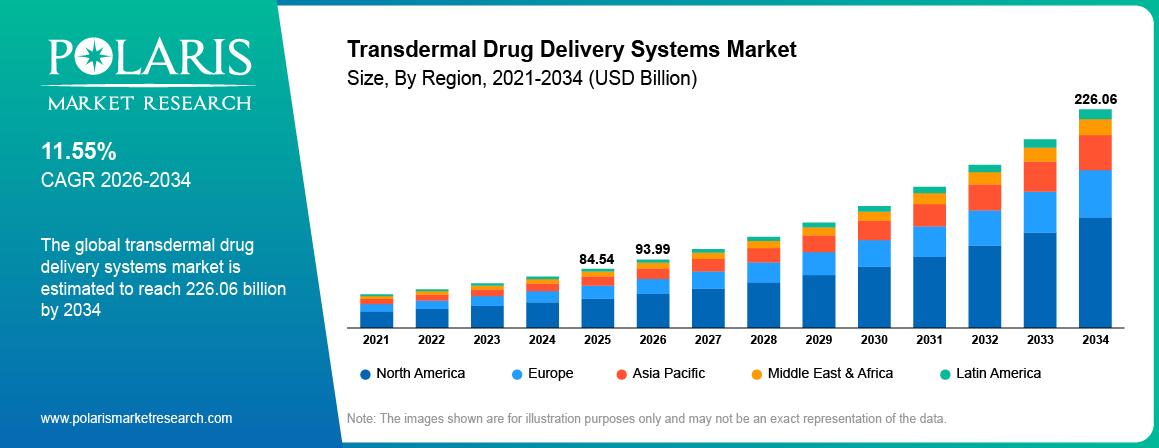
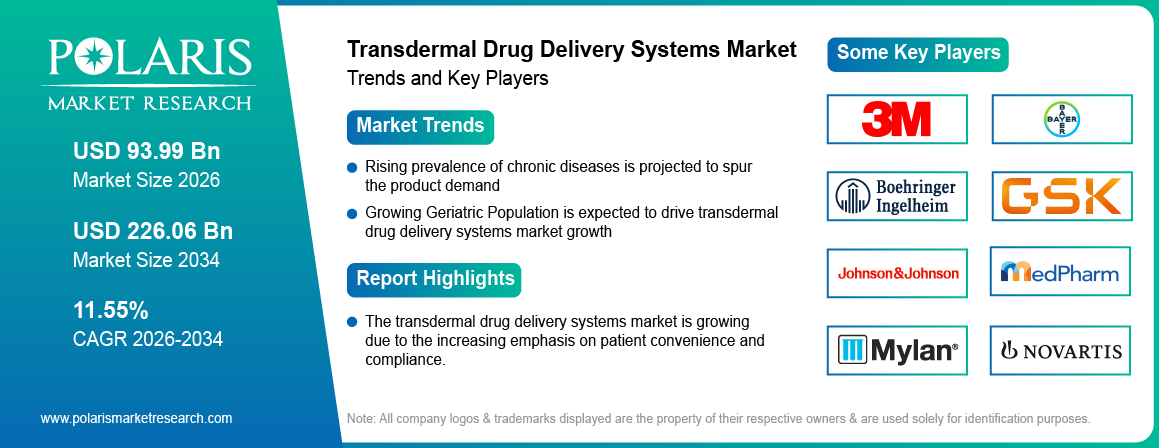
The global transdermal drug delivery systems market size was valued at USD 84.54 billion in 2025. The market is expected to exhibit a CAGR of 11.55% from 2026 to 2034. The increasing prevalence of chronic diseases drives the market growth. Also, rising geriatric population prone to chronic conditions fuels the market expansion.
Market Statistics
Transdermal Drug Delivery Systems Market Key Takeaways
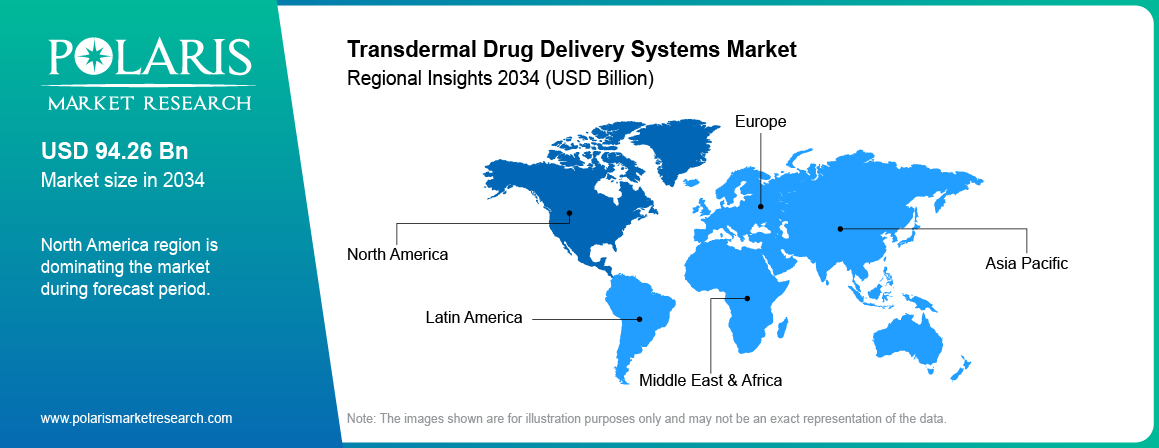
- North America led the global market with 41.7% share in 2025. The leading position is fueled by its advanced healthcare infrastructure.
- The Asia Pacific market is expected to register the highest CAGR of 10.8% during the forecast period. This is attributed to increasing healthcare expenditure and rising awareness.
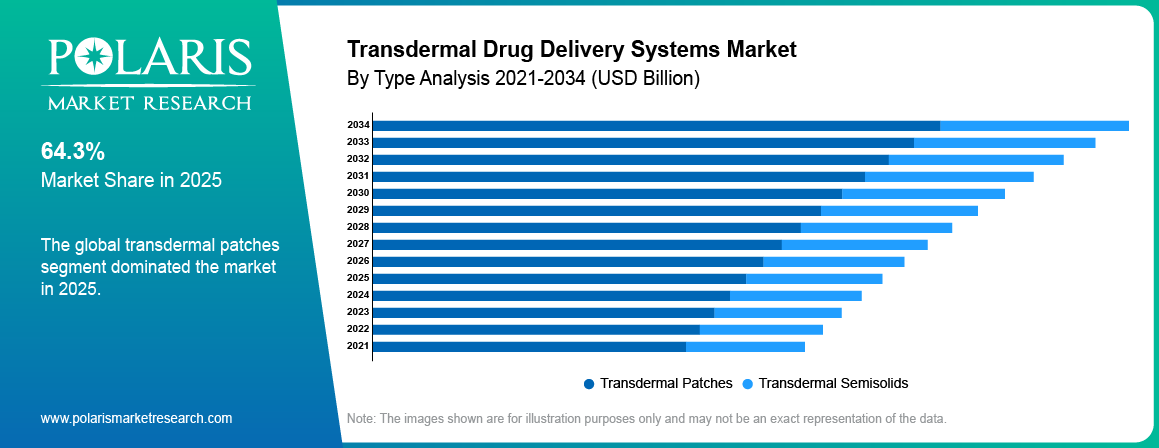
- Transdermal patches held the largest share of 64.3% in 2025. The dominance is driven by their simplicity and efficacy.
- Iontophoresis led with 36.8% revenue share 2025. This is due to Its efficient drug delivery mechanism.
- The pain management segment held the largest revenue share of 39.6% in 2025. It is due to its convenience and steady drug delivery mechanism.
Note: Figures and projections outlined in this report are the result of Polaris Market Research’s proprietary analytical processes, grounded in the latest available datasets and market observations.
Industry Dynamics
- Rising incidence of chronic conditions drives the demand for transdermal drug delivery systems.
- Increasing aging population prone to chronic disease fuels the growth of the market.
- Regulatory and compliance requirements hinder the market expansion.
- Technological advancements in patch design is expected to offer lucrative market opportunities during the forecast period.
- Adoption of smart wearable devices is projected to emerge as a key market trend in the coming years.
AI in Transdermal Drug Delivery: Permeability Prediction, Patch Design, Personalized Dosing & Quality Control
- AI tools predict optimal drug–skin interactions. It reduces research time and development costs. This way, AI adoption accelerates formulation development.
- Machine learning (ML) algorithms help improve patch design, material selection, and drug permeability. ML use optimizes controlled drug release.
- AI-powered quality inspection enhances manufacturing efficiency. It enables real-time defect detection and automated quality control.
- AI-enabled tools analyze patient data. It helps optimize dosing, treatment effectiveness, and adherence. The technology facilitates personalized transdermal therapies.
- Smart patches powered by AI enhance patient compliance. They support real-time monitoring of drug delivery. Such innovations improve treatment outcomes.
What Are Transdermal Drug Delivery Systems? Definition, Systemic Delivery & Dosage Forms
Transdermal drug delivery systems (TDDS) are drug administration technologies. The TDDS systems release the drugs via the skin and into the blood stream. The systems are usually found in many types of formats such as patches, gels and even advanced wearables. The systems offer the release of drugs in a continuous mode. They increase the patient’s adherence to the drugs. The systems reduce dosing frequency and avoid gastrointestinal degradation.
Source: Polaris Market Research Analysis
To Understand More About this Research:Download Sample Report
Transdermal Drug Delivery Systems Market Trends
The transdermal drug delivery systems market is growing due to the increasing emphasis on patient convenience and compliance. Transdermal patches offer a convenient alternative to oral medications, particularly beneficial for patients struggling with pill swallowing or complex schedules. By delivering medication through the skin, patches eliminate the need for injections and frequent dosing, providing a hassle-free method of drug administration. Moreover, patches promote better patient compliance, leading to improved treatment outcomes and reduced healthcare costs. Additionally, they ensure controlled and sustained medication release, minimizing fluctuations in drug concentration and enhancing symptom management.
In addition, companies operating in the market are introducing new products to expand market reach and strengthen presence.
- For instance, in September 2023, Satio secured a $3.5 million agreement to design a transdermal drug delivery device for home use. This compact and cost-effective device incorporates disposable microneedle components to ensure accurate drug delivery. It facilitates remote administration of a precise, measured dosage of any liquid medication approved for transdermal use.
Technological advancements in patch design are revolutionizing the transdermal drug delivery systems market. Microneedle patches offer painless drug delivery into the bloodstream, improving absorption rates and expanding therapeutic possibilities. Advanced patch materials minimize skin irritation, while integrated smart technologies enable real-time monitoring of drug delivery and patient health. Enhanced manufacturing processes increase production efficiency and scalability, reducing costs and improving accessibility. These innovations make transdermal drug delivery systems more attractive to patients and healthcare providers, driving market growth.
How Do Transdermal Drug Delivery Systems Work? Skin Permeation, Systemic Absorption & Controlled Release
- A transdermal patch or topical delivery system is applied to the skin.
- The drug delivery system releases drug at required amount.
- The medication penetrates the stratum corneum, the tougher layer of dead skin cells.
- The drug enters the bloodstream through skin capillaries.
- Tiny blood vessels (microcirculation) in the dermis pick up and carry the drug in the body.
Transdermal vs Oral Drug Delivery: First-Pass Metabolism, Dosing, Bioavailability, Adherence & Limitations
| Feature | Transdermal Drug Delivery | Oral Drug Delivery |
| Administration | Through skin | Through mouth |
| First-Pass Metabolism | Avoided | Present |
| Dosing Frequency | Lower | Higher |
| Patient Compliance | Higher | Moderate |
| Gastrointestinal Side Effects | Minimal | More common |
Source: Polaris Market Research Analysis
Benefits and Limitations of Transdermal Drug Delivery Systems
Transdermal drug delivery systems have several clinical and commercial benefits compared to oral or injectable formats.
- Non-invasive means of administration: This technique of drug delivery does not need any injections or swallowing of pills.
- Improved compliance of patients: As a result of being user-friendly, elderly people are choosing these devices more frequently.
- Slow-release of the drug: It maintains a constant flow of medicine into the body.
- Minimal side effects: Due to the regular flow of medicines, there is no peaks and troughs often seen with oral medication.
These combined advantages are a key reason transdermal systems continue to gain share across pain management, hormonal therapy, and cardiovascular treatment applications.
Market Dynamics
Driver: The rising prevalence of chronic diseases is projected to spur the product demand
The rising prevalence of chronic diseases drives the expansion of the transdermal drug delivery systems market. Chronic conditions like diabetes, cardiovascular diseases, and arthritis are increasingly common worldwide, challenging healthcare systems. Transdermal drug delivery systems offer a convenient and effective method of medication administration for these ailments. Their ability to provide controlled and sustained release of medications over time is particularly beneficial for managing chronic diseases requiring continuous therapy. Additionally, these systems improve patient compliance and convenience compared to traditional methods. With reduced risk of side effects and fluctuations in drug levels, transdermal delivery enhances the safety and efficacy of chronic disease therapy.
Opportunities: Growing Geriatric Population is expected to drive transdermal drug delivery systems market growth
The transdermal drug delivery systems market is surging due to the expanding geriatric population worldwide. With aging comes a higher prevalence of chronic diseases like hypertension, diabetes, and chronic pain among seniors. Transdermal patches offer a convenient alternative, delivering medication directly through the skin, bypassing the gastrointestinal tract and reducing side effects. This method is particularly beneficial for older adults who struggle with swallowing pills or managing multiple medications. Additionally, transdermal systems provide controlled, continuous medication release, ensuring steady symptom relief. As the elderly population continues to grow, the demand for innovative drug delivery systems like transdermal patches is expected to rise.
Industry Challenges
Regulatory, Skin-Safety, Adhesion and Drug-Compatibility Requirements Limit TDDS Development
Regulatory and compliance requirements significantly influence the transdermal drug delivery systems market. Oversight by agencies like the FDA and EMA demands rigorous testing to ensure safety, efficacy, and quality before market approval. Navigating the complex regulatory landscape poses challenges for manufacturers, with varying requirements across regions. Compliance necessitates substantial investments in time and resources, including preclinical and clinical trials, regulatory filings, and adherence to Good Manufacturing Practices (GMP). Additionally, stringent regulations govern labeling, packaging, and manufacturing processes, adding complexity to market entry.
Source: Polaris Market Research Analysis
Transdermal Drug Delivery Systems Market Segmentation Analysis
The transdermal drug delivery systems market analysis is primarily segmented based on type, technology, application, and region.
| By Type | By Technology | By Application | By Region |
|
|
|
|
Source: Polaris Market Research Analysis
By Type Analysis
The Transdermal patches held the largest share of 64.3% in 2025 due to their simplicity and efficacy. Patients find them easy to use, promoting adherence to treatment regimens. With controlled and continuous drug release, patches ensure steady dosing, minimizing side effects. Their versatility allows for delivery of various medications, catering to diverse therapeutic needs. As they bypass the gastrointestinal tract, patches reduce systemic side effects common in oral medications. Additionally, they offer convenience by eliminating the need for frequent dosing, which is especially beneficial for the elderly.
By Technology Analysis
The Iontophoresis led with 36.8% revenue share 2025 due to its efficient drug delivery mechanism. By utilizing a low-level electric current, iontophoresis ensures targeted and controlled delivery of medications, enhancing drug absorption through the skin. Its non-invasive nature, involving electrode application on the skin surface, promotes patient comfort and compliance. Additionally, iontophoresis offers versatility in delivering various types of drugs across therapeutic areas like pain management and dermatology. With customizable delivery profiles and growing clinical adoption supported by scientific evidence, iontophoresis meets diverse patient and healthcare provider needs, driving its revenue share in the market.
Emerging Technologies: Microneedle & Wearable Drug Delivery
Microneedle Systems
Microneedle systems have become one of the most rapidly developing innovations in the market. The systems allow painless administration and increased bioavailability for small molecules and biologics. As per our market study, industry players are increasingly investing in developing self-administered, remote dosing formats.
Wearable Drug Delivery
The emergence of smart, connected patches with real-time sensing ability is becoming more prevalent. This is due to the growing trend toward home care and increasing demand for personalized medicines. The application of digital medicine along with the delivery of drugs can be expected to provide new avenues in addition to iontophoresis and electroporation.
By Application Analysis
The pain management segment held the largest revenue share of 39.6% in 2025. These patches offer convenient and steady drug delivery, minimizing systemic side effects by bypassing the gastrointestinal tract. They provide targeted relief directly to the affected area, enhancing efficacy and patient comfort. Many prefer patches for their ease of use and discreet application. With the ability to deliver various pain medications, they cater to diverse needs. Additionally, as chronic pain conditions become more prevalent, the demand for effective and convenient pain management solutions like transdermal patches continues to grow.
Source: Polaris Market Research Analysis
Real-World Examples of Transdermal Drug Delivery Systems Applications
| Use Case | Real-World Example |
| Chronic Pain Management | Fentanyl and buprenorphine patches for long-term pain relief in cancer and chronic pain patients. |
| Nicotine Replacement Therapy | Nicotine patches support smoking cessation by delivering controlled nicotine doses. |
| Hormone Replacement Therapy | Estrogen patches help manage menopausal symptoms and hormone deficiencies. |
| Motion Sickness Treatment | Scopolamine patches prevent nausea and vomiting during travel. |
| Cardiovascular Disease Management | Nitroglycerin patches provide continuous treatment for angina and ischemic heart disease. |
Source: Polaris Market Research Analysis
Transdermal Drug Delivery Systems Market by Region
North America led the global market with 41.7% share in 2025 due to its advanced healthcare infrastructure, technological innovations, and high healthcare expenditure. The region's large patient population with chronic conditions creates substantial demand for these systems. Additionally, favorable reimbursement policies and the presence of key market players further contribute to its dominance. Strong research collaborations between academia, industry, and government organizations drive innovation, consolidating North America's leadership position in the market.
The Asia Pacific market is expected to register the highest CAGR of 10.8% during the forecast period due to rising healthcare expenditure, and increasing awareness. Technological advancements in countries like Japan, South Korea, and China drive innovation. The expanding pharmaceutical industry in the region, coupled with government initiatives to improve healthcare infrastructure and access to innovative treatments, further contributes to market growth.
Regional Market Trends
| Region | Market Position | Key Trends |
| North America | Largest Market | Strong pharmaceutical innovation, widespread adoption of novel drug delivery systems, and favorable regulatory support. |
| Europe | Second-Largest Market | Increasing R&D investments, rising adoption of patient-friendly therapies, and growing emphasis on chronic disease management. |
| Asia-Pacific | Register highest CAGR | Rising healthcare expenditure, high prevalence of chronic diseases, expanding pharmaceutical manufacturing, and improving healthcare access. |
| Latin America | Emerging Market | Growing adoption of advanced drug delivery technologies, expanding healthcare infrastructure, and increasing awareness of innovative therapeutic solutions. |
| Middle East & Africa | Developing Market | High emphasis on healthcare modernization, rising investments in pharmaceutical sectors, and gradual adoption of advanced transdermal drug delivery technologies. |
Source: Polaris Market Research Analysis
Source: Polaris Market Research Analysis
Transdermal Drug Delivery Systems Competitive Landscape & Leading Patch, Device and CDMO Providers
The transdermal drug delivery systems comprises various stakeholders, and the expected arrival of new players will intensify competition. Leading companies continually enhance their technologies to maintain a competitive advantage, emphasizing efficiency, reliability, and safety. These organizations prioritize strategic actions like forging alliances, enriching product portfolios, and participating in cooperative ventures to outperform industry rivals. Their main goal is to secure a significant transdermal drug delivery systems market share.
Some of the major players operating in the global transdermal drug delivery systems market include:
- 3M Company
- Bayer AG
- Boehringer Ingelheim International GmbH
- Dr. Reddy's Laboratories Ltd.
- Endo Pharmaceuticals Inc.
- GlaxoSmithKline plc
- Hisamitsu Pharmaceutical Co., Inc.
- Johnson & Johnson
- MedPharm Ltd.
- Mylan N.V.
- Novartis International AG
- Noven Pharmaceuticals, Inc.
- Purdue Pharma L.P.
- Teva Pharmaceutical Industries Ltd.
- UCB S.A.
Transdermal Drug Delivery Systems Market Developments: FDA Approvals, Iontophoretic Patches, Microneedles & Manufacturing Investment
- July 2026: Viatris Inc. announced FDA approval for its Gwyn Lo (norelgestromin and ethinyl estradiol transdermal system). It is a new combined hormonal contraceptive (CHC) patch with low-dose estrogen. (Source: PRNewswire)
- July 2026: Praxis Precision Medicines, Inc. announced a research collaboration and license agreement with Remagine Labs, Inc. With this deal, the companies aim to develop an iontophoretic transdermal patch to deliver ulixacaltamide. (Source: GLOBE NEWSWIRE)
Transdermal Drug Delivery Systems Market Future Outlook: Microneedles, Smart Patches, Biologics & Personalized Dosing
The transdermal drug delivery systems industry is expected to experience substantial growth in the coming years. The growth will be fueled by rising demand for patient-friendly therapies and chronic disease management solutions. Increasing preference for noninvasive treatment methods is expected to fuel the expansion. The market is witnessing continuous advancements in microneedle technologies, wearable drug delivery devices, smart patches, and biologics delivery platforms. It is projected to expand market opportunities. Pharmaceutical companies are investing in innovative controlled-release technologies. Thus, transdermal drug delivery is expected to become a critical component of next-generation healthcare and personalized medicine strategies.
Transdermal Drug Delivery Systems Market Report Coverage, Scope & Competitive Analysis
The transdermal drug delivery systems market report emphasizes on key regions across the globe to provide better understanding of the product to the users. Also, the report provides market insights into recent developments, trends and analyzes the technologies that are gaining traction around the globe. Furthermore, the report covers in-depth qualitative analysis pertaining to various paradigm shifts associated with the transformation of these solutions.
The report provides detailed analysis of the market while focusing on various key aspects such as competitive analysis, types, technologies, applications, and their futuristic growth opportunities.
Transdermal Drug Delivery Systems Market Report Scope, Segmentation & Forecast Coverage
| Report Attributes | Details |
| Market size value in 2025 | USD 84.54 billion |
| Market size value in 2026 | USD 93.99 billion |
| Revenue forecast in 2034 | USD 226.06 billion |
| CAGR | 11.55% from 2026 – 2034 |
| Base year | 2025 |
| Historical data | 2021 – 2024 |
| Forecast period | 2026 – 2034 |
| Quantitative units | Revenue in USD billion and CAGR from 2026 to 2034 |
| Segments covered |
|
| Regional scope |
|
| Competitive Landscape |
|
| Report Format |
|
| Customization | Report customization as per your requirements with respect to countries, region and segmentation. |
Source: Polaris Market Research Analysis
Transdermal Drug Delivery Systems Market FAQ's
Transdermal Drug Delivery Systems Market Size Worth $226.06 Billion By 2034
Key players in the market are Boehringer Ingelheim International GmbH, GlaxoSmithKline plc, Hisamitsu Pharmaceutical Co., Inc.
North America dominated the Transdermal Drug Delivery Systems Market with a 41.7% share in 2025, driven by advanced healthcare infrastructure and high adoption of drug delivery technologies.
Transdermal Drug Delivery Systems Market exhibiting the CAGR of 11.55% during the forecast period.
The largest segment accounted for a market share of 64.3%, driven by the growing adoption of transdermal drug delivery systems.
Transdermal drug delivery systems can administer medications such as nicotine, fentanyl, buprenorphine, nitroglycerin, estrogen, testosterone, scopolamine, clonidine, rivastigmine, and rotigotine through medicated patches.
Transdermal drug delivery provides controlled drug release. They avoid first-pass metabolism. It improves patient compliance. TDDS reduces dosing frequency. It minimizes gastrointestinal side effects. Using these systems, consistent therapeutic drug levels are maintained.
Transdermal therapies are used to treat following conditions: chronic pain, cardiovascular diseases, Parkinson's disease, hormone deficiencies, motion sickness, smoking addiction, Alzheimer's disease, and certain neurological disorders.
Download Sample Report of Transdermal Drug Delivery Systems Market
Please fill out the form to request a customized copy of the research report.


