
Artificial Flowers Market Size, Share, Trends and Forecast, 2026-2034
REPORT DETAILS
Artificial Flowers Market Summary
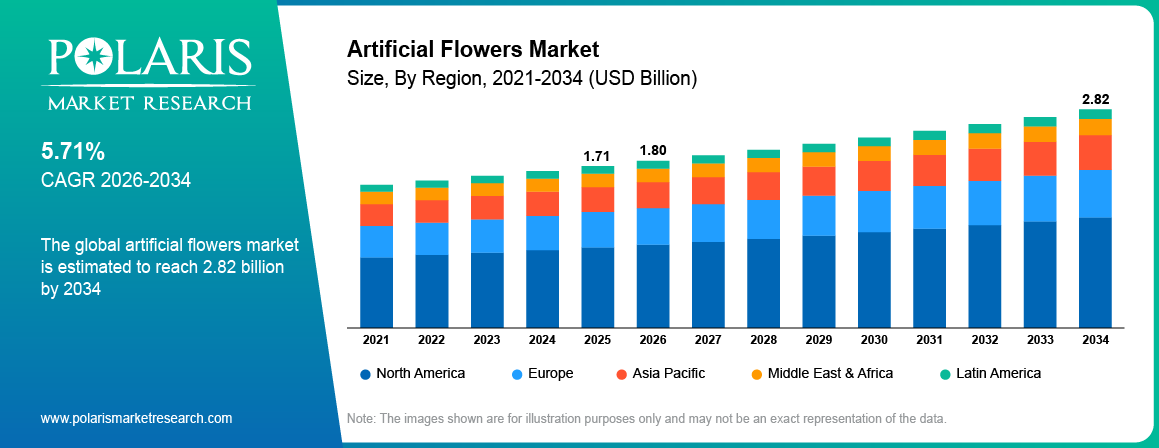
The global artificial flowers market size was valued at USD 1.71 billion in 2025, exhibiting a CAGR of 5.71% during 2026–2034. The market is driven by rising demand for low-maintenance home décor, increased popularity of synthetic floral arrangements, and growth in commercial event applications.
Market Statistics
Key Takeaways
- The Asia artificial flowers market dominates global production and export, capturing 33.0% share in 2025, supported by low manufacturing costs, skilled labor, and strong international demand.
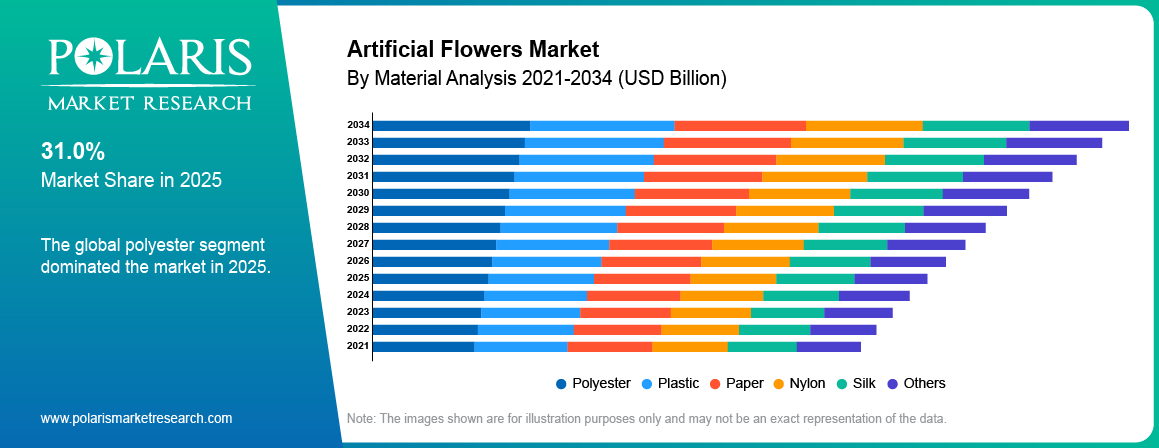
- The polyester segment accounted for the largest share of 31.0%, due to its durability, cost-effectiveness, and realistic appearance, making it a preferred material for artificial flower production.
- The commercial segment is expected to witness CAGR of 6.15% by 2034, driven by high demand from event planners, hotels, and corporate spaces for long-lasting and visually appealing floral decor.
- In 2025, the supermarkets segment maintained a strong share of 29.0%, benefiting from wide product visibility, convenience, and impulse purchases by consumers.
- The paper segment is expected to witness CAGR around 29.0% during the forecast period due to rising sustainability preferences and DIY décor trends.
- The online distribution channel is projected to expand at a CAGR of 5.30% from 2026 to 2034. It is driven by increasing e-commerce adoption and wider product accessibility.
Note: Figures and projections outlined in this report are the result of Polaris Market Research’s proprietary analytical processes, grounded in the latest available datasets and market observations.
Artificial Flowers Market Dynamics
- The rising demand for low-maintenance home décor and the increasing use of artificial flowers in events and weddings are driving market growth.
- The growing urban lifestyle and the influence of social media trends further boost consumer interest in artificial floral arrangements.
- Environmental concerns over non-biodegradable materials limit sustainable growth.
- The development of eco-friendly, recyclable artificial flowers presents significant expansion opportunities.
To Understand More About this Research: Download Sample Report
What Are Artificial Flowers and How Are They Made?
Artificial flowers are decorative products made from materials like polyester, silk, plastic, paper, and nylon that mimic real flowers in appearance and texture. They are widely used in home décor, events, hospitality, and commercial spaces to offer long-lasting, low-maintenance, and cost-effective aesthetic solutions.
The availability of a diverse range of artificial flowers in various shapes, sizes, and colors has been a key factor contributing to the expansion of the market. This diversity allows manufacturers to cater to a wide array of customer preferences, ensuring that artificial flowers align with different styles and design preferences in home and commercial spaces.
There is a notable trend of gifting artificial flowers for various occasions and events, which has significantly contributed to the growing demand in the market. Artificial flowers offer a long-lasting and aesthetically pleasing alternative to traditional fresh flowers, making them an attractive choice for gifts.
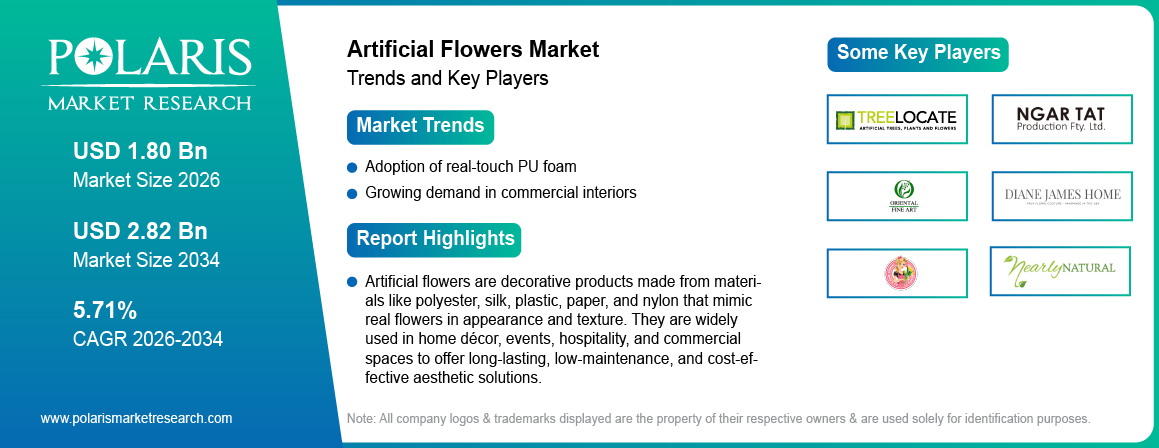
Key factor driving the adoption of artificial flowers, especially those utilizing real-touch PU foam technology, is their longevity. These flowers have a prolonged lifespan compared to fresh flowers, making them a cost-effective choice over time.
Additionally, the customization options available with artificial flowers allow businesses and individuals to tailor the floral arrangements to specific preferences, contributing to their widespread adoption. The cost-effectiveness and convenience of faux flowers eliminate the necessity for frequent replacements and cleanup typically associated with real flowers. Moreover, the trend is moving beyond traditional vase displays, with a growing emphasis on integrating artificial flowers into imaginative arrangements such as wreaths.
Artificial Flowers vs. Fresh Flowers: Cost, Durability and Sustainability
| Aspects | Artificial Flowers | Natural Flowers |
| Cost | Higher upfront cost, but more economical over long-term use | Lower initial cost, but recurring replacement increases total spend |
| Maintenance | No watering, trimming, or sunlight needed | Require regular care, water, and temperature control |
| Durability | Long-lasting and reusable for years | Short lifespan and prone to wilting |
| Seasonal Availability | Available year-round in all designs and colors | Often limited by season, climate, and supply |
| Environmental Impact | Can create concerns due to plastic use and limited recycling | Biodegradable, but often linked to water use, transport, and short-term waste |
Source: Polaris Market Research Analysis
Artificial Flowers Market Trends
Artificial Flowers Market Drivers and Opportunities
Realistic Designs, Customization and Real-touch Materials
The artificial flowers industry is undergoing significant growth, propelled by innovations like the adoption of real-touch polyether polyurethane foam technology. Traditionally, these flowers were often associated with being cheap and of low quality. Moreover, the advancements in the manufacturing processes & materials have resulted in the development of high-quality flowers that closely mimic the appearance of real ones.
Real-touch flowers, particularly those crafted from PU foam, have become notable in the market. These artificial flowers offer several advantages, including low maintenance, durability, and vibrant colors, making them well-suited for various commercial spaces such as offices, hotels, spas and salons, and retail stores. The realistic look and feel of these flowers enhance their aesthetic appeal, creating a visually appealing environment in these settings.
Artificial Flowers Market Segment Analysis
The market is primarily segmented based on material, application, distribution channel, and region.
| By Material | By Application | By Distribution Channel | By Region |
|
|
|
|
Source: Polaris Market Research Analysis
To Understand the Scope of this Report: Request Customization
Artificial Flowers Market, by Material
Polyester Artificial Flowers Led the Market in 2025
Polyester segment accounted for the largest share valued at 31.0% in 2025. This dominance is primarily attributed to the exceptional versatility and durability offered by polyester, making it a preferred choice for crafting realistic and long-lasting artificial flowers. Polyester's capacity to retain vibrant colors and intricate details significantly enhances the visual appeal of the artificial flowers made from this material. Furthermore, the cost-effectiveness of manufacturing artificial flowers using polyester fabric, compared to materials like silk, is a key factor driving its growing popularity and increasing demand.
Paper segment will grow rapidly at a CAGR of 5.0% during the forecast period. This growth is primarily attributed to paper emerging as a sustainable alternative to materials like polyester and plastic, aligning with the increasing environmental consciousness among consumers. Advances in paper manufacturing technology have played a crucial role in creating highly realistic and visually appealing artificial flowers, thereby enhancing their overall appeal. The affordability of paper as a raw material further positions these artificial flowers as cost-effective, and appealing to budget-conscious consumers. Additionally, the growing trend of DIY (Do-It-Yourself) crafts and home decor projects has spurred demand for paper-based artificial flowers, contributing to the overall growth of the market.
Artificial Flowers Market, by Application
Residential Applications Led the Artificial Flowers Market in 2025
Residential segment captured 63.0% share in 2025. This growth is primarily linked to the minimal maintenance requirements of artificial flowers, eliminating the need for watering, exposure to sunlight, and frequent replacements. This convenience makes artificial flowers an attractive option for modern homeowners. Moreover, artificial flowers offer a durable and long-lasting decorative solution, enhancing the aesthetic appeal of homes without the concerns associated with seasonal availability.
The commercial segment is expected to witness CAGR of 6.15% by 2034. Within commercial settings, there has been a notable transition in demand from plastic to the textile-borne products. Textile materials are preferred for their versatile design options, diverse color choices, & ecological appeal. Notably, top choices for artificial flowers include carnations, chrysanthemums, and roses. Significant demand in the commercial sector arises from the rental business, encompassing exhibitions, offices, and special events like weddings. Rental companies predominantly opt for "silk polyester" products, owing to their washable nature, & shape retention.
Artificial Flowers Market, by Distribution Channel
Supermarkets and Hypermarkets Held a 29.0% Share in 2025
In 2025, supermarkets segment held a significant market share of 29.0%. This dominance is attributed to the extensive offerings of artificial flowers in these large retail outlets, providing consumers with a convenient and diverse range of options to explore and select their preferred items. The one-stop shopping experience offered by supermarkets and hypermarkets is particularly appealing to customers seeking home decor and floral arrangements, leading to an upsurge in sales.
Online segment is expected to grow at a CAGR of 5.30% during the forecast period. It is driven by online platforms providing a diverse range of artificial flower options conveniently accessible from home. The increasing internet penetration has played a significant role in the expansion of the online sales channel segment. Additionally, online stores are continually broadening their assortment of artificial flowers.
Artificial Flowers Market Regional Analysis
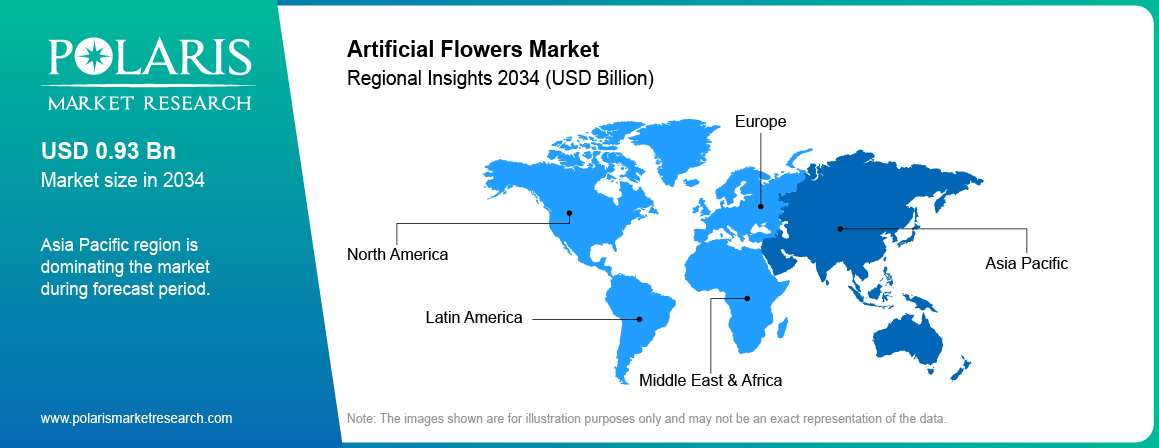
The artificial flowers market is experiencing robust growth globally, with the Asia Pacific region leading with 33.0% share in 2025, due to its strong manufacturing base and growing consumer demand. Asia Pacific benefits from countries like China and India, where cost-effective production and skilled labor drive large-scale manufacturing and exports. Increasing urbanization, rising disposable incomes, and a shift toward low-maintenance home and commercial décor further boost demand. Additionally, the expansion of retail infrastructure and growing awareness of sustainable décor options are encouraging adoption. The region’s preference for vibrant, aesthetically pleasing artificial flowers is also supported by cultural festivals and events, enhancing market growth.
In 2025, Europe market accounted for 23.0% share, driven by consumers’ strong focus on aesthetics, quality, and sustainability. European buyers favor premium and eco-friendly products, pushing manufacturers to innovate with new materials and realistic designs. The region’s mature retail sector, combined with the growth of online sales channels, facilitates diverse distribution. Additionally, Europe’s increasing interest in interior décor trends and commercial applications, such as hotels and event venues, supports steady demand for artificial flowers. Regulations promoting environmentally sustainable products are influencing market preferences in this area.
The North America artificial flowers market is expected to witness CAGR of 5.30% during the forecast period, characterized by high consumer awareness of home décor trends and convenience-driven purchases. The market benefits from strong retail chains and online platforms that offer a wide variety of artificial flower products. North American consumers appreciate durable, reusable floral décor for homes, offices, and events. Seasonal trends and growing demand for allergy-friendly alternatives to fresh flowers also contribute to this shift. Sustainability and innovative designs are becoming important purchase drivers as consumers seek quality and eco-conscious options.
Artificial Flowers Market Competitive Landscape
The market exhibits fragmentation with a substantial presence of numerous unorganized players. Major companies in the industry prioritize the development of highly realistic botanical reproductions. For instance, New Growth Designs, a prominent player in the artificial flowers sector, specializes in crafting luxury artificial floral designs with meticulous attention to detail. The company places a strong emphasis on innovation and is dedicated to addressing challenges within the fresh floral industry.
Leading Artificial Flowers Companies and Suppliers:
- TreeLocate (Europe) Limited
- Foshan Tongxin Artificial Flowers
- Dongguan Fusheng Arts Products
- NGAR TAT PRODUCTION
- Oriental Fine Art
- Silk Flower
- Diane James Designs, Inc.
- J. S. Flower Company Limited
- Nearly Natural
- Floral Home Décor
Artificial Flowers Market Recent Developments
- In February 2025, Home Bargains launched its Jardin Artificial Cherry Blossom Tree—a budget-friendly yet UV- and weather-resistant outdoor décor product—representing a significant innovation in realistic, low-maintenance artificial floral solutions. (Source: mirror.co.uk)
Artificial Flowers Market Challenges and Sustainability Issues
- Environmental concerns over plastic-based materials and their impact on sustainability.
- Limited recycling options for many artificial flower components, especially mixed-material designs.
- Perception issues, as some consumers still view artificial flowers as less natural or premium than fresh flowers.
Artificial Flowers Market Future Outlook
The future outlook for the artificial flowers market is positive, with growth supported by rising demand for sustainable décor alternatives and a stronger shift toward reusable decorative products. Expansion of e-commerce floral retail will make it easier for consumers and businesses to access a wider variety of designs, while hospitality and event sectors are likely to increase adoption for their durability and visual consistency. Product innovation in more realistic materials and finishes should further improve appeal, especially in premium décor applications. Growing preference for long-lasting decorative solutions over fresh flowers will remain a key driver of market expansion through 2034.
Artificial Flowers Market Report Scope and Methodology
| Report Attributes | Details |
| Market size value in 2025 | USD 1.71 Billion |
| Market size value in 2026 | USD 1.80 Billion |
| Revenue Forecast in 2034 | USD 2.82 Billion |
| CAGR | 5.71% from 2026 – 2034 |
| Base year | 2025 |
| Historical data | 2021 – 2024 |
| Forecast period | 2026 – 2034 |
| Quantitative units | Revenue in USD million/billion and CAGR from 2026 to 2034 |
| Segments Covered | By Material, By Application, By Distribution Channel, By Region |
| Regional scope | North America, Europe, Asia Pacific, Latin America; Middle East & Africa |
| Customization | Report customization as per your requirements with respect to countries, regions, and segmentation. |
Source: Polaris Market Research Analysis
Explore the market dynamics of the 2025 Artificial Flowers Market share, size, and revenue growth rate, meticulously examined in the insightful reports crafted by Polaris Market Research Industry Reports. The analysis of the Artificial Flowers Market extends to a comprehensive market forecast up to 2034, coupled with a retrospective examination. Avail yourself of a complimentary PDF download to sample this in-depth industry analysis.
Browse Our Top Selling Reports
Minibar Refrigerators Market Size, Share 2024 Research Report
Research Grade Proteins Market Size, Share 2024 Research Report
Insect Repellent Market Size, Share 2024 Research Report
Artificial Flowers Market Frequently Asked Questions
The global artificial flowers market size is expected to reach USD 2.82 billion by 2034
Tree Locate, Foshan Tongxin Artificial Flowers are the top market players in the market.
The Asia artificial flowers market dominates global production and export, capturing 33.0% share in 2025.
The global artificial flowers market and is expected to grow at a CAGR of 5.71% during the forecast period.
Material, application, distribution channel, and region are the key segments in the Artificial Flowers Market.
Key growth drivers include rising demand for low-maintenance home décor, increasing use in commercial events and weddings, long-lasting durability compared to fresh flowers, and growing influence of social media trends. The development of eco-friendly, recyclable options and real-touch PU foam technology also boost market expansion.
Artificial flowers are widely used in both residential and commercial settings. Commercial applications include hotels, offices, event venues, weddings, and retail stores, where durability and low maintenance are valued. In residential settings, they're popular for home décor due to their long-lasting nature, vibrant colors, and elimination of watering or seasonal replacement needs.
Download Sample Report of Artificial Flowers Market
Please fill out the form to request a customized copy of the research report.


