
Insect Repellent Market Share, Size, Analysis Report, 2026-2034
REPORT DETAILS
Insect Repellent Market Summary
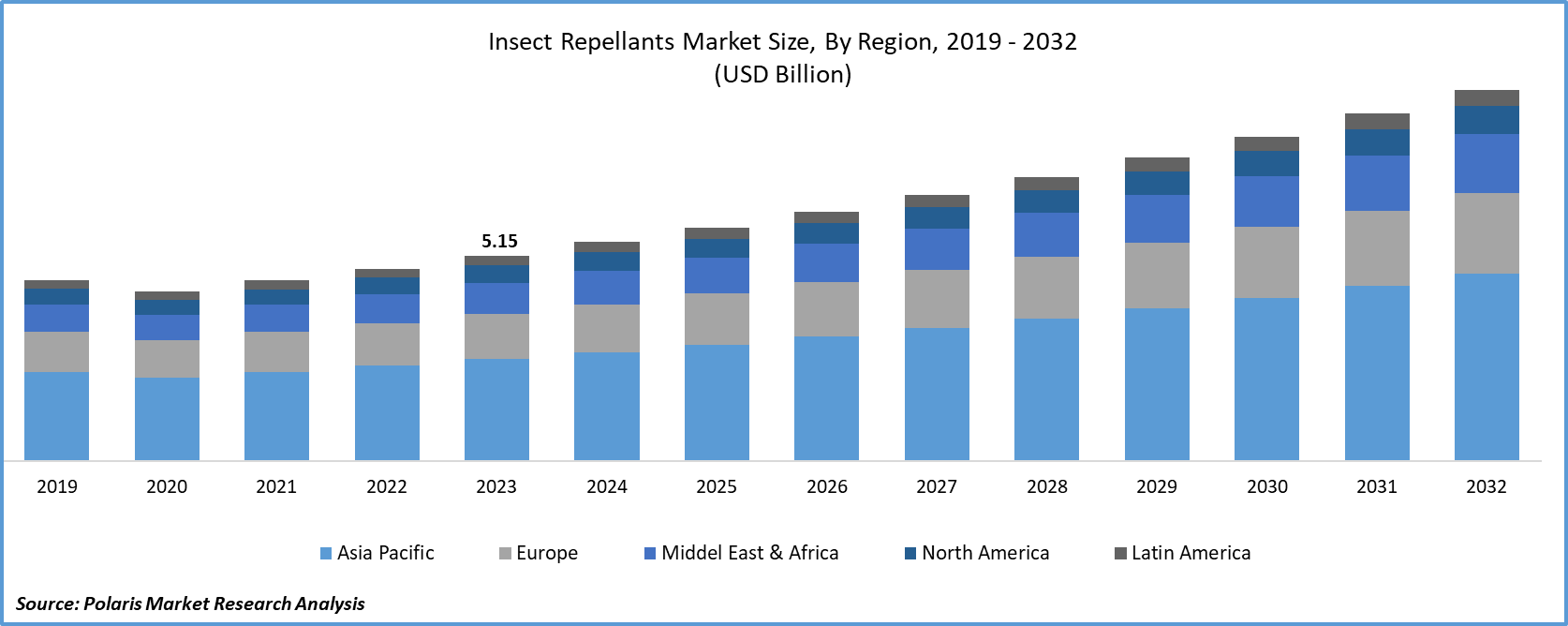
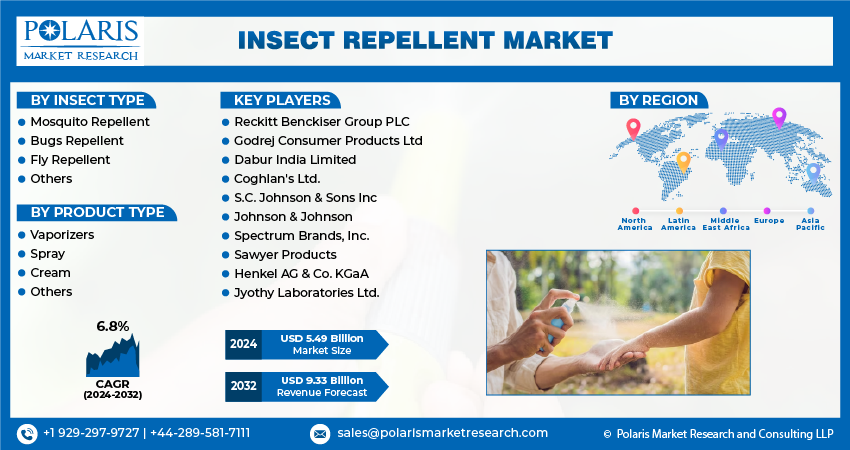
The global Insect Repellent Market was valued at USD 5.93 billion in 2025 and is forecasted to grow at a CAGR of 6.8% from 2026 to 2034. Increasing outdoor recreational activities, travel to tropical regions, and public health campaigns against vector-borne diseases are supporting market expansion.
Market Statistics
Key Takeaways
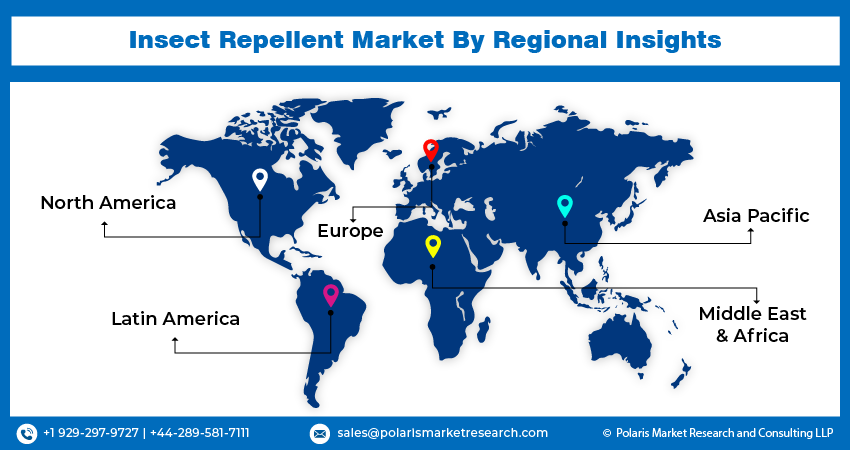
- Asia Pacific dominated the global market with 41.43% in 2025. The dominance is attributed to its warm, humid climate, which creates ideal conditions for mosquitoes and other insects to thrive.
- The Middle East & Africa market is expected to register the highest CAGR of 8.5% during the forecast period. Rising awareness about health risks propels the industry growth.
- The mosquito repellent segment accounted for the largest share of 67.5% in 2025. The increasing prevalence of mosquito-borne diseases like malaria, dengue, Zika virus, and chikungunya accounted for the leading position.
- The bugs repellent segment is expected to exhibit a significant CAGR of 7.6% during the forecast period. The demand for these products is being driven by features such as odorless and non-sticky nature.
- The insect repellent vaporizers segment held the majority market share of 32.1% in 2025. Vaporizers offer continuous and passive protection, which propels their demand.
Note: Figures and projections outlined in this report are the result of Polaris Market Research’s proprietary analytical processes, grounded in the latest available datasets and market observations.
Industry Dynamics
- Growing prevalence of mosquito-borne diseases, such as dengue, malaria, and chikungunya, propels demand for insect repellent products across urban and rural regions.
- There is an increasing consumer awareness about personal health and hygiene. It boosts the use of repellents in households, travel, and outdoor settings.
- Consumers are seeking safer and eco-friendly alternatives. Thus, demand for natural, plant-based, and DEET-free repellents is reshaping product innovation.
- Rising outdoor recreational activities, such as camping, hiking, and tourism, fuel the consumption of portable and long-lasting repellent formats.
- Concerns over potential skin irritation, chemical toxicity, and regulatory restrictions on certain active ingredients limit market growth.
What is Insect Repellent?
Insect repellent refers to a chemical or natural substance. They are applied to skin, clothing, or surrounding areas to deter insects such as mosquitoes, flies, and other biting bugs from landing or feeding. These products play a vital role in personal protection. They help reduce the risk of vector-borne diseases, including malaria, dengue, and Zika.
The wide array of the insect repellents, such as sprays, coils, mats, & creams, has significantly boosted their appeal among consumers. This diverse selection caters to various preferences and requirements, whether indoors or outdoors. The global rise in insect populations has contributed to the spread of various diseases. Mosquitoes are significant carriers of diseases such as malaria, dengue, & yellow fever. They also transmit illnesses like lymphatic filariasis & Japanese encephalitis.
Source: Polaris Market Research Analysis
Comparison Matrix: Natural Vs. Chemical Repellents
| Aspect | Chemical Repellents (e.g., DEET, Picaridin) | Natural Repellents (Plant-Based Oils) |
| Active Ingredients | Synthetic compounds such as DEET and picaridin designed for high efficacy | Essential oils such as citronella, eucalyptus, neem, and lavender |
| Effectiveness | Highly effective with long-lasting protection against a wide range of insects | Moderate effectiveness; may require frequent reapplication |
| Duration of Protection | Provides extended protection (4–12 hours depending on concentration) | Shorter protection window (1–4 hours typically) |
| Safety Profile | Considered safe when used as directed, though concerns exist about skin sensitivity and chemical exposure | Perceived as safer and eco-friendly, but may still cause allergic reactions in some users |
| Odor & Feel | Generally odorless or mild scent; non-greasy formulations available | Strong herbal fragrance; can feel oily on skin |
| Suitability | Preferred for high-risk areas with disease prevalence and outdoor activities | Suitable for daily use, children (with caution), and low-risk environments |
| Regulatory Status | Strictly regulated and tested for efficacy and safety | Less regulated; variability in performance and formulation consistency |
Source: Polaris Market Research Analysis
The global urban population is showing increased health awareness and a growing concern about the risks associated with mosquito bites. In developing countries, where mosquito-borne diseases are on the rise, even rural communities are becoming more health-conscious. According to a March 2020 report from the World Health Organization (WHO), viral diseases account for over 17% of all the infectious diseases, resulting in more than 700,000 annual deaths. These diseases can be caused by parasites, or viruses.
In recent years, world suffered with many outbreaks of lethal infections, including chikungunya, influenza, zika virus, & dengue, primarily transmitted by the insect vectors. With the increase in vector-borne diseases, there is a growing demand for insect-repellent products, leading to a rise in the insect repellent market for insect-repellent active chemicals. Moreover, these diseases & new viruses can spread to different regions through travel and the transportation of goods.
The Insect Repellent Market report details key market dynamics to help industry players align their business strategies with current and future trends. It examines technological advances and breakthroughs in the industry and their impact on the market presence. Furthermore, a detailed regional analysis of the industry at the local, national, and global levels has been provided.
Additionally, other insects like the tsetse fly cause sleeping sickness, sandflies lead to the leishmaniasis group of diseases, blackflies cause Onchocerciasis or river blindness, and fleas are responsible for plague. According to an article published in The New England Journal of Medicine in November 2022, the Intergovernmental Panel on Climate Change has reported a high level of certainty that diseases spread by vectors have increased significantly in recent years.
Source: Polaris Market Research Analysis
Industry Dynamics
Growth Drivers
Technological Advancements:
Advancements in technology are reshaping the way insect repellents are adopted and embraced, marking a significant impact on the market's future. Affordable and environmentally friendly products are anticipated to present substantial growth prospects for industry participants. Organic insect repellents are emerging as a safer option compared to synthetic counterparts like DEET and Picaridin. This shift broadens the market's potential for expansion.
The rising prevalence of insect-borne diseases has led to greater awareness among consumers, driving the increased usage of insect repellents. In 2020, data from the U.S. Census and Simmons National Consumer Survey (NHCS) indicated that 195.5 Mn individuals in the U.S. used insect repellents. Enhanced product visibility through online platforms and advertising campaigns continues to boost the adoption of insect repellents.
What is the Future of Insect Repellent Market?
The market is expected to witness steady growth during the forecast period. Rising global temperatures are expanding insect populations and prolonging breeding seasons. This factor will boost the market expansion. Increasing health awareness and preventive healthcare practices are encouraging consistent product usage. Innovation in eco-friendly and plant-based repellents would shape product development. Additionally, the expansion of e-commerce platforms is improving product accessibility. Further, growing government initiatives and public health campaigns for disease prevention will support market growth
Report Segmentation
The market is primarily segmented based on insect type, product type, and region.
| By Insect Type | By Product Type | By Region |
|
|
|
Source: Polaris Market Research Analysis
Source: Polaris Market Research Analysis
By Insect Type Analysis
Mosquito repellent segment accounted for the noteworthy share in 2025
The mosquito repellent segment accounted for the largest share of 67.5% in 2025. This dominance is attributed to the escalating prevalence of mosquito-borne diseases like malaria, dengue, Zika virus, and chikungunya. Heightened awareness about these diseases has driven the demand for effective mosquito repellents. The introduction of novel and efficient products has further propelled the segment's growth. Notably, the approval of the new mosquito repellent product, AM 601 Pod containing transfluthrin, by the U.S. Environmental Protection Agency (EPA) in July 2023 signifies the market's continuous expansion and innovation.
The bugs repellent segment is expected to exhibit a significant CAGR of 7.6% during the forecast period. The demand for these products is being propelled by odorless & non-sticky repellents. In March 2023, Zevo, introduced its latest On-Body Mosquito + Tick Repellents, providing odorless & non-sticky protection against ticks for up-to 8 hours. This launch aligns with the concerned consumer preferences for formulas for being both non-sticky & odorless.
By Product Type Analysis
Insect repellent vaporizers segment held the majority market share in 2025
The insect repellent vaporizers segment held the majority market share of 32.1% in 2025. This is primarily due to the convenience they provide. Unlike topical applications like sprays or lotions, vaporizers offer continuous and passive protection. Upon being plugged in, these devices release repelling vapors, establishing a protective barrier for the indoor spaces. This ensures that users are shielded from the insects without the hassle of frequent re-application.
Spray segment will grow at substantial pace. The demand for the insect repellent sprays is propelled by their effectiveness, portability, & ability to offer precise applications, catering to both outdoor activities & daily use. In June 2023, Shubug introduced a new brand, Shubug Active & Shubug Natural, providing potent insect protection. The natural formula ensures 10 hours of defense against mosquitoes and pests with just 1 spray, while Shubug Active offers 12 hrs of protection. These products also emphasize quality ingredients and safety, addressing the needs of outdoor enthusiasts as consumers increasingly prioritize health and safety by seeking efficient and convenient insect repellent solutions.
Regional Insights
Asia Pacific dominated the global insect repellent market with 41.43% in 2025
Region’s growth is primarily due to its warm and humid climate, creating ideal conditions for mosquitoes and other insects to thrive. As people search for ways to alleviate discomfort and reduce the risk of disease transmission from insects, the demand for insect repellents is expected to rise. Except for the Democratic People's Republic of Korea, all countries in this region are dengue-endemic, collectively contributing to around half of the global dengue cases. India, Indonesia, Sri Lanka, & Thailand are among the 30 most affected countries across the world.
As per the estimates of the WHO, prevalence of the dengue estimated to be around 3.9 Bn people are at risk of infection with the dengue viruses. In 2022, there were 2,33,251 dengue cases in India, up from 44,585 in 2020. In the first 10 months of 2022, there were 110,473 cases.
The Middle East & Africa market is expected to register the highest CAGR of 8.5% during the forecast period. The increasing awareness about health risks has made consumers more proactive in safeguarding their health. This proactive approach includes the use of insect repellents as a preventive measure. Africa, according to the Africa Health Organization, is responsible for about 90% of the world's malaria cases. In the Middle East, governments and health organizations frequently conduct awareness campaigns about diseases transmitted by vectors. These initiatives stress the significance of using insect repellents as a crucial preventive measure.
Source: Polaris Market Research Analysis
Key Market Players & Competitive Insights
The market comprises global and local players. Major companies employ tactics like mergers, acquisitions, and establishing new operations in various regions to expand their market offerings.
Some of the major players operating in the global market include:
- Reckitt Benckiser Group PLC
- Godrej Consumer Products Ltd
- Dabur India Limited
- Coghlan's Ltd.
- S.C. Johnson & Sons Inc
- Johnson & Johnson
- Spectrum Brands, Inc.
- Sawyer Products
- Henkel AG & Co. KGaA
- Jyothy Laboratories Ltd.
Recent Developments
- In April 2026, Affix Labs Group B.V., a Dutch Green Chemtech startup, closed a USD 1.17 million funding round for the European expansion of a sustainable insect repellent. (Source: PRNewswire)
- In March 2025: Thermacell Repellents launched the E65 rechargeable mosquito repeller, featuring a fast-charging dock, 6.5-hour battery life, and a 20-foot protection zone. The product addresses growing demand for convenient, long-lasting outdoor repellent solutions. (Source: thermacell.com)
- In November 2024: Nippo entered India’s home care segment with the launch of Swooper, a mosquito repellent formulated with Japanese MFT (Metrofluthrin) technology and a sandalwood fragrance. The product was introduced across both offline retail and online platforms. (Source: afaqs.com)
- In August 2024: Safex Chemicals’ specialty arm introduced Renofluthrin, a patented mosquito-repellant molecule, marking a significant product innovation and expanding its portfolio of vector-control solutions. (Source: indiatimes.com)
Insect Repellent Market Report Scope
| Report Attributes | Details |
| Market size value in 2025 | USD 5.93 billion |
| Market size value in 2026 | USD 6.31 billion |
| Revenue forecast in 2034 | USD 10.71 billion |
| CAGR | 6.8% from 2026 – 2034 |
| Base year | 2025 |
| Historical data | 2021 – 2024 |
| Forecast period | 2026 – 2034 |
| Quantitative units | Revenue in USD billion and CAGR from 2026 to 2034 |
| Segments covered | By Product Type, Insect Type, By Region |
| Regional scope | North America, Europe, Asia Pacific, Latin America; Middle East & Africa |
| Customization | Report customization as per your requirements with respect to countries, region and segmentation. |
Source: Polaris Market Research Analysis
The analysis of Insect Repellent Market extends to a comprehensive market forecast up to 2034, coupled with a retrospective examination. Avail yourself of a complimentary PDF download to sample this in-depth industry analysis.
Browse Our Top Selling Reports
Collagen Market Size, Share 2024 Research Report
Aerospace Riveting Equipment Market Size, Share 2024 Research Report
Latin America Industrial Pumps Market Size, Share 2024 Research Report
UV Nail Gel Market Size, Share 2024 Research Report
Radiation Dose Management Market Size, Share 2024 Research Report
Insect Repellent Market FAQ's
The global insect repellent market size is expected to reach USD 10.71 billion by 2034
Key players in the market are Reckitt Benckiser, Godrej Consumer, Dabur, Coghlan’s, Johnson & Johnson
Asia Pacific dominated the global market with 41.43% in 2025.
The global insect repellent market is expected to grow at a CAGR of 6.8% during the forecast period.
The insect repellent market report covering key segments are insect type, product type, and region.
Key drivers include rising vector-borne diseases, outdoor recreational activities, tropical travel increase, public health campaigns, technological advancements, and climate-driven insect proliferation.
Key products include vaporizers, sprays, creams, and oils designed to protect against mosquitoes, bugs, flies, and other disease-carrying insect vectors.
Download Sample Report of Insect Repellent Market
Please fill out the form to request a customized copy of the research report.


