
Battery Separators Market Size, Share, Trends & Forecast, 2026–2034
REPORT DETAILS
Battery Separators Market Summary
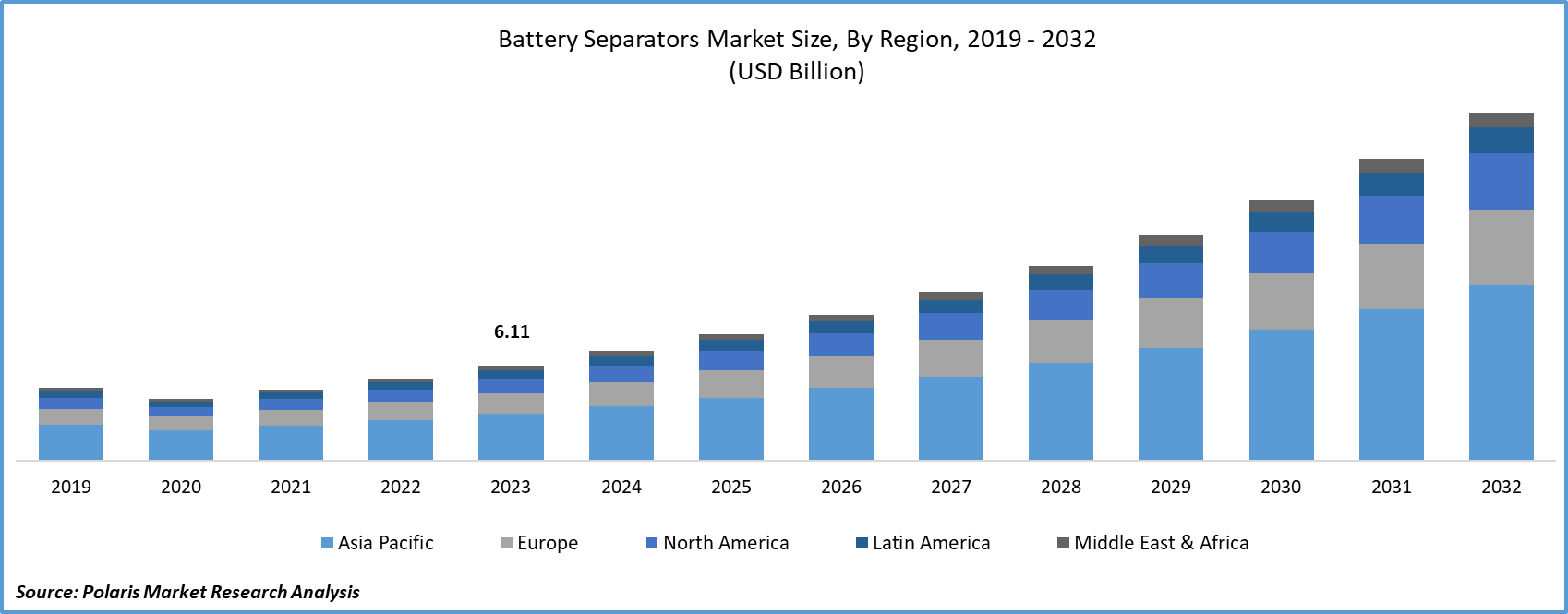
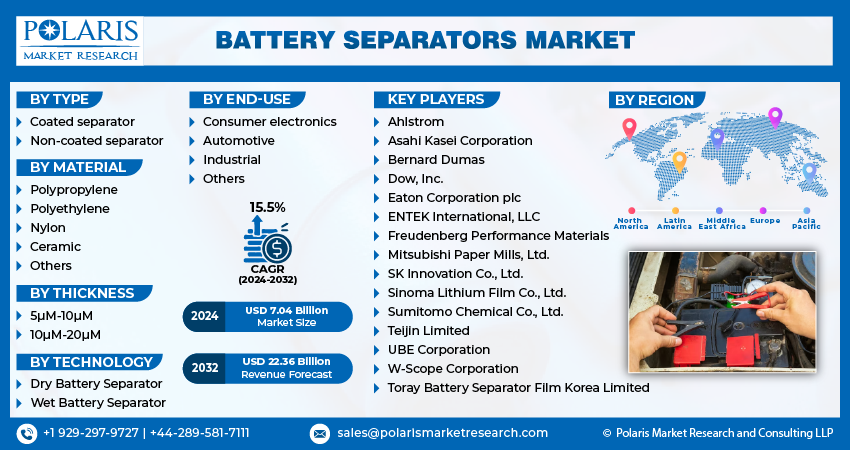
The global battery separators market size was valued at around USD 11.82 billion in 2025 and is expected to register a CAGR of 17.09% from 2026 to 2034. Increasing adoption of electric vehicles and rising emphasis on advanced Li-ion battery production drive the market growth. In addition, growing demand for renewable energy storage fuel the market expansion.
Market Statistics
Battery Separators Market Key Takeaways
- Asia Pacific accounted for the largest revenue share of 53.0% of the global market in 2025. The dominance is attributed to the high presence of lithium-ion cell manufacturers, electric vehicle manufacturers, consumer electronics assembly manufacturers, and the availability of a well-developed separator supply chain.
- China led the Asia Pacific market with 57.0% revenue share in 2025. This is due to China's vertically integrated battery ecosystem with raw materials, separator production, battery cells, and EV manufacturing.
- The North America market is expected to record the highest CAGR of 20.0% during the projected period. This is fueled by the regional battery supply chain realignment and increasing trend for domestic sourcing of components.
- The coated separator segment held a 62.0% revenue share of the battery separators industry in 2025. This is due to rising performance requirements of electric vehicle batteries and high-capacity energy storage batteries.
- The polyethylene segment is expected to register a significant CAGR of 16.70% during the forecast period, owing to its extensive history in lithium-ion cells that require a controlled pore structure and a thermal shutdown mechanism.
Note: Figures and projections outlined in this report are the result of Polaris Market Research’s proprietary analytical processes, grounded in the latest available datasets and market observation.
What are Battery Separators?
Battery separators are thin, microporous membranes that separate the anode and cathode in a battery cell. They primarily serve as a safety barrier that prevents the two electrodes from coming into contact; they also allow ions to flow through the electrolyte from one electrode to the other as the cell charges and discharges. This electrical insulation and ionic conduction make separators critical to battery safety, efficiency, cycle life, and performance. For lithium-ion batteries, the anode is the negative electrode and the cathode is the positive electrode during discharge. The porous nature of the battery separator prevents the custard and conductive agent from directly contacting the anode or cathode, while allowing controlled ion transport through the electrolyte-filled pores.
Polyethylene and polypropylene are common separator materials that can be used owing to their chemical stability, good mechanical strength, good compatibility with electrolyte and good thermal shutdown performance. A thermal shutdown battery separator inhibits ion transport at temperatures above the safe operating range, preventing thermal runaway and internal short circuits. Ceramic-coated separators also have enhanced thermal stability, puncture resistance, and electrolyte wettability, and therefore are becoming more and more important in the market for lithium-ion battery separators and EV battery separators.
The battery separators market is growing on account of the industrial, automotive, consumer electronics and renewable energy industries. Efficient separators enable electric and hybrid vehicle batteries to withstand high-stress charging, temperature, and cycling, while grid-scale and industrial energy storage requires strong membranes capable of continuous operation and renewable energy integration. High-end separators are also being utilized in smartphones, tablets, wearables and similar small-form-factor applications to achieve greater battery energy density without compromising on safety.
How Battery Separators Work?
- Between electrodes placement: Within a lithium-ion battery cell, the separator is located between the anode and cathode. Its location provides a controlled interface between the electrodes and the electrolyte while retaining the internal three-dimensional structure needed for repeated charge and discharge cycles.
- Avoid contact through the separator: The separator is a physical barrier that keeps the two electrodes apart. This avoids an internal short-circuit of the battery and ensures that the battery can perform the electrochemical processes necessary for its function.
- Ions travel through micropores: The battery separator is an open structure with many small pores filled with electrolyte, through which the lithium ions travel from the anode to the cathode. The right battery separator electrolyte compatibility effectively improves ionic conductivity and charge transfer performance in the battery.
- Thermal shutdown: When the internal temperature becomes too high, thermal shutdown battery separator swells and closes its pores. Limiting the ion flow contributes to the termination of the electrochemical process, and to the reduction of thermal runaway probability.
- Protective covering: A ceramic coated battery separator provides a thermal protective cover that enhances dimension stability, electrolyte wettability, mechanical strength and resistance to separator shrink under severe working ambience.
- Performance implications: These synergistic effects enable highly challenging applications (e.g., electric vehicles and energy storage systems) owing to their improvements in lithium-ion battery safety, ionic conductivity, cycle durability, charging performance, and battery energy density, to name a few key considerations.
Source: Polaris Market Research Analysis
Market Dynamics
Driver: Rising Adoption of Electric Vehicles
Strong growth in electric vehicle (EV) production boosts demand for lithium-ion battery packs, propelling the requirement for high-performance battery separators. Since electric vehicle batteries are subjected to harsh conditions, such as high-rate charging, high energy density, high temperature, and long working cycles, there is a rising need for separators with superior thermal stability, mechanical strength, electrolyte compatibility, and ionic conductivity. In June 2026, the UK Office for National Statistics announced that electric vehicles hold 55% share of all new car registrations in June 2026, an increase from 47% in June 2025. Consequently, increasing EV adoption is driving up the overall lithium-ion battery separator market (Source: cy.ons.gov.uk).
The rising emphasis on high-capacity and fast charging EV battery is boosting the demand for high-performance wet-process and coated separators capable of delivering higher battery separator energy density and long-term operating stability. This strengthens the importance of battery separator for electric vehicles to increase battery safety, charging performance, and long-term reliability.
Driver: Increasing Demand for Battery Separators in Renewable Energy Storage Systems
Growth of solar and wind generation is driving up installations of grid-scale and distributed battery energy storage systems. Batteries store electricity when generation exceeds load and discharge when generation falters. This mode of operation brings significant prospects for renewable energy battery energy storage system separator technology in utility and residential energy storage market.
Grid-scale ESS are known to undergo prolonged charge-discharge cycles regularly, and many cells are required to operate stably. Separator quality affects ion transport, internal resistance, cycling stability, and single-cell consistency across the battery pack. Thus, materials that maintain pore uniformity and electrolyte compatibility over extended use become especially advantageous as energy storage systems scale in size.
Residential energy storage presents a different demand curve. Batteries integrated into rooftop solar systems must endure heavy daily cycling while remaining safe near homes and other residential places. Advanced separator materials are expected to enable longer service life and stable electrochemical performance under such repetitive operating conditions.
Expansion in the battery separators market is driven largely by automotive demand, but stationary energy storage is increasingly becoming a growth sector. Increased renewables deployment will also boost demand for lithium-ion and other new battery chemistries, thus opening up more business for PE, PP, ceramic-coated, and specialty separator materials. The approach implicitly shows renewable energy battery storage separator as a sub-section of Energy Storage Systems to further validate topic relevance for this use.
Driver: Li-ion Battery Advancement
Advancements in Li-ion battery chemistry, charge rate, energy density, and cycle life are increasing the performance requirements for separator materials. Advanced cells are increasingly demanding even more stringent requirements for thinner membranes, optimized porosity of the battery separator, enhanced electrolyte wettability, and better thermal protection. This supports the need for polyethylene, polypropylene, and ceramic-coated separators that maintain ionic conductivity without undermining cell safety. The approach furthermore relates battery separator energy density to EV applications and future market expansion.
Driver: Gigafactory Investment
Direct large-scale battery production investments increase separator needs, as cell production volumes drive parallel demand for separator materials. In August 2026, the U.S. Department of Energy provided USD 500 million for seven projects to scale up domestic critical-material processing, battery manufacturing, and recycling capacity. This investment includes a USD 50 million federal share for Coreshell Technologies to build the first U.S. gigafactory for silicon-anode battery production. These type of investments in gigawatt production facilities strengthen battery gigafactory separator demand by growing lithium-ion cell output and supporting critical battery-component supply chain localization. Capacity growth of a similar nature in North America, Europe and Asia Pacific is motivating separator manufacturers to bring their production closer to battery and electric vehicle manufacturing clusters, to deliver greater supply security at lower logistics dependence. (Source: energy.gov)
Driver: Government Clean Energy Policies
Government subsidies toward electric vehicles, domestic batteries production, clean energy deployment, and energy storage infrastructure promote investment in the battery supply chain. These regulations drive producers to expand battery and component production capacity, indirectly expanding the market for battery separators. Supportive policies also contribute to the strengthening of localized battery supply chains and additional demand for advanced separator materials within lithium-ion batteries and energy storage systems. Furthermore, continued clean energy investment provides incentives for producers to develop better-performing separator technology which enhances battery safety, thermal stability and long-term efficiency.
Restraint: Raw Material Price Volatility and Supply Chain Risk
Variations in the prices of polyethylene, polypropylene, ceramic materials, specialty polymers, and coating raw materials could increase battery separator production costs. Transportation and petrochemical feedstock systems, together with battery-material supply chains, all increase vulnerability to supply chain disruptions for manufacturers. This, in turn, drives margins lower and makes it hard to lock in long-term pricing contracts with battery makers when surprise shortages or rising input prices occur. The lithium-ion battery separator market is experiencing the rapid growth and thereby increasing business opportunities for the high-quality materials. Some risks can be hedged by localizing supply, but it takes significant time and capital to find substitute suppliers and qualify new materials.
Restraint: Battery Safety Regulations
Strict battery safety standards put the separator producers under high demand for constant thermal stability, mechanical robustness, pore uniformity, and electrolyte compatibility. The separators for EV and energy storage applications need to demonstrate consistent performance under high temperature, fast charging, vibration, and long cycling. Moreover, complying with more stringent safety requirements may also mean additional testing, certification, quality control systems, outlays in advanced technologies such as ceramic coated battery separators and thermal shutdown battery separators. These can prolong product development cycles and raise the costs of getting products to market, especially for smaller companies.
Restraint: High Separator Manufacturing Complexity
Production of battery separators demands exact control of membrane thickness, pore size, porosity, coating uniformity, mechanical strength and dimensional stability. Small deviations can impact ionic conductivity, battery energy density and safety performance. High-end wet-process, dry-process and coated separator production is also based on special equipment and process plan. Developing thinner, energy-dense batteries and consistently producing a quality separator at gigafactory scale is increasingly difficult. It increases capital requirements and production costs, creating barriers to market entry.
Opportunity: Advanced Battery Chemistry Demand
Rising investments in higher-energy-density lithium-ion, sodium-ion, and other next-generation battery chemistries enable separator manufacturers to design materials with improved thermal stability, porosity, ionic conductivity, and electrolyte wettability. The trend is now shifting toward ceramic coated battery separators, ultra-thin membranes and other advanced solutions to meet the demand for faster charging and longer cycle life from battery manufacturers. Therefore, this could create new sources of revenue in the lithium-ion battery separator market, particularly in the EV and energy storage markets, as the energy density and safety performance of battery separators becomes more important.
Opportunity: Solid-State Battery Separator Innovation
Advances in solid-state batteries are opening up a new technology space for separator providers as traditional porous polymer membranes are being replaced by solid-electrolyte structures based on ceramics, polymers, sulfides, oxides, and composites. This shift broadens demand for solid-state battery separator technology that can deliver sufficient electrode separation with high ionic conduction.
Higher energy density is one of the main commercial attractions. Solid-state designs may enable batteries that store more energy per unit of weight and volume, potentially benefiting electric vehicles, aerospace systems, and miniaturized electronics. Therefore, the thin cell designs enabled by separator and electrolyte materials, while maintaining mechanical integrity, will become more strategically important as commercialization progresses.
Faster charging is another area of potential progress. Novel solid electrolytes are designed to allow fast ions transport and overcome many drawbacks of flammable liquid electrolytes. Ideal materials must provide ionic conductivity, interfacial stability, mechanical robustness, and compatibility with future electrode chemistries simultaneously.
The transition also bodes well for companies specializing in ceramic-coated battery separators, specialty polymer, and composite-material technologies, as the current separator manufacturing base can serve as a platform for production of next-generation products. Provided strategy points out ceramic and solid-electrolyte separators as a key emerging play on higher energy density/faster charging.
Commercial progress is still slow however, solid-state pilot manufacturing investment is expanding the market applicability of advanced separator materials and potentially creating a premium segment within the battery separators market.
Source: Polaris Market Research Analysis
Real World Use-Cases
- EV Battery Packs: The battery separators provide the new high-voltage lithium-ion battery pack in an EV with stable ion transport under high current rates, high temperature, and cycling. This underscores the importance of battery ES for EVs to improve battery safety, durability, and energy density.
- Smartphones: Smartphones rely on small lithium-ion batteries that need to possess a high energy density in the limited space inside. Ultra-thin polyethylene (PE) and polypropylene (PP) based separators retain efficient ion flow in short cell stack supports lightweight device design and long operating time between charging cycles.
- Grid-Scale Energy Storage Systems: Batteries are employed to stabilize large solar and wind projects in a range of grid-scale energy-storage systems. A dependable renewable energy battery storage separator can enhance the ability of the system to resist high-rate charge and discharge; thus, separator performance is becoming more critical for grid stability and long-term energy storage.
- Industrial UPS Systems: Systems for facilities like data centers, telecom buildings, manufacturing plants, and other critical infrastructure require reliable power supplies for the batteries powering uninterruptible power supplies during a power outage. Durable separator materials ensure stable battery performance, system uptime, and a longer service life.
- Power Tools: Cordless drills, saws, and other power tools need batteries that can provide high current for a short time. Strengthened separators can handle mechanical strain, rapid discharge, and multiple charging cycles. This enables compact, high-output batteries.
- Aerospace and Defense: Battery systems require separators able to meet vibration, temperature changes, and extreme reliability expectations. Advanced ceramic battery separator technology is uniquely suited to be used in those applications that demand the worst-case scenarios for thermal stability and failure, with severe heat ablation among other behaviors.
Segmentation Analysis
Market by Type
The coated separator segment accounted for 62.0% of the battery separators market share in 2025. This is due to rising performance requirements of electric vehicle batteries and high-capacity energy storage batteries. Battery producers increasingly apply ceramic or polymer coatings to improve battery separator thermal stability, dimensional stability, puncture resistance, and electrolyte wettability in extreme operating environments. These properties are particularly influential in high-energy-density lithium-ion battery anode, where elevated temperatures and rapid charging cycles lead to an increased risk of separator deformation and internal cell failure.
Increasing production of EV batteries has also applied more pressure on demand for ceramic coated battery separator technology that can preserve structural integrity in severe charge/discharge conditions. The facilitated electrolyte absorption also contributes in enhancing ion transport efficiency, while enhanced mechanical strength might support the development of thinner separator for the compact battery configuration. This superior performance has led to the increasing preference for coated vs non-coated battery separators in high-end EV and grid-scale energy storage systems (ESS), and ultra-high-performance electronic applications.
The non-coated separator segment is estimated to record a CAGR of 15.08% over the forecast period, as it remains a cost-effective, proven solution for applications where cost efficiency and established manufacturing processes are still key purchasing considerations. Non-coated separators are no longer primarily competing based on improved thermal characteristics, but still have a role in traditional consumer batteries, selected industrial systems, and other applications that operate under relatively modest performance requirements.
The simpler production process can potentially eliminate further processing steps for coating and allow manufacturers to more competitively serve price-sensitive, high-volume battery applications. In addition, existing polyethylene and polypropylene separator production infrastructure enables suppliers to scale output without needing the extra coating stages involved with advanced membranes. Therefore, strong demand is expected to continue as global battery production increases across many chemistries and end-use types. Although premium applications are increasingly moving toward coated solutions, conventional polyethylene and polypropylene battery separator li-ion technologies still hold a meaningful share where they provide a reasonable balance between performance and production economics.
Coated vs. Non-Coated Separator
| Dimension | Coated Separator | Non-Coated Separator |
| Thermal Stability | High. Ceramic/polymer coatings prevent shrinkage at elevated temperatures | Moderate. More susceptible to thermal deformation at high temperatures |
| Safety Performance | Superior. Ceramic coating reduces thermal runaway risk significantly | Standard. Relies on base polymer properties for safety |
| Electrolyte Wettability | Enhanced. Coatings improve electrolyte absorption and ion flow | Standard wettability, sufficient for conventional applications |
| Mechanical Strength | High. Coating layer adds puncture resistance and structural integrity | Adequate for standard battery applications |
| Battery Energy Density | Enables higher energy density batteries (EV and ESS applications) | Suitable for standard energy density needs |
| Manufacturing Cost | Higher. Additional coating process increases production cost | Lower. Simpler manufacturing process, cost-effective |
| Cycle Life | Longer. Coating reduces degradation and dendrite growth | Standard cycle life for conventional applications |
| Primary Applications | EV batteries, grid-scale ESS, high-performance electronics | Conventional lead-acid batteries, standard consumer electronics |
| 2025 Market Share | Dominant. 62.0% global revenue share | Growing. Cost advantage drives adoption in price-sensitive segments |
| Key Manufacturers | Asahi Kasei (Hipore), SK IE Technology, Toray Industries | ENTEK International, Freudenberg, Sumitomo Chemical |
Source: Polaris Market Research Analysis
Material Analysis
The polypropylene segment is expected to register a CAGR of 18.50% as it is used in applications requiring high chemical stability, dimensional stability, and good performance at high temperatures. The growing production of EV batteries and demand for polypropylene separator lithium-ion solutions are supporting the growth in automotive and industrial batteries.
The polyethylene segment is projected to grow at 16.70% CAGR owing to its extensive history in lithium-ion cells that require a controlled pore structure and a thermal shutdown mechanism. An increase in the production of consumer electronics and electric vehicle batteries is propelling the market for polyethylene battery separator material. Their use in high volume wet process production also keeps growing as battery manufacturers are growing production capacity globally.
Nylon accounted for around 44.0% of the market share in 2025, due to its high mechanical strength, thermal stability, and electrolyte absorption. These properties make it ideal for high-performance Li-ion and high-temperature batteries where the separator must be robust. Nylon is the best-performing material and is widely utilized in EV batteries as well as in other high-energy applications.
The ceramic segment is anticipated to witness the highest CAGR of 21.50% during 2026–2034, attributable to ceramic-coated battery separator technology gaining traction in high-end EVs, grid energy storage, and aerospace applications. Their better thermal stability, increased mechanical strength, and decreased short-circuit induced failure rate are contributing to their significance when battery manufacturers are pursuing higher battery energy density/SA and safety.
Comparison Matrix: Which is Best Battery Separator Material?
| Material | Key Properties | Primary Battery Type | Main Application | Market Position (2025) | Notable Producers |
| Nylon | Excellent thermal stability, high mechanical strength, superior electrolyte absorption | Li-ion | EV batteries, high-temp applications | Dominant. 44.0% market share | Freudenberg, Ahlstrom |
| Polyethylene (PE) | Consistent pore size, thermal shutdown feature, cost-effective, good chemical resistance | Li-ion | Consumer electronics, EV batteries | Major. Strong growth | Asahi Kasei (Hipore), SK IE Technology, Toray |
| Polypropylene (PP) | High temperature resistance, excellent chemical stability, high versatility | Li-ion, Lead-acid | EV batteries, automotive, medical | CAGR (18.50%) | UBE Corporation, Celgard (Polypore) |
| Ceramic-Coated | Superior thermal stability, prevents short circuits, enhanced durability | Li-ion (high-performance) | Premium EVs, energy storage, aerospace | Rapidly expanding. 21.5% CAGR forecast | Asahi Kasei, SK IE Technology, Sumitomo |
| Glass Fiber Separator Battery | High porosity, chemical inertness, wettability, suitable for lead-acid | Lead-acid | Industrial, UPS, automotive SLI | Stable in conventional segments | Ahlstrom, Bernard Dumas, Hollingsworth & Vose |
| Specialty Polymers / Others | Application-specific properties (PVDF, PAN, composite) | Solid-state, specialty | Next-gen batteries, R&D | Emerging. Growth with solid-state adoption | Solvay, Teijin, Natrion |
Source: Polaris Market Research Analysis
Thickness Assessment
The 5 µM–10 µM segment dominated the battery separators market by holding a 60.50% share in 2025, because of the rising demand for smaller and lighter battery designs for e-mobility and consumer electronics. Thinner separators enable battery producers to utilize more of the internal cell volume for active electrode materials, which can lead to greater battery separator energy density without an appreciable change in battery size. This thickness is also desirable for high-performance lithium-ion battery separator market applications that require high ion flow, minimum internal resistance and stable cycling performance.
The 10 µM–20 µM segment is projected to record a CAGR of 18.50% during the forecast period. Growth is driven by increasing use in battery systems that require higher structural strength and operational stability, rather than extreme compactness. This particular thickness range applies mostly to variations of grid batteries used for renewable energy battery storage separation applications, which are subject to multiple charge-discharge cycles during extended periods of usage. Increasing grid-scale ESS deployment is thus challenging the ES market to produce separators that can uphold mechanical strength and maintain electrolyte compatibility during extended operation
Technology Insights
The dry battery separator accounted for 61.0% of the market in 2025. This is attributed to its long-term use in traditional lithium-ion, lead-acid, and consumer pack batteries. The dry manufacturing process bypasses solvent extraction, which can streamline production processes, reduce processing costs, and minimize environmental impacts when compared to solvent-based workflows. It also delivers high mechanical strength and good dimensional stability, enabling high-volume production of batteries with strict uniformity and cost requirements. Its general applicability in consumer electronics, standard lithium-ion and automotive batteries has ensured a large installed production-based and steady demand.
The wet battery separator segment is anticipated to witness a CAGR of 20.09% over the forecast period. Rising demand for high-performance lithium-ion batteries with higher porosity, more electrolyte absorption, and better ionic conductivity is propelling the demand for wet battery separators. Such properties are becoming relevant for EV batteries and premium energy-storage systems in general; higher charging rates and more demanding operating conditions increasingly emphasize separator performance. Increasing adoption of ceramic coated battery separator technologies or restacked membranes, which are predominately associated with wet-process membranes used in advanced batteries systems, is expected to further augment growth. With the trend of battery manufacturers moving towards higher energy density, faster charging and safer systems, wet process battery separator products are becoming more and more popular in the applications, where the electrochemical performance is more important than the ease of manufacturing.
| Dimension | Dry Process Separator | Wet Process Separator |
| Manufacturing Process | Extrusion of polymer film + stretching to create pores (no solvents) | Polymer mixed with plasticizer + extraction with solvent to create pores |
| Key Property | Higher mechanical strength, dimensional stability | Higher porosity, superior electrolyte absorption |
| Ion Transport | Good — adequate for standard battery applications | Superior — higher ionic conductivity supports high-performance batteries |
| Cost | Lower — no solvent extraction needed, simpler process | Higher — solvent extraction adds cost and complexity |
| Environmental Impact | More eco-friendly (no solvents) | Higher environmental footprint (solvent use) |
| Main Applications | Consumer electronics, standard Li-ion batteries, lead-acid batteries | High-performance EV batteries, premium energy storage systems |
| Market Share (2025) | Dominant — over 61% global revenue share | Growing — ceramic-coated wet separators gaining rapidly at 20.09% CAGR |
| Key Manufacturers | Celgard (Polypore), ENTEK International, UBE Corporation | Asahi Kasei (Hipore), SK IE Technology (SKIET), Toray Industries |
Source: Polaris Market Research Analysis
Battery Type Analysis
The lithium-ion battery separators segment accounted for a 57.0% share of the battery separators market in 2025. This is attributed to the widespread use of these batteries for electric vehicles (EVs), consumer electronics, and energy storage systems (ESSs). With the increasing production of EVs, the sales of lithium-ion battery separators are also increasing. Also, there is a rising demand for high energy density, fast charging and good thermal stability. These factors support the introduction of new and advanced coated and microporous membrane battery.
The lead-acid batteries segment is likely to witness a 14.40% CAGR during the projected period. The demand for lead-acid batteries is rising in car ignition systems, UPS apparatus, telecom backup, and the power industry. The large installed base and renewal schedule support steady demand for separator materials, specifically glass-mat and specialty fiber products.
Demand for separators is rising in applications that demand long life, dependable operation, and compatibility with severe environments, such as those employing nickel-cadmium batteries. Interest, though limited, in chemically robust separator materials continues due to ongoing demand for their use in industrial backup systems, aviation, emergency power, and specialized instrumentation.
Applications for nickel-metal batteries also contribute to demand for separators from hybrid vehicles, industrial gear, and certain rechargeable consumer products. The use in applications that are time-tested, durable, and cycle stable provides an additional source of revenue, unrelated to the EV battery separator market.
Other battery chemistries will add to demand as manufacturers introduce next-gen energy storage technologies. This segment also identifies solid-state battery separator technology and emerging sodium-ion systems as potentially requiring more sophisticated ceramic, polymer, and composite separator materials with improved ionic-transport and thermal-performance characteristics.
By End-Use Analysis
Based on end-use analysis, the market has been segmented into consumer electronics, automotive, industrial, and others. The automotive segment dominated the market with 57.0% revenue share in 2025. The shift to electric vehicles represents a significant advancement in the automotive industry. Electric vehicles (EVs) rely on battery technology, such as lithium-ion batteries, for safety, efficiency, and durability. This reliance on advanced batteries highlights the importance of high-performance separators. Many countries and regions are implementing regulations to promote cleaner transportation in response to concerns about greenhouse gas emissions. These regulatory measures are contributing to increased demand for electric and hybrid vehicles, necessitating the development of advanced battery technologies.
Battery Safety & Thermal Management
Increasing battery energy density, fast charging, and high power are leading to higher cell internal thermal loads, and separator performance at the cell level is becoming a relevant aspect of battery-level risk management. Uncontrolled temperatures of polymer membranes can cause shrinkage, warping, or curling, which can lead them to converge or to have a smaller physical gap between electrodes, which ultimately might increase the chance of an internal short circuit. This challenge will boost the demand for materials with superior thermal stability for battery separators.
A thermal shutdown battery separator introduces an additional level of protection in that it permits polymer pores to close at temperatures, which are outside of its normal operating limits. Inhibited ion transport also slows down electrochemical reactions and reduces the risk of excessive heating. This feature is significant for EV battery packs, stationary storage systems, and other high-energy applications where the failure of a single cell can propagate to adjacent cells.
The move toward ceramic-coated battery separator technology enhances the thermal performance. Ceramic layers improve dimensional stability at high temperatures, reduce separator shrinkage, and increase mechanical strength while preserving electrolyte wettability. These ceramic coated separator advantages make coated membranes ideal for high power lithium-ion batteries.
Growing scrutiny from regulators and the industry at large on battery fire prevention, transport safety and operational reliability is leading manufacturers to focus on most secure separator designs. Instead of simply being a passive part, advanced separators are increasingly designed and engineered to be incorporated in a multilayer battery safety concept including thermal shut-down properties, heat-resistant coatings, controlled porosity and tougher mechanical stability.
Emerging Technology Trends
- Ceramic-Coated Technology: The demand for solutions such as ceramic-coated battery separators is growing as battery manufacturers need enhanced thermal stability, dimensional strength, and electrolyte wettability in high-performance cells. These coatings are particularly relevant to EV and energy storage applications, as safety requirements increase under high-temperature, fast-charge conditions.
- Solid-State Separators: Research into solid-state battery separator technology is progressing, with development efforts investigating ceramic, polymer, sulfide, oxide, and composite materials that allow for efficient ion transport while avoiding traditional liquid-electrolyte-based configurations. This trend is tightly correlated with higher battery energy density, enhanced safety, and next gen EV architectures.
- High-Heat-Resistant Membranes: Manufacturers of separators are turning more attention to membranes that can resist the collapse of their structure by heat during operation. Enhanced battery separator thermal stability may reduce shrinkage and warping, enabling safer operation in fast-charging EV batteries, aerospace technologies, and large-scale energy storage systems.
- Bio-Based Sustainable Materials: Sustainability-related trends are driving innovation in recyclable, renewable, or low-impact materials for use as separators. Bio-based fibers and ‘green’ polymer alternatives enable battery manufacturers to reduce the environmental impact of battery materials and help meet future regulatory and circular-economy targets.
- AI-Driven Material Optimization: Artificial intelligence is becoming increasingly used to investigate the properties of materials, such as their combinations, pore structures, coating formulations, and performance manifestations. AI-enabled innovation can reduce testing cycle times and enable better design and identification of product-to-product best candidates for specific battery chemistries, including separator porous structure, ionic conductivity, and electrolyte compatibility.
- Ultra-Thin Separators: Recent advances in film processing technology are enabling the production of thinner membranes, which provide additional internal space for the active electrode materials. Using ultra-thin separators can thus lead to higher battery separator energy density, a more compact cell design, and lighter battery packs, with the required mechanical strength and safety for advanced lithium-ion applications.
Source: Polaris Market Research Analysis
Regional Analysis
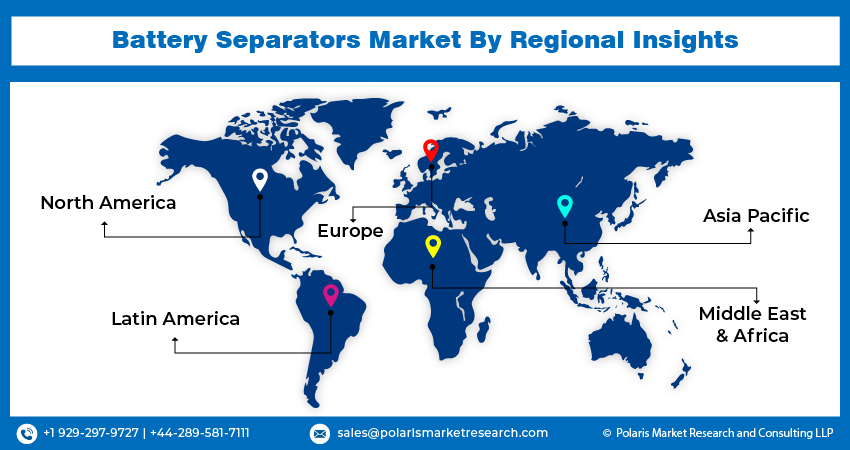
By region, the study provides the battery separator market insights into North America, Europe, Asia Pacific, Latin America, and the Middle East & Africa.
North America Battery Separators Market
North America is expected to witness the highest CAGR of 20.0% during the forecast period. This is supported by regional battery supply chain realignment and the growing trend toward domestic sourcing of components. The development of new EV-cell factories is opening new trade lanes for separator suppliers, especially for wet-process membranes producers and those with advanced coatings. This trend is strengthening the North America battery separator market and allowing suppliers to engage sooner in the development of the battery platform, and not just the late stage importing of finished separators. Gigafactory expansion in North America also support the regional market penetration.
U.S. Battery Separators Market Insight
The U.S. market is expected to record a CAGR of 20.60% during the forecast period, driven by growing localization of battery-cell and component manufacturing. New regional supply relationships, technology partnerships and the need for high-performance EV batteries are creating a conducive environment for separator manufacturers looking for exposure to the fast-growing EV battery separator market and domestic energy storage industry.
Europe Battery Separators Market
Europe held the 17.0% share of the market in 2025, owing to its matured automotive industry electrification policies and increasing battery cell manufacturing. The demand trend is towards high-performance separators that can meet the challenging safety, sustainability and lifecycle requirements. Local companies are also focusing on recyclable and less environmental impact materials for battery, thus driving the product opportunities in the lithium-ion battery separator market for high value-added products.
Asia Pacific Battery Separators Market
Asia Pacific led the global battery separators market share by holding 53.0% in 2025. It is attributed to the high presence of lithium-ion cell manufacturers, electric vehicle manufacturers, consumer electronics assembly manufacturers, and availability of well-developed separator supply chain. China, Japan, and South Korea have well-developed battery manufacturing industries that drive a consistent demand for PE, PP, and ceramic-coated battery separator technologies. This mass production of EVs supports the battery separator Asia Pacific market directly as it progresses automotive Li-ion cells requirement of separators. Also, an advantage for the region is the close alignment of battery-material providers, cell manufacturers, and automotive OEMs, which enhances procurement efficiency and enables fast scaling of innovative separator technologies. Growing investments in high-volume battery plants and localized component manufacturing further reinforce Asia Pacific's position as the dominant production and consumption region for battery separators.
China
China accounted for 57.0% of the Asia Pacific market in 2025. This is due to China's vertically integrated battery ecosystem with raw materials, separator production, battery cells, and EV manufacturing. The high domestic production volumes enable separator producers to achieve economies of scale, while also speeding up the adoption of wet-process, ultra-thin, and coated technologies. As a result, China is not only a leader in terms of consumption, but also in terms of manufacturing capacity and technology commercialization in the battery separator Asia Pacific market.
Latin America Battery Separators Market
Latin America is anticipated to advance at a 15.0% CAGR over the period from 2026 to 2034, attributed to steady EV penetration, energy-storage deployment as well as investments in the regional lithium value chain. Growth in solar generation and grid modernization is specifically developing long-term opportunities for renewable energy battery storage separator usage in countries like Brazil and Argentina.
Middle East & Africa Battery Separators Market
The MEA market is anticipated to grow at a 13.86% CAGR owing to support from renewable-energy projects, grid infrastructure enhancements, telecom backup needs, and potential electric-mobility developments. Increasingly decentralized power systems, large solar projects, and the diversified application base for stationary batteries are growing beyond the traditional use in automotive and industrial applications. As a result, demand for separators is steadily rising across the MEA.
| Region | Market Position (2026) | Est. Market Share | CAGR Outlook | Key Countries | Key Growth Drivers |
| Asia-Pacific | Largest market | 53.0% | Steady high | China, Japan, South Korea, India | Battery manufacturing ecosystems, EV production, FMCG growth, FDI inflows |
| North America | Fastest-growing region | 18.52% | Highest CAGR (20.0%) | United States, Canada, Mexico | EV demand, IRA Section 45X tax credits, domestic battery supply chain investment |
| Europe | Significant and growing | 17.0% | Strong | Germany, France, UK, Italy, Netherlands | Energy transition goals, EV mandates, gigafactory expansion (Northvolt, VW PowerCo) |
| China | Dominant within APAC | 57.0% | Moderate-High | Mainland China | World's largest Li-ion battery producer, dominant separator supply chain, strong EV market |
| India | Emerging market | - | 21.40% | India | EV ecosystem development, PLI scheme for battery manufacturing, growing consumer electronics |
| Middle East & Africa | Nascent market | Small | 13.86% | Saudi Arabia, UAE, South Africa | Grid modernization, renewable energy investment, growing automotive sector in South Africa |
| Latin America | Emerging market | Small | 15.0% | Brazil, Argentina | Argentina's lithium ore reserves, Brazil's data center investments, EV incentive programs |
Source: Polaris Market Research Analysis
Manufacturing & Gigafactory Expansion
- ENTEK Indiana Expansion: ENTEK’s initial build-to-suit capacity at its Indiana facility in an initial phase would be 700 million m2 of separator capacity, with production in Q4 2026, and the annual capacity is expected to reach 1.4 billion m2. This scale-up backs the supply of domestic wet process battery separator for EV and ESS products, as demand for battery gigafactory separator continues to skyrocket.
- Asahi Kasei Ontario Expansion: In April 2026, Asahi Kasei stated that the construction of its Hipore lithium-ion battery separator plant in Ontario had commenced and that the timing for the startup of commercial production was being aligned with market conditions in North America. The new facility is part of the company’s regional manufacturing approach and will provide local wet-process separator production to the North American battery separator industry.
- Supply Chain Localization: These are part of a larger trend in the industry of locating separator production near battery cell and automotive production centers. This also makes finishing more efficient, increases independence from the import and improves quality and delivery reliability, shortens qualification cycles and enables a more rapid response to changing requirements for ceramic coated battery separator material as well as other advanced material by separator suppliers.
Sustainability & Bio-based Battery Separator Materials
The battery separators market is seeing growing demand for sustainable products, as manufacturers focus on using less harmful materials without affecting thermal stability, electrolyte compatibility, mechanical strength, or cycle life. R&D is broadening toward recyclables, cellulose-based nonwovens, bio-based fibers, and composites, reducing dependence on traditional fossil-based separator materials. Such trend is particularly relevant as EV & ES manufacturers tend to focus more on lifecycle emissions, material recovery, circular the supply chain of batteries.
Bio-based and green cells separator technologies can also provide a point of differentiation in markets where the battery’s customers are starting to look at the environmental impact of the full battery system and not just cell performance. The porosity, electrolyte absorption, and potential suitability with greener manufacturing methods of cellulose and other renewable fiber matrices are under investigation. The provided policy notably calls for the coverage of recyclable and bio-based separator R&D with the increasing regulatory pressure to utilize sustainable battery materials.
Source: Polaris Market Research Analysis
Competitive Landscape
The battery separator industry is consolidated with players such as Asahi Kasei, UBE Corporation, and others, dominating the market. Japanese and Korean manufacturers such as Asahi Kasei, Toray, SK IE Technology, Sumitomo Chemical, and W-Scope dominate the high-end lithium-ion separator market. They are focusing on developing advanced wet-process & coating technologies for the automotive and consumer electronics industries. These businesses are competing vigorously on thermal stability, porosity control, and micro-thin gauge capability.
Battery separator providers based in North America and Europe such as ENTEK, Freudenberg and Hollingsworth & Vose are aiming to compete by offering non-woven specialty separators, advanced ceramic coatings, and industrial and energy storage-oriented membranes. Chinese companies, like Sinoma Lithium Film, are growing rapidly to catch up home demand. Prominent players in the market also include some niche companies Natrion who is innovating next generation solid-state electrolyte separators & some diversified industrial players such as Dow and Eaton tapping into their material science portfolio. Such a fragmented but advancing landscape creates continuous R&D investment stimulation, with players vying technological supremacy, manufacturing accuracy and strategic cooperation with battery cell producers instead of sheer scale competitiveness.
List of Key Battery Separator Companies
- Ahlstrom
- Asahi Kasei Corporation (Celgard / Hipore)
- Bernard Dumas
- Dow, Inc.
- Eaton Corporation plc
- ENTEK International (ENTEK Lithium Separators)
- Freudenberg Performance Materials
- Green New Energy Materials
- Hollingsworth & Vose
- Mitsubishi Paper Mills, Ltd.
- Natrion
- Sinoma Lithium Film Co., Ltd.
- SK IE Technology (SK Innovation)
- Sumitomo Chemical Co., Ltd.
- Teijin Limited
- Toray Battery Separator Film Korea Ltd. (Toray Industries)
- UBE Corporation
- W-Scope Corporation
Key Players Vendor Positioning Overview
| Player Tier | Companies | Competitive Strengths | Key Geographic Focus |
| Tier 1. Global Leaders | Asahi Kasei, SK IE Technology, Toray Industries, ENTEK | Largest production capacity; patented wet-process technology; major EV OEM supply agreements; gigafactory-scale supply capability | Japan, South Korea, U.S., Canada, Europe |
| Tier 2. Established Specialists | Sumitomo Chemical, Freudenberg, W-Scope, UBE Corporation, Teijin | Strong technology portfolios; specialty separator segments; established customer bases in automotive and electronics | Japan, Germany, South Korea, Europe |
| Tier 3. Regional & Specialty Players | Mitsubishi Paper Mills, Ahlstrom, Sinoma, Hollingsworth & Vose, Bernard Dumas, Eaton | Niche segment leadership (AGM, lead-acid, glass mat); strong regional market positions; sustainability-focused innovation | Japan, Finland, China, France, U.S. |
| Emerging Players | Natrion (US), Green New Energy Materials (China/US) | Next-generation solid ionic composite technology; rapid expansion into North American market; US domestic supply chain focus | United States, North America |
Source: Polaris Market Research Analysis
Industry Developments
- August 2026: UBE MAXELL announced construction of an additional lithium-ion battery separator base-film production facility at its Sakai Works. Phase I construction is scheduled to begin in fiscal 2026, with the overall expansion expected to increase separator base-film production capacity by approximately 50% from the current level. (Source: ube.com)
- July 2026: Ahlstrom launched a new range of FortiCell glass fiber tissue solutions for energy-storage batteries. The portfolio includes heavier grades designed specifically to reinforce polyethylene battery separators, alongside AGM separator solutions, improving dimensional stability, processing reliability, and battery performance in demanding applications. (Source: ahlstrom.com)
- February 2026: Natrion signed a memorandum of understanding with Soelect Inc. to collaborate on the development and manufacturing of next-generation lithium-metal and solid-state batteries. The partnership combines Soelect’s Lithium-X lithium-metal anode technology with Natrion’s Active Separator, a solid-state electrolyte separator designed for scalable production using existing lithium-ion battery manufacturing equipment. (Source: natrion.co)
- March 2025: Ahlstrom released an advanced Absorbent Glass Mat battery separator solution. The company stated that the platform addresses growing demand for more energy-efficient, longer-lasting, and more sustainable products, and can be delivered as fully customizable solutions ranging from pure micro-glass structures to micro-glass-synthetic fiber composite solutions. (Source: ahlstrom.com)
Future Outlook
The development of electric mobility, new battery chemistry, and battery value chain sustainability requirements will be collectively driving the battery separators industry growth. Growth in EV penetration will further drive demand for high-performance battery separators in the electric vehicle industry, especially products that support faster charging, higher battery separator energy density, and better thermal reliability in highly developed lithium-ion battery packs.
The advancement to solid state battery separator technology is anticipated to open up additional growth avenues for ceramic, polymer, and composite separator materials that can enable safer, higher density battery architectures. Meanwhile, ceramic coated battery separator technologies will be more relevant and prioritized by related manufacturers for thermal stability, electrolyte wettability, mechanical durability, and resistance to separator shrinkage in harsh working environments.
Our battery separator market forecast 2034 predicts that sustainability will promote research into recyclable polymers, bio-based fibers, less-impacting coatings, and more resource-efficient production techniques. Regulatory pressure, coupled with customer demand, may drive separator manufacturers to materials that meet both electrochemical and sustainability criteria.
The growth of the market between 2026 and 2034 will be increasingly driven by the ability of manufactures to address safety, cost, energy density, sustainability, and compatibility with emerging battery chemistries. Advanced coated membranes, ultra-thin separators, and solid-electrolyte solutions, those companies that manage to commercialize these cutting-edge technologies will be the most competitive players in EV, energy-storage, and next-generation battery applications.
Research Methodology
The Battery Separators Market report by Polaris Market Research is developed using a rigorous, multi-stage research framework designed to deliver reliable, data-backed market intelligence.
Primary Research
Primary data collection involved structured interviews and surveys with C-suite executives, product managers, sales directors, and procurement heads at battery separator manufacturers, battery OEMs, EV producers, and industrial end-users. These interactions validated market size estimates, growth trajectories, and emerging technology adoption rates across key geographies.
Secondary Research
Secondary sources included company annual reports and investor presentations, industry association publications (IEA, ICEA), regulatory filings, trade databases, patent analyses, and peer-reviewed academic journals covering battery materials science and electrochemistry.
Market Estimation Approach
Market sizing employs both top-down and bottom-up approaches. The top-down methodology begins from total battery production volumes by chemistry and region, applying separator content per GWh. The bottom-up approach aggregates revenue estimates from individual manufacturer production capacities and average selling prices.
Data Triangulation & Validation
All data points are cross-validated through multiple independent sources. Segment splits, regional shares, and competitor positions are verified through both primary interviews and secondary data before final publication. Historical data covers 2019–2024; forecasts extend through 2034.
Market Segmentation
By Type Outlook (Revenue, USD Billion, 2021 - 2034)
- Coated Separator
- Non-coated Separator
By Material Outlook (Revenue, USD Billion, 2021 - 2034)
- Polypropylene (PP)
- Polyethylene (PE)
- Nylon
- Ceramic
- Others
By Thickness Outlook (Revenue, USD Billion, 2021 - 2034)
- 5 µM – 10 µM
- 10 µM – 20 µM
By Technology Outlook (Revenue, USD Billion, 2021–2034)
- Dry Battery Separator
- Wet Battery Separator
By Battery Type Outlook (Revenue, USD Billion, 2021–2034)
- Li-ion
- Lead-Acid
- Nickel-cadmium
- Nickel Metal
- Others
By End Use Outlook (Revenue, USD Billion, 2021–2034)
- Consumer Electronics
- Automotive
- Industrial
- Others
By Regional Outlook (Revenue, USD Billion, 2021–2034)
- North America
- U.S.
- Canada
- Europe
- Germany
- France
- UK
- Italy
- Spain
- Netherlands
- Russia
- Rest of Europe
- Asia Pacific
- China
- Japan
- India
- Malaysia
- South Korea
- Indonesia
- Australia
- Vietnam
- Rest of Asia Pacific
- Middle East & Africa
- Saudi Arabia
- UAE
- Israel
- South Africa
- Rest of Middle East & Africa
- Latin America
- Mexico
- Brazil
- Argentina
- Rest of Latin America
Battery Separators Market Report Scope
| Report Attributes | Details |
| Market Size in 2025 | USD 11.82 Billion |
| Market Size in 2026 | USD 13.77 Billion |
| Revenue Forecast by 2034 | USD 48.91 Billion |
| CAGR | 17.09% from 2026 to 2034 |
| Base Year | 2025 |
| Historical Data | 2021–2024 |
| Forecast Period | 2026–2034 |
| Quantitative Units | Revenue in USD Billion and CAGR from 2026 to 2034 |
| Report Coverage | Revenue Forecast, Competitive Landscape, Growth Factors, and Industry Trends |
| Segments Covered |
|
| Regional Scope |
|
| Competitive Landscape |
|
| Report Format |
|
| Customization | Report customization as per your requirements with respect to countries, regions, and segmentation. |
Source: Polaris Market Research Analysis
Battery Separators Market FAQ's
Battery separators are thin microporous membranes that are placed between positive and negative electrodes. They prevent short circuits while allowing lithium ions to pass. The separators are employed in Li-ion, lead-acid, Ni-Cd, and solid-state batteries?for EVs, electronics, and energy storage.
Tiny pores of battaery separators allow charged ions to pass freely through the electrolyte. It enables the chemical reactions that charge and discharge the battery.
In Li-ion batteries, separators are important for battery safety (prevent short circuit/fire), performance (influence charge rate and efficiency), and cycle life (prevent growth of dendrites, prolong cycle life).
EV penetration, renewable energy storage, consumer electronics, gigafactory investments (e.g., ENTEK, Asahi Kasei), and?government clean-energy policies drive the market expansion.
Each cell in an EV battery has a separator to keep the electrodes from touching and shorting, while allowing ions to move between them, even under high stress (fast charging, heat, vibration). Demand for the ceramic-coated variety is increasing dramatically.
Ceramic-coated battery separators are advanced porous membranes modified with Al?O? or SiO?. They enhance the thermal stability, wettability, mechanical strength, and ionic conductivity. They are used in luxury EVs and grid storage.
Solid-state batteries use a solid electrolyte?as the separator and ion conductor, eliminating fire risks associated with liquid electrolytes. Researchers are advancing ceramic, polymer, and composite materials. Nissan, Toyota, QuantumScape, and others are committing to pilot production lines, with first commercial products?expected between 2027 and 2030.
Download Sample Report of Battery Separators Market
Please fill out the form to request a customized copy of the research report.


