
Central Nervous System Therapeutics Market Growth, Trends, Global Forecast, 2026-2034
REPORT DETAILS
Central Nervous System Therapeutics Market Summary
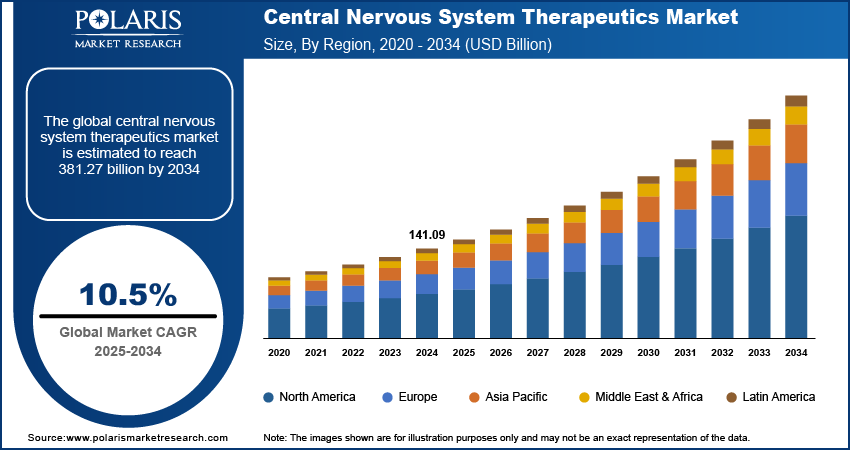
The global central nervous system therapeutics market was valued at USD 132.0 billion in 2025 and is expected to grow at a CAGR of 8.5% from 2026 to 2034. The growth is driven by rising prevalence of neurological disorder, rising focus by pharmaceutical and biotechnology companies.
Market Statistics
Key Takeaways
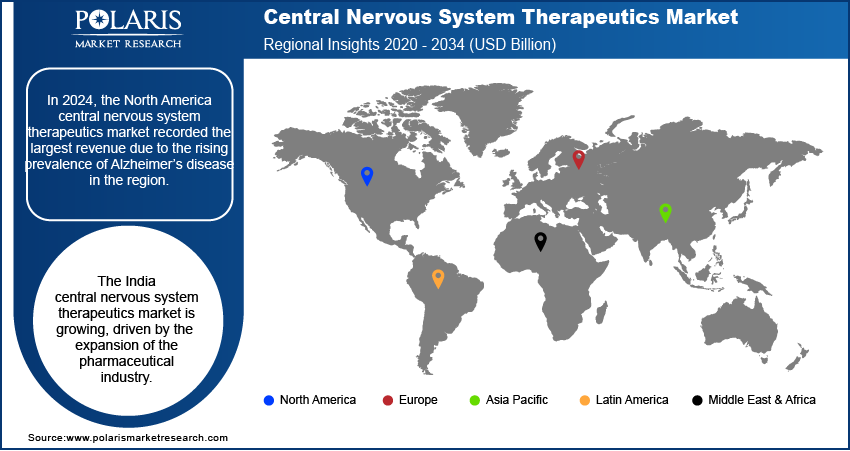
- North America accounted for 39.0% market share in 2025. The regional market dominance is attributed to advanced healthcare infrastructure and widespread awareness of neurological and mental health conditions.
- Asia Pacific held 10.0% of the global revenue share. Rising healthcare investment and growing awareness of neurological disorders drive the regional market growth.
- The mental health segment held 27.0% market share in 2025. The global rise in psychiatric conditions such as depression and anxiety contributes to the segment’s dominance.
- The pain reliever segment accounted for 28.0% market share in 2025. Pain relievers are widely used to manage chronic and acute neurological pain.
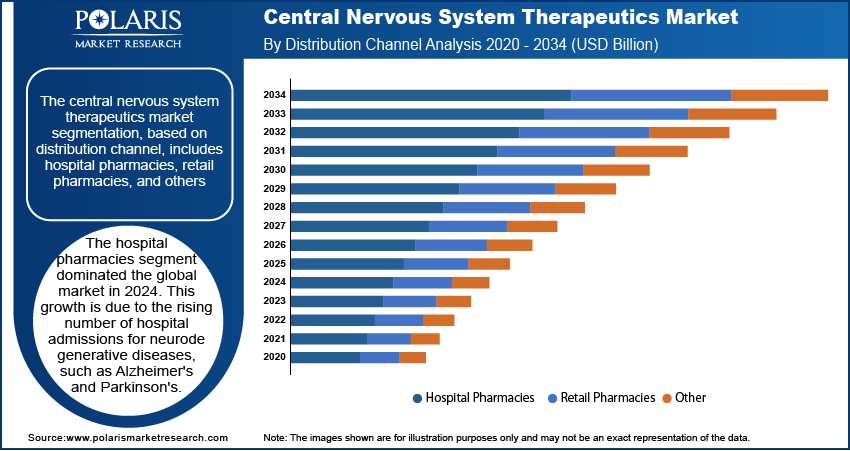
- The hospital pharmacy segment accounted for 37.0% revenue share in 2025. Many CNS treatments are administered or initiated in hospital settings.
Note: Figures and projections outlined in this report are the result of Polaris Market Research’s proprietary analytical processes, grounded in the latest available datasets and market observations.
Industry Dynamics
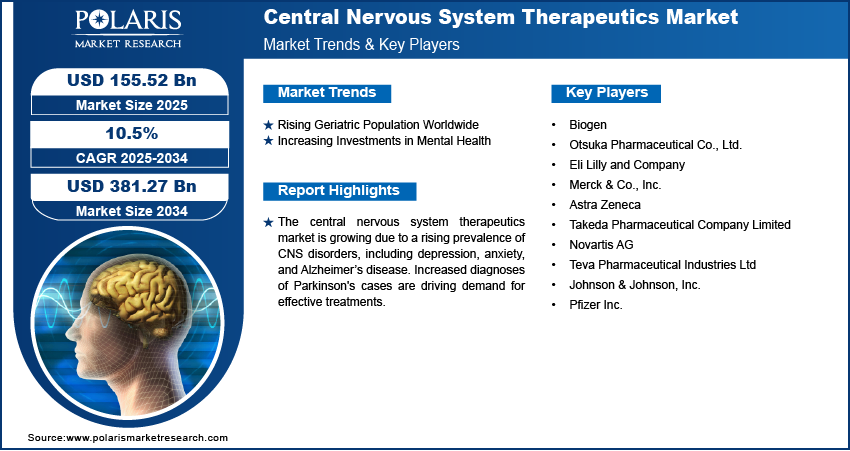
- The rising prevalence of neurological disorders such as Alzheimer’s disease and Parkinson’s disease is driving the demand for CNS therapeutics.
- Increased focus by pharma and biotechnology companies to develop targeted and disease-modifying therapeutics is another factor fueling market development.
- Growing use of AI for target identification is expected to create several market opportunities.
- Physiological barriers may present market challenges.
AI Impact on Central Nervous System Therapeutics Market
- AI is used to aid in the discovery of new treatments for neurological and psychiatric conditions through the analysis of vast amounts of medical and research data.
- It aids in tailoring individual treatments based on disease patterns in patients and therapy responses.
- AI can enhance clinical trials through improved selection and monitoring of patients and analysis of their data.
- It improves diagnostic procedures and planning of treatment using predictive analytics.
The global central nervous system (CNS) therapeutics market is undergoing a transformative phase, driven by rising disease prevalence, increased awareness of neurological and psychiatric disorders, and significant advances in pharmaceutical research and technology. CNS disorders, including neurodegenerative diseases such as Alzheimer’s and Parkinson’s, psychiatric conditions like depression and schizophrenia, as well as epilepsy, trauma, and neurovascular diseases, represent some of the most challenging and costly health concerns worldwide. The demand for effective, accessible, and innovative CNS treatments continues to grow at a steady pace as aging populations expand and mental health issues become more visible and openly discussed.
Source: Polaris Market Research Analysis
Technological advancements are transforming every stage of the CNS therapeutics value chain from drug discovery to delivery and patient monitoring. Innovations in neuroimaging, biomarker development, artificial intelligence (AI), and big data analytics are enabling more accurate diagnoses, earlier intervention, and personalized treatment pathways. Digital therapeutics, mobile health applications, and wearable medical devices are offering real-time insights into patient behavior and treatment adherence, particularly valuable for managing chronic CNS disorders such as epilepsy and depression. In drug development, computational biology and AI models are accelerating target identification and reducing clinical trial timelines. Additionally, progress in nanotechnology and drug delivery systems is helping to overcome the blood-brain barrier, enhancing drug efficacy and safety. The potential to revolutionize CNS care grows significantly as the industry embraces digital health and precision medicine, thereby driving the growth.
Industry Dynamics
Rising Prevalence of Neurological Disorder
The global burden of CNS-related conditions such as Alzheimer’s disease, Parkinson’s disease, epilepsy, and multiple sclerosis is on the rise, driven by aging populations, sedentary lifestyles, and environmental stressors. The growing prevalence of neurological and psychiatric disorders is increasing the need for long-term disease management and more effective therapeutic interventions. In addition, improving disease awareness, earlier diagnosis, and expanding access to neurological care are contributing to higher treatment rates across both developed and emerging markets.
Rising Focus by Pharmaceutical and Biotechnology Companies
Pharmaceutical and biotechnology companies are intensifying their focus on developing targeted, disease-modifying therapies, supported by advanced diagnostic tools, artificial intelligence, and neuroimaging technologies. The emergence of personalized medicine, biomarkers, and digital health platforms has further accelerated progress in this complex therapeutic area. Increasing investment in neuroscience research, biomarker-guided drug development, and novel delivery technologies is helping companies identify more precise therapeutic targets. At the same time, expanding clinical pipelines for neurodegenerative, psychiatric, and rare neurological disorders are supporting the introduction of innovative treatment options and strengthening overall market growth.
CNS Therapeutics vs General Pharmaceuticals
| Aspect | CNS Therapeutics | General Pharmaceuticals |
| Main Target | Disorders of brain, spinal cord and the nervous system | Systemic disorders affecting various organs in the body |
| Area of Treatment | Neurological and psychiatric conditions | General medical conditions |
| Mode of Action | Drugs acting on the neural system and neurotransmitters | Drugs acting on various biological systems and organs |
| Blood Brain Barrier | Necessitates the passage through the blood brain barrier | Does not necessitate the crossing of the blood brain barrier |
| Clinical Trials | More complicated due to the variability of the neurological system and monitoring period | Relatively simpler depending on the nature of the disease |
| Research and Development Costs | Higher due to the complexity of neuroscience and lower success rate | Lower than for CNS drugs |
Source: Polaris Market Research Analysis
Segmental Insights
Disease Analysis
In 2025, the mental health segment accounted for 27.0% share during the forecast period driven by a global rise in psychiatric conditions such as depression, anxiety, bipolar disorder, and schizophrenia. Increasing awareness, reduced stigma, and better access to mental health services have contributed to higher diagnosis and treatment rates. Governments and healthcare systems are investing more in mental health infrastructure and support programs. Additionally, the development of novel therapies with fewer side effects and improved efficacy has boosted patient adherence. The demand for CNS therapeutics is rising as mental health continues to be a growing concern worldwide, thereby driving the segment growth.
The neurovascular disease segment recorded 7.70% CAGR during 2026-2034, driven by the rising prevalence of strokes, aneurysms, and related vascular conditions, especially among the elderly. Lifestyle changes, hypertension, and diabetes are major risk factors contributing to the increase in cases. Advances in diagnostic imaging services, early intervention, and minimally invasive treatments have improved patient outcomes. Moreover, ongoing research into neuroprotective agents and clot-dissolving drugs is expanding therapeutic options. Public health campaigns promoting stroke awareness and rapid response further fuels the demand. The demand for neurovascular therapies is expected to grow steadily as life expectancy rises, thereby driving the segment growth.
By Drug Class Analysis
The pain reliever segment accounted for 28.0% market share in 2025 as they are widely used to manage chronic and acute neurological pain. Conditions such as migraines, neuropathic pain, and post-surgical discomfort often require long-term pain management. The demand for both opioid and non-opioid pain medications continue to grow, despite regulatory scrutiny. Innovations in non-addictive pain relief options are attracting strong interest from pharmaceutical companies. The demand for pain relievers is rising as more patients seek effective and safer alternatives for managing CNS-related pain, thereby driving the segment growth.
By Distribution Channel Analysis
The hospital pharmacy segment accounted for 37.0% revenue share in 2025 as many CNS treatments, especially for severe mental health or neurovascular conditions, are administered or initiated in hospital settings under close medical supervision. Hospitals further offer access to specialized neurologists and psychiatrists, ensuring accurate diagnosis and personalized treatment plans. Furthermore, critical medications that require controlled storage or monitoring, such as injectable biologics or high-potency drugs, are more safely and efficiently distributed through hospital pharmacies. This makes them a crucial node in the CNS treatment ecosystem, thereby driving the segment growth.
Source: Polaris Market Research Analysis
Regional Analysis
Central Nervous System Therapeutics Market in North America
North America central nervous system therapeutics market accounted for 39.0% global share in 2025 driven by advanced healthcare infrastructure, high healthcare spending, and widespread awareness of neurological and mental health conditions. The region benefits from early adoption of innovative drugs and strong support for clinical research. A growing elderly population and rising incidence of Alzheimer’s and Parkinson’s further fuel demand. Pharmaceutical giants and biotech firms in this region actively engage in partnerships and FDA fast-track approvals, making North America a hub for CNS drug development and commercialization, thereby driving the growth in North America.
Central Nervous System Therapeutics Market in US
The US central nervous system therapeutics market reached 83.0% share in 2025. High prevalence of mental health disorders, increasing diagnosis rates, and strong government focus on mental health care reform drives this growth. The presence of major pharmaceutical companies and robust R&D investment enables rapid innovation and access to new therapies. Additionally, favorable insurance coverage and a large base of neurologists and psychiatrists ensure widespread treatment access. Public awareness campaigns and advocacy for mental health further play a key major in the rising demand for CNS medications across the country, thereby driving the growth.
Central Nervous System Therapeutics Market in Asia Pacific
The Asia Pacific central nervous system therapeutics market recorded 10.0% CAGR, due to its large population, rising healthcare investment, and increasing awareness of neurological disorders. Urbanization, stress, and aging populations are contributing to higher rates of mental and neurodegenerative diseases. Countries such as India, Japan, and South Korea are expanding healthcare infrastructure and adopting more advanced treatment options. Additionally, government initiatives to improve mental health services and growing pharmaceutical manufacturing capabilities are attracting global players to invest in the region, driving further expansion in Asia Pacific.
Central Nervous System Therapeutics Market in China
The China central nervous system therapeutics market accounted for 37.91% regional share in 2025, driven by a large patient base, increased healthcare spending, and government focus on mental health. The country is facing a growing burden of mental health issues and neurodegenerative diseases due to urban stress, lifestyle changes, and aging. Policy reforms to integrate mental health into primary care and expanded reimbursement coverage are improving access to treatment. Domestic pharmaceutical companies are further increasing their presence in CNS drug development, while partnerships with international firms are helping introduce advanced therapies, thereby driving the growth of industry in China.
Central Nervous System Therapeutics Market in Europe
The Europe central nervous system therapeutics market accounted for 28.0% share in 2025, driven by well-established healthcare systems, high awareness levels, and strong government support for mental health and neurological care. The region benefits from advanced research capabilities and early access to innovative drugs through the European Medicines Agency (EMA). Rising cases of Alzheimer’s, Parkinson’s, and depression, in aging populations are driving demand for effective CNS therapies. Collaborative research initiatives across EU nations and increasing focus on reducing stigma around mental health are further boosting treatment adoption. Moreover, Europe further serves as a key hub for clinical trials and regulatory innovation, thereby driving the expansion in region.
Central Nervous System Therapeutics Market in Germany
The Germany central nervous system therapeutics market recorded USD 6.09 billion revenue in 2025, driven by its robust healthcare infrastructure, high R&D investment, and growing focus on mental health. The country has seen a rise in neurological disorders among its aging population, prompting increased demand for both innovative and generic CNS medications. Government-backed health insurance and reimbursement schemes ensure strong access to treatment. Additionally, Germany's strong pharmaceutical manufacturing base and academic research institutions foster development and distribution of CNS therapies. Public campaigns on mental health awareness and early diagnosis initiatives are further helping drive patient engagement, thereby driving the growth in Germany.
Source: Polaris Market Research Analysis
Key Players & Competitive Analysis
The Central Nervous System (CNS) therapeutics market is highly competitive, with key players leveraging innovation and strategic collaborations to gain market share. Biogen Inc. and Eli Lilly dominate the neurodegenerative disorders space, particularly Alzheimer's and multiple sclerosis. Johnson & Johnson, Pfizer, and Merck maintain strong CNS portfolios through R&D and acquisitions. Novartis and Takeda focus on rare neurological conditions and advanced biologics. AstraZeneca is expanding its CNS pipeline through immuno-neurology. Otsuka and Teva lead in psychiatric treatments, notably schizophrenia and depression, with Otsuka’s partnership-driven model proving successful. Neuraxpharm, a specialty CNS firm, offers a competitive edge in Europe through generics and niche therapies. Strategic moves, such as licensing deals and AI-based drug discovery, are reshaping the landscape. As the demand for CNS therapies grows with aging populations, these companies are intensifying efforts in precision medicine and novel delivery platforms to strengthen their competitive positions.
Key Players
- Biogen Inc.
- Eli Lilly and Company
- Johnson & Johnson
- Merck & Co., Inc.
- Neuraxpharm
- Novartis AG
- Otsuka Pharmaceutical Co., Ltd.
- Pfizer Inc.
- Takeda Pharmaceutical Company Limited
- Teva Pharmaceutical Industries Ltd.
- UCB S.A.
Future Outlook
It is anticipated that the central nervous system (CNS) therapeutics market will continue to grow over the next few years, driven by the increasing prevalence of neurological and mental disorders, the aging population, and ongoing developments in the field of neurosciences. Increased investments in biologic drugs, precision medicines, gene therapy, and artificial intelligence for drug discovery have been instrumental in advancing treatments. Moreover, increased emphasis on individualized treatment of neurological diseases and new disease-modifying therapies has been driving the innovations related to various neurological diseases such as Alzheimer’s disease, Parkinson’s disease, epilepsy, depression, and multiple sclerosis.
Industry Developments
- April 2026: FORE Biotherapeutics announced the U.S. Food and Drug Administration (FDA) granted Breakthrough Therapy Designation (BTD) to plixorafenib. The BTD for plixorafenib is for the treatment of adult patients with BRAF V600E-mutated high-grade glioma (HGG). (source: businesswire.com)
- March 2026: The U.S. FDA approved Avlayah (tividenofusp alfa-eknm) to treat neurologic manifestations of Hunter syndrome. The regulatory authority stated that Avlayah is an IV infusion given once weekly. (source: fda.gov)
Central Nervous System Therapeutics Market Segmentation
By Disease Outlook (Revenue, USD Billion, 2021–2034)
- Neurovascular Diseases
- CNS Trauma
- Mental Health
- Neurodegenerative Diseases
- Alzheimer’s Disease
- Parkinson's Disease
- Multiple Sclerosis
- Huntington’s Disease
- Amyotrophic Lateral Sclerosis
- Others
- Infectious Diseases
- CNS Cancer
- Others
By Drug Class Outlook (Revenue, USD Billion, 2021–2034)
- Anesthetics
- Anticonvulsants
- Antiemetic
- CNS Stimulants
- Pain Relievers
- Others
By Distribution Channel Outlook (Revenue, USD Billion, 2021–2034)
- Hospital Pharmacy
- Retail Pharmacy
- Other
By Regional Outlook (Revenue, USD Billion, 2021–2034)
- North America
- US
- Canada
- Mexico
- Europe
- Germany
- France
- UK
- Italy
- Spain
- Netherlands
- Russia
- Rest of Europe
- Asia Pacific
- China
- Japan
- India
- Malaysia
- South Korea
- Indonesia
- Australia
- Vietnam
- Rest of Asia Pacific
- Middle East & Africa
- Saudi Arabia
- UAE
- Israel
- South Africa
- Rest of Middle East & Africa
- Latin America
- Brazil
- Argentina
- Rest of Latin America
Central Nervous System Therapeutics Market Report Scope
| Report Attributes | Details |
| Market Size in 2025 | USD 132.0 Billion |
| Market Size in 2026 | USD 142.98 Billion |
| Revenue Forecast by 2034 | USD 274.69 Billion |
| CAGR | 8.5% from 2026 to 2034 |
| Base Year | 2025 |
| Historical Data | 2021–2024 |
| Forecast Period | 2026–2034 |
| Quantitative Units | Revenue in USD Billion and CAGR from 2026 to 2034 |
| Report Coverage | Revenue Forecast, Competitive Landscape, Growth Factors, and Industry Trends |
| Segments Covered |
|
| Regional Scope |
|
| Competitive Landscape |
|
| Report Format |
|
| Customization | Report customization as per your requirements with respect to countries, regions, and segmentation. |
Source: Polaris Market Research Analysis
FAQs
The global market size was valued at USD 142.98 billion in 2025 and is projected to grow to USD 274.69 billion by 2034.
The global market is projected to register a CAGR of 8.5% during the forecast period.
North America accounted for 39.0% market share in 2025.
A few of the key players in the market are Biogen Inc.; Eli Lilly and Company; Johnson & Johnson; Merck & Co., Inc.; Neuraxpharm; Novartis AG; Otsuka Pharmaceutical Co., Ltd.; Pfizer Inc.; Takeda Pharmaceutical Company Limited; Teva Pharmaceutical Industries Ltd.; UCB S.A.
The mental health segment held 27.0% market share in 2025.
The hospital pharmacy segment accounted for 37.0% revenue share in 2025.
Download Sample Report of Central Nervous System Therapeutics Market
Please fill out the form to request a customized copy of the research report.


