
E-pharmacy Market Size, Share, Trends & Forecast, 2026–2034
REPORT DETAILS
E-pharmacy Market Summary
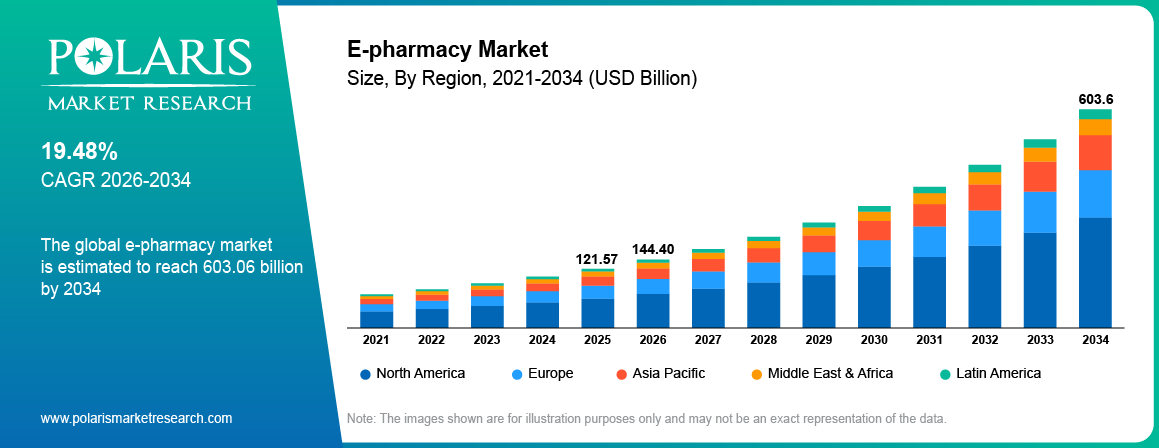
The global e-pharmacy market size was valued at USD 121.57 billion in 2025. The market is projected to grow at a CAGR of 19.48% from 2026 to 2034. Increasing digital literacy and the surging prevalence of chronic diseases drive market growth. The growth is also attributed to the rising advancements in digital technologies and evolving consumer preferences for online shopping. Also, growing internet penetration boosts the online pharmacy market growth.
Market Statistics
E-pharmacy Market Key Takeaways
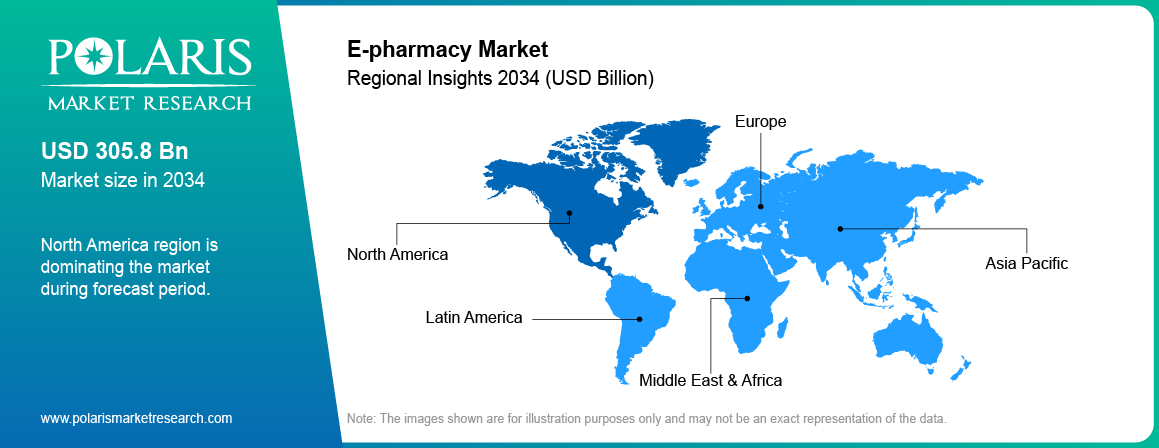
- North America accounted for the largest share of 38.2% in 2025. The regional market dominance is driven by the increased adoption of online healthcare services. Also, the growing preference for convenient digital pharmacy platforms makes the region market leader.
- Asia Pacific is expected to witness the fastest growth at a 21.7% CAGR during the forecast period. The regional e-pharmacy market growth is driven by the rising prevalence of common illnesses and increasing internet penetration. Further, growing access to digital healthcare services fuels the regional market expansion.
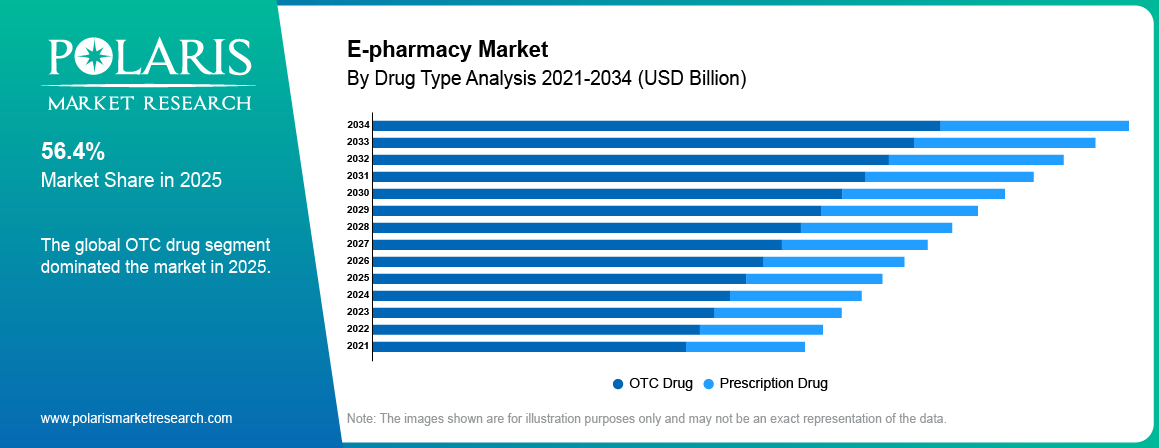
- The OTC drug segment accounted for the largest market share of 56.4% in 2025. This is due to the widespread availability of OTC medicines and the convenience of purchasing them without a prescription.
- The skin care segment is expected to witness significant growth at a 20.6% CAGR during the forecast period. The segment’s growth is driven by increasing consumer awareness of skin health and the growing popularity of online personal care purchases.
- The online payments segment accounted for a 62.8% market share in 2025. Benefits such as seamless checkout experiences and digital payment adoption drive the dominance. Also, attractive platform incentives have contributed to the growing popularity of online payments.
Note: Figures and projections outlined in this report are the result of Polaris Market Research’s proprietary analytical processes, grounded in the latest available datasets and market observations.
What is the E-Pharmacy Market?
The e-pharmacy market refers to the online marketplace for purchasing medications, healthcare products, and pharmacy-related services. E-pharmacy involves platforms and apps where customers can browse, order, and receive medicines and other health-related items delivered to their doorstep. Healthcare e-commerce solutions are becoming essential to reduce operating costs in the expanding healthcare sector and its high operating expenses.
E-pharmacies also sell things like health products and personal care items. Sometimes people can even talk to doctors or pharmacists online. So e-pharmacies make it easier for people to buy medicines. They make it faster and more convenient for people to get what they need. The online drug delivery marketplace is growing as more people use the internet and smartphones. Many people are very busy. They want to get healthcare services that are easy to use.
Key factors driving the e-pharmacy market expansion include the digitization of healthcare services and the growing number of tech-savvy consumers. In addition, rising healthcare mobile application adoption and convenience-driven consumer preferences for online shopping are fueling the growth of the market. The increasing reliance of the healthcare sector on e-commerce is expected to further accelerate market development.
How Does E-Pharmacy Work?
To buy medicines online, consumers must upload prescriptions on the website or mobile app. Then they can select the medicines. After selection, they add required details, such as the delivery address. The confirmation of the order is done by choosing the payment method such as online payments or cash on delivery (COD). Pharmacists who are licensed verify the prescription and check whether it’s eligible for the medicines. Pharmacies and fulfillment centers procure the ordered products. The orders are packed under quality and temperature requirements. The delivery of the medicines is done by the delivery partners to the customers.
Source: Polaris Market Research Analysis
E-Pharmacy Vs Traditional Pharmacy
| Factor | E-Pharmacy | Traditional Pharmacy |
| Convenience | Online ordering at any time from the comfort of home | Necessity to physically visit the store |
| Availability | Accessible via pharmacy app and websites | Accessible based on geographical limitations |
| Pricing | Sale prices, cash back, and subscription services | Standard retail prices |
| Delivery | Home delivery with tracking services | Immediate pickup facility only |
| Prescriptions | Uploading prescriptions and e-prescriptions | Manual handling of prescriptions |
| Integration with Healthcare | Integration with telemedicine and digital health systems | Limited digital integration |
Source: Polaris Market Research Analysis
AI Impact on E-pharmacy Market
- AI assists e-pharmacies in recommending personalized medicines according to their customers’ preferences and purchase history.
- It allows for fast prescription processing and management through automation and data analysis.
- AI assists in managing the inventory more effectively by predicting the demand for medicines and preventing stockouts.
E-Pharmacy Market Dynamics
The e-pharmacy market is witnessing robust growth on account of the rising internet penetration, increasing need for convenient healthcare services, and changing consumer behavior. Ease of access to medicines, home delivery, digital payments and consultation facilities contribute to the adoption of online prescription drug delivery services.
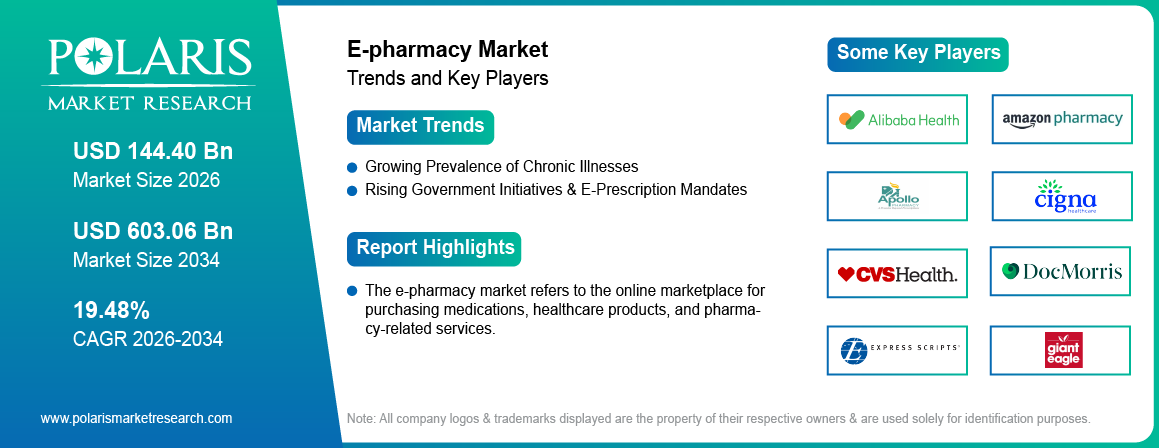
Driver: Growing Prevalence of Chronic Illnesses
The prevalence of chronic illnesses is rising worldwide. These include diseases such as diabetes, hypertension, and cardiovascular diseases. For instance, according to World Health Organization, it is estimated that 1 in 10 people in Europe alone will be affected by diabetes by 2045. This rise in prevalence will propel the need for chronic disease management, fueling the demand for the pharmaceuticals products. Patients with chronic illness often are not able to travel for everyday medication needs. This in turn is driving the need for convenient and reliable access to medicines. Geriatric population is highly prone to the chronic conditions. It propels the continuous demand for geriatric medicines. E-pharmacies offers online platforms for easy ordering and doorstep delivery of essential medications, thereby driving the growth (Source: who.int).
Driver: Rising Government Initiatives & E-Prescription Mandates
Globally, governments are coming up with projects aimed at encouraging the use of digital health platforms, which is helping in the increase of e-pharmacies. In the U.S., the ASTP/ONC’s HTI-4 (Health Data, Technology, and Interoperability) final rule was finalized on July 2025 and became effective from October 1, 2025. The rule updates certification criteria for electronic prescribing, real-time prescription benefit checks, and electronic prior authorization. It pushes certified health IT systems toward standardized e-prescribing workflows that e-pharmacies plug into directly (Source: healthit.gov).
In the European Union, the European Medicines Agency's ePI (electronic product information) initiative is moving product labeling and package leaflets from print to structured digital formats, with voluntary rollout beginning in 2026 for centrally authorized products. This reduces friction for cross-border e-pharmacy operators distributing standardized product information (Source: ema.europa.eu).
There are various efforts by the Government of India to boost online healthcare services. The government introduced many initiatives such as Ayushman Bharat, National Digital Health Mission (NDHM) and Pradhan Mantri Bhartiya Janaushadhi Pariyojana (PMBJP). These programs create confidence among consumers and make it easier to obtain licenses to operate e-pharmacies.
Driver: Investments in Same-Day and Advanced Fulfillment Logistics
The e-pharmacy market growth is driven by upsurging investments in same-day delivery and advanced fulfillment logistics. This pattern reflects a broader industry shift toward rapid-fulfillment infrastructure, including hyperlocal micro-fulfillment and dark-store-style models used by quick-commerce entrants, It will compress delivery windows for both critical and routine medications. Usage of technology like automated warehouses, real-time inventory management, and predictive demand forecasting is increasing. This will enhance the speed and efficiency of doorstep delivery. This would help retain customers of e-pharmacy platforms. The players in the online pharmacy market are making huge investments in their logistics infrastructure. It helps them cater to the changed demand of consumers for same-day deliveries. Therefore, it can be anticipated that this trend would increase the customers of e-pharmacies and brand value of e-pharmacies. This will also encourage more consumers to prefer online pharmacies for regular and critical medicine purchases.
Restraint: Regulatory Fragmentation
The e-pharmacy market is hindered by the presence of diverse and varying regulatory guidelines across countries. E-pharmacy companies face challenges while complying with the varying legal requirements, including obtaining necessary licenses, verifying prescriptions, consulting pharmacists, and restricting the sales of specific medicines in a particular region. Thus, the e-pharmacy companies that operate on a global level must understand and adjust to the regulatory frameworks in different geographies. Additionally, the changing regulatory frameworks impact the business models of e-pharmacy companies, hindering their growth trajectory. Moreover, the changes in healthcare laws may require the companies to modify their business strategies or invest in technological upgrades for compliance, thereby restraining the market growth.
Restraint: Counterfeit Drugs and Illegal Online Pharmacies
The e-pharmacy market is restrained by the prevalence of counterfeit drugs and illegal online pharmacies worldwide. Fake online pharmacies sell substandard, expired, or misbranded drugs. This type of practice affects consumer confidence in legitimate pharmaceutical platforms. The enforcement actions bring to light how severe the situation is. In its statement, INTERPOL said it seized more than 6.42 million doses of counterfeit and unauthorized pharmaceuticals valued at US$15.5 million in 90 countries and territories. In its operation named “Pangea XVIII” (March 2026), INTERPOL made 269 arrests and shut down 66 crime rings in many countries. It disrupted roughly 5,700 criminal-linked websites and social media channels selling illicit medicines (Source: interpol.int).
Counterfeit drugs and illegal online pharmacies diminish consumers’ trust in buying medicines from online platforms. The illegal online pharmacies also pose a threat to the reputation of reliable online pharmacies, as customers associate unauthorized sales with authentic online pharmacies. Thus, the e-pharmacy market requires robust regulations to tackle the menace surrounding counterfeit drugs and illegal medicines.
Opportunity: AI-Powered Telepharmacy and Personalization
The e-pharmacy market has significant growth opportunities, considering the rising demand for AI-powered telepharmacy and personalization. Artificial intelligence can be used to offer telepharmacy services. This is expected to address the consumers’ basic healthcare needs. The technology may help provide medication-related information such as dosage instructions and general health advice to the consumers. Additionally, the e-pharmacy companies can use artificial intelligence to improve the telepharmacy, including processing prescriptions and medication dispensing which improves the consumer experience, thereby fueling the industry growth.
Trend: Integration with Telemedicine and Digital Healthcare
Integration of e-pharma portals with telemedicine and the overall digital healthcare infrastructure is revolutionizing consumer access to medical facilities and pharmaceutical products. Increasingly, e-pharmacies are being combined with teleconsultation sites that allow consumers to speak to qualified physicians, obtain digital prescriptions, and order medicines from one integrated portal. Integration allows not only increasing efficiency, but also makes consultation and obtaining medical products easier and faster, especially for patients with chronic diseases or those who live in remote regions and have restricted access to health care. Also, integration of e-pharmacy portals with electronic medical record (EHR) systems, digital payments, health tracking apps, and AI-based health care solutions contributes to the provision of more personalized care. With further adoption of digital technologies by the healthcare systems, telemedicine and e-pharmacy integration is expected to emerge as one of the major e-pharmacy market trends.
Source: Polaris Market Research Analysis
Segmental Insights
By Drug Type
The global e-pharmacy market, based on drug type, is bifurcated into prescription drugs and OTC drugs. In 2025, the OTC drugs segment dominated the e-pharmacy market share by holding 56.4%. The leading position is due to their widespread availability and the convenience of purchasing them without a prescription. Consumers are now more inclined to opt for OTC medications when suffering from smaller health problems like cold, allergies, pain, or stomach-related problems. This is due to the easy availability and low cost of OTC drugs. This trend of self-medication propels the demand for OTC medications. E-pharmacies offer a variety of OTC medicines with fast delivery, user-friendly platforms, and reasonable prices. These benefits boost the popularity of OTC items among global consumers.
By Product Type
The global e-pharmacy market, based on product type, is segmented into skin care, dental, cold and flu, vitamins, weight loss, and other product types. The skin care segment is expected to register the highest CAGR of 20.6% from 2026 to 2034. It is due to the rise in consumer awareness about skin wellness and the growing inclination toward dermatological products. Some of the contributing elements in this regard include disposable income, changing beauty standards, and consumer interest in preventive skincare. The e-pharmacies offer consumers an opportunity to purchase a variety of skincare products at discounted prices. These include moisturizers, sunscreen, ant-aging products, and even acne remedies, among others. The recent trend of personalized skincare recommendation and telepharmacy services along with dermatologists on e-pharmacies further contribute to this segment’s healthy growth trend.
By Therapeutic Area
The e-pharmacy market by therapeutic area is segmented into pain management, cardiovascular diseases, diabetes & metabolic disorders, respiratory disorders, and other therapeutic areas. The pain management segment led the e-pharmacy market in 2025, accounting for 20.4% of the total. This category comprises drugs for treating headache, muscle pain, joint pain, back pain, and other related ailments. The need for analgesics and pain relievers is inevitable, making this segment highly popular among users. E-pharmacies enable easy browsing, purchasing, and delivery of the required medication to the doorsteps of customers. Moreover, the preference for online healthcare services and increased internet penetration has also boosted this segment’s growth. The availability of both prescribed and over-the-counter drugs for pain management through e-commerce platforms has also significantly contributed to the segment’s growth.
By Business Model
E-pharmacy business models include inventory, marketplace, and hybrid. Inventory accounted for the largest market share of 41.6% in 2025. This is due to its ability to enable the company to own the inventory of the medicines and control prices. It manages fulfillment directly through licensed warehouses and pharmacies. Efficient inventory management enables faster order fulfillment. This also improves quality assurance. Upsurging investments in automated fulfillment centers and real-time inventory management boost operational efficiency and customer satisfaction. The inventory-based platforms are also able to control margins, but require more working capital and regulatory compliance.
Comparison Matrix: E-Pharmacy Business Models
| Feature | Inventory | Marketplace | Hybrid |
| Inventory Ownership | Platform-owned | Third-party pharmacies | Mixed |
| Pricing Control | High | Moderate | High |
| Delivery Speed | Fast | Partner-dependent | Fast |
| Working Capital Requirement | High | Low | Moderate |
| Product Variety | Moderate | High | High |
| Scalability | Moderate | High | High |
| Quality Control | Strong | Partner-dependent | Strong |
Source: Polaris Market Research Analysis
By Payment Method
In terms of payment method, the market is bifurcated into cash on delivery (COD) and online payment. The cash on delivery segment is expected to witness significant growth at a 15.7% CAGR during the forecast period. COD remains an important payment option. It is particularly popular in emerging economies. Players offer COD payment option to build trust among first-time online consumers. It supports online pharmacy expansion in regions where digital payment penetration is limited. However, its share is expected to gradually decline as digital wallets, UPI-based payments, and contactless payment methods become more widely accepted, improving transaction efficiency and reducing delivery-related payment risks.
By Platform
The app-based platform segment dominated the industry and is expected to grow at a 16.8% CAGR during the forecast period. The mobile e-pharmacy app market is expected to grow as smartphones become the primary channel for digital healthcare services. Healthcare mobile applications offer convenient prescription uploads, medication reminders, refill subscriptions, order tracking, and integrated teleconsultation services within a single interface. The use of artificial intelligence creates push notifications, recommendation engines, and customer support. The use of AI tools increases customer engagement and retention. The use of the mobile internet, particularly in developing nations, creates an increase in the number of orders for apps-based medicine.
Comparison Between Mobile App vs. Web-Based Platform
| Feature | Mobile App | Web-Based Platform |
| Primary Use Case | On-the-go ordering, refills, and reminders | Desktop research and suitable for bulk/family orders |
| User Engagement Tools | Push notifications, AI-based recommendations, and loyalty/rewards integration | Detailed product/medication description and comparison browsing |
| Personalization | High. Order history, refill subscriptions, teleconsultation in one interface | Moderate. Account-based history, less real-time personalization |
| Adoption Driver | Smartphone penetration, especially in emerging markets | Established users, insurance/PBM portal integration |
| Typical Regional Strength | Asia Pacific, urban/mobile-first markets | North America, Europe (established digital healthcare ecosystems) |
| Prescription Handling | In-app upload, camera capture, e-prescription sync | Manual upload, account-linked prescription management |
Source: Polaris Market Research Analysis
Source: Polaris Market Research Analysis
Regional Analysis
By region, the study provides the e-pharmacy market insights into North America, Europe, Asia Pacific, Latin America, and the Middle East & Africa. The market growth is regional diverse and is dependent on an influx of internet users, healthcare infrastructure, consumer inclination, regulatory landscape, and digital payment methods. The developed regions witness a higher growth rate than the emerging counterparts due to existing digital healthcare ecosystems.
Regional Snapshot
| Region | 2025 Status | Growth driver |
| North America | Largest market | Insurance coverage, high internet penetration, and rising incidence of minor illnesses |
| Asia Pacific | Market with Highest CAGR | Smartphone penetration, super-app pharmacy integration (China, India) |
| Europe | Second-largest, fragmented | E-prescription rollout uneven across member states |
| Latin America | Emerging | Rising smartphone/internet access, government digital-health push |
| Middle East & Africa | Emerging, GCC-led | Government digital-health investment, rising online trust |
Source: Polaris Market Research Analysis
North America
In 2025, North America dominated the global market with 38.2% revenue share. This is due to the increased usage of online services and the growing number of internet users. In March 2025, Novo Nordisk introduced NovoCare Pharmacy, a direct-to-patient delivery platform. NovoCare Pharmacy offers cash-paying consumers all dose strengths of Wegovy at a reduced cost of USD 499/month. The platform expands the company's offerings to the fulfil needs of individuals affected by obesity (Source: PRNewswire). The demand for over-the-counter pharmaceuticals has risen as the frequency of minor illnesses, such as the flu, fever, backaches, coughs, and colds, increases. As a result, more people are turning to Internet pharmacies to get those medications. Additionally, the convenience of ordering medications from the comfort of home is expected to further drive the growth of the market in North America, particularly in the U.S. Further, the growing U.S. telemedicine market is propelling the adoption of e-pharmacy.
Asia Pacific
The Asia Pacific e-pharmacy market is expected to register the highest CAGR of 21.7% during the forecast period. The growth is driven by the rising prevalence of common illnesses, which is anticipated to increase the demand for associated over-the-counter (OTC) medications. Additionally, the e-pharmacy market in Asia Pacific is expanding due to government initiatives aimed at improving the quality of healthcare services. The growing popularity of the direct-to-patient approach is further expected to drive the regional market demand.
The regional market is led by China and India's super-app distribution models. In China, JD Health and Alibaba Health operate a near-duopoly in online pharmacy. JD Health reporting over 580 million registered users in 2025 (Source: asiapro-distribution.com). However, Alibaba Health estimated that digital drug sales would increase by more than double and reach approximately USD 52 billion in next three to five years (Source: finance.biggo.com). Both companies are leveraging integrated e-commerce logistics networks for fast, even same-day, medicine delivery.
In India, Tata 1mg leads the India e-pharmacy market share. The company’s ePharmacy business achieved breakeven during 2026. It offers express medicine delivery within 30–60 minutes across 10 cities. (Source: thehindubusinessline) PharmEasy, Netmeds, and Apollo 24|7 are also major players in India’s market. The services integrate medicines delivery with diagnosis and teleconsultation as one "super-app" service. PharmEasy claims to have an extensive delivery network across more than 19,000 pin codes to provide services in tier 2 and tier 3 cities (Source: sctinfo.com).
Europe
Europe is expected to witness significant growth at a 15.8% CAGR during the forecast period. The growth is attributed to high internet penetration and the increasing digitalization of healthcare ecosystems. The inclination of consumers toward online medication ordering from the comfort of their homes has fueled the market growth in region. The robust healthcare infrastructure and well-established delivery chains across the European states support the easy online pharmacy setup. A rising trend of digital payments and growing popularity of smartphone applications for medication ordering have also triggered the market growth. As per reports by the European Central Bank, the region witnessed a transaction value of non-cash payments reaching EUR 77.7 billion in the first half of 2025. The aging population in Europe prefers home healthcare services, including medication home delivery, further driving the demand for e-pharmacies. Thereby driving the growth of the industry (Source: ecb.europa.eu).
This aspect plays a significant role in distinguishing this region. As regards the EU's ePI (electronic product information) project, the labeling and patient information leaflet are being developed digitally. The voluntary application to centrally authorized medicines is scheduled to start in 2026. These initiatives make the process of dealing with multilingual medicine information in cross-border context more efficient for the operators of the e-pharmacies in the EU member states. Simultaneously, the GDPR is influencing the way health data of patients, their prescriptions, and data transfer across borders by e-pharmacies are handled. It helps build compliance-by-design into onboarding, prescription verification, and delivery-tracking systems.
Middle East & Africa (MEA)
The Middle East & Africa e-pharmacy market held a 10.7% share in 2025. This is primarily driven by rising internet usage and smartphone adoption. Also, the digitalization of healthcare ecosystems fuels the regional market expansion. A growing number of consumers are opting for digital platforms for medication. The rising investment in digital healthcare technologies has also fueled the demand for e-pharmacies in the Middle East. The healthcare infrastructure development and high disposable income of consumers in the Middle East have created a favorable environment for the growth of online pharmacies. The home healthcare services, including online medication dispensation, are gaining popularity as they provide convenience to the consumers. Moreover, in Africa, the rising number of mobile penetration and digital payment initiatives are enabling more consumers to adopt e-pharmacies for their healthcare needs, thereby driving the growth.
Latin America
The e-pharmacy market in Latin America is growing at a steady rate of 13.6% CAGR during the forecast period, due to rising internet penetration, increasing smartphone adoption, and the growing need for convenient medication delivery methods. The high consumer preference toward online services, including medication dispensation has fueled the demand for e-pharmacies in the region. According to the International Trade Administration (ITA), 94 million Brazilians made online purchases in 2025. Furthermore, the popularity of digital payments is also rising. This factor drives the number of online transactions across e-pharmacy platforms. The increasing popularity of telemedicine and other digital health platforms has improved consumer awareness of online pharmacies, thus, fueling the region’s growth. [Source: trade.gov]
E-Pharmacy Regulations Across Key Regions
| Region | Named Regulatory Instrument(s) | Impact on E-Pharmacy Market |
| North America |
|
|
| Europe |
|
|
| Asia-Pacific |
|
|
| Latin America |
|
|
| Middle East & Africa |
|
|
Source: Polaris Market Research Analysis
Source: Polaris Market Research Analysis
Competitive Landscape
The industry of e-pharmacies experiences a lot of competition owing to the presence of established as well as upcoming start-ups who wish to take advantage of the increasing demand for online health care solutions. Major players in the e-pharmacies industry are constantly working on improving their offering through the inclusion of innovative technologies like AI-powered recommendations, easy payment gateways, and teleconsultations to outperform others. In addition to that, collaboration with pharma companies, health care organizations, and logistics firms is becoming increasingly common among players. E-pharmacy industry is witnessing a large amount of investments and mergers and acquisitions allowing players to have a wider geographic presence and diversified offerings.
Value Chain Analysis
The e-pharmacy value chain begins with pharmaceutical manufacturers and continues through licensed distributors and wholesalers, who supply inventory to e-pharmacy platforms operating under inventory-led, marketplace, or hybrid business models. Once an order is placed, licensed pharmacists verify the prescription and confirm medication eligibility before fulfillment centers, either platform-owned warehouses or partner pharmacy networks, pick, pack, and apply required quality and temperature controls. Last-mile delivery partners, increasingly supported by dark-store-style micro-fulfillment hubs and same-day logistics networks, transport medicines to the consumer's doorstep.
Supporting this physical flow is a digital layer of enabling infrastructure: payment gateways, e-prescription and teleconsultation integration, AI-driven inventory and demand forecasting, and regulatory compliance systems for licensing and controlled-substance tracking. Value increasingly concentrates at the fulfillment-and-delivery and digital-engagement layers, where speed, personalization, and prescription-verification trust most directly shape consumer choice between platforms, making logistics investment and regulatory compliance the two most competitively differentiating links in the chain.
List of Key E-Pharmacy Companies
- Alibaba Health
- Amazon Pharmacy
- Apollo Pharmacy
- Cigna Corporation
- CVS Health Corporation
- DocMorris
- Express Scripts Holding
- Giant Eagle
- JD Health
- Kroger Co
- LloydsPharmacy
- Netmeds
- OptumRx
- PharmEasy
- Rowlands Pharmacy
- Tata 1mg
- Walgreen Co.
- Walmart Inc.
Industry Developments
- July 2026: MercadoLibre announced plans to launch an in-house online pharmacy in Chile after its Brazil pilot, highlighting expanding e-commerce investment in Latin America's e-pharmacy market. (Source: reuters.com)
- February 2026: Amazon Pharmacy announced plans to expand Same-Day prescription delivery to over 4,500 U.S. cities and towns by the end of 2026. The company stated that expansion will address pharmacy closures, transportation barriers, and staffing shortages. (Source: aboutamazon.com)
- January 2026: Morrison announced the launch of its national automated pharmacy infrastructure platform, Fillex. Morrison stated that the platform provides an open-access, automated infrastructure layer. It will help grocery chains, retail pharmacies, and health systems scale in an efficient way. (Source: morrisonglobal.com)
E-Pharmacy Market Future Outlook
The e-pharmacy market is expected to witness sustained growth in the coming years. Healthcare ecosystems are becoming increasingly digital. Future expansion is expected to be driven by AI-powered pharmacy automation and broader adoption of e-prescriptions. Further, stronger integration with telemedicine and subscription-based medication management will drive the expansion. Emphasis on faster fulfillment through quick-commerce networks will boost industry growth. Regulatory modernization and secure digital health records will fuel the market expansion. Also, improved cold-chain logistics for specialty medicines will strengthen long-term market development.
E-pharmacy Market Segmentation
By Therapeutic Area Outlook (Revenue – USD Billion, 2021–2034)
- Pain Management
- Cardiovascular Diseases
- Diabetes & Metabolic Disorders
- Respiratory Disorders
- Gastrointestinal (GI) Disorders
- Dermatology
- Women's Health
- Mental Health
- Others
By Business Model Outlook (Revenue – USD Billion, 2021–2034)
- Inventory
- Marketplace
- Hybrid
By Drug Type Outlook (Revenue – USD Billion, 2021–2034)
- Prescription Drug
- OTC Drug
By Product Type Outlook (Revenue – USD Billion, 2021–2034)
- Skin Care
- Dental
- Cold and Flu
- Vitamins
- Weight Loss
- Other Product Types
By Payment Method Outlook (Revenue – USD Billion, 2021–2034)
- Cash On Delivery
- Online Payment
By Platform Outlook (Revenue – USD Billion, 2021–2034)
- App Based
- Web Based
By Regional Outlook (Revenue – USD Billion, 2021–2034)
- North America
- US
- Canada
- Europe
- Germany
- France
- UK
- Italy
- Spain
- Netherlands
- Russia
- Rest of Europe
- Asia Pacific
- China
- Japan
- India
- Malaysia
- South Korea
- Indonesia
- Australia
- Vietnam
- Rest of Asia Pacific
- Middle East & Africa
- Saudi Arabia
- UAE
- Israel
- South Africa
- Rest of Middle East & Africa
- Latin America
- Mexico
- Brazil
- Argentina
- Rest of Latin America
Report Scope
| Report Attributes | Details |
| Market Size Value in 2025 | USD 121.57 billion |
| Market Size Value in 2026 | USD 144.40 billion |
| Revenue Forecast by 2034 | USD 603.06 billion |
| CAGR | 19.48% from 2026 to 2034 |
| Base Year | 2025 |
| Historical Data | 2021–2024 |
| Forecast Period | 2026–2034 |
| Quantitative Units | Revenue in USD billion and CAGR from 2026 to 2034 |
| Report Coverage | Revenue Forecast, Market Competitive Landscape, Growth Factors, and Trends |
| Segments Covered |
|
| Regional Scope |
|
| Competitive Landscape |
|
| Report Format |
|
| Customization | Report customization as per your requirements with respect to countries, regions, and segmentation. |
Source: Polaris Market Research Analysis
E-pharmacy Market FAQ's
The global market was valued at USD 121.57 billion in 2025 and is projected to grow to USD 603.06 billion by 2034.
The global market is projected to register a CAGR of 19.48% from 2026 to 2034.
North America accounted for the largest market share of 38.2% in 2025, driven by increased usage of online services and a growing number of internet users.
A few of the key players in the market are Express Scripts Holding, Giant Eagle, The Walgreen Company, Kroger Co, CVS Health Corporation, DocMorris, PharmEasy, Wal-Mart Stores, OptumRx, Rowland Pharmacy, Lloyds Pharmacy Ltd (McKesson Corporation), 1mg, Netmeds, and Apollo Pharmacy.
In 2025, the OTC drugs segment accounted for the largest market share of 56.4%, driven by widespread availability and convenient prescription-free purchase.
The skin care segment is expected to witness significant growth during the forecast period, driven by increasing consumer awareness about skin health and a growing preference for dermatological products.
Rising internet and smartphone usage, growing demand for convenient healthcare, home delivery, and digital healthcare adoption are driving market growth.
Regulatory differences, counterfeit medicines, and data privacy concerns are a few challenges. Also, the need for secure prescription verification hinder the e-pharmacy market growth.
AI-powered telepharmacy, personalized healthcare services, and advanced delivery solutions would create new growth opportunities for e-pharmacy companies.
The pain management segment dominated the market in 2025. The segment growth is supported by strong demand for convenient access to pain relief medicines.
Download Sample Report of E-pharmacy Market
Please fill out the form to request a customized copy of the research report.


