
Erythropoietin (Epo) Biomarkers Market Growth Report, 2026-2034
REPORT DETAILS
Erythropoietin (Epo) Biomarkers Market Summary
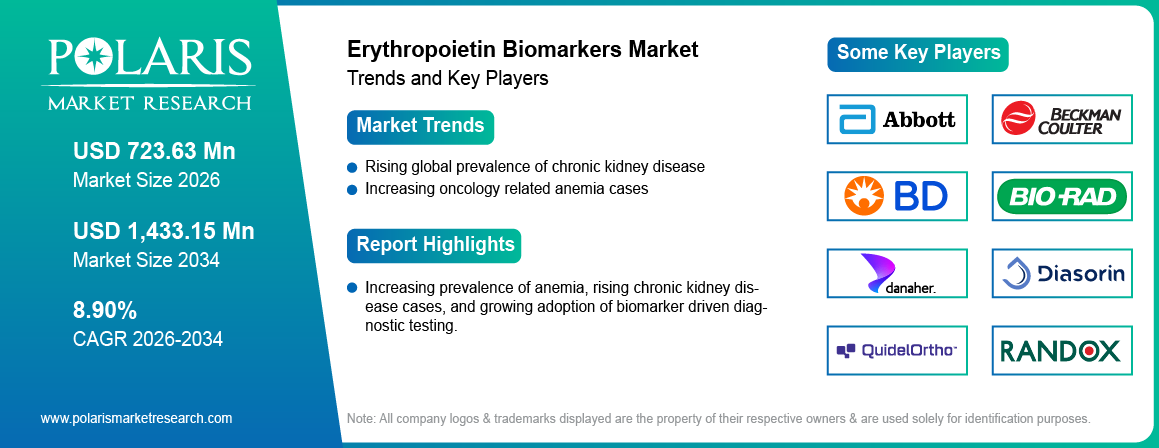
The global erythropoietin (EPO) biomarkers market is estimated around USD 665.41 million in 2025, with consistent growth anticipated during 2026–2034. Growth is driven by rising prevalence of anemia and increasing incidence of chronic kidney disease across global healthcare systems. The market is projected to grow at a CAGR of 8.90% during the forecast period.
Market Statistics
Key Takeaways
- The EPO biomarkers market North America dominated the global erythropoietin diagnostics market in 2025, accounting for over 39% market share.
- By Biomarker Type, Endogenous EPO dominated the market in 2025 due to increased emphasis in clinical practice to measure erythropoietin synthesis in patients with chronic kidney disease and anemia, accounting for over 54% market share.
- By Technology, immunoassays segment accounted for the largest market share in 2025 due to the sensitivity and specificity of immunoassays in detecting erythropoietin biomarkers in blood samples, holding approximately 61% market share.
- By Application, chronic kidney disease diagnosis segment accounted for the largest market share in 2025 due to the prevalence of anemia in patients with chronic kidney diseases, contributing around 48% market share.
- By end user, hospitals segment accounted for the highest market share in 2025, due to increasing diagnostic testing for anemia, kidney diseases, and cancer supportive care, representing nearly 57% market share.
Industry Dynamics
- Rising prevalence of chronic kidney disease is increasing demand for erythropoietin biomarker monitoring in nephrology care.
- Increasing anemia diagnostics across hospitals and laboratories is strengthening biomarker testing adoption.
- Variability in biomarker assay methods and testing protocols creates challenges in clinical standardization.
- Advancements in biomarker research and AI based diagnostic technologies are creating long term growth opportunities in the erythropoietin biomarkers market.
What is an Erythropoietin (EPO) Biomarkers?
The erythropoietin (EPO) biomarkers field is defined as the biological markers that measure the presence and activity of erythropoietin in the human body. Erythropoietin is a hormone that is produced in the kidneys and regulates the production of red blood cells in the bone marrow. Endogenous EPO levels function as measurable biomarkers used in anemia diagnostics and clinical evaluation of oxygen related physiological responses. These biomarkers help clinicians assess erythropoiesis activity and identify the causes of reduced red blood cell production.
Erythropoietin biomarkers are widely used in laboratory diagnostics to evaluate anemia, kidney function, and oxygen regulation in the body. Biomarker tests measure circulating endogenous EPO levels through blood based assays and diagnostic platforms. These measurements help in identifying diseases that are associated with abnormal erythropoiesis and oxygen transport. There has been increasing use of EPO biomarker analysis in hospitals and diagnostic laboratories in the testing and diagnosis of various diseases.
-biomarkers-market-size-by-region-2021---2034.webp)
Source: Polaris Market Research Analysis
To Understand More About this Research:Download Sample Report
The erythropoietin biomarkers market includes technologies used for measuring and analyzing erythropoietin related biomarkers for diagnostic purposes. The erythropoietin biomarkers market includes biomarker assays, diagnostic kits, laboratory testing technologies, and biomarker analysis systems used for hospital, clinical laboratory, and research purposes. The market excludes erythropoietin drugs and erythropoiesis stimulating agent (ESA) therapeutics and focuses on biomarker detection tools.
Clinical Significance of EPO Biomarkers
EPO biomarkers support diagnosis and monitoring of several hematologic and renal disorders. Measurement of erythropoietin levels helps differentiate renal related anemia from other anemia types. Clinical laboratories utilize EPO biomarker testing for the monitoring of chronic kidney disease, where there are decreased kidney functions resulting in decreased levels of erythropoietin.
EPO analysis for biomarkers also plays a role in supportive care in oncology by evaluating cancer patients for treatment-related anemia. Physicians use erythropoietin level evaluation to understand oxygen regulation response and erythropoiesis in various physiological conditions. These biomarkers are used for decision support in hematology, nephrology, and oncology patient care.
Drivers & Opportunities
Rising global prevalence of chronic kidney disease: The increasing prevalence of chronic kidney diseases is positively impacting the market demand for erythropoietin biomarker testing services in the field of clinical diagnostics. World Kidney Day states that 10% of the world's population suffers from chronic kidney diseases, and millions of people die every year due to lack of access to affordable treatment options for this disease. CKD impairs the functioning of the kidneys to produce erythropoietin, leading to CKD-related anemia and decreased production of red blood cells. Erythropoietin biomarker testing services are used by doctors to assess the severity of anemia and the erythropoiesis response.
Increasing oncology related anemia cases: Rising number of cancer patients undergoing chemotherapy is increasing the occurrence of treatment related anemia. Chemotherapy often impact bone marrow function and red blood cell production. Erythropoietin biomarker testing is used by clinical labs to track the progression of anemia and develop supportive care strategies in cancer patients undergoing chemotherapy. This type of monitoring is helping to improve cancer treatment assessment in different settings.
Restraints & Challenges
Standardization challenges in biomarker testing: Variability in the methods used for biomarker assays is a major problem that affects the biomarker diagnostics for erythropoietin. The variability in the methods used for testing, as well as the sensitivity and technology used for the tests can lead to inconsistent results in biomarker assays across various diagnostic centers. The lack of standardization in the testing methods can influence the interpretation of erythropoietin levels.
Opportunity
Integration of AI in biomarker analysis: Adoption of artificial intelligence in diagnostic data analysis is creating growth opportunities for the erythropoietin biomarkers market. In January 2026, Tempus AI introduced Paige Predict, a digital pathology analysis solution using AI that analyzes H&E WSIs to predict clinically relevant biomarkers for various types of cancer. This is creating opportunities for identifying biomarkers even in limited tissue samples. Diagnostic accuracy is improved with AI-based analysis systems supporting complex data analysis from biomarkers. AI integration with laboratory testing technologies is further supporting advanced analysis for biomarkers in hematology and nephrology diagnostics.
Source: Polaris Market Research Analysis
Segmental Insights
This report offers detailed coverage of the erythropoietin biomarkers market by biomarker type, technology, application, and end user to help readers identify the fastest expanding and most attractive demand segments.
By Biomarker Type
-
Endogenous EPO
Endogenous EPO dominated the market in 2025 due to increased emphasis in clinical practice to measure erythropoietin synthesis in patients with chronic kidney disease and anemia. The measurement of endogenous erythropoietin helps in assessing red blood cell synthesis and hypoxia-related physiological responses. Growing use of biomarker based diagnostic testing in nephrology and hematology is supporting segment growth.
-
Reticulocyte Response Markers
The reticulocyte response markers segment is projected to grow at the fastest CAGR during the forecast period, due to rising demand for early detection of erythropoietic activity. Reticulocyte markers help in assessing bone marrow response to erythropoietin stimulation and monitoring the outcome of anemia treatment. The increasing usage of advanced hematology diagnostic equipment in hospitals and laboratories is helping in segment growth.
By Technology
-
Immunoassays
The immunoassays segment accounted for the largest market share in 2025 due to the sensitivity and specificity of immunoassays in detecting erythropoietin biomarkers in blood samples. Immunoassays platforms offer automation in testing for clinical laboratories. Increasing demand for reliable biomarker detection technologies in diagnostic settings supports market growth.
-
Chemiluminescent Immunoassays
The chemiluminescent immunoassays segment is expected to exhibit a robust CAGR during the forecast period due to increased analytical sensitivity and diagnostic turnaround. Chemiluminescent immunoassays platforms offer a high throughput in detecting biomarkers for large testing volumes. Increasing adoption of automated diagnostic analyzers in hospitals supports segment expansion.
By Application
-
Chronic Kidney Disease Diagnosis
The chronic kidney disease diagnosis segment accounted for the largest market share in 2025 due to the prevalence of anemia in patients with chronic kidney diseases. Erythropoietin biomarker testing helps in assessing erythropoietin deficiency. There is increasing emphasis in managing chronic kidney diseases.
-
Oncology Supportive Care
The oncology supportive care segment is projected to grow at the fastest CAGR during the forecast period, due to increasing use of erythropoietin biomarkers in managing chemotherapy induced anemia. Biomarker monitoring helps in the determination of treatment plans and patient outcomes. Increasing volumes in cancer treatment expected to boost the market segment.
By End User
-
Hospitals
The hospitals segment accounted for the highest market share in 2025, due to increasing diagnostic testing for anemia, kidney diseases, and cancer supportive care. Routine erythropoietin biomarker testing in hospitals provides a complete diagnostic picture. Increasing diagnostic facilities in hospitals boosts this segment.
-
Diagnostic Laboratories
The diagnostic laboratories segment is projected to grow at the fastest CAGR during the forecast period, due to increasing outsourcing of specialized biomarker testing services. Laboratories perform high volume erythropoietin biomarker analysis using automated diagnostic platforms. Rising demand for advanced laboratory diagnostics supports segment expansion.
Source: Polaris Market Research Analysis-biomarkers-market-by-product-analysis-2021---2034.webp)
Regional Analysis
North America Market Assessment
The EPO biomarkers market North America dominated the global erythropoietin diagnostics market in 2025. Advanced diagnostic infrastructure across the US and Canada supports biomarker testing adoption. High prevalence of chronic kidney disease increases demand for erythropoietin diagnostics. Strong biomedical research activity across the region supports innovation in biomarker testing. For instance, the US Department of Health and Human Services reported that the NIH received nearly 52,000 research project grant applications in FY2023, with a funding success rate of 21.3%.
Asia Pacific Erythropoietin Biomarkers Market Insights
The Asia Pacific biomarker market is projected to grow at the fastest CAGR during the forecast period. Rising healthcare expenditure across China, India, and Japan supports expansion of advanced diagnostic services. Increasing CKD burden across the region strengthens demand for CKD diagnostics Asia Pacific, including erythropoietin biomarker testing. For example, an article published in PubMed Central (PMC) reported that chronic kidney disease (CKD) prevalence in India has reached epidemic levels, with population-based studies estimating a prevalence of 4%–20%.
Europe Erythropoietin Biomarkers Market Overview
The erythropoietin diagnostics Europe market accounted for the second largest share in the global market. Strong healthcare policies support early disease detection through biomarker testing. Growing biomarker research across Germany, France, and the UK is increasing adoption of erythropoietin diagnostics.
Latin America Market Outlook
The erythropoietin diagnostics market in Latin America is growing due to improving diagnostic facilities in healthcare systems. Governments are investing in laboratory infrastructure and clinical testing services. This trend supports adoption of biomarker-based diagnostics across hospitals and laboratories.
Middle East & Africa Market Insights
The erythropoietin biomarker diagnostics market in the Middle East and Africa is growing due to rising healthcare investments. For instance, Marmore MENA Intelligence reported that UAE’s healthcare spending accounts for less than 5% of GDP and is projected to reach 5.1% by 2029. Governments are expanding hospital networks and diagnostic laboratory infrastructure. Increasing focus on chronic disease diagnosis is supporting adoption of biomarker testing.
-biomarkers-market-trends-by-region-2021-–-2034.webp)
Source: Polaris Market Research Analysis
Key Players & Competitive Analysis Report
The competitive landscape in the market for erythropoietin biomarker diagnostics is influenced by ongoing innovation in detecting biomarkers. Firms are developing advanced systems for testing and diagnosing various diseases using more sensitive systems for detecting erythropoietin and other relevant biomarkers. Strategic partnerships between diagnostic companies, research centers, and pharmaceutical companies are promoting the use of biomarker testing in various diagnostic and research activities.
The key players operating in the erythropoietin biomarkers market are Thermo Fisher Scientific Inc., Roche Diagnostics International Ltd., Abbott Laboratories, Siemens Healthineers AG, Bio-Rad Laboratories, Inc., Beckman Coulter, Inc., Danaher Corporation, DiaSorin S.p.A., QuidelOrtho Corporation, Randox Laboratories Ltd., Becton, Dickinson and Company, Sysmex Corporation, and many more.
Premium Insights
Emerging Biomarker Technologies
Biomarker innovation is shaping the future of biomarker diagnostics across clinical laboratories. AI-assisted diagnostic platforms enhance accuracy and speed up the interpretation of results from biomarker tests in hematology and nephrology tests. Multi-marker panels use a combination of erythropoietin biomarkers, as well as iron and hemoglobin biomarkers, to enhance the accuracy of tests for anemia.
AI-driven biomarker discovery is enhancing the accuracy of precision medicine biomarkers. Advanced analytics platforms are used to discover new biomarker combinations that are used to monitor disease or evaluate treatment. This has helped to enhance the growth of the AI diagnostics market.
Future Market Opportunities
Decentralized diagnostics have opened new opportunities in the future of biomarker diagnostics. Point-of-care testing platforms facilitate faster biomarker analysis outside centralized laboratories. This is expected to promote faster clinical decisions and diagnostic access.
Wearable technologies for biomarker monitoring are developed in precision medicine-based diagnostic technologies. Advanced biosensors and digital technologies are providing continuous monitoring of physiological biomarkers such as those for oxygen levels and hematologic status.
Key Players
- Abbott Laboratories
- Beckman Coulter, Inc.
- Becton, Dickinson and Company
- Bio-Rad Laboratories, Inc.
- Danaher Corporation
- DiaSorin S.p.A.
- QuidelOrtho Corporation
- Randox Laboratories Ltd.
- Roche Diagnostics International Ltd.
- Siemens Healthineers AG
- Sysmex Corporation
- Thermo Fisher Scientific Inc.
Industry Developments
- June 2025: Beam Therapeutics announced BEACON Phase 1/2 trial data showing that its base-editing therapy BEAM-101 improved red blood cell health in sickle cell disease patients, with erythropoietin levels declining to near-normal levels, indicating improved oxygen delivery and biomarker response.
Erythropoietin Biomarkers Market Segmentation
By Biomarker Type Outlook (Revenue, USD Million, 2021-2034)
- Endogenous EPO
- Reticulocyte Response Markers
- Hemoglobin & Hematocrit Indicators
- Ferritin and Iron Biomarkers
By Technology Outlook (Revenue, USD Million, 2021-2034)
- Immunoassays
- ELISA Testing
- Chemiluminescent Immunoassays
- Multiplex Assays
By Application Outlook (Revenue, USD Million, 2021-2034)
- Chronic Kidney Disease Diagnosis
- Oncology Supportive Care
- Hematological Disorders
- Anti-Doping Testing
By End User Outlook (Revenue, USD Million, 2021-2034)
- Hospitals
- Diagnostic Laboratories
- Research Institutes
- Pharmaceutical Companies
- Contract Research Organizations
By Regional Outlook (Revenue, USD Million, 2021-2034)
- North America
- US
- Canada
- Europe
- Germany
- France
- UK
- Italy
- Spain
- Netherlands
- Russia
- Rest of Europe
- Asia Pacific
- China
- Japan
- India
- Malaysia
- South Korea
- Indonesia
- Australia
- Vietnam
- Rest of Asia Pacific
- Middle East & Africa
- Saudi Arabia
- UAE
- Israel
- South Africa
- Rest of Middle East & Africa
- Latin America
- Mexico
- Brazil
- Argentina
- Rest of Latin America
Erythropoietin Biomarkers Market Report Scope
| Report Attributes | Details |
| Market Size in 2025 | USD 665.41 Million |
| Market Size in 2026 | USD 723.63 Million |
| Revenue Forecast by 2034 | USD 1,433.15 Million |
| CAGR | 8.90% from 2026 to 2034 |
| Base Year | 2025 |
| Historical Data | 2021–2024 |
| Forecast Period | 2026–2034 |
| Quantitative Units | Revenue in USD million and CAGR from 2026 to 2034 |
| Report Coverage | Revenue Forecast, Competitive Landscape, Growth Factors, and Industry Trends |
| Segments Covered |
|
| Regional Scope |
|
| Competitive Landscape |
|
| Report Format |
|
| Customization | Report customization as per your requirements with respect to countries, regions, and segmentation. |
Source: Polaris Market Research Analysis
Erythropoietin (Epo) Biomarkers Market FAQ's
The global market size was valued at USD 665.41 million in 2025 and is projected to grow to USD 1,433.15 million by 2034.
North America dominates the market due to strong diagnostic infrastructure and growing prevalence of chronic kidney disease and anemia.
Major applications include anemia diagnosis, chronic kidney disease monitoring, oncology supportive care, and erythropoiesis evaluation.
A few of the key players in the market are Thermo Fisher Scientific Inc., Roche Diagnostics International Ltd., Abbott Laboratories, Siemens Healthineers AG, Bio-Rad Laboratories, Inc., Beckman Coulter, Inc., Danaher Corporation, DiaSorin S.p.A., QuidelOrtho Corporation, Randox Laboratories Ltd., Becton, Dickinson and Company, Sysmex Corporation, and others.
Key market drivers include rising prevalence of chronic kidney disease, increasing anemia diagnostics, and growing adoption of biomarker based clinical testing.
Major end users include hospitals, clinical diagnostic laboratories, research institutions, and specialty hematology and nephrology centers.
The market outlook remains strong due to expanding biomarker based diagnostics and increasing clinical focus on early detection of anemia and kidney related disorders.
Download Sample Report of Erythropoietin (Epo) Biomarkers Market
Please fill out the form to request a customized copy of the research report.


