
Food Encapsulation Market Size, Key Analysis, Growth Report 2026-2034
REPORT DETAILS
Food Encapsulation Market Summary
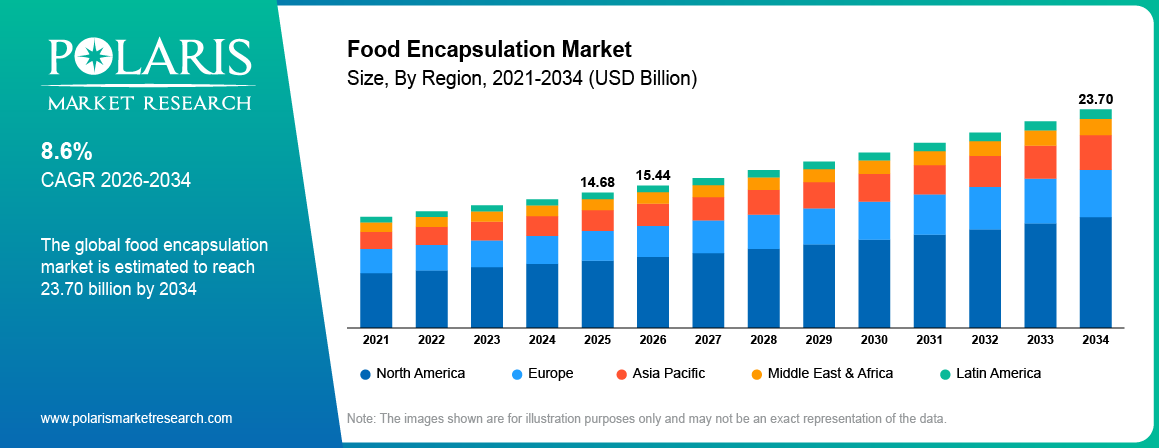
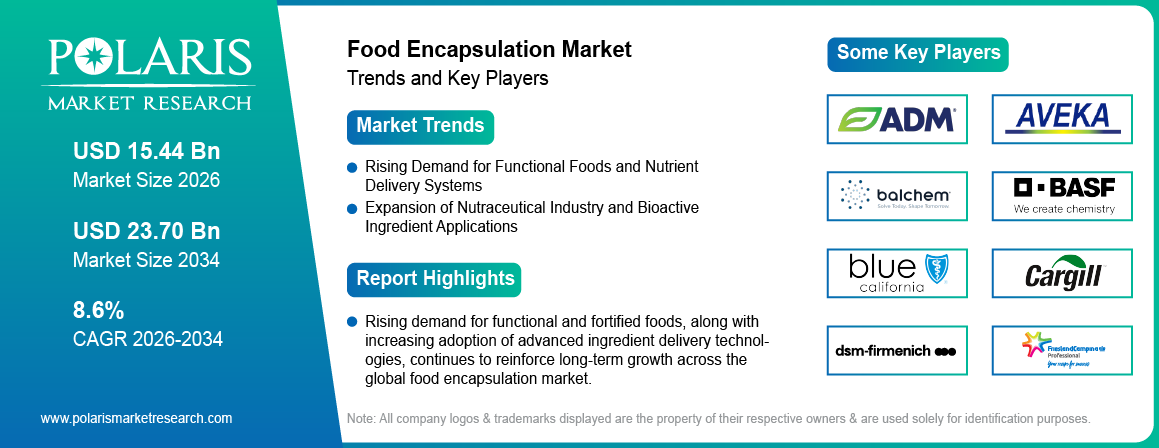
The global food encapsulation market is estimated around USD 14.68 Billion in 2025,?with consistent growth anticipated during 2026–2034. Expansion is supported by rising demand for functional foods, increasing use of bioactive ingredients, and growing need for ingredient stability and controlled delivery systems. The market is projected to grow at a CAGR of 8.6% during the forecast period.
Market Statistics
Key Takeaways
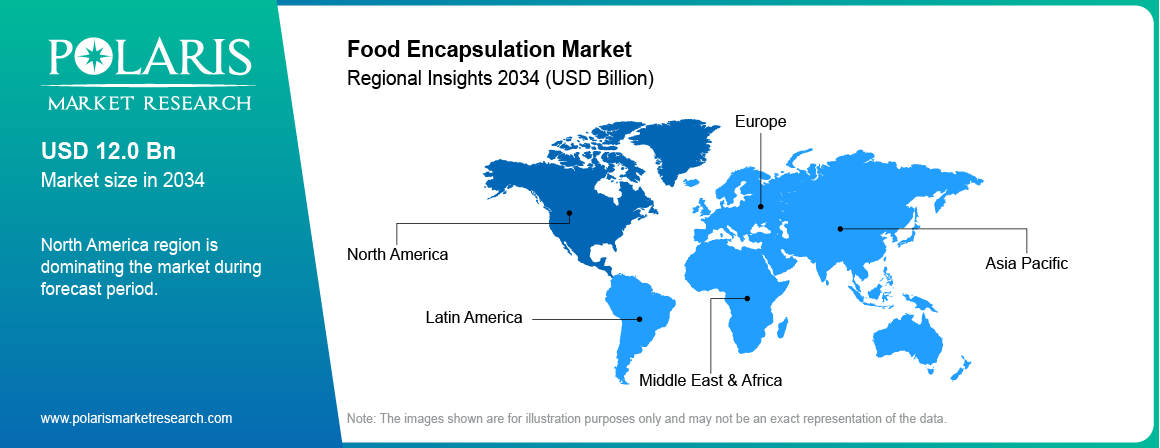
- North America held 38% of the global market in 2025, driven by an advanced food processing industry and strong demand for functional and fortified products.
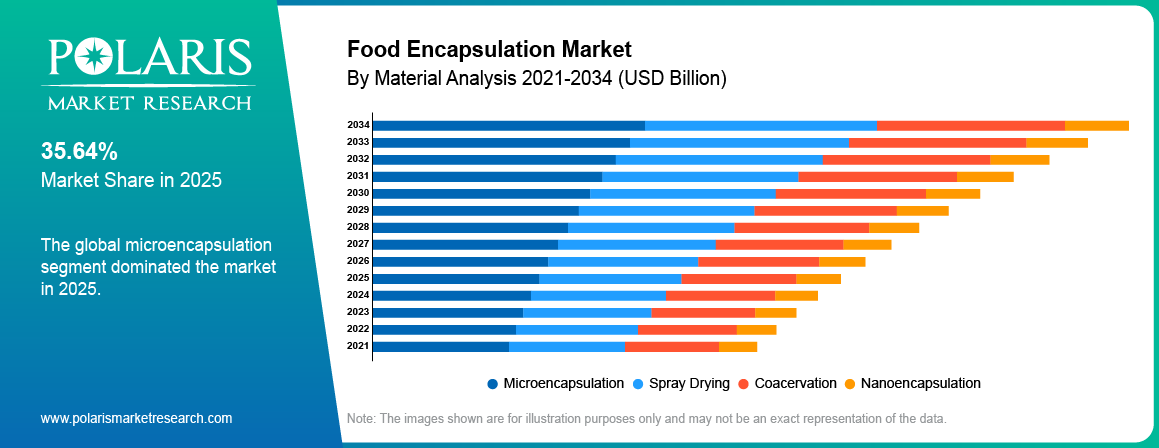
- By Material, Microencapsulation held 47% of the global market in 2025, driven by its versatility in protecting sensitive ingredients and improving product stability.
- By Application, Functional foods held 40% of the total encapsulation market in 2025, driven by the increasing consumer demand for functional foods.
Industry Dynamics
- Increasing demand for functional foods is driving the adoption of ingredient delivery systems, which enhance stability and bioavailability.
- The growth of the nutraceutical industry is fueling demand for vitamin, probiotic, and plant-derived ingredients in capsule forms.
- High costs of processing and technology remain hindrance for small and mid-scale companies.
- Growing demand for plant-derived food products and functional drinks is creating demand for advanced encapsulation technologies.
What is included in the Food Encapsulation market?
The market refers to the process of enclosing active food ingredients within a protective coating to improve stability, delivery, and functionality in food products. This technique is commonly used in food encapsulation industry and is used to prevent sensitive ingredients such as vitamins, probiotics, flavorings, and omega-3 fatty acids from getting exposed to heat, humidity, and oxidation.
Encapsulation plays an essential role in modern food manufacturing processes, enabling ingredient stability, flavor protection, nutrient delivery, and shelf-life improvement. The development of functional foods has given rise to an increasing need for encapsulated ingredients in functional food products. The encapsulation of food ingredients is vital for food manufacturers to deliver nutrients while maintaining taste and consistency in food products.
To Understand More About this Research:Download Sample Report
The market for food encapsulation is growing steadily with the increasing demand for processed and functional foods in North America, Europe, and Asia Pacific. The market covers various segments, including dairy foods, beverages, bakery products, dietary supplements, etc.
Drivers & Opportunities
Growth of functional foods increasing demand for ingredient delivery systems: Rising consumer focus on health, immunity, and daily performance is strengthening market drivers. According to HealthFocus, the percentage of consumers buying food and drinks to enhance daily performances has risen to 54%, while the figure stands at 40% for sports performances. This has resulted in rise in the consumption of functional food ingredient delivery technology that provides protection against degradation for vitamins, probiotics, and bioactive compounds.
Expansion of nutraceutical industry: Growth in nutraceutical products is increasing the need for advanced delivery systems that enhance bioavailability and shelf life. Functional ingredients such as omega-3s, probiotics, and plant extracts require protection from heat, oxygen, and moisture. Encapsulation technologies address these challenges, enabling manufacturers to develop stable, value-added formulations. This trend supports sustained growth across the market.
Restraints & Challenges
High processing and technology costs: Rising need for advanced encapsulation processes entails additional expenses for specialized equipment, materials, and expertise. The challenges in encapsulation processes for food industry applications restrain mid-scale food manufacturers from adopting encapsulated food products. These high-cost challenges restrain the market growth.
Opportunity
Growth of plant-based and functional beverages: Increasing demand for plant-based food is creating significant opportunity for market. This is due to encapsulation is beneficial in terms of flavor, nutrient enhancement, and texture improvement in plant-based foods. In March 2026, Oatly announced expansion of its range of Barista Edition Oat Milk with launches in new flavors like vanilla, caramel, coconut, and churros. This is a significant opportunity for the development of encapsulation in functional food ingredient systems.
Segmental Insights
This report offers detailed coverage of the market by material and application to help readers identify the fastest expanding and most attractive demand segments.
By Materials Analysis
-
Microencapsulation
Microencapsulation witnessed largest market share propelled by its versatility in protecting sensitive ingredients and improving product stability. Microencapsulation food industry growth is quite high for food ingredients such as vitamins, flavorings, and probiotics. Food microencapsulation is a technology that offers control over food stability and release.
-
Nanoencapsulation
Nanoencapsulation is the fastest-growing segment attributed to advancements in nano food delivery systems. Food technology that employs nanoencapsulation technology is used to deliver precise amounts of bioactive compounds and increase their efficiency of absorption.
By Application Analysis
-
Functional Foods
Functional foods encapsulation market held leading market share, driven by the increasing demand for functional foods. Probiotic encapsulation is used for the stability of probiotic microorganisms in processing and digestion. The market is driven by increasing trend of consumers becoming more health-conscious.
-
Beverages and Dairy
Encapsulation in beverages and dairy is the fastest-growing segment as manufacturers incorporate sensitive ingredients such as vitamins, omega fatty acids, and flavors. Encapsulation dairy products and encapsulation beverages improve ingredient stability and taste consistency.
Regional Analysis
North America Food Encapsulation Market Assessment
North America dominated the market, remained prominent due to an advanced food processing industry and strong demand for functional and fortified products. Encapsulation is used for stability, taste masking, and delivery of nutrients in various processed foods and drinks. In 2024, the US plant-based foods market was at a value of USD 8.1 billion. This shows that the region is witnessing growth in value-added plant-based foods, which has also contributed to the growth of encapsulated nutrients in supplements, dairy alternatives, and fortified foods, thereby propelling the food encapsulation market.
Europe Food Encapsulation Market Overview
Europe food encapsulation market has been growing steadily driven by rising demand for clean labels and stringent regulations around food additives and labels. This encouraged food producers to choose food encapsulation in order to replace synthetic food additives with food ingredients. This ensured the food’s stability and shelf life while staying compliant with the regulations and demands of the consumers for natural food products.
Asia Pacific Food Encapsulation Market Insight
Asia Pacific food encapsulation market expanded rapidly due to a rising middle-class population and increasing demand for packaged and functional foods. According to the World Economic Forum, Asia’s middle-class population is projected to grow from 2 billion in 2020 to 3.5 billion by 2030. This demographic change led to growing consumption of fortified foods and beverages, along with dietary supplements, and adoption of encapsulation technologies in response to the changing regional food encapsulation trends.
Key Players & Competitive Analysis Report
The competitive landscape is dominated by food encapsulation companies that are involved in food ingredients, food encapsulation technology, and specialty nutrition. Market players compete with each other in terms of advanced microencapsulation, nanoencapsulation, and controlled release technologies that help in improving food stability and flavor protection.
Key companies operating in the market include Archer Daniels Midland Company, Advanced BioNutrition Corporation, Aveka Group, Balchem Corporation, BASF SE, Blue California, Cargill, Incorporated, DSM-Firmenich AG, Encapsys, LLC, FrieslandCampina Kievit, Givaudan SA, Ingredion Incorporated, International Flavors & Fragrances Inc., Kerry Group plc, and Sensient Technologies Corporation.
Key Players
- Archer Daniels Midland Company
- Advanced BioNutrition Corporation
- Aveka Group
- Balchem Corporation
- BASF SE
- Blue California
- Cargill, Incorporated
- DSM-Firmenich AG
- Encapsys, LLC
- FrieslandCampina Kievit
- Givaudan SA
- Ingredion Incorporated
- International Flavors & Fragrances Inc.
- Kerry Group plc
- Sensient Technologies Corporation
Future Outlook and Industry Opportunities
- The future of food encapsulation is moving towards the development of more sophisticated food delivery systems that provide better ingredient stability, controlled release, and functional properties.
- Next-generation encapsulation technologies like nano-encapsulation and multi-layer coatings are helping in the development of nutrient and flavor bioavailability in complex food systems.
- Food encapsulation innovation is increasingly driven by AI-assisted formulation, allowing for optimized material selection, release profiles, and development cycles.
- Sustainability trends are affecting the selection of encapsulating materials, including biodegradable polymers, plant-based encapsulants, and low-energy encapsulation techniques.
- Personalized nutrition is also expanding the scope of encapsulation that includes vitamins, probiotics, and bioactive compounds.
- Overall, innovation in technology, sustainability, and digital formulation is expected to transform ingredient innovation and unlock new opportunities in the market.
Industry Developments
- May 2025: OOO Component-Lactis initiated production of Florobiom probiotic formulations using microbial biomass encapsulation technology. This is aimed at improving the stability, delivery, and efficacy of probiotics.
- June 2024: Big Idea Ventures, through its Generation Food Rural Partners (GFRP) fund, launched BioCloak, a company that aims to develop bio-based encapsulation technologies for active ingredients, nutrients, and biologicals in food and agriculture.
Market Segmentation
By Material Outlook (Revenue, USD Billion, 2021-2034)
- Microencapsulation
- Spray Drying
- Coacervation
- Nanoencapsulation
By Application Outlook (Revenue, USD Billion, 2021-2034)
- Functional Foods
- Beverages and Dairy
- Bakery and Confectionery
By Regional Outlook (Revenue, USD Billion, 2021-2034)
- North America
- US
- Canada
- Europe
- Germany
- France
- UK
- Italy
- Spain
- Netherlands
- Russia
- Rest of Europe
- Asia Pacific
- China
- Japan
- India
- Malaysia
- South Korea
- Indonesia
- Australia
- Vietnam
- Rest of Asia Pacific
- Middle East & Africa
- Saudi Arabia
- UAE
- Israel
- South Africa
- Rest of Middle East & Africa
- Latin America
- Mexico
- Brazil
- Argentina
- Rest of Latin America
Report Scope
| Report Attributes | Details |
| Market Size in 2025 | USD 14.68 Billion |
| Market Size in 2026 | USD 15.44 Billion |
| Revenue Forecast by 2034 | USD 23.70 Billion |
| CAGR | 8.6% from 2026 to 2034 |
| Base Year | 2025 |
| Historical Data | 2021–2024 |
| Forecast Period | 2026–2034 |
| Quantitative Units | Revenue in USD Billion and CAGR from 2026 to 2034 |
| Report Coverage | Revenue Forecast, Competitive Landscape, Growth Factors, and Industry Trends |
| Segments Covered |
|
| Regional Scope |
|
| Competitive Landscape |
|
| Report Format |
|
| Customization | Report customization as per your requirements with respect to countries, regions, and segmentation. |
Source: Polaris Market Research Analysis
Food Encapsulation Market FAQ's
The global market size was valued at USD 14.68 Billion in 2025 and is projected to grow to USD 23.70 Billion by 2034.
North America dominated the market due to strong demand for functional foods and advanced food processing capabilities.
Functional foods represent the largest application segment, followed by beverages, dairy products, bakery items, and dietary supplements.
Key companies include Archer Daniels Midland Company, Advanced BioNutrition Corporation, Aveka Group, Balchem Corporation, BASF SE, Blue California, Cargill, Incorporated, DSM-Firmenich AG, Encapsys, LLC, FrieslandCampina Kievit, Givaudan SA, Ingredion Incorporated, International Flavors & Fragrances Inc., Kerry Group plc, and Sensient Technologies Corporation.
The growth is driven by factors such as rising demand for functional foods, increasing market for nutraceuticals, rising demand for ingredient stability, and improvements in encapsulation technologies.
The main technologies used in food encapsulation are spray drying, microencapsulation, nanoencapsulation, extrusion, and coacervation.
Download Sample Report of Food Encapsulation Market
Please fill out the form to request a customized copy of the research report.


