
Lupus Nephritis Drugs Market Size, Share, and Forecast 2026 to 2034
REPORT DETAILS
Lupus Nephritis Drugs Market Summary
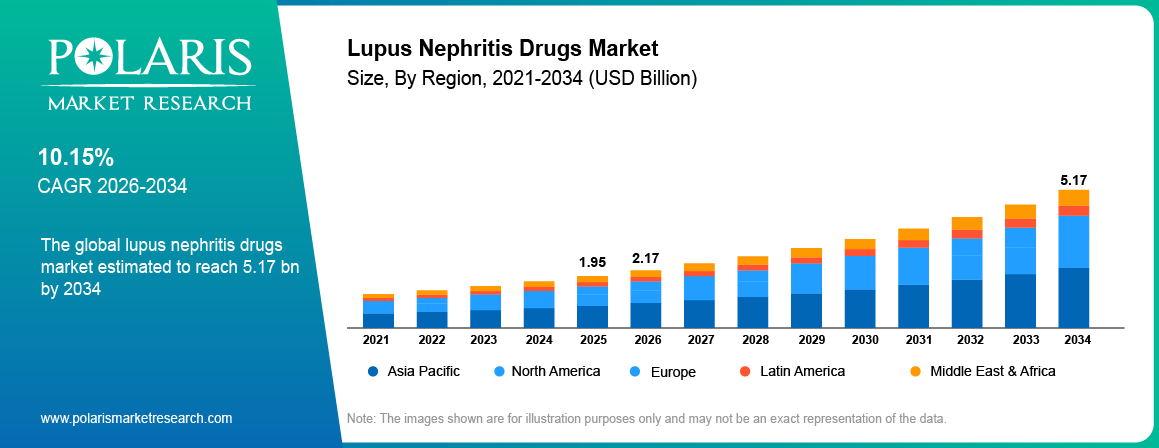
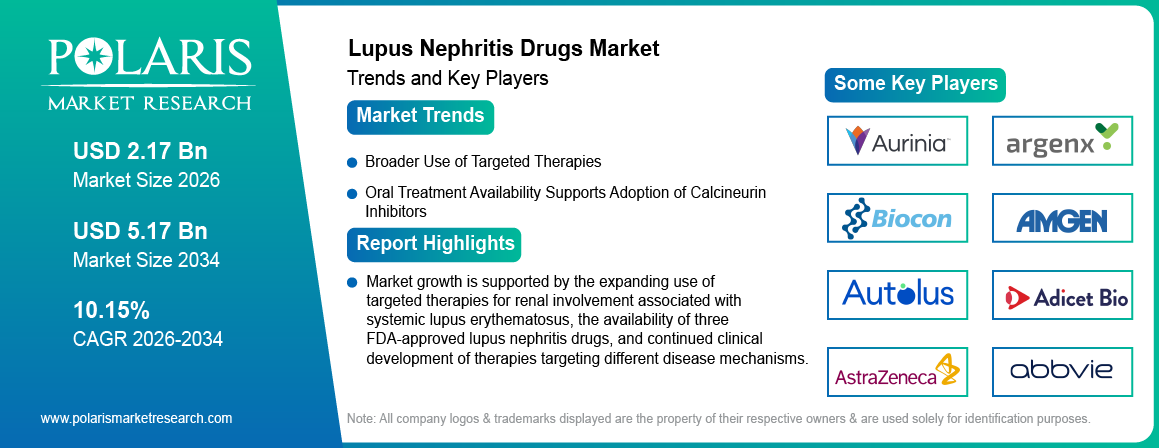
The lupus nephritis drugs market size is valued at USD 1.95 billion in 2025 and is projected to reach USD 5.17 billion by 2034, registering a CAGR of 10.15% from 2026 to 2034. Market growth is supported by the expanding use of targeted therapies for renal involvement associated with systemic lupus erythematosus, the availability of three FDA-approved lupus nephritis drugs, and continued clinical development of therapies targeting different disease mechanisms.
Market Statistics
Key Takeaways
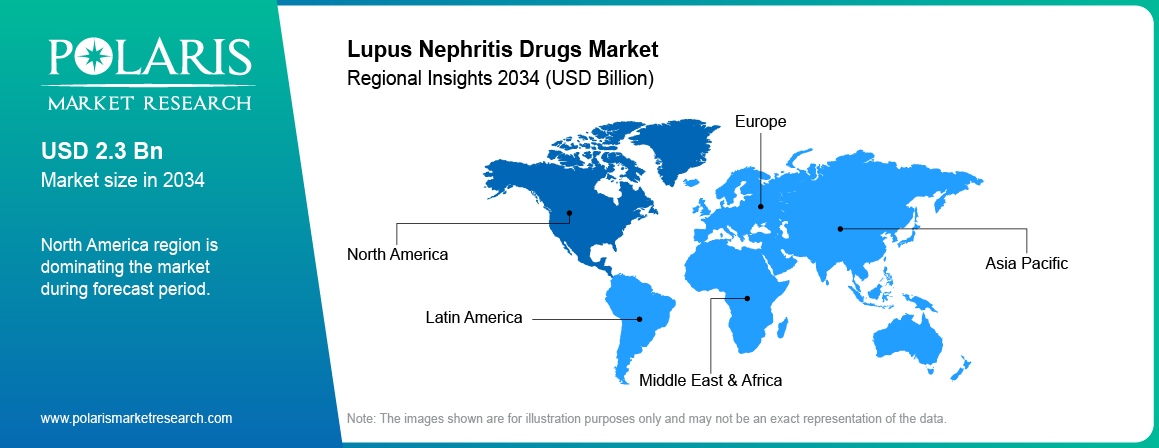
- North America led the market with 43.08% share in 2025. The dominance is propelled by established specialty care infrastructure, access to approved lupus nephritis therapies, and strong pharmaceutical activity.
- The market in Asia Pacific is projected to witness the fastest growth during the forecast period. The growth is supported by expanding access to lupus nephritis therapies, improving specialist care, and a substantial underlying patient population.
- In 2025, anti CD20 monoclonal antibodies held significant market share with 14.56% in 2025. Availability of a treatment specifically directed at CD20 positive B cells contributed to the segment dominance.
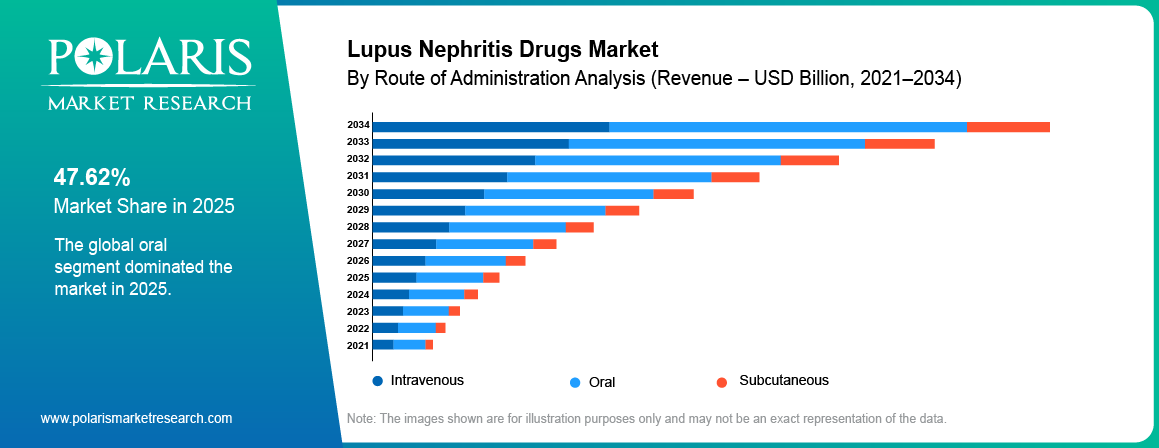
- The oral administration segment held the largest share of 47.62% in 2025, owing to the availability of voclosporin, an oral therapy approved specifically for lupus nephritis.
- In 2025, the hospital pharmacies segment led with 41.18% revenue share. This is driven by the clinical nature of lupus nephritis treatment and the role of healthcare providers in administering and monitoring the therapy.
Note: Figures and projections outlined in this report are the result of Polaris Market Research’s proprietary analytical processes, grounded in the latest available datasets and market observations.
Lupus Nephritis Drugs Market Definition
The lupus nephritis drugs market focuses on therapies that are used to treat kidney inflammation caused by systemic lupus erythematosus (SLE). Lupus nephritis is one of the most important renal manifestations of systemic lupus erythematosus. Persistent inflammation may lead to renal impairment and, in severe cases, renal failure. Around 60% of patients suffering from SLE develop lupus nephritis. Rising prevalence of disease is propelling the demand for its therapies (Source: pmc.ncbi.nlm.nih.gov).
The lupus nephritis treatment market represents a defined segment within the broader systemic lupus erythematosus drugs market. Its commercial scope centers on therapies used specifically for renal involvement rather than the full range of systemic lupus erythematosus manifestations. This distinction is becoming more important as drug developers pursue indications that can extend from lupus nephritis into broader systemic lupus erythematosus treatment.
The current U.S. treatment landscape also separates lupus nephritis drugs from conventional background therapy. Three therapies are FDA approved specifically for active lupus nephritis: belimumab, voclosporin, and obinutuzumab. These products represent distinct treatment mechanisms, including BLyS inhibition, calcineurin inhibition, and CD20-directed B cell depletion. Conventional immunosuppressants and corticosteroids remain important components of background treatment, but the availability of these targeted therapies has created a more differentiated lupus nephritis treatment landscape.
Approved Lupus Nephritis Therapies Overview
| Brand (Generic) | Company | Mechanism | Route | U.S. LN Approval |
| Benlysta (belimumab) | GSK | BLyS inhibitor | Intravenous, subcutaneous | 2020 |
| Lupkynis (voclosporin) | Aurinia Pharmaceuticals; Otsuka (partner outside the U.S.) | Calcineurin inhibitor | Oral | January 2021 |
| Gazyva (obinutuzumab) | Genentech (Roche Group) | Anti CD20 monoclonal antibody | Intravenous | October 2025 |
Source: Polaris Market Research Analysis; U.S. FDA approvals and prescribing information; company disclosures.
Drug Pipeline Analysis
The lupus nephritis drug pipeline has become more diversified following the approval of obinutuzumab. Three approved lupus nephritis drugs now provide validated commercial mechanisms. Anti BAFF receptor inhibition, type I interferon receptor blockade, dual BAFF and APRIL inhibition, and CD19 and CD20 directed cellular therapy are represented across the clinical development pipeline. This lupus nephritis drug pipeline extends beyond incremental formulation changes and includes emerging mechanisms that could influence treatment selection if clinical and regulatory milestones are achieved.
Drug Pipeline Analysis
| Candidate | Company | Mechanism | Phase | Trial Identifier | Status |
| Ianalumab, VAY736 | Novartis | Anti BAFF receptor monoclonal antibody | III | NCT05126277; NCT06711887 | Core study active; extension study recruiting (September 2026) |
| Anifrolumab | AstraZeneca | Type I interferon receptor monoclonal antibody | III | IRIS; NCT05138133 | Active, not recruiting; primary completion estimated February 2027 |
| Secukinumab | Novartis | IL 17A inhibitor | III, completed | NCT04181762 | Did not meet primary endpoint; results published January 2026 |
| Zetomipzomib, KZR 616 | Aurinia Pharmaceuticals (acquired Kezar Life Sciences in 2026) | Immunoproteasome inhibitor | IIb, terminated | PALIZADE; NCT05781750 | Terminated in October 2024 after four fatal serious adverse events (84 patients enrolled); development refocused on autoimmune hepatitis |
| Aritinercept, AUR200 | Aurinia Pharmaceuticals | Dual BAFF and APRIL inhibitor | I | Not specified | Clinical development initiated in four autoimmune indications |
| Obe-cel | Autolus Therapeutics | CD19 CAR T cell therapy | II, pivotal | LUMINA | Enrolling; data expected in 2028 |
| Rese-cel, CABA-201 | Cabaletta Bio | CD19 CAR T cell therapy | I/II | RESET-SLE | FDA-aligned single-arm registrational lupus nephritis cohort design (about 25 patients) |
| Prula-cel, ADI-001 | Adicet Bio | CD20-directed allogeneic gamma delta CAR T cell therapy | I | Not specified | Phase 1 lupus nephritis and SLE update expected in 3Q 2026; pivotal trial planning for lupus nephritis |
| IMPT 514 | Lyell Immunopharma (ImmPACT Bio) | CD19 and CD20 bispecific CAR T cell therapy | 1b/2 | NCT06153095 | Phase 1/2 study withdrawn by sponsor; lupus nephritis indication inactive; FDA Fast Track granted in 2023 |
| KYV-101 | Kyverna Therapeutics | CD19 CAR T cell therapy (autologous) | I/II | KYSA-1; KYSA-3 | Lupus nephritis cohorts ongoing in Phase I/II studies |
| Rapcabtagene autoleucel, YTB323 | Novartis | CD19 CAR T cell therapy | II | AUTOGRAPH; NCT06581198 | Active, not recruiting (August 2026); refractory SLE and lupus nephritis |
| Telitacicept | RemeGen | Dual BLyS and APRIL inhibitor (TACI-Fc fusion protein) | III (China) | NCT05680480 | Registry lists lupus nephritis study as recruiting; approved in China for SLE |
Source: Polaris Market Research Analysis; ClinicalTrials.gov; company disclosures (Novartis, AstraZeneca, Aurinia Pharmaceuticals, Autolus Therapeutics, Cabaletta Bio, Adicet Bio, Lyell Immunopharma, Kyverna Therapeutics, RemeGen). Pipeline status as of October 2026.
Ianalumab and anifrolumab are the most advanced active candidates behind the three approved lupus nephritis drugs. Novartis's SIRIUS LN program is evaluating ianalumab as an anti BAFF receptor mechanism in Phase III, while the related extension study was recruiting in September 2026. AstraZeneca's anifrolumab is being evaluated in the Phase III IRIS trial, which has completed recruitment, with primary completion estimated for February 2027. Secukinumab illustrates the clinical risk within the lupus nephritis clinical pipeline, as its Phase III lupus nephritis trial did not demonstrate superiority over placebo. The result highlights the uncertainty that remains even among late stage lupus nephritis clinical trials, while Novartis continues development of ianalumab.
Zetomipzomib highlights the safety risk in the lupus nephritis drug pipeline. Its PALIZADE Phase IIb program was terminated in October 2024 after four fatal serious adverse events, and development has since been refocused on autoimmune hepatitis following Aurinia's acquisition of Kezar Life Sciences. Cell therapy programs, including Autolus's obe-cel, Cabaletta Bio's rese-cel, Kyverna's KYV-101, Novartis's rapcabtagene autoleucel, and Adicet Bio's prula-cel, are the fastest-emerging approaches. Lyell Immunopharma's IMPT 514, inherited from ImmPACT Bio, combined CD19 and CD20 targeting in a bispecific CAR T cell therapy for active and refractory lupus nephritis and received FDA Fast Track designation in 2023. However, its Phase 1/2 study was withdrawn by the sponsor and the lupus nephritis indication is now inactive.
Market Dynamics
Lupus Nephritis Drugs Market Driver Impact Analysis
| Market Driver | Impact Level | Geographic Relevance | Impact Timeline |
| Broader use of targeted therapies across three approved mechanisms | High | Global, led by North America | Short to medium term |
| Obinutuzumab's 2025 LN approval and 2026 SLE indication filing | High | Global, led by North America | Short to medium term |
| Extended patent protection for voclosporin through 2036 | Medium | US | Long term, structural |
| Oral treatment availability and combination regimens (voclosporin with biologics) | Medium | North America, Europe, Japan | Medium term |
| Rising diagnosed prevalence and improved LN screening | High | Global | Medium to long term |
| Regulatory white space in China and India | Medium | Asia Pacific | Long term |
| Late-stage pipeline progress: ianalumab and anifrolumab in Phase III | Low | Global | Medium term |
Source: Polaris Market Research Analysis; U.S. FDA; company disclosures (Aurinia Pharmaceuticals, Roche, GSK); ClinicalTrials.gov. Impact level reflects the relative influence of each driver on 2026–2034 market growth.
Driver: Broader Use of Targeted Therapies
The increasing use of targeted therapies is driving growth in the lupus nephritis drugs market. Physicians are starting to gain access to treatments that target specific immune pathways, rather than rely on conventional immunosuppressants and corticosteroids. This expands treatment choice for patients with active disease and supports greater use of mechanism-based therapies alongside background treatment.
The increasing number of approved mechanisms for active lupus nephritis supports the move to targeted treatment. Examples of inhibition of BLyS, calcineurin and CD20 directed B cell depletion are belimumab, voclosporin, and obinutuzumab, respectively. There are three different mechanisms, which gives doctors more options for treatment of the disease and provides a commercial basis for developing specific treatments for lupus nephritis (Source: rheumnow.com).
Driver: Oral Treatment Availability Supports Adoption of Calcineurin Inhibitors
The availability of an oral lupus nephritis specific treatment is supporting demand for calcineurin inhibitors. Oral administration provides an alternative to infusion-based biologics and reduces the need for treatment to be delivered through an infusion setting. This administration advantage supports the positioning of voclosporin in long-term lupus nephritis treatment and contributes to continued demand for the segment.
The commercial performance of Lupkynis provides evidence of this demand. For the three months ended March 31, 2026, Aurinia Pharmaceuticals had a total revenue of USD 77.7 million as compared to USD 62.5 million for the three months ended March 31, 2025, representing a 24% increase. Voclosporin also remains the only oral therapy specifically approved for lupus nephritis, giving the calcineurin inhibitor segment a unique administration profile in the current treatment market (Source: auriniapharma.com).
Restrain: Dependence on a Limited Number of Approved Therapies Increases Market Concentration Risk
The limited number of approved therapies for lupus nephritis is limiting competitive development. The market is still driven by a small group of product holders increasing the importance of individual product performance and limiting the number of established treatment alternatives for physicians. This concentration also raises the commercial and development bar for companies looking to bring new therapies to market.
The concentrated structure is reflected in the current approved product landscape, including GSK’s belimumab, Aurinia Pharmaceuticals’ voclosporin, and Genentech’s obinutuzumab. Aurinia’s commercial risk profile is heavily weighted to Lupkynis, and portfolio diversification is a key consideration for the company’s longer-term growth story.
Opportunity: Expansion of Drug Pipeline to Introduce New Treatment Mechanisms
The lupus nephritis drugs market offers a large opportunity for developing additional mechanisms. New mechanisms can expand treatment options and open additional commercial opportunities beyond the three therapies now approved. A larger pipeline also gives pharmaceutical companies opportunities to build differentiated autoimmune portfolios and address patients who require alternatives to existing treatment approaches.
The pipeline already extends into several mechanisms beyond those used by approved products. Ianalumab is evaluated as an anti BAFF receptor monoclonal antibody in Phase III, while anifrolumab is evaluated as a type I interferon receptor antibody in the Phase III IRIS program. Earlier-stage development includes dual BAFF and APRIL inhibition, and CD19 and CD20 directed CAR T cell therapies, offering multiple avenues for future market expansion.
Opportunity: Large Patient Need Creates Room for Broader Diagnosis and Treatment Access
The substantial burden of Lupin nephritis provides an opportunity to expand diagnosis and access to targeted therapy. Lupus nephritis is a common complication of systemic lupus erythematosus. There is a large underlying population that requires renal monitoring and treatment. Greater identification of renal involvement can increase the number of patients entering disease specific treatment pathways and support demand for lupus nephritis therapies.
The epidemiological evidence highlights the scale of this opportunity. Lupus nephritis affects up to 60% of people affected by systemic lupus erythematosus. According to the U.S. Department of Health and Human Services, an estimated 129 million people in the U.S. have at least one major chronic disease. The size of the affected population provides a substantial foundation for market expansion as diagnosis and access to mechanism-specific therapies improve (Source: lupus.org, cdc.gov).
Lupus Nephritis Epidemiology Snapshot
| Indicator | Value | Scope |
| Share of SLE patients who develop lupus nephritis | Up to 60% | Global |
| Average annual incidence of lupus nephritis | Approximately 1 per 100,000 | United States |
| SLE prevalence | 15.9 per 100,000 | Southern Asia |
| SLE prevalence | 110.85 per 100,000 | Tropical Latin America |
| Histological class in pivotal biologic trials | ISN/RPS Class III or IV, with or without Class V | Treated population |
Source: Polaris Market Research Analysis; Lupus Foundation of America; published epidemiological studies; pivotal trial publications.
Lupus Nephritis Drugs Market Segmentation Analysis
The report analyzes the lupus nephritis drugs market across drug class, route of administration, distribution channel, and region. The segmentation provides a basis for identifying both the largest revenue pools and the areas expected to generate the strongest incremental growth over the forecast period.
Drug Class Insights
The anti CD20 monoclonal antibodies segment held significant market share with 14.56% in 2025. The segment's leading position is supported by the growing role of targeted B cell therapies in active lupus nephritis and the availability of a treatment specifically directed at CD20 positive B cells. The mechanism has strengthened the targeted therapy landscape and expanded treatment options beyond conventional immunosuppressive approaches. This position also reflects the increasing use of mechanism-based treatment strategies for patients with active disease, giving anti CD20 monoclonal antibodies an important role within the current lupus nephritis treatment market.
The calcineurin inhibitors segment is expected to grow significant at 10.84% CAGR during the forecast period. Growth is supported by the distinct position of voclosporin as an oral therapy specifically approved for lupus nephritis, which gives the class an administration advantage in long term disease management. The availability of an oral option provides physicians with an alternative to therapies that require infusion or injection and supports continued demand for calcineurin inhibitor treatment. This positioning strengthens the role of calcineurin inhibitors within the lupus nephritis treatment market and supports their expected growth during the forecast period.
Route of Administration Insights
The oral administration segment held 47.62% share the lupus nephritis drugs market in 2025. The leading position of the segment is supported by availability of a lupus nephritis specific oral therapy that offers an alternative to injectable and infusion-based treatment. Voclosporin is an oral therapy approved specifically for lupus nephritis so the oral route occupies a unique position in the market. In addition, oral delivery may offer more convenience to patients receiving long-term treatment and decrease the dependence on clinical administration. These factors support the ongoing role of oral therapy in the treatment of lupus nephritis.
The subcutaneous route segment is projected to register a 14.72% CAGR during the forecast period. Growth is supported by flexibility offered by administration outside an intravenous infusion setting. The availability of subcutaneous belimumab offers an alternative formulation for patients on targeted treatment, expanding the administration options in the lupus nephritis treatment landscape. Subcutaneous delivery may decrease reliance on infusion-based administration and provide additional flexibility for patients and healthcare providers. This combination of treatment convenience and targeted therapy availability supports the expected expansion of the subcutaneous route during the forecast period.
Distribution Channel Insights
In 2025, hospital pharmacies dominated the market with 41.18% share. This is due to the leading position is the clinical nature of treatment of lupus nephritis, especially those treatments that require infusion or a healthcare professional to be involved. Hospital pharmacies are still closely linked to the prescribing, product administration, monitoring, and reimbursement processes and this supports their role in the distribution chain. Their connection to specialist care also makes hospital pharmacies an important channel for targeted lupus nephritis therapies, particularly when treatment requires clinical supervision or ongoing monitoring.
The specialty pharmacies segment is projected to register a 12.48% CAGR during the forecast period. Growth is supported by the increasing role of specialty medicines in chronic autoimmune treatment and the need for dedicated dispensing and patient support services. Specialty pharmacies also help coordinate prescription drugs fulfillment, treatment access, and ongoing management of therapy. This makes them increasingly relevant as specialized therapies become more common in the marketplace. Their specialized services help patients navigate complex treatment pathways and aid continued medication use, which strengthen the position of specialty pharmacies within the lupus nephritis drugs market distribution landscape.
Lupus Nephritis Drugs Market Regional Analysis
North America Lupus Nephritis Drugs Market Trends
North America dominated the lupus nephritis drugs market with 43.08% share in 2025. The region's leading position is supported by its established treatment infrastructure and broad access to targeted lupus nephritis therapies. In the U.S., FDA-approved options treat lupus nephritis (LN). North American market is further boosted by the depth of clinical evidence supporting targeted treatment. The Phase III REGENCY study enrolled 271 adults with active lupus nephritis and found a complete renal response at week 76 in 46.4% of patients receiving obinutuzumab compared with 33.1% receiving placebo alongside standard therapy. This supports the growing clinical role of mechanism specific treatment within the U.S. lupus nephritis treatment environment. The availability of clinical evidence for targeted treatment also supports physician confidence and strengthens the regional lupus nephritis drugs market (Source: nejm.org).
Europe Lupus Nephritis Drugs Market Trends
Europe represented 26.32% regional market share for lupus nephritis drugs in 2025. The region benefits from established specialist care and access to targeted treatment options within the main European healthcare systems. The European Medicines Agency has added Gazyvaro for use with mycophenolate mofetil in adults with active class III or IV lupus nephritis, demonstrating the availability of a targeted anti CD20 treatment within the European regulatory framework. Availability of specific therapies and specialized treatment pathways will help to sustain the growth of the Europe lupus nephritis drugs market and provide physicians with more options to treat active lupus nephritis (Source: ema.europa.eu). Established access to multiple treatment mechanisms is supporting continued market development across Europe. Voclosporin is another example of targeted treatment availability. The availability of voclosporin adds another mechanism to the European lupus nephritis treatment landscape and supports treatment choice (Source: nice.org.uk).
Asia Pacific Lupus Nephritis Drugs Market Trends
Asia Pacific is projected to register 12.74% CAGR during the forecast period. The region's growth potential is supported by a large underlying lupus patient population and expanding access to lupus nephritis specific treatment. An international epidemiologic study estimated the prevalence of SLE at 15.9 per 100,000 persons in southern Asia and 110.85 per 100,000 in tropical Latin America, highlighting the wide variation in disease burden across regions and the increased patient opportunity in emerging markets. These factors support the Asia Pacific lupus nephritis drugs market and create opportunities for wider diagnosis and treatment access (Source: pmc.ncbi.nlm.nih.gov).
Regulatory access further propels the growth of the market in Asia Pacific. Japan approved Lupkynis for lupus nephritis. It offers an oral treatment specifically tailored for the disease. The Japanese approval also followed positive Phase III evidence, in which 40.8% of patients receiving voclosporin achieved renal response at 52 weeks compared with 22.5% receiving placebo. The availability of an approved oral therapy strengthens the Japan lupus nephritis treatment landscape and supports broader adoption of lupus nephritis specific treatment across the Asia Pacific market (Source: otsuka.co.jp).
Latin America Lupus Nephritis Drugs Market Trends
Latin America is supported by a substantial underlying lupus patient population and growing potential for specialty treatment access. Brazil represents an important market within the region, while the broader Latin American population provides additional scope for diagnosis and treatment expansion. The expansion of targeted treatment pathways provides further room for regional market development. Current lupus nephritis treatment increasingly uses combination approaches that bring targeted agents into treatment alongside conventional immunosuppression. Greater access to specialist healthcare services and disease specific therapies can further support the development of the market during the forecast period.
Middle East and Africa Lupus Nephritis Drugs Market Trends
The Middle East and Africa market held 4.44% share driven by the presence of a significant underlying lupus treatment need and expanding access to advanced therapies. The region contains countries with a significant lupus prevalence, while broader global evidence shows substantial variation in SLE burden between geographic populations. This creates scope for further diagnosis and treatment as specialist healthcare services become more accessible. Greater availability of targeted therapies and improved recognition of renal involvement can support future development of the Middle East and Africa lupus nephritis drugs market. These factors create additional potential for treatment access across the region.
Lupus Nephritis Drugs Market Competitive Landscape
The lupus nephritis drugs market remains concentrated around three approved product holders: GSK, Genentech within the Roche Group, and Aurinia Pharmaceuticals. GSK established the first targeted biologic position through belimumab, Genentech added obinutuzumab as the newest approved mechanism, and Aurinia maintains a differentiated position through the oral therapy Lupkynis. Competition is shaped by mechanism, formulation, renal efficacy, indication breadth, patent duration, and the ability to expand into additional patient populations.
Vendor Positioning
| Company | Market Position | Verified Differentiator |
| GSK plc (Benlysta) | Market Leader | First targeted biologic for lupus nephritis; intravenous and subcutaneous formulation flexibility |
| F. Hoffmann-La Roche, Genentech (Gazyva) | Challenger | Anti CD20 B cell depletion with strong complete renal response data from the Phase III REGENCY trial |
| Aurinia Pharmaceuticals (Lupkynis) | Niche Specialist | Only oral lupus nephritis specific therapy; U.S. generic entry blocked until December 2036 |
| Otsuka Pharmaceutical (Lupkynis, ex-U.S.) | Regional Partner | Commercial presence for voclosporin in Japan and Europe through its Aurinia partnership |
| AstraZeneca (Saphnelo) | Emerging Player | Type I interferon receptor mechanism approved in SLE; lupus nephritis evaluated in Phase III |
| Novartis (Ianalumab) | Emerging Player | Dual-action anti BAFF receptor antibody in Phase III; broad B cell autoimmune footprint |
| Cabaletta Bio, Autolus, Adicet Bio | Pipeline Disruptors | CD19 and CD20 directed CAR T cell therapies aiming for a one-time immune reset |
Source: Polaris Market Research Analysis; company annual reports and product labels; U.S. FDA. Market position reflects relative commercial scale and portfolio breadth in lupus nephritis
Technology and Innovation Landscape
The lupus nephritis treatment environment has moved from a two mechanism commercial market to a three mechanism market in only five years. Belimumab established BLyS inhibition, voclosporin introduced calcineurin inhibition as an oral treatment, and obinutuzumab added CD20 directed B cell depletion in 2025. The pipeline now extends this mechanistic diversity through anti BAFF receptor inhibition, type I interferon receptor blockade, dual BAFF and APRIL inhibition, and cellular therapy.
Technology and Innovation Landscape Snapshot
| Technology / Mechanism | Adoption Stage | Key Development | Market Impact |
| BLyS Inhibition | Established, commercial | Belimumab, approved 2020 | First targeted mechanism and dual formulation options |
| Calcineurin Inhibition | Established, commercial | Voclosporin, approved 2021 and protected to 2036 | Oral administration and extended exclusivity |
| Anti CD20 Depletion | Growing, commercial | Obinutuzumab, approved 2025; systemic lupus erythematosus filing pending | New mechanism and potential indication expansion |
| Anti BAFF Receptor Inhibition | Phase III | Ianalumab, Novartis; SIRIUS LN extension recruiting | Potential fourth approved mechanism |
| Type I Interferon Receptor Blockade | Phase III | Anifrolumab, AstraZeneca; IRIS trial | Potential mechanism expansion |
| CD19 and CD20 Directed CAR T | Phase I/II | Obe-cel, Autolus; rese-cel, Cabaletta Bio; prula-cel, Adicet Bio | Early development of cellular therapy |
Source: Polaris Market Research Analysis; ClinicalTrials.gov; company disclosures; U.S. FDA.
The most commercially established innovations are currently centered on mechanism differentiation and administration flexibility rather than digital technology. Voclosporin's oral formulation provides a clear distinction from infusion based biologics, while belimumab offers both intravenous solutions and subcutaneous administration. Obinutuzumab expands the mechanism set and brings a newer clinical profile to the commercial market.
Pivotal Clinical Evidence for Approved Therapies
| Therapy | Pivotal Trial | Patients | Primary Efficacy Result |
| Belimumab | BLISS-LN | 448 | Primary efficacy renal response of 43% versus 32% with placebo at week 104 |
| Voclosporin | AURORA 1 | 357 | Complete renal response of 40.8% versus 22.5% with placebo at week 52 |
| Obinutuzumab | REGENCY | 271 | Complete renal response of 46.4% versus 33.1% with placebo at week 76 |
Source: Polaris Market Research Analysis; New England Journal of Medicine; The Lancet; ClinicalTrials.gov. Results are not head-to-head comparisons.
Buyer Analysis and Barriers to Market Entry
Pharmaceutical business development teams are important users of lupus nephritis market intelligence because the category combines approved products with a growing late-stage pipeline. The licensing and acquisition teams consider differentiating mechanisms, clinical maturity, regulatory positioning, and potential to expand current autoimmune portfolios. Specialty pharmacy networks also require visibility into product adoption and dispensing trends as targeted therapies become more prominent.
Buyer Analysis Framework
| Buyer / Investor Type | Primary Use Case | Key Insight Sought | Decision Horizon |
| Pharma business development | Licensing and acquisition targeting | Pipeline and mechanism differentiation | 2 to 5 years |
| Specialty pharmacy network | Capacity and staffing planning | Dispensing and monitoring volume trends | 1 to 3 years |
| Payer / formulary team | Step therapy and prior authorization policy | Comparative efficacy and cost profile | 1 to 2 years |
| Patient advocacy organization | Patient direction and trial enrollment | Newly approved and pipeline options | Ongoing |
Source: Polaris Market Research Analysis
Barriers to Market Entry
- Patent protection: Extended protection around voclosporin limits near term generic competition in the U.S., with the August 2026 settlement preventing generic entry until December 7, 2036.
- Clinical development cost: Lupus nephritis trials require carefully defined renal endpoints, appropriate disease classification, and meaningful follow up, increasing the complexity of pivotal development.
- Specialist concentration: Prescribing relationships are concentrated among rheumatology and nephrology centers with experience in complex autoimmune renal disease.
- Combination treatment expectations: New products are generally developed for use alongside established background therapy rather than as simple replacements for corticosteroids or conventional immunosuppressants.
- Regulatory and clinical uncertainty: Recent Phase III results for secukinumab demonstrate that even late-stage programs can fail to establish superior efficacy, increasing the development risk for new entrants.
Premium Insights and Forward Outlook
Lupus Nephritis to Systemic Lupus Erythematosus Expansion Pattern Could Become More Important
Obinutuzumab's development path illustrates how lupus nephritis can serve as a commercially meaningful entry point into the broader systemic lupus erythematosus treatment market. A favorable regulatory decision would increase the potential addressable population and reinforce the strategic value of a mechanism that has already demonstrated renal efficacy.
Pipeline Diversification Is Becoming a Commercial Priority
Aurinia's reliance on Lupkynis highlights the commercial importance of developing additional assets even when the lead product receives extended patent protection. The company's acquisition of Kezar Life Sciences, completed in 2026, added zetomipzomib to its pipeline, although the asset's lupus nephritis program was terminated in 2024. Novartis continues to advance Ianalumab despite the negative Phase III result for secukinumab. These developments indicate that portfolio breadth is becoming an important component of long-term market positioning (Source: auriniapharma.com, novartis.com).
The largest whitespace remains outside the most mature regulatory markets. Japan has established access to an oral lupus nephritis-specific therapy, while the research underlying this report did not identify confirmed lupus nephritis-specific approvals for the three approved therapies in China or India. Regulatory expansion across these and other underpenetrated markets could therefore increase the geographic reach of currently commercialized products without requiring a new mechanism.
Cost and Pricing Benchmarking Analysis
Pricing varies substantially across lupus nephritis therapies as products differ in administration, dosing frequency, treatment duration, and delivery setting. Confirmed public pricing information is available for Lupkynis and Benlysta, while the Gazyva figure is drawn from Canadian reimbursement review data because a U.S. lupus nephritis specific price could not be confirmed.
Cost and Pricing Benchmarking Analysis
| Product / Service Type | Latest Price Data | Key Cost Driver | Complexity Tier |
| Lupkynis, voclosporin, oral | U.S. cash price approximately USD 16,656 to USD 18,210 per 180 capsule (30 day) supply; UK list price GBP 1,000 per 180 capsule pack, excluding VAT | Ongoing daily therapy and extended patent protected exclusivity | Tier 2 |
| Benlysta, belimumab, subcutaneous | GSK WAC list price of USD 1,337.01 per single dose and USD 5,348.04 per four dose pack (July 2026) | Self administration and weekly dosing | Tier 1 |
| Benlysta, belimumab, IV | GSK WAC list price of USD 673.61 per 120 mg vial and USD 2,245.19 per 400 mg vial (July 2026) | Infusion administration, monitoring, and weight based dosing | Tier 2 |
| Gazyva, obinutuzumab, IV | Canada: CAD 5,751.73 per 1,000 mg vial; estimated annual cost CAD 23,007 in year one and CAD 11,503 in later years. U.S. lupus nephritis list price not publicly confirmed | Infusion schedule, first year loading doses, and maintenance | Tier 3 |
Source: Polaris Market Research Analysis; GSK wholesale acquisition cost disclosure (July 2026); Drugs.com; GoodRx; NICE; Canada's Drug Agency (CDA-AMC). Prices are list or cash prices and exclude rebates and discounts.
Key Players in the Lupus Nephritis Drugs Market
- AbbVie Inc.
- Adicet Bio, Inc.
- Amgen Inc.
- argenx SE
- AstraZeneca PLC
- Aurinia Pharmaceuticals Inc.
- Autolus Therapeutics plc
- Biocon Limited
- Biogen Inc.
- Bristol-Myers Squibb Company
- Cabaletta Bio, Inc.
- Eli Lilly and Company
- F. Hoffmann-La Roche Ltd (Genentech, Inc.)
- GSK plc
- Kyverna Therapeutics, Inc.
- Lyell Immunopharma, Inc.
- Novartis AG
- Otsuka Pharmaceutical Co., Ltd.
- Pfizer Inc.
- RemeGen Co., Ltd.
- Teva Pharmaceutical Industries Limited
- Viatris Inc.
Industry Developments
- April 2026: Genentech announced that the FDA had accepted its supplemental Biologics License Application (sBLA) for Gazyva (obinutuzumab) for the SLE treatment. The FDA is expected to decide on approval by December 2026. In October 2025, Gazyva was approved for adults with lupus nephritis in the U.S. and EU. (Source: gene.com)
- April 2026: Roche announced that the FDA accepted its application to expand Gazyva/Gazyvaro (obinutuzumab) into systemic lupus erythematosus, following positive Phase III ALLEGORY results. (Source: roche.com)
- January 2026: The Lupus Society of Illinois highlighted Gazyva, Benlysta and Lupkynis as the three FDA-approved therapies specifically available for lupus nephritis, highlighting the growing number of options for treatment of patients with kidney involvement. (Source: lupusil.org)
- August 2026: Aurinia Pharmaceuticals reported second quarter 2026 total revenue of USD 83.2 million, up 19%, with Lupkynis net product sales of USD 79.4 million, and initiated the Phase 4 PRESERVE study combining Lupkynis with belimumab, obinutuzumab, or anifrolumab. (Source: sec.gov)
- March 2026: Aurinia Pharmaceuticals agreed to acquire Kezar Life Sciences for USD 6.955 per share in cash plus a contingent value right, adding zetomipzomib to its pipeline; the transaction has since closed. (Source: fiercebiotech.com)
- January 2026: Health Canada authorized Gazyva for lupus nephritis, and Canada's Drug Agency issued a positive reimbursement recommendation in May 2026. (Source: newswire.ca)
Lupus Nephritis Drugs Market
By Drug Class Outlook (Revenue, USD Billion, 2021–2034)
- Calcineurin Inhibitors
- Anti CD20 Monoclonal Antibodies
- BLyS Inhibitors
- Conventional Immunosuppressants
- Corticosteroids
By Route of Administration Outlook (Revenue, USD Billion, 2021–2034)
- Oral
- Intravenous
- Subcutaneous
By Distribution Channel Outlook (Revenue, USD Billion, 2021–2034)
- Hospital Pharmacy
- Specialty Pharmacy
- Retail Pharmacy
By Regional Outlook (Revenue, USD Billion, 2021–2034)
- North America
- U.S.
- Canada
- Europe
- Germany
- France
- UK
- Italy
- Spain
- Netherlands
- Rest of Europe
- Asia Pacific
- China
- Japan
- India
- South Korea
- Taiwan
- Australia
- Rest of Asia Pacific
- Latin America
- Brazil
- Mexico
- Argentina
- Rest of Latin America
- Middle East & Africa
- Saudi Arabia
- UAE
- South Africa
- Rest of Middle East & Africa
Lupus Nephritis Drugs Market Report Scope
| Report Attributes | Details |
| Market Size in 2025 | USD 1.95 Billion |
| Market Size in 2026 | USD 2.17 Billion |
| Revenue Forecast by 2034 | USD 5.17 Billion |
| CAGR | 10.15% from 2026–2034 |
| Base Year | 2025 |
| Historical Data | 2021–2024 |
| Forecast Period | 2026–2034 |
| Quantitative Units | Revenue in USD Billion and CAGR |
| Report Coverage | Revenue Forecast, Growth Factors, Competitive Landscape, Industry Trends, and Strategic Analysis |
| Segments Covered |
|
| Regional Scope |
|
| Competitive Landscape | Company Profiling, Product Benchmarking, Financial Analysis, Market Developments, and Strategic Initiatives |
| Report Format | PDF + Excel |
| Customization | Available by Country, Region, and Segment |
Source: Polaris Market Research Analysis
Why Choose Polaris Market Research
Polaris Market Research & Consulting, Inc. applies a source disciplined approach to the lupus nephritis drugs market. The study combines regulatory filings, company disclosures, clinical research, clinical trial registries, and other industry sources. The methodology separates proprietary market sizing from externally verifiable clinical, regulatory, and commercial evidence. It allows the analysis to distinguish internal estimates from independently supported market information and maintain consistency across the research process.
The report analyzes lupus nephritis therapies by mechanism, including calcineurin inhibitors, anti CD20 monoclonal antibodies, and BLyS inhibitors. This gives a more transparent view of treatment competition and market development at the mechanism level. The separate analysis of these lupus nephritis therapies also helps clarify differences in approved treatment strategies, mechanisms of action, and market position for both existing and emerging products.
The lupus nephritis drugs market analysis can be customized by region, segment, or individual data point to support portfolio assessment, market entry evaluation, licensing decisions, and competitive intelligence. This flexibility allows users to focus on the most pertinent areas of the lupus nephritis market, such as regional opportunities, treatment segments, competitive positioning, and individual market indicators needed for making strategic choices.
Research Methodology
The research methodology combines secondary research, primary validation, market sizing, forecasting, and data quality review. Sources include regulatory filings, company disclosures, peer reviewed research, clinical trial registries, epidemiological studies, and patient advocacy organizations.
Secondary research identifies the regulatory, clinical, epidemiological, and competitive landscape. We analyze company disclosures for commercial performance, product positioning, patent developments, and pipeline activity. We use clinical trial registries to assess pipeline stage and study status.
Primary validation is used to cross-check internal market sizing assumptions against disclosed company financial information and other available commercial evidence. This also provides additional validation for estimates of approved products and market-level calculations.
Market sizing is a blend of top down and bottom-up methods. Commercial information at the product level and disclosed revenues are considered alongside epidemiological evidence, including data on the incidence and prevalence of lupus nephritis from the LUMEN study in the US.
Forecasting includes regulatory approvals, indication expansion, patent timelines, pipeline progression, route of administration, and distribution patterns. The model also accounts for differences between oral and biologic therapies and that additional treatment mechanisms may play a role.
Final data validation includes cross-checking of quantitative results against company disclosures, regulatory information, clinical evidence, and clinical trial registry records prior to analyst review and publication.
Research Methodology Overview
| Research Phase | Key Activities | Data Sources Used | Purpose / Output |
| Secondary Research | Regulatory, company, clinical, and epidemiological review | FDA filings, company disclosures, clinical journals, CDC, ClinicalTrials.gov | Establish market context |
| Primary Research | Validation of internal market sizing assumptions | Company disclosures and financial filings | Validate key findings |
| Market Sizing & Triangulation | Top down and bottom-up estimation | Revenue disclosures and epidemiological data | Develop base year and forecast estimates |
| Forecasting | Modeling of regulatory, patent, and clinical milestones | Approval, filing, patent, and pipeline information | Develop forecast trajectory |
| Data Validation | Cross checking and analyst review | Approved source set and internal review | Confirm consistency before publication |
Source: Polaris Market Research Analysis
Lupus Nephritis Drugs Market FAQ's
The lupus nephritis drugs market was valued at USD 1.95 billion in 2025 and is forecast to reach USD 5.17 billion by 2034.
The lupus nephritis drugs market is projected to grow at 10.15% CAGR during the forecast period, supported by increasing adoption of targeted therapies, expansion of treatment options, and continued clinical development.
Anti CD20 monoclonal antibodies dominated the market in 2025. The segment's leading position is supported by the growing role of targeted B cell depletion in lupus nephritis treatment.
Calcineurin inhibitors are projected to register the fastest growth during the forecast period, supported by the established commercial position of voclosporin and its oral administration route.
North America dominated the market in 2025, supported by established specialty care infrastructure, access to approved therapies, and strong pharmaceutical activity.
Asia Pacific is projected to register the fastest growth during the forecast period. The region offers significant expansion potential through improving diagnosis, specialist care, and access to lupus nephritis therapies.
Key growth factors include the increasing use of targeted therapies and the expanding commercial position of oral treatment options. Continued development of new treatment mechanisms is also supporting market expansion.
Belimumab (Benlysta), voclosporin (Lupkynis), and obinutuzumab (Gazyva) are currently FDA-approved for active lupus nephritis.
Belimumab blocks B lymphocyte stimulator. However, voclosporin is an oral calcineurin inhibitor. On the other side, obinutuzumab depletes CD20 positive B cells. All are used alongside standard background therapy.
No. In August 2026, Aurinia Pharmaceuticals and Teva Pharmaceuticals announced patent settlement to block generic voclosporin from the U.S. market until December 7, 2036.
The pivotal trials for obinutuzumab enrolled patients affected by ISN/RPS Class III or IV proliferative lupus nephritis, with/without Class V involvement.
Lupus nephritis affects up to 60% of people affected by systemic lupus erythematosus. The U.S. reports an average annual incidence of approximately 1 per 100,000 individuals.
Obinutuzumab (Gazyva), approved in October 2025, is the newest of the three FDA-approved lupus nephritis drugs.
Key players include GSK plc, F. Hoffmann-La Roche Ltd (Genentech, Inc.), and Aurinia Pharmaceuticals Inc. as the three approved product holders, with Otsuka Pharmaceutical as the ex-U.S. voclosporin partner. Novartis AG, AstraZeneca PLC, Cabaletta Bio, Autolus Therapeutics, Adicet Bio, Kyverna Therapeutics, and RemeGen lead the late-stage and cell therapy pipeline.
Download Sample Report of Lupus Nephritis Drugs Market
Please fill out the form to request a customized copy of the research report.


