
Synthetic DNA Market Size, Share, and Forecast 2026 to 2034
REPORT DETAILS
Synthetic DNA Market Summary
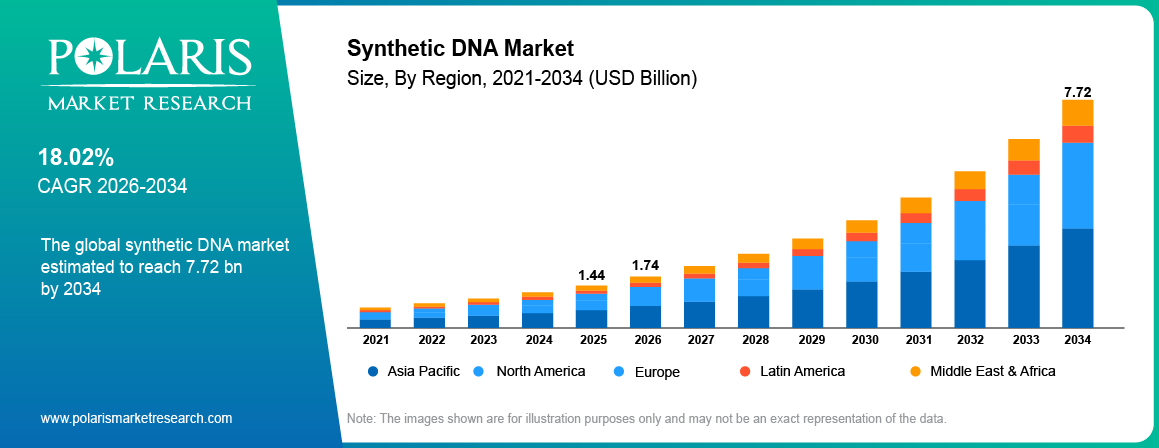
The Synthetic DNA Market size was valued at USD 1.44 Billion in 2025. The market is expected to grow at a CAGR of 18.02% from 2026 to 2034. Growth is fueled by faster availability of DNA fragments, expanding commercial access to longer and more complex DNA constructs, development of enzymatic DNA synthesis, increasing use of sequence design automation, and growing demand for verified DNA across research, diagnostics, and therapeutic development.
Market Statistics
Key Takeaways
- North America accounted for 39.68% of the global Synthetic DNA Market in 2025, supported by established suppliers, biotechnology companies, and research institutions.
- Asia Pacific is projected to register a 20.12% CAGR, propelled by expanding biotechnology research, diagnostics, and commercial DNA synthesis access.
- DNA Oligonucleotides and Pools accounted for 54.42% of the market in 2025, driven by broad use across research and diagnostic workflows.
- Enzymatic Synthesis is projected to register a 22.31% CAGR, fueled by on-demand synthesis and longer, more complex DNA constructs.
- Research and Engineering represented 43.42% of the market in 2025, reflecting broad use across molecular biology, genome engineering, and synthetic genomics.
Note: Figures and projections outlined in this report are the result of Polaris Market Research’s proprietary analytical processes, grounded in the latest available datasets and market observations.
Synthetic DNA Market Definition
The Synthetic DNA Market comprises the commercial supply of DNA products whose nucleotide sequence is deliberately specified and manufactured rather than merely extracted from a biological sample. The scope includes custom DNA oligonucleotides, DNA pools, gene fragments, synthesized or verified genes, libraries, and custom constructs, together with inseparable synthesis and verification services. Equipment revenue, standalone reagents, RNA products, downstream amplification and fermentation, finished medicines, and downstream engineered products are outside the defined revenue boundary.
The adjacent oligonucleotide synthesis category includes both DNA and RNA. Only DNA products fall within this market, including DNA primers, probes, adapters, and libraries. guide RNA (gRNA) molecules, messenger RNA, and RNA therapeutic substances are excluded. This distinction is important as an order that contains both DNA and RNA components cannot be synthetic DNA revenue without the application of the defined transaction boundary.
DNA manufacturing is broader than sequence creation. It can include amplification, plasmid DNA manufacturing, purification, and clinical manufacturing activities that occur after the DNA sequence has been produced. A plasmid containing a synthesized insert therefore does not make every subsequent manufacturing activity synthetic DNA revenue. Similarly, replication of an existing template is not automatically equivalent to writing a new sequence. These boundaries reduce the risk of double counting across synthesis, research services, and downstream manufacturing.
Synthetic biology represents the broader engineering discipline in which DNA is one component of a design-build-test-learn workflow. Synthetic DNA supports this activity by providing defined sequences for research, engineering, diagnostics, and therapeutic development. Thermo Fisher Scientific's GeneArt workflow illustrates the connection between sequence design, manufacturability checks, ordering, production status, and quality documentation.
Drug Pipeline Analysis
DNA medicine candidates provide downstream demand context for synthetic DNA, but a clinical program does not by itself establish commercial synthesis revenue or identify a supplier. Polaris therefore treats therapeutic programs as evidence of potential sequence requirements rather than as direct market revenue.
INOVIO Pharmaceuticals' INO-3107 is a DNA immunotherapy candidate for recurrent respiratory papillomatosis. The program progressed to FDA review through a biologics license application with a PDUFA target action date of October 30, 2026, providing a documented example of DNA-based therapeutic development. The clinical program illustrates why DNA templates and sequence-related manufacturing requirements can become relevant as therapeutic candidates progress, while supplier attribution remains outside the disclosed evidence base.
The Phase 1/2 development of INO-3107 provides downstream context for sequence verification and manufacturing controls. Clinical evidence should not be interpreted as proof that a particular synthesis chemistry is superior or that the full clinical-development value belongs to the synthetic DNA market.
Nykode Therapeutics' abi-suva, formerly VB10.16, provides another example of a DNA-based therapeutic program. The candidate is being developed as an HPV16-targeting DNA-based therapeutic vaccine, with clinical programs spanning cervical and head-and-neck cancer indications, including the randomized Phase 2 Abili-T trial, which dosed its first patient in May 2026. The program demonstrates the downstream relevance of custom DNA synthesis to therapeutic development, but the supplier of the DNA used in the clinical program is not established by the available evidence (Source: nykode.com; mfn.se).
Pipeline interpretation in Synthetic DNA analysis should therefore distinguish development activity from manufacturing route and addressable revenue. A clinical milestone can identify a potential requirement for sequence design, analytical controls, or manufacturing transfer, but it cannot establish purchase volumes or supplier allocation without explicit evidence.
Downstream DNA Medicine Programs
| DNA Medicine Program | Company | Indication | Development Status | Relevance to Synthetic DNA Market |
| INO-3107 | INOVIO Pharmaceuticals | Recurrent respiratory papillomatosis | BLA under FDA review; PDUFA target date October 30, 2026 | DNA templates and sequence verification for clinical supply |
| VGX-3100 | INOVIO Pharmaceuticals | HPV-related cervical dysplasia | Positive Phase 3 topline results reported by partner ApolloBio in China (2026) | Plasmid sequence design and verification at scale |
| abi-suva (formerly VB10.16) | Nykode Therapeutics | HPV16-positive cervical and head-and-neck cancers | Phase 2 Abili-T trial dosing began May 2026; interim data expected 2027 | Custom DNA synthesis for plasmid construct development |
| DMAb and DPROT platforms | INOVIO Pharmaceuticals | DNA-encoded monoclonal antibodies and proteins | Early data presented at 2026 scientific conferences | Demand for custom, sequence-verified gene constructs |
Source: Polaris Market Research Analysis | Note: Supplier attribution is not disclosed; programs indicate downstream demand context, not synthetic DNA revenue.
Market Dynamics
Driver Impact Analysis Snapshot
| Driver / Opportunity | Type | Impact | Basis in This Report |
| Faster DNA fragment availability | Driver | High | Express delivery shortens design-to-validation cycles in design build test learn workflows |
| Longer verified DNA constructs | Driver | Medium | Sequence-perfect clonal DNA of up to 50 kb widens the range of designs available commercially |
| Commercial DNA oligos for molecular diagnostics | Opportunity | High | GMP-grade oligo capability extends supply beyond research into regulated assay workflows |
| Specialized constructs for genome engineering | Opportunity | Medium | Engineered-organism and synthetic genomics projects need custom, sequence-verified DNA |
Source: Polaris Market Research Analysis
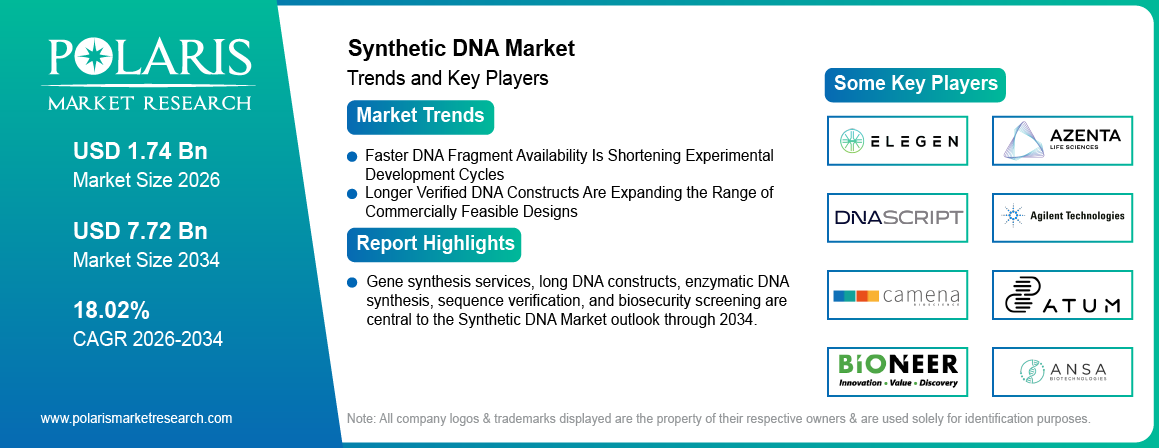
Driver: Faster DNA Fragment Availability Is Shortening Experimental Development Cycles
Faster access to commercially synthesized DNA fragments is supporting the growth of the synthetic DNA market by reducing the time researchers spend waiting for custom genetic material. Twist Bioscience has added eligible DNA fragments to its Express delivery offering in 2025, allowing for a quicker turnaround on some fragments for USD 0.07 per base pair. Shorter delivery cycles enable research teams to move more rapidly from sequence design to cloning, testing and iteration. This is particularly important in design build test learn workflows where rapid access to physical DNA constructs is a prerequisite for reliable experimental cycles. This enables investigators to better synchronize their DNA procurement with project timelines, reducing the lag time between design and lab validation by offering faster turnaround times for the most commonly requested fragments from synthesis providers (Source: Twist Bioscience).
Driver: Longer Verified DNA Constructs Are Expanding the Range of Commercially Feasible Designs
The availability of long, sequence-verified DNA constructs is expanding the range of designs that researchers are able to obtain directly from commercial synthesis providers. In 2025 Ansa Biotechnologies announced a 50 kilobase sequence-perfect clonal DNA product, signaling the commercial availability of substantially longer validated constructs than conventional short DNA formats. Longer constructs also reduce the need to split complex sequences into multiple gene fragments prior to assembly, which can ease workflows involving large genes, pathways, and other engineered DNA designs. And an expansion of Ansa’s clonal DNA products through Integrated DNA Technologies further extends access through an established commercial ordering channel. These developments increase the role of long DNA constructs in complex gene synthesis and expand the scope of projects that can be supported by purchased DNA deliverables (Source: Ansa Biotechnologies; Integrated DNA Technologies).
Restraint: Quality Control and Biosecurity Screening Are Increasing Order Complexity
Quality control and biosecurity screening requirements add to the operational complexity of synthetic DNA procurement, especially for longer or more complex sequences. Providers also have to do sequence verification, screen customers, review orders, and document, on top of DNA synthesis and fulfillment. The U.S. government has established a framework for synthetic nucleic acid providers and users that incorporates sequence screening and customer verification, and subsequent federal actions have further reinforced expectations of screening. The 2024 federal screening framework scheduled a tighter screening window of 50 nucleotides and a broader definition of sequences of concern from October 13, 2026, although its status has remained in flux since Executive Order 14292 called for an updated framework in May 2025. These requirements add additional review steps before certain orders are synthesized or delivered, and require providers to maintain appropriate records and screening processes. As the synthetic DNA market expands in terms of construct sophistication and applications, suppliers have to balance fast delivery with controls that mitigate the risk of misuse and maintain quality standards. (Source: Federal Register; Frontiers in Bioengineering and Biotechnology)
Opportunity: Commercial DNA Oligos Can Support Expanding Molecular Diagnostic Workflows
Growing use of DNA primers, probes, and other synthetic oligonucleotides in diagnostic workflows is creating opportunities for suppliers that provide consistent, application-specific DNA products. Commercial oligo providers support applications where sequence accuracy, manufacturing consistency, and quality documentation are important for downstream assay development and testing. LGC Biosearch Technologies, for example, maintains commercial GMP oligonucleotide capabilities that support the production of oligos for regulated applications. These capabilities enable synthetic DNA providers to support customers beyond basic research and support needs associated with molecular diagnostics and other quality-sensitive workflows. As diagnostic companies expand their nucleic-acid-based assay portfolios, there are higher demand for specialized commercial DNA oligos with particular quality and manufacturing specifications, increasing the addressable application base for synthetic DNA providers (Source: LGC Biosearch Technologies).
Opportunity: Genome Engineering Is Creating Demand for Specialized DNA Constructs
The continued growth of genome engineering and synthetic biology applications provides opportunities for specialized DNA constructs tailored to more complex research workflows. Scientists working with engineered organisms, pathway development, and genetic modification often need combinations of genes, regulatory elements, fragments and sequence-verified constructs that are not available as standard biological materials. This is an example of how synthetic DNA capabilities are applied to complex biological engineering projects, including work with chloroplast genomes, in collaboration between Camena Bioscience and Constructive Bio to support plant genomics in 2025. Such projects require reliable access to custom DNA sequences and longer constructs that can support synthetic genomics and agricultural biotechnology applications. Increasing use of engineered biological systems therefore creates opportunities for suppliers able to deliver customized, sequence-verified DNA for specialized genome engineering workflows (Source: Camena Bioscience).
AI Impact on Synthetic DNA Market
Artificial intelligence is changing how synthetic DNA is designed, ordered, and validated. AI-guided protein design and nucleic acid therapeutics research are increasing demand for complex, sequence-verified constructs, and suppliers are responding with automated design checks, manufacturability scoring, and API-based ordering. In May 2026, Twist Bioscience expanded its clonal gene portfolio to sequences of up to 7,000 base pairs, citing AI-guided protein design and nucleic acid therapeutics as demand drivers (Source: Twist Bioscience).
AI-enabled drug discovery is also pulling DNA suppliers deeper into experimental workflows. In September 2026, Twist Bioscience agreed to supply antibody characterization data services to Eli Lilly’s TuneLab platform, and GenScript Biotech Corporation reported that its AI drug discovery business doubled in the first half of 2026. These developments indicate that AI is expanding demand for rapid, high-quality DNA and gene-to-protein validation, although the effect on synthetic DNA product revenue depends on repeat procurement (Source: Twist Bioscience; GenScript Biotech Corporation).
Synthetic DNA Market Report Segmentation Analysis
The Synthetic DNA Market is segmented by product format, synthesis technology, application, end use industry, and region. These dimensions distinguish the type of DNA deliverable purchased, the production method used to manufacture it, the downstream workflow supported, the organization procuring the product, and the geographic market in which demand is generated.
Product Format Insights
The DNA Oligonucleotides and Pools segment accounted for 54.42% of the market in 2025, supported by broad use of short synthetic DNA sequences in research, diagnostic, and molecular biology workflows. These products include primers, probes, adapters, and pooled sequences supplied as the final customer deliverable. Agilent Technologies SurePrint HiFi DNA Oligo Pools are custom-designed oligonucleotide collections for those applications. We designed commercial availability of pooled products to support applications involving screening, sequence variation and library construction while maintaining a clear separation between a finished DNA pool purchased by the customer and synthesis performed internally as part of another construct (Source: Agilent Technologies).
The Gene Fragments segment is expected to grow at a 19.42% CAGR during the forecast period due to the demand for defined DNA components that is incorporated into larger experimental constructs. Gene fragments allow researchers to acquire specific sequences without purchasing a fully assembled and vetted gene, and the format is amenable to cloning, assembly and synthetic biology workflows. Twist Bioscience offers gene fragments that are available for commercial use with defined length and delivery features. This includes selected Express products starting from USD 0.07 per base pair. Individual DNA building blocks are available for researchers to buy for projects as standardized fragment products are available (Source: Twist Bioscience).
The Verified Genes segment accounted for 20.13% of the market in 2025, driven by the demand for DNA deliverables which combine synthesis, assembly and sequence verification into a more complete customer product. Verified genes save the buyer from doing so much downstream confirmation compared to buying individual fragments that still need to be assembled and validated. GenScript offers gene synthesis services, including sequence design, synthesis, gene cloning and quality-related workflows, demonstrating how suppliers bundle multiple production steps around a defined gene deliverable. This format is especially useful when researchers need a DNA sequence ready for use in downstream experiments, instead of just a sequence part by itself (Source: GenScript Biotech Corporation).
The Custom Constructs and Libraries segment is projected to record a 22.46% CAGR during the forecast period, fueled by the rising demand for more complex DNA designs and collections of sequence variants. These products can include multiple functional elements or offer multiple designed sequences for screening and engineering workflows. In January 2026, Integrated DNA Technologies added Ansa Biotechnologies’ clonal DNA and XL clonal DNA products to its synthetic biology offering through a strategic collaboration, creating commercial access to longer verified complex DNA constructs. The offerings of this type allow customers to acquire DNA for more complex experimental designs and decrease the necessity of splitting certain sequences into multiple separately synthesized parts (Source: Integrated DNA Technologies).
Product Format Snapshot
| Product Format | What the Buyer Receives | Customer Workload | Representative Evidence |
| DNA oligonucleotides and pools | Primers, probes, adapters, and pooled sequences | Low; ready for assay or library use | Agilent SurePrint HiFi DNA Oligo Pools |
| Gene fragments | Defined double-stranded DNA components | Customer assembles and verifies | Twist Express fragments from USD 0.07/bp |
| Verified genes | Assembled, sequence-verified gene | Minimal downstream confirmation | GenScript gene synthesis services |
| Custom constructs and libraries | Long, complex, or multi-variant designs | Low assembly; specification-driven | Ansa clonal DNA up to 50 kb via IDT; Twist Complex Genes |
Source: Polaris Market Research Analysis
Synthesis Technology Insights
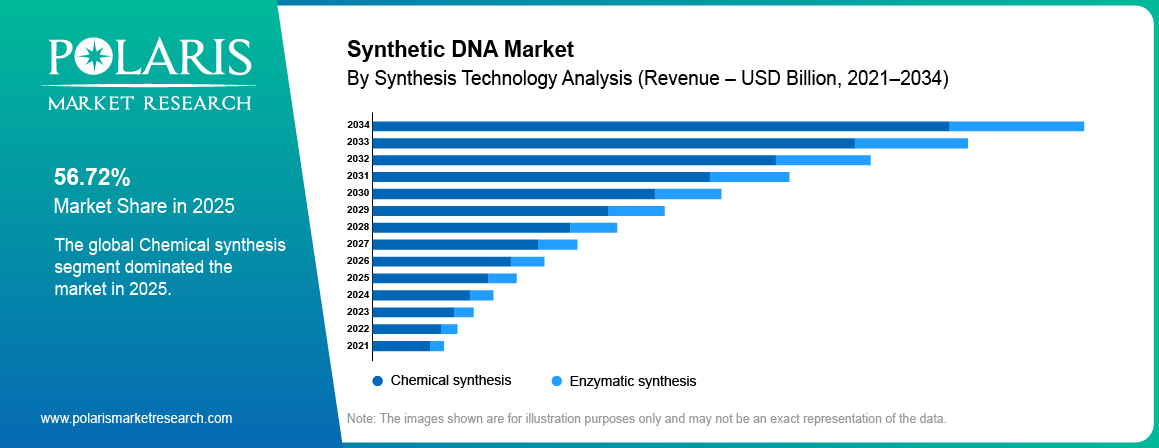
The Chemical Synthesis segment accounted for 56.72% of the synthesis technology segment in 2025, due to the well-established production workflows for chemical DNA synthesis of oligonucleotides and other shorter DNA sequences. Phosphoramidite chemistry is a key approach for commercial manufacturing, as it is embedded in mature oligonucleotide production and quality-control processes. The continued commercial availability of oligonucleotide products for research and regulated applications underscores the established role of chemical synthesis in the manufacture of DNA. For example, LGC Biosearch Technologies has commercial GMP oligonucleotide products with defined manufacturing and quality requirements and supports applications where reproducibility and controlled production are important (Source: LGC Biosearch Technologies).
Phosphoramidite chemistry is regarded as the synthesis method underlying chemical DNA synthesis, rather than a separate market segment. This technology remains relevant to the production of DNA oligonucleotides since commercial manufacturers have built manufacturing infrastructure, quality processes, and product formats around chemically synthesized sequences. LGC Biosearch Technologies' commercial GMP oligonucleotide offering illustrates the continued application of established chemical manufacturing processes to quality-sensitive DNA products. Array-based synthesis and other production configurations are similarly treated as manufacturing configurations within the relevant synthesis technology rather than separate revenue categories. This classification prevents overlapping revenue between the chemistry, production configuration, and final DNA product being purchased (Source: LGC Biosearch Technologies).
The Enzymatic Synthesis segment is projected to register a 22.31% CAGR during the forecast period, supported by commercial efforts to address DNA production requirements that can become more challenging as sequence length and construct complexity increase. DNA Script employs its enzymatic DNA synthesis platform SYNTAX, and Ansa Biotechnologies has shown an enzymatic approach for making long sequence-verified DNA. These models reflect different commercial paradigms, one on instrument-enabled on-demand synthesis and the other on service-based delivery. These offerings expand the technology base for synthetic DNA production and support applications requiring alternative approaches to conventional chemical synthesis (Source: DNA Script; Ansa Biotechnologies).
Application Insights
The Research and Engineering segment accounted for 43.42% of the application segment in 2025, driven by the broad need for defined DNA sequences for cloning, protein engineering, genome engineering, pathway construction and screening workflows. Synthetic DNA allows investigators to specify sequences rather than to start from sequences from existing biological sources. This provides experimental teams more control over how constructs are designed. Thermo Fisher Scientific’s GeneArt platform provides automated sequence design and ordering, including design checks and documentation for gene synthesis workflows. Tools like these connect sequence design to commercial production of DNA, and help researchers translate defined genetic designs into downstream laboratory experimentation (Source: Thermo Fisher Scientific).
The Diagnostics segment is expected to witness a 17.84% CAGR during the forecast period owing to demand for synthetic DNA components used in assay development, validation and molecular testing workflows. DNA primers, probes and other oligonucleotide formats are available to prescribed sequences and specifications, and are thus suitable for synthetic DNA applications in diagnostics where reproducibility and controlled production is necessary. LGC Biosearch Technologies offers GMP oligos commercially for applications that require documented manufacturing and quality processes. This requirement is not present in all basic research applications of diagnostic purchasing, as organizations may be more concerned with lot consistency, traceability, documentation, and quality controls when synthetic DNA is incorporated into a regulated or commercially deployed workflow. (Source: LGC Biosearch Technologies)
The Therapeutic Development segment is expected to hold 32.72% share of the application segment in 2025 due to the utilization of defined DNA sequences in research programs, construct development, analytical activities, and DNA-based therapeutic development. Synthetic DNA suppliers offer sequence-defined DNA templates that are inputs to research, but not the final therapeutic product itself. One example of a DNA therapeutic program that's in the clinical and regulatory pipeline is INO-3107, developed by INOVIO. These programs highlight the downstream importance of synthetic DNA capabilities but remain outside the market boundary where revenue is tied to the purchase of DNA products rather than finished medicines (Source: INOVIO Pharmaceuticals).
End Use Industry Insights
The Pharmaceutical and Biotechnology Companies segment accounted for 41.26% of the end use industry segment in 2025, owing to the purchasing requirements of drug discovery, genetic engineering, assay development and therapeutic research. These pharmaceutical biotechnology companies can request various types of DNA at different stages of development, from short oligonucleotides and gene fragments to verified genes and complex constructs. GenScript’s commercial gene synthesis services are a good example of how suppliers are helping biotechnology customers with integrated sequence design and DNA production workflows. The diversity of applications in pharmaceutical and biotech research results in a demand for suppliers capable of managing different sequence lengths, build requirements, verification needs, and delivery formats in a single purchasing relationship (Source: GenScript Biotech Corporation).
The segment of Academic and Public Research Institutes is expected to register a 14.86% CAGR during the forecast period due to constant demand for custom DNA in molecular biology, functional genomics, protein engineering and other laboratory research programs. These academic research institutes frequently have defined sequences of experiments that cannot be satisfied by standardized biological materials alone. A good illustration of an alternative procurement model where DNA can be made closer to the point of research use is DNA Script’s on-demand synthesis technology. These abilities will benefit research organizations that require flexibility in designing and producing sequences while avoiding the need to depend on conventional centralized purchasing for every DNA construct (Source: DNA Script).
The Diagnostic Organizations segment accounted for 15.18% of the end use industry segment in 2025 driven by the demand for synthetic DNA for assay development, molecular testing, and other diagnostic workflows. Synthetic DNA become an input for standardized testing processes, allowing diagnostic organizations to focus more on documented quality, manufacturing consistency, traceability, and reproducibility than general research users. LGC Biosearch Technologies' commercial GMP oligonucleotide offering demonstrates the availability of DNA products designed around controlled manufacturing requirements. This creates a distinct procurement profile in which product specifications and quality documentation can be as important as sequence design when organizations select a synthetic DNA supplier (Source: LGC Biosearch Technologies).
The Industrial and Agricultural Biotechnology Organizations segment represents a specialized customer group requiring synthetic DNA for engineered biological systems, plant research, pathway development, and related biotechnology applications. The work of Camena Bioscience in collaboration with Constructive Bio on plant genomics applications demonstrates how synthetic DNA capabilities can help in working with complex plant genetic systems. The projects include custom sequences and larger DNA constructs designed for specific engineering goals. Demand from industrial agricultural biotechnology organizations therefore expands the application base of synthetic DNA beyond pharmaceutical and academic research, particularly as synthetic genomics and agricultural biotechnology programs require increasingly specialized DNA inputs (Source: Camena Bioscience).
Regional Analysis
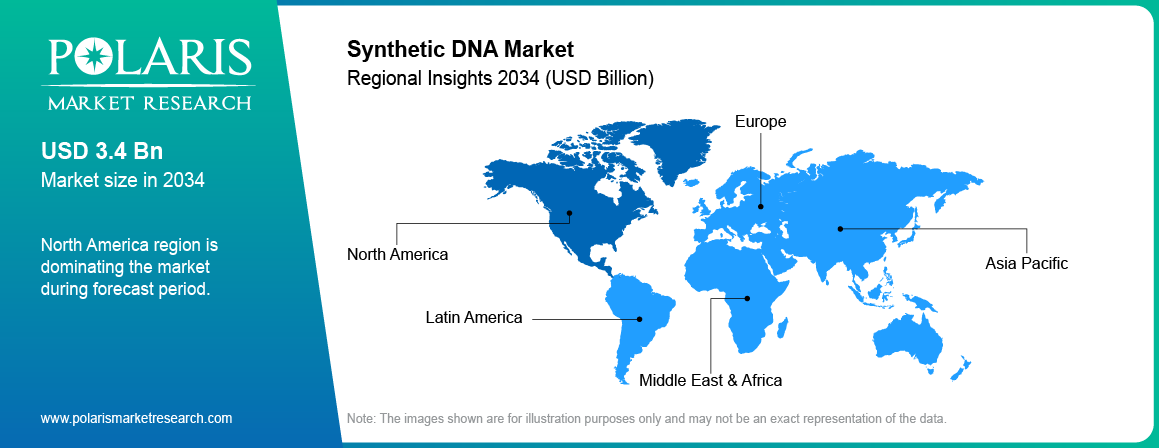
The Synthetic DNA Market regional analysis includes North America, Europe, Asia Pacific, Latin America, and Middle East & Africa. Regional demand differs according to biotechnology research activity, DNA synthesis capabilities, supplier access, research infrastructure, diagnostic applications, therapeutic development, and the availability of specialized synthesis technologies.
North America Synthetic DNA Market Trends
In 2025, North America held 39.68% of the global Synthetic DNA Market. The regional market is supported by established suppliers of gene synthesis services, biotechnology companies, research institutions and specialized technology developers, and commercial access to longer and more complex constructs is broadening the range of DNA products available to researchers. Integrated DNA Technologies expanded its synthetic biology portfolio in January 2026 by gaining access to Ansa Biotechnologies’ clonal DNA and XL clonal DNA products, including longer DNA constructs. The development strengthens commercial access to sequence-verified DNA through an established ordering environment and supports applications requiring complex gene synthesis and larger constructs (Source: Integrated DNA Technologies).
Europe Synthetic DNA Market Trends
In 2025, Europe held 25.14% of the global Synthetic DNA Market, supported by established life-sciences capabilities, specialized DNA synthesis providers, biotechnology research, and development of alternative synthesis technologies. European activity also includes work on larger and more complex genetic systems. DNA Script's SYNTAX platform provides an example of enzymatic DNA synthesis developed around on-demand production, while Camena Bioscience's collaboration with Constructive Bio applies synthetic DNA capabilities to plant genomics and chloroplast engineering. These developments demonstrate how European synthetic DNA activity extends from DNA synthesis services into enzymatic DNA synthesis and synthetic genomics applications requiring increasingly specialized DNA constructs (Source: DNA Script; Camena Bioscience).
Asia Pacific Synthetic DNA Market Trends
Asia Pacific is expected to grow at 20.12% CAGR during the forecast period due to expanding biotechnology research, pharmaceutical development, diagnostics, synthetic biology activity and wider access to commercial DNA synthesis services and sequence verification. Distribution agreements with international suppliers are also growing their regional presence, enabling customers to obtain specialized DNA products without the need for local manufacturing facilities. In July 2026, DNA Script entered into a distribution agreement with Imperial Life Sciences to expand access to its on-demand DNA synthesis technology in India. This development demonstrates the regional distribution enhance access to enzymatic DNA synthesis and specialized DNA production capabilities throughout the Asia Pacific region (Source: DNA Script).
Latin America Synthetic DNA Market Trends
Latin America accounted for 5.72% of the global Synthetic DNA Market in 2025, fueled by demand in biotechnology research, molecular diagnostics, pharmaceutical development, and other life sciences applications. Increasingly, regional access is affected by international supplier networks and distribution arrangements that allow customers to obtain DNA synthesis services and products without the need for a full manufacturing footprint in every country. DNA Script reported it had signed distributor agreements for Latin America in 2026, part of its push to broaden access to on-demand DNA synthesis. Such arrangements can broaden availability of specialized synthesis technologies and support regional customers requiring defined DNA products for research and biotechnology workflows (Source: DNA Script).
Middle East & Africa Synthetic DNA Market Trends
Middle East & Africa held 4.70% of the global Synthetic DNA Market in 2025. Regional demand is associated with biotechnology research, molecular diagnostics, pharmaceutical development, and increasing access to international DNA synthesis providers. Commercial availability is also influenced by procurement channels, supplier distribution, research infrastructure, and the ability of organizations to obtain DNA products meeting required quality specifications. DNA Script’s collaboration with EVA Pharma and Quantoom Biosciences in 2025 demonstrates the importance of DNA synthesis technologies to wider synthetic biology and biomanufacturing activity with African and European partners. Such collaborations can support the development of local biotechnology capabilities while creating additional channels for synthetic DNA technologies within emerging life-sciences markets (Source: DNA Script).
Synthetic DNA Market Competitive Landscape
The Synthetic DNA Market competitive landscape includes established oligonucleotide and gene providers alongside specialized synthesis-technology companies. Competition centers on sequence acceptance, delivery format, quality evidence, turnaround time, complexity handling, and integration into customer workflows. The broader DNA synthesis market also spans RNA oligonucleotides and equipment, which sit outside the boundary of this report.
Competitive Landscape Snapshot
| Company | HQ | Vendor Landscape | Vendor Positioning | Verified Offering and 2026 Highlight |
| Twist Bioscience Corporation | US | Silicon-based gene synthesis specialist | Market Leader | Gene fragments and verified genes; Complex Genes (300–7,000 bp) launched May 2026 |
| Integrated DNA Technologies, Inc. | US | Oligo and gene supplier (Danaher company) | Market Leader | DNA oligos, fragments, and genes; Ansa clonal DNA up to 50 kb added January 2026 |
| Thermo Fisher Scientific Inc. | US | Diversified life science supplier | Market Leader | GeneArt synthesized genes and fragments with API-based design and ordering |
| GenScript Biotech Corporation | China | Gene synthesis and biologics services group | Market Leader | Gene synthesis and custom constructs; FLASH Gene sequence-to-plasmid service |
| Eurofins Scientific SE | Luxembourg | Genomics testing and services group | Established Player | Gene and oligo synthesis |
| LGC Biosearch Technologies Limited | UK | Oligo and assay components specialist | Established Player | DNA oligos, GMP oligonucleotides, and commercial assay components |
| Merck KGaA | Germany | Diversified life science supplier | Established Player | Custom DNA oligos (Sigma-Aldrich portfolio) |
| Agilent Technologies, Inc. | US | Analytical instruments and oligo pool supplier | Established Player | SurePrint DNA oligo pools |
| Azenta, Inc. | US | Genomics services provider | Established Player | GENEWIZ gene synthesis services |
| BIONEER CORPORATION | South Korea | Molecular biology products and services | Regional Player | DNA oligos and gene synthesis |
| Eton Bioscience, Inc. | US | Custom oligo and gene service provider | Regional Player | DNA oligos and gene synthesis |
| IBA Lifesciences GmbH | Germany | Custom oligo service provider | Regional Player | Custom oligonucleotide synthesis |
| Ansa Biotechnologies, Inc. | US | Enzymatic synthesis innovator | Technology Challenger | Enzymatic clonal DNA from 100 bp to 50 kb; pricing from USD 0.13/bp (April 2026) |
| DNA Script SAS | France | Enzymatic synthesis innovator | Technology Challenger | Enzymatic synthesis: SYNTAX benchtop platform and ENCODEX GMP-grade DNA |
| Molecular Assemblies, Inc. | US | Enzymatic synthesis innovator | Technology Challenger | Enzymatic DNA synthesis technology |
| Camena Bioscience Ltd. | UK | Enzymatic synthesis innovator | Technology Challenger | Enzymatic synthesis for complex projects, including chloroplast genome work |
| Elegen Corporation | US | Long-DNA synthesis innovator | Technology Challenger | Long and complex DNA synthesis |
| Evonetix Ltd. | UK | Benchtop synthesis innovator | Technology Challenger | Benchtop gene synthesis technology |
| Quintara Biosciences, Inc. | US | Gene and construct service provider | Niche Specialist | Verified genes and specialized constructs |
| ATUM | US | Gene design and synthesis specialist | Niche Specialist | Gene design and synthesis |
| Synbio Technologies, Inc. | US | Gene and pathway construct specialist | Niche Specialist | Gene synthesis and pathway constructs |
Source: Polaris Market Research Analysis. Positioning is a Polaris qualitative assessment based on product breadth, commercial scale, and 2026 activity, not a revenue ranking.
Complex gene synthesis services create a basis for specialized suppliers to compete on manufacturability rather than treating DNA solely as a commodity priced by base pair. Buyers must consider the sequence acceptance rules, verification method, product format, and handling of unsuccessful constructs.
The competitive structure also reflects the transfer of workflow responsibility. A fragment supplier may leave assembly and verification with the customer, while a verified-gene provider can deliver a more complete construct. This makes a direct price-per-base comparison potentially misleading in any synthetic DNA analysis of supplier positioning.
Technology and Innovation Landscape
Technology and Innovation Landscape Snapshot
| Technology | Representative Players | Maturity | Capability Evidence (2026) |
| Phosphoramidite chemical synthesis | LGC Biosearch Technologies and established oligo suppliers | Mature | GMP oligonucleotide production for regulated and diagnostic use |
| Silicon chip-based synthesis | Twist Bioscience | Commercial at scale | Complex Genes of 300–7,000 bp; about 99.5% of clonal gene orders accepted (May 2026) |
| CMOS-based synthesis | GenScript Biotech Corporation | Commercial, expanding | DNA data storage collaboration with Mimulus (April 2026) |
| Enzymatic synthesis | DNA Script, Ansa Biotechnologies, 4basebio | Scaling | Ansa clonal DNA up to 50 kb; 4basebio ssDNA up to 10,000 nt (May 2026) |
| Cell-free DNA production | Ribbon Bio | Early commercial | MiroSynth Cell-Free DNA without bacterial cloning (May 2026) |
| Sequence design automation and AI | Thermo Fisher Scientific, Twist Bioscience | Emerging | GeneArt API validation and ordering; complexity and manufacturability scoring |
Source: Polaris Market Research Analysis
Enzymatic DNA synthesis is one of the principal technology areas being developed to expand DNA-writing capability. DNA Script's platform demonstrates an enzymatic approach for on-demand oligonucleotide production, while Ansa applies enzymatic synthesis to longer clonal DNA constructs.
Traditional phosphoramidite chemistry remains important for established oligonucleotide manufacturing. The technology offers mature production workflows, while enzymatic approaches are being developed to address different sequence-length and complexity requirements.
Sequence design automation is becoming more closely connected with synthesis procurement. Thermo Fisher's GeneArt API supports sequence validation against production acceptance criteria, manufacturability optimization, ordering, status tracking, and quality documentation.
DNA libraries represent another technology-enabled product category. Rather than manufacturing one sequence at a time, library workflows generate collections of designed variants that can support screening and engineering programs.
Use Case Analysis
Protein Engineering
Synthetic DNA supports protein engineering by providing designed genes and variants for expression and testing. Gene fragments and verified genes can occupy different positions in this workflow depending on whether the customer intends to perform downstream assembly or receive a more complete construct.
Genome Engineering
Genome engineering, including CRISPR-based workflows, requires DNA sequences that can serve as inserts, donor constructs, regulatory elements, or other defined components. Longer and more complex constructs can reduce the number of separate assembly steps in some workflows, although the commercial benefit depends on sequence-specific requirements.
Synthetic Genomics
Synthetic genomics extends DNA design beyond individual genes toward larger genetic systems. The chloroplast genome project involving Camena Bioscience and Constructive Bio illustrates the need for synthesis and assembly capabilities that can support larger and more complex biological designs.
Molecular Diagnostics
DNA primers and probes are core sequence-defined components of molecular diagnostic assays. Commercial diagnostic use places greater emphasis on modification specifications, traceability, lot consistency, and quality systems than many research-only applications.
Quality-Controlled DNA Supply
Verified genes and clonal constructs can reduce the amount of sequence validation and quality control work transferred to the customer. The value of verification depends on the method used, coverage of the construct, supporting documentation, and the buyer's acceptance criteria.
Industrial and Agricultural Biotechnology
Industrial and agricultural biotechnology programs can require DNA constructs designed for specific organisms, pathways, regulatory elements, or engineering objectives. Such industrial agricultural biotechnology projects may have different sequence and procurement requirements from routine mammalian expression research.
Buyer Analysis and Barriers to Market Entry
DNA synthesis procurement is influenced by sequence requirements, product format, verification level, turnaround time, price, quality documentation, and biosecurity screening.
| Buyer | Primary Requirement | Typical Evaluation |
| Pharmaceutical & biotechnology companies | Complex and verified constructs | Quality, sequence acceptance, turnaround, documentation |
| Academic & public research institutes | Research-grade DNA | Price, availability, turnaround, sequence quality |
| Diagnostic organizations | Commercial-grade oligos | Traceability, quality systems, lot consistency |
| Industrial & agricultural biotechnology | Specialized constructs | Manufacturability, sequence complexity, delivery requirements |
Source: Polaris Market Research Analysis
Buyers evaluating complex gene synthesis should compare the actual completed deliverable rather than only the number of base pairs. A verified construct can transfer assembly, cloning, or verification work from the customer to the supplier.
Sequence verification is another procurement criterion. Buyers should assess what portion of the sequence is verified, which analytical method is used, and what documentation accompanies the product.
Commercial DNA oligos may carry additional requirements when used in diagnostic or regulated workflows. Quality-system certification, traceability, modification availability, and lot consistency can become part of supplier qualification.
Biosecurity screening is an additional barrier as suppliers must evaluate certain sequences and customers under applicable screening requirements. Changes in policy frameworks make current-source verification important when assessing supplier obligations.
Price comparisons can also be difficult because suppliers may quote different products, scales, verification levels, cloning options, or turnaround conditions. DNA synthesis pricing should therefore be normalized by product type and service scope.
Biosecurity and Regulatory Snapshot
| Framework / Policy | Status | Implication for Suppliers |
| U.S. Framework for Nucleic Acid Synthesis Screening (2024) | Screening window tightens to 50 nucleotides and sequences-of-concern definition broadens from October 13, 2026 | Stricter review of short and split orders |
| Executive Order 14110 | Rescinded January 25, 2025 | Framework compliance status needs current-source verification |
| Executive Order 14292 (May 2025) | Calls for a revised or replacement screening framework | Potential screening obligations beyond federally funded buyers |
| Senate Bill S.3741 (2026) | Bipartisan bill introduced to require private-sector screening | Would add an enforcement mechanism |
| International Gene Synthesis Consortium protocols | Voluntary, industry-led | Baseline customer and sequence screening practice |
Source: Polaris Market Research Analysis; U.S. OSTP; Johns Hopkins Center for Health Security
Premium Insights and Forward Outlook
Longer and more complex gene synthesis is expanding the range of designs that can be commercially supplied, but the market effect depends on repeat procurement rather than headline maximum length. A 50 kb offering establishes capability, repeat orders across customer sequences provide stronger evidence of sustained commercial adoption.
The synthetic DNA industry forecast should therefore track several operational indicators separately: accepted sequence complexity, delivery reliability, production capacity, verification requirements, and repeat customer activity.
Sequence design automation is another important commercial direction because it connects computational design with manufacturability assessment and ordering. Such workflows can reduce the gap between a digitally designed sequence and an orderable construct.
The broader synthetic DNA analysis should consequently distinguish technical capability from market realization. New chemistry, longer constructs, and faster delivery create potential addressable demand, but the final revenue impact must be established through customer purchases and Polaris internal market modeling.
Cost and Pricing Benchmarking Analysis
DNA synthesis pricing varies by product format, sequence length, complexity, verification, quantity, and turnaround requirements. Public supplier pricing should therefore be treated as a product-level benchmark rather than as a proxy for market-wide pricing.
Twist Bioscience advertises Gene Fragment pricing beginning at USD 0.07 per base pair, with an Express processing time beginning at two business days for the applicable offering. (Source: twistbioscience.com)
Ansa's 50 kb commercial DNA offering was announced with pricing as low as USD 0.28 per base pair and turnaround times below 25 business days. These figures apply to the specified Ansa product and should not be generalized to every synthetic DNA construct. Ansa’s April 2026 announcement cites pricing starting at USD 0.13 per base pair across its 100 bp to 50 kb range. (Source: ansabio.com)
Key Players in the Synthetic DNA Market
- Ansa Biotechnologies, Inc.
- Agilent Technologies, Inc.
- ATUM
- Azenta, Inc.
- BIONEER CORPORATION
- Camena Bioscience Ltd.
- DNA Script SAS
- Elegen Corporation
- Eton Bioscience, Inc.
- Eurofins Scientific SE
- Evonetix Ltd.
- GenScript Biotech Corporation
- IBA Lifesciences GmbH
- Integrated DNA Technologies, Inc.
- LGC Biosearch Technologies Limited
- Merck KGaA
- Molecular Assemblies, Inc.
- Quintara Biosciences, Inc.
- Synbio Technologies, Inc.
- Thermo Fisher Scientific Inc.
- Twist Bioscience Corporation
Industry Developments
- September 2026: Integrated DNA Technologies and Ansa Biotechnologies expanded their partnership to enable direct ordering of complex DNA constructs up to 50 kb through the IDT e-commerce platform, with more than 400 institutions across 33 countries having ordered constructs of up to 49.1 kb. (Source: idtdna.com)
- May 2026: Ribbon Bio announced the launch of MiroSynth Cell-Free DNA and MiroMine in-lab DNA production kit for cell-free production of complex synthetic DNA without the need of bacterial cloning. (Source: ribbonbio.com)
- May 2026: 4basebio announced high-performance enzymatic ssDNA platform to create long-form DNA templates up to 10,000 nucleotides, which can be used for gene modification and next-generation genetic medicines. (Source: 4basebio.com)
- May 2026: Twist Bioscience Corporation launched early access to Complex Genes, extending its clonal gene portfolio to long and structurally complex sequences of 300 to 7,000 base pairs with a standard turnaround of 15 business days. (Source: businesswire.com)
- April 2026: Ansa Biotechnologies showcased its sequence-perfect clonal DNA products spanning 100 bp to 50 kb at SynBioBeta 2026, citing turnaround as short as 11 business days and pricing starting at USD 0.13 per base pair. (Source: Ansa Bio)
- April 2026: GenScript Biotech Corporation and Mimulus Corp announced a multi-year collaboration to industrialize DNA-based data storage using GenScript’s CMOS-based DNA synthesis technology. (Source: biospace.com)
- January 2026: Integrated DNA Technologies and Ansa Biotechnologies announced a strategic collaboration to offer Ansa’s Clonal DNA and XL Clonal DNA products, ranging from 100 bp to 50 kb, through the IDT synthetic biology portfolio. (Source: idtdna.com)
Synthetic DNA Market Report Segmentation
By Product Format Outlook (Revenue, USD Billion, 2021–2034)
- DNA oligonucleotides and pools
- Gene fragments
- Verified genes
- Custom constructs and libraries
By Synthesis Technology Outlook (Revenue, USD Billion, 2021–2034)
- Chemical synthesis
- Enzymatic synthesis
By Application Outlook (Revenue, USD Billion, 2021–2034)
- Research and engineering
- Diagnostics
- Therapeutic development
By End Use Industry Outlook (Revenue, USD Billion, 2021–2034)
- Pharmaceutical and biotechnology companies
- Academic and public research institutes
- Diagnostic organizations
- Industrial and agricultural biotechnology organizations
By Region Outlook (Revenue, USD Billion, 2021–2034)
- North America
- US
- Canada
- Europe
- Germany
- France
- UK
- Italy
- Spain
- Netherlands
- Rest of Europe
- Asia Pacific
- China
- Japan
- India
- South Korea
- Taiwan
- Australia
- Rest of Asia Pacific
- Latin America
- Brazil
- Mexico
- Argentina
- Rest of Latin America
- Middle East & Africa
- Saudi Arabia
- UAE
- South Africa
- Rest of Middle East & Africa
Synthetic DNA Market Report Scope
| Report Attributes | Details |
| Market Size in 2025 | USD 1.44 Billion |
| Market Size in 2026 | USD 1.74 Billion |
| Revenue Forecast by 2034 | USD 7.72 Billion |
| CAGR | 18.02% from 2026–2034 |
| Base Year | 2025 |
| Historical Data | 2021–2024 |
| Forecast Period | 2026–2034 |
| Quantitative Units | Revenue in USD Billion and CAGR |
| Report Coverage | Revenue Forecast, Growth Factors, Competitive Landscape, Industry Trends, and Strategic Analysis |
| Segments Covered | By Product Format, Synthesis Technology, Application, End Use Industry, and Region |
| Regional Scope | North America, Europe, Asia Pacific, Latin America, Middle East & Africa |
| Competitive Landscape | Company Profiling, Product Benchmarking, Financial Analysis, Market Developments, and Strategic Initiatives |
| Report Format | PDF + Excel |
| Customization | Available by Country, Region, and Segment |
Source: Polaris Market Research Analysis
Why Choose Polaris Market Research
A synthetic DNA market report should connect each DNA deliverable with the commercial transaction being measured. Separating product format, synthesis technology, application, and buyer organization helps prevent unlike products from being compared as though they were interchangeable and reduces the risk of counting the same DNA transaction at multiple stages.
Synthetic DNA market analysis also benefits from distinguishing public capability evidence from quantitative market evidence. A supplier announcement can establish a new product or service capability without establishing revenue share, while a therapeutic milestone can indicate downstream demand without proving a synthesis contract.
Polaris Market Research & Consulting, Inc. can customize the analysis around country coverage, construct complexity, quality specifications, procurement requirements, and supplier benchmarking. All market figures, segment rankings, and regional conclusions are validated through Polaris proprietary analytical processes.
Research Methodology
Synthetic DNA analysis uses company product pages, dated company announcements, supplier technical materials, government policy publications, and selected clinical sponsor disclosures. The research cutoff for this report is October 7, 2026.
This first phase of the DNA Synthesis market research defines and establishes the market boundary and revenue conventions. DNA products are isolated from RNA, equipment, standalone reagents, later amplification, downstream therapeutic manufacturing and finished drugs. The boundary follows the purchased DNA deliverable.
The second phase collects evidence on products, companies, prices, partnerships, technology developments, and downstream programs. Each claim is connected to the applicable evidence source, while public supplier prices retain their stated units and conditions.
The third phase applies synthetic DNA market analysis across product format, synthesis technology, application, end-use industry, and regional activity. Company names and product aliases are normalized so that brands are not incorrectly counted as separate competitors.
The fourth phase considers the buyer requirements, barriers to procurement, technology development, regional activity and competitive position, and reconciles public evidence with Polaris proprietary market sizing.
The fifth phase applies quality control before publication. Polaris analysts confirm market figures, segment and regional rankings, company verification dates, pipeline status, current pricing, policy references, and forecast assumptions.
Five-Phase Research Methodology
| Phase | Activity | Output |
| 1. Scope Definition | Define the DNA product and revenue boundary | Market boundary |
| 2. Secondary Research | Review approved company, technical, policy, and clinical evidence | Source log |
| 3. Primary Validation | Validate selected product and company evidence where applicable | Evidence validation |
| 4. Competitive Benchmarking & Reconciliation | Compare segment structures, companies, technologies, and regional evidence | Polaris internal model |
| 5. Quality and Sourcing Review | Review citations, scope, figures, company evidence, and forecast assumptions | Final RD and forecast |
Source: Polaris Market Research Analysis
A synthetic DNA report should state limitations where they affect interpretation. Public prices are product-level benchmarks, therapeutic programs are downstream context rather than automatic synthesis revenue, and market shares and CAGRs are derived from Polaris internal modeling.
Synthetic DNA Market FAQ's
The Synthetic DNA Market was valued at USD 1.44 Billion in 2025 and is projected to reach USD 7.72 Billion by 2034.
The market is anticipated to expand at a CAGR of 18.02% from 2026 to 2034, driven by faster DNA delivery, longer verified constructs, and the commercialization of enzymatic synthesis.
North America accounted for 39.68% of the global market in 2025, supported by established DNA synthesis suppliers, biotechnology companies, and research institutions. Asia Pacific is projected to register a 20.12% CAGR through 2034.
DNA Oligonucleotides and Pools accounted for 54.42% of the market in 2025, driven by broad use of primers, probes, adapters, and pooled DNA products across research and diagnostic workflows.
Key players include Twist Bioscience Corporation, Integrated DNA Technologies, Inc., Thermo Fisher Scientific Inc., GenScript Biotech Corporation, Eurofins Scientific SE, LGC Biosearch Technologies Limited, Agilent Technologies, Inc., Azenta, Inc., Ansa Biotechnologies, Inc., and DNA Script SAS.
Key drivers include shorter delivery cycles for DNA fragments, commercial access to longer sequence-verified constructs, expanding use of enzymatic DNA synthesis, and sequence design automation that links digital designs to orderable DNA.
Biosecurity screening, sequence verification, and quality-control requirements add review steps and operational complexity, particularly for longer or more complex orders.
In May 2026, Twist Bioscience launched early access to Complex Genes of 300 to 7,000 base pairs. Integrated DNA Technologies added Ansa Biotechnologies’ clonal DNA of up to 50 kb in January 2026 and expanded integrated ordering in September 2026.
Synthetic DNA is used for cloning, protein engineering, genome engineering, and synthetic genomics, as well as primers and probes for molecular diagnostics and sequence-defined inputs for therapeutic development and agricultural biotechnology.
Synthetic DNA is produced by chemical synthesis, most commonly phosphoramidite chemistry, or by enzymatic synthesis. Short oligonucleotides are assembled into gene fragments, verified genes, and longer constructs, and sequence verification confirms the final product.
Enzymatic synthesis uses enzymes, such as terminal deoxynucleotidyl transferase, to add nucleotides in place of phosphoramidite chemistry. Providers including DNA Script and Ansa Biotechnologies use it for on-demand oligonucleotides and longer, sequence-verified DNA.
Pricing depends on product format, length, complexity, verification, quantity, and turnaround. Twist Bioscience advertises Gene Fragments starting at USD 0.07 per base pair, and Ansa Biotechnologies cites clonal DNA pricing starting at USD 0.13 per base pair.
Turnaround varies by product and complexity. Twist Bioscience cites a standard 15 business days for Complex Genes and Express fragments from two business days, while Ansa Biotechnologies cites turnaround as short as 11 business days for clonal DNA.
Ansa Biotechnologies offers sequence-perfect clonal DNA of up to 50 kb, which the company describes as the longest sequence-perfect synthetic DNA commercially available.
A gene fragment is a DNA component that may require customer assembly, while a verified gene is a more complete construct with supplier-side sequence verification.
Providers screen customers and sequences under biosecurity frameworks. The 2024 U.S. framework scheduled a tighter 50-nucleotide screening window from October 13, 2026, although its status has been under review since Executive Order 14292.
No. Synthetic biology is the broader discipline of designing and engineering biological systems, while synthetic DNA is a defined DNA input used within many synthetic biology workflows.
The market covers custom DNA oligonucleotides, DNA pools, gene fragments, verified genes, libraries, and custom constructs, together with inseparable synthesis and verification services. Equipment, standalone reagents, RNA products, downstream amplification, and finished medicines are excluded.
Download Sample Report of Synthetic DNA Market
Please fill out the form to request a customized copy of the research report.


