
Tumor Ablation Market Size & Share Global Analysis Report, 2026-2034
REPORT DETAILS
Tumor Ablation Market Summary
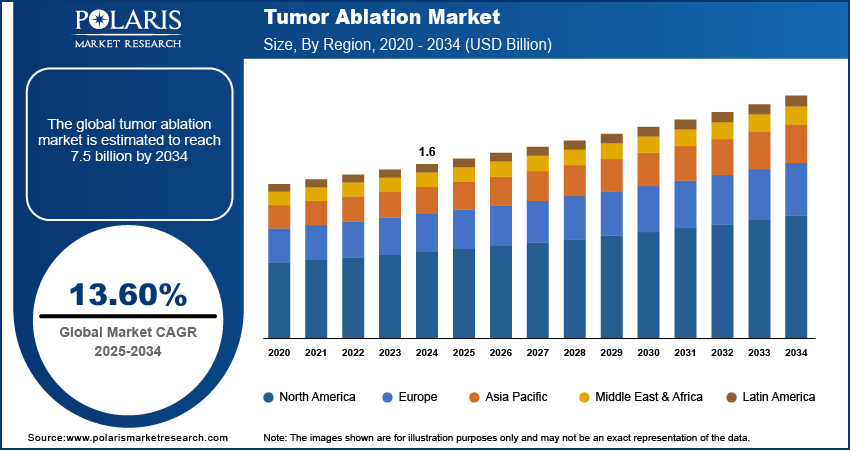
The global tumor ablation market was valued at USD 1.98 billion in 2025 and is anticipated to grow at a CAGR of 11.4% from 2026 to 2034. Key drivers include the growing preference for minimally invasive surgeries and the rising prevalence of cancer worldwide.
Market Statistics
Key Takeaways
- North America held the largest tumor ablation market share of 41.55% in 2025. Increased spending on healthcare infrastructure and advanced medical technology are key drivers of the region's market dominance.
- Asia Pacific is expected to register the highest growth rate of 12.3% during the forecast period. The rising requirement for minimally invasive tumor ablation procedures is driving the market in the region.
- The radiofrequency (RF) ablation segment led the market with a 33.5% revenue share in 2025. This is due to its efficiency and specificity in solid tumor ablation techniques.
- The lung cancer segment is expected to witness the fastest growth at a 12.1% CAGR during the projection period. Smoking and exposure to radon gas are driving the segment's growth.
- The percutaneous ablation segment dominated with a 44.3% market share in 2025. This is owing to its minimally invasive nature and reduced complications.
Note: Figures and projections outlined in this report are the result of Polaris Market Research’s proprietary analytical processes, grounded in the latest available datasets and market observations.
Industry Dynamics
- Tumor ablation procedures such as radiofrequency and cryoablation provide targeted destruction of cancerous cells. The growing prevalence of cancer is driving demand for these procedures.
- The rising preference of patients and surgeons towards minimally invasive procedures is driving the growth of the tumor ablation market.
- The shift of procedures towards outpatient facilities is expected to create several market opportunities.
- The high cost of equipment and procedures may hinder market expansion.
AI Impact on Tumor Ablation Market
- AI enables a doctor to accurately pinpoint tumor size and location. This helps with ablative procedures targeting cancerous cells without causing significant harm to surrounding healthy tissue.
- Using historical data, AI enables informed decision-making and the selection of the most appropriate ablation procedure.
- Imaging and robotic assistance provided by the system reduce operating room procedure time and provide added convenience for the patient.
- AI technology enables tracking post-ablation follow-up responses. This makes it easier to note early changes and plan follow-up visits.
What is Tumor Ablation Market?
The tumor ablation market includes medical procedures that involve the destruction of cancerous tissues using minimal invasive techniques. These include the application of heat, cold, and electrical energy among other approaches. They are widely used in oncology for the treatment of localized tumors.
The incidence of cancer is growing due to the aging population and environmental pollution. Smoking habits and lifestyle changes are also contributing to the increase in cancer cases. These trends point to immediate demand for effective treatments that will drive revenue growth in the tumor ablation market. Medical device companies and healthcare organizations are also investing in the R&D of scientifically advanced ablation technologies. For example, Baird Medical received FDA clearance in November 2022 for its microwave ablation system. The company revealed that the approval expanded treatment options for thyroid nodules and other soft-tissue diseases in the U.S. Such new product developments have been driving growth in the tumor ablation market by offering more advanced techniques for different types of cancer.
Source: Polaris Market Research Analysis
The tumor ablation market is experiencing rapid growth as healthcare moves toward image-guided tumor ablation and minimally invasive treatments for solid tumors. The frequency of these procedures has increased over time as alternatives to open surgeries among cases where patients cannot afford to go through invasive operations. Advancements in medical imaging equipment and targeted energy delivery have ensured that treatments are more accurate. This has solidified the position of tumor ablation in modern cancer treatment.
Tumor ablation procedures are gaining wider use as the number of cancer cases rises and demand grows for targeted treatment options. Better awareness and improved screening programs are helping detect cancer earlier. That way, doctors can use ablation treatments at the right time. Along with ongoing medical improvements, these factors are making tumor ablation therapies more effective and easier to access, supporting overall market growth.
Market Dynamics
Rising Prevalence of Cancer Patients
With the growing incidence of early-stage solid tumors, there has been an increased demand for targeted cancer therapy solutions that destroy tumors without damaging surrounding healthy tissue. For instance, according to the Cancer Australia Statistics for the year 2022, Australia witnessed the diagnosis of 162,163 new cases of cancer. Out of these, 88,982 were males, and 73,181 were females. Tumor ablation techniques-radiofrequency, microwave, cryoablation, and laser treatments-destroy tumors in a focused manner and generally result in fewer side effects following the procedure. For that reason, they are well indicated for elderly patients and for patients who cannot undergo major surgery. Thus, the rising prevalence of cancer patients is driving the tumor ablation market share.
Increasing Patients and Surgeons’ Inclination Towards Minimally Invasive Procedures
The growing trend among patients and surgeons toward minimally invasive procedures is expected to boost the tumor ablation market. For instance, in January 2024, the University of Chicago Medicine was the first health system in Illinois to make the use of histotripsy. This noninvasive technique uses focused ultrasound energy to target the destruction of liver tumors. In minimally invasive procedures, there are relatively fewer incisions or needle punctures than in open surgery. This results in less tissue damage and minimal bleeding. The complication rate is also lower. Patients undergoing minimally invasive procedures tend to have shorter hospital stays and faster recovery times.
Advanced imaging tools are common in minimally invasive procedures. They allow surgeons to focus and target cancerous regions. This increases accuracy and helps conserve normal tissues in the region. The surgical tools enable surgeons to perform complex operations with greater precision than in open surgery. The procedures involve minimal cuts, thereby reducing the risk of infection and increasing demand for tumor ablation procedures.
Source: Polaris Market Research Analysis
Segment Insights
Technology Insights
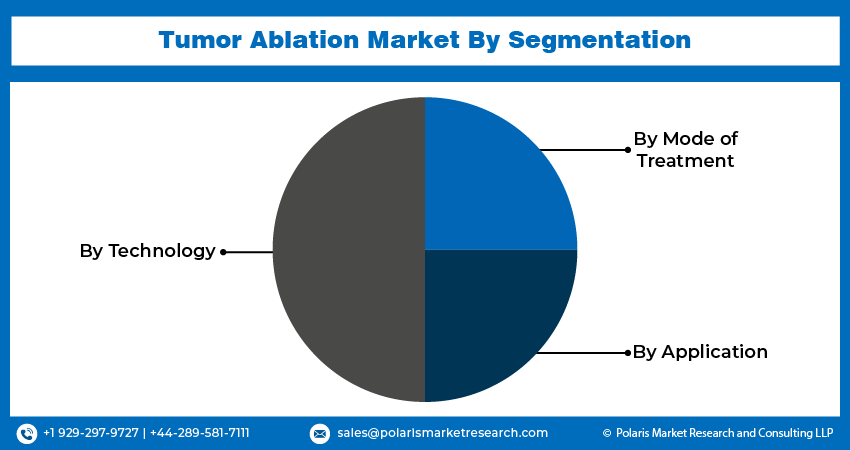
The tumor ablation market segmentation based on technology includes radiofrequency (RF) ablation, microwave ablation, cryoablation, and others. The radiofrequency ablation segment accounted for the largest market share in 2025. This is due to its efficiency and specificity in solid-tumor ablation of the liver and kidney. Radiofrequency ablation treats multiple tumors simultaneously by using multiple electrodes placed at various sites, thereby enhancing procedural efficiency. This advancement is expected to lead to increased adoption of evolved tumor ablation techniques.
The launch of radiofrequency ablation (RFA) had a major impact on the market, which boosted demand. For example, in November 2020, Abbott launched the IonicRF Generator, which the United States Food & Drug Administration approved. The IonicRF Generator offers a non-surgical, minimally invasive approach to managing pain in the nervous system. The IonicRF Generator is a radiofrequency ablation product that uses heat to target nerves. This prevents the nerves from sending pain signals to the brain.
Radiofrequency ablation is the most common method adopted because of its affordability and proven success over the years. Microwave ablation is gaining popularity because it heats more quickly and can be applied successfully in areas that are difficult to treat, such as the lungs and liver. Cryoablation is generally preferred when visual guidance is needed during the procedure and is used to treat renal and bone cancers.
Radiofrequency vs Microwave vs Cryoablation vs Others
| Types | Energy Source | Benefit | Usage Area |
| RF ablation | Electricity-provided heat | Established method | Liver and kidney cancers |
| MW ablation | Electromagnetic field | Rapid heating | Lung and liver cancers |
| Cryoablation | Extreme low temperatures | Controlled freezing | Kidney, prostatic cancer and bone lesions |
| Other types | Lasers, ultrasound, electroporation | Specialized treatment | Specific oncological diseases |
Source: Polaris Market Research Analysis
Application Insights
The tumor ablation market segmentation based on application includes liver cancer, lung cancer, kidney cancer, bone metastasis, and others. Lung cancer is expected to emerge as the fastest-growing market segment in the forecast period. Cigarette smoking is a significant contributor to lung cancer, accounting for most cases. For instance, according to the Lung Cancer Research Foundation, the approximate number of people diagnosed with lung cancer within the U.S. during 2023 was 238,340. This rising number of people developing lung cancer has triggered the use of these procedures, contributing largely to the industry share. Carcinogens present in tobacco smoke can cause damage to lung cells, ultimately resulting in cancer development. A total of 80% of deaths due to lung cancer are attributed to smoking, whereas persons who never smoked during their lifetime account for the remaining 20% of total lung cancer deaths. A second major risk factor that leads to lung cancer is exposure to radon gas. Other environmental risk factors that can increase lung cancer risk include air pollutants, including fine particles of soil (PM2.5), generated by industrial processes, transportation, and fossil fuel combustion.
Source: Polaris Market Research Analysis
Regional Insights
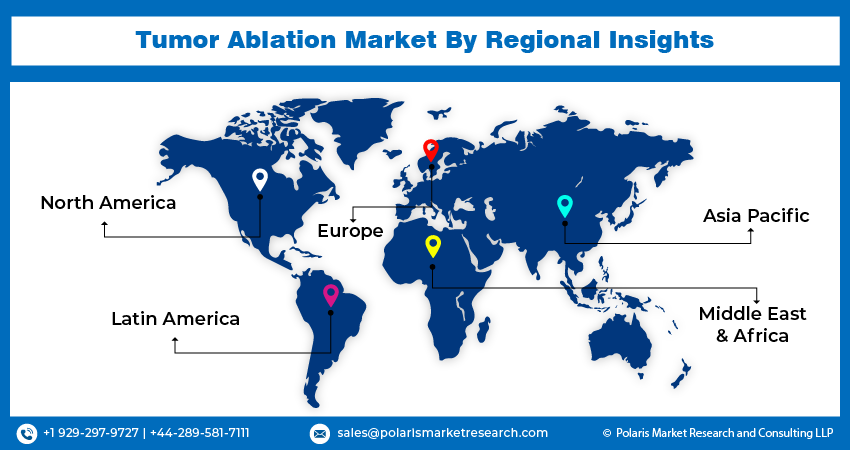
By region, the study provides market insights into North America, Europe, Asia Pacific, Latin America, and the Middle East & Africa. The North America tumor ablation market led the global market in 2025. Governments in North America are investing in healthcare infrastructure and funding advanced medical technologies. They are also expediting regulatory approvals for innovative treatment options to enhance the quality of care for cancer patients.
For example, the National Cancer Institute allocated USD 50 million to the Persistent Poverty Initiative in June 2023. The Persistent Poverty Initiative aims to reduce the effects of persistent poverty on cancer. It focuses on research and the development of cancer prevention studies. It also promotes the use of community-based programs. The program is significant because it is the first major initiative to deal with the structural and institutional causes of persistent poverty related to cancer. Increasing government policies on cancer treatment in healthcare services have driven the adoption of tumor ablation procedures, significantly boosting market share.
The U.S. tumor ablation market is expected to witness significant growth. This is due to its advanced healthcare system with medical facilities and highly skilled healthcare providers. The major healthcare facilities offer specialized oncology care, including tumor ablation. The entry of new products into the healthcare sector, especially in advanced technology, shifts the market dynamics. This is because new products create new opportunities and capabilities. They help improve precision, efficacy, and outcomes. For example, Bioventus Inc. introduced the neXus SonaStar Elite handpiece after receiving FDA approval. The product is part of the neXus Ultrasonic Surgical Aspirator System. It provides greater versatility and control through a patented digital algorithm. The device can operate at various frequencies, including the newly cleared 36 kHz SonaStar Elite Handpiece. Such technological advancements have contributed to market growth.
The Asia Pacific tumor ablation market is expected to witness the fastest growth during the forecast period. This is due to the increasing need for minimally invasive tumor ablation techniques and safe therapeutic choices.
The regional market is also benefiting from improved healthcare facilities and the availability of better treatment options for advanced cancer. Adoption is also driven by supportive reimbursement policies from various governments for cancer screening and early diagnosis. Minimally invasive cancer treatments are being more commonly adopted due to an increase in cancer cases and better medical expertise in countries such as China, India, and Japan.
Additionally, the growing number of people affected by cancer has contributed positively to the expansion of the industry. For example, in August 2023, the Union for International Cancer reported that the number of breast cancer cases in Asia constituted 45% of the total 2.3 million cases recorded worldwide in 2020. Additionally, the region has over half of the total number of global cervical cancer cases.
The India tumor ablation market is also anticipated to grow significantly over the forecast period due to increasing awareness among healthcare providers and the general population of the importance of early detection and treatment of cancer. Efforts by health organizations and governments to raise awareness of the availability and effectiveness of tumor ablation, a less invasive procedure, are also contributing to greater awareness of its benefits, thereby boosting the market outlook.
Source: Polaris Market Research Analysis
Competitive Landscape
The tumor ablation competitive landscape is driven by strong innovation. There is the development of advanced ablation technology, robotic assistance, and the combination of ablation with immunotherapy. Key market players focus on approvals, studies, and strategic partnerships to establish their presence worldwide and broaden the application of ablation in tumors.
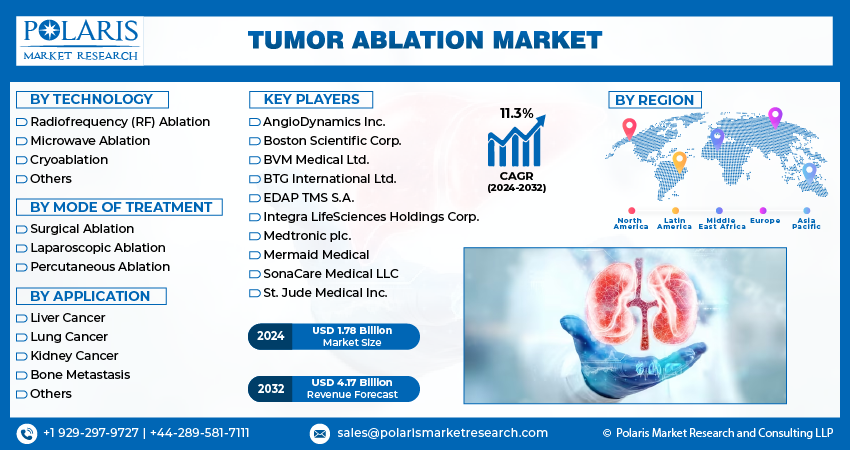
A few of the major tumor ablation market players include AngioDynamics Inc., Boston Scientific Corp., BVM Medical Ltd., BTG International Ltd., EDAP TMS S.A., Integra LifeSciences Holdings Corp., Medtronic plc., Mermaid Medical, SonaCare Medical LLC, and St. Jude Medical Inc.
Boston Scientific Corporation is a global leader in manufacturing, developing, and distributing medical devices for use in a wide range of interventional medical specialties. The company is organized into two segments, Cardiovascular and MedSurg. In January 2024, Boston Scientific Corporation received approval from the U.S. Food and Drug Administration for the FARAPULSE Pulsed Field Ablation (PFA) System. This system is designed to isolate pulmonary veins in the treatment of drug-refractory, recurrent, symptomatic paroxysmal atrial fibrillation (AF). It offers a novel alternative to standard-of-care thermal ablation.
Medtronic plc manufactures, develops, and sells device-based medical therapies to physicians, clinicians, patients worldwide, and healthcare systems. In December 2022, Medtronic plc obtained clearance from the U.S. Food and Drug Administration for its OsteoCool 2.0 bone tumor ablation system. This advanced technology is designed for the treatment of painful bone metastases and benign bone tumors such as osteoid osteoma.
List of Key Companies
- AngioDynamics Inc.
- Boston Scientific Corp.
- BVM Medical Ltd.
- BTG International Ltd.
- EDAP TMS S.A.
- Integra LifeSciences Holdings Corp.
- Medtronic plc.
- Mermaid Medical
- SonaCare Medical LLC
- St. Jude Medical Inc.
Tumor Ablation Industry Developments
- April 2026: Francis Medical announced the successful completion of the first commercial procedure in the Midwest with the use of the Vanquish Water Vapor Ablation System. According to Francis Medical, Vanquish is a transurethral, electromagnetically guided thermotherapy system for ablating targeted prostate tissue using convective water vapor energy. (source: prnewswire.com)
- January 2026: Stereotaxis received U.S. FDA approval for its MAGiC magnetic interventional ablation catheter. The company stated that the catheter is designed for robotically guided, minimally invasive treatment of heart arrhythmias. (source: stereotaxis.com)
- July 2025: Varian, a subsidiary of Siemens Healthineers, launched the IntelliBlate microwave ablation solution in Europe after it earned CE Mark certification. The product offers healthcare professionals a minimally invasive treatment option for soft tissue cancers. The new innovation works seamlessly with image-guided therapy solutions from Siemens Healthineers. (Source: appliedradiationoncology.com)
Future of Tumor Ablation Market
The market for tumor ablation is projected to expand owing to the use of artificial intelligence for treatment planning, robot-assisted technology, and increasing demand for personalized medicine in oncology. The growing trend towards outpatient care and minimally invasive cancer therapy will further aid the market's development. The technological progress made in terms of imaging guidance, precision energy delivery, and combining therapies is anticipated to enhance the efficacy of the therapy. The increased investment in healthcare and improved accessibility to advanced oncology solutions in developing countries will present lucrative opportunities for market players
Market Segmentation
By Technology Outlook (Revenue – USD Billion, 2021–2034)
- Radiofrequency (RF) Ablation
- Microwave Ablation
- Cryoablation
- Others
By Mode of Treatment Outlook (Revenue – USD Billion, 2021–2034)
- Surgical Ablation
- Laparoscopic Ablation
- Percutaneous Ablation
By Application Outlook (Revenue – USD Billion, 2021–2034)
- Liver Cancer
- Lung Cancer
- Kidney Cancer
- Bone Metastasis
- Others
By Regional Outlook (Revenue – USD Billion, 2021–2034)
- North America
- US
- Canada
- Europe
- Germany
- France
- UK
- Italy
- Spain
- Netherlands
- Russia
- Rest of Europe
- Asia Pacific
- China
- Japan
- India
- Malaysia
- South Korea
- Indonesia
- Australia
- Vietnam
- Rest of Asia Pacific
- Middle East & Africa
- Saudi Arabia
- UAE
- Israel
- South Africa
- Rest of Middle East & Africa
- Latin America
- Mexico
- Brazil
- Argentina
- Rest of Latin America
Tumor Ablation Market Report Scope
| Report Attributes | Details |
| Market Size in 2025 | USD 1.98 billion |
| Market Size in 2026 | USD 2.20 billion |
| Revenue Forecast by 2034 | USD 5.22 billion |
| CAGR | 11.4% |
| Base Year | 2025 |
| Historical Data | 2021–2024 |
| Forecast Period | 2026–2034 |
| Quantitative Units | Revenue in USD billion, and CAGR from 2026 to 2034 |
| Report Coverage | Revenue Forecast, Market Competitive Landscape, Growth Factors, and Trends |
| Segments Covered |
|
| Regional Scope |
|
| Competitive Landscape | Tumor Ablation Industry Trend Analysis (2025) Company profiles/industry participants profiling include company overview, financial information, product/service benchmarking, and recent developments |
| Report Format | PDF + Excel |
| Customization | Report customization as per your requirements with respect to countries, regions, and segmentation. |
Source: Polaris Market Research Analysis
tumor ablation market FAQ's
The tumor ablation market is expected to reach USD 5.22 billion by 2034. It is projected to account for a CAGR of 11.4% between 2026 and 2034.
Tumor ablation is a non-surgical procedure in which radiologists use needle-pointed catheters to pierce tumors and eliminate them with excessive heat or cold. The technique maintains healthy tissues surrounding the tumors through image-guided precision.
Radiofrequency ablation accounts for the largest market share. This is due to its ability to target solid cancers more accurately and delicately.
Minimally invasive ablative treatments for cancer ensure qu
The liver, lung, kidney, and bone cancers are the key cancers addressed through ablation procedures. These procedures provide targeted destruction of cancerous cells with minimal impact on the surrounding normal organs and tissues.
The lung cancer has the fastest share in the global market
Download Sample Report of tumor ablation market
Please fill out the form to request a customized copy of the research report.


