
Gluten-Free Breakfast Cereals Market Size, Share Global Analysis Report, 2023-2032
REPORT DETAILS
The global gluten-free breakfast cereals market was valued at USD 6.41 billion in 2022 and is expected to grow at a CAGR of 9.4% during the forecast period. As awareness of celiac disease has increased, more people are being diagnosed with the condition, leading to a growing demand for gluten-free products, including breakfast cereals. Gluten-free breakfast cereals are a convenient and popular option for people with celiac disease who need to follow a strict gluten-free diet to manage their symptoms. According to the study published in 2021, In the Western world, both the prevalence and incidence of CeD have increased. Over the previous several decades, the combined annual average incidence of CeD has increased by 7.5% (95% CI, 5.8-9.3) annually. This will further fuel the growth of the gluten-free breakfast cereals market in coming years.
Source: Polaris Market Research Analysis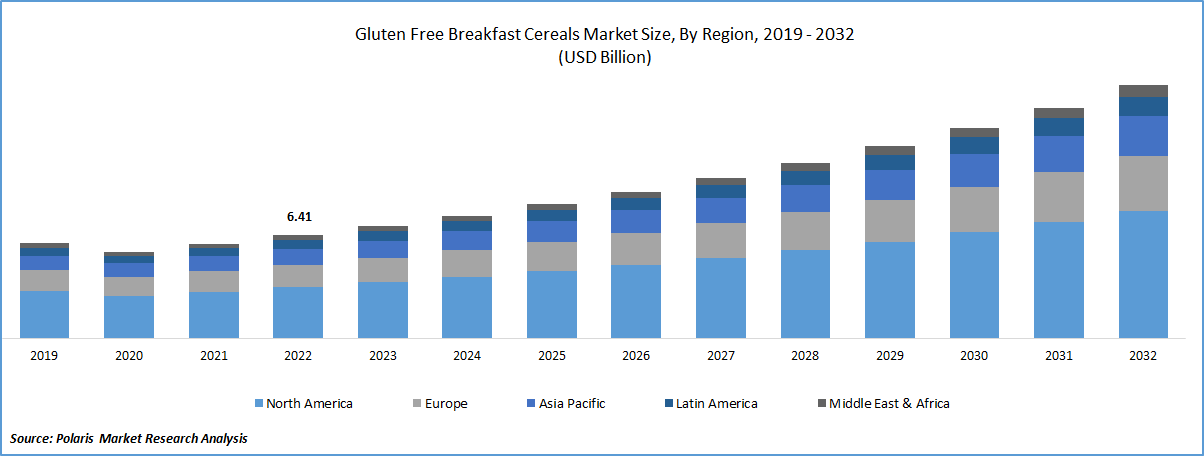
To Understand More About this Research: Download Sample Report
Industry Dynamics
Growth Drivers
The researchers discovered that compared to men, women and children had a higher incidence of celiac disease in the twenty-first century. According to the study published in Celiac Disease Foundation, the prevalence of celiac disease in women stood at 17.4/100,000 person-years, whereas it was around 7.8/100,000 person-years among men. This means that for every 100,000 women observed for a year, slightly more than 17 will be diagnosed with the condition. Children had a higher incidence of celiac disease (21.3/100,000 person-years) than adults (12.9/100,000 person-years). Examining these incidence rates over time reveals that they are rising, with an average annual increase of 7.5% during the previous few decades. This will create further demand for plant gluten-free products in the coming future.
Source: Polaris Market Research Analysis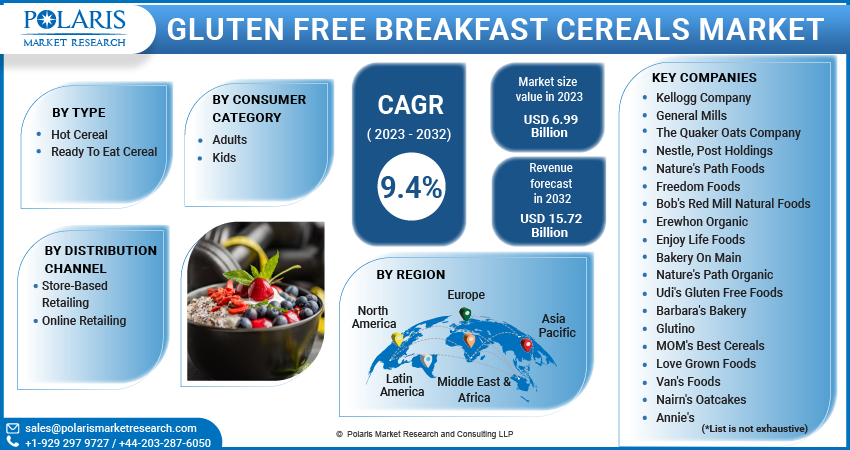
For Specific Research Requirements, Request Customization
Report Segmentation
The market is primarily segmented based on type, consumer category, distribution channel and region.
| By Type | By Consumer Category | By Distribution Channel | By Region |
|
|
|
|
Source: Polaris Market Research Analysis
To Understand the Scope of this Report: Request Customization
Ready To Eat Cereal segment is expected to witness fastest growth over the forecast period
Ready To Eat Cereal segment is projected to experience faster growth for the gluten-free breakfast cereals market due to increasing consumer demand for convenient, healthy breakfast options, increasing prevalence of gluten sensitivity and celiac disease, and growing awareness of the health benefits of whole grains and other gluten-free ingredients. Among the various segments of the gluten-free breakfast cereals market, the ready-to-eat (RTE) cereal segment has emerged as a key driver of growth in recent years. RTE cereal is one of the most convenient and easy-to-prepare breakfast options available in the market. With busy lifestyles and hectic schedules becoming increasingly common, consumers are looking for quick and easy breakfast options that can be prepared in a matter of minutes.
Adults segment is accounted for the largest market share in 2022
Adult segment is expected to have a larger market share for the market in the study period. They are more likely to be diagnosed with gluten sensitivity or celiac disease than children, which means that they are actively seeking out gluten-free options. This trend is driven in part by a growing awareness of gluten intolerance and the health benefits of gluten-free diets among adults. As a result, many manufacturers have introduced a wide variety of gluten-free breakfast cereals that are specifically marketed towards adults with gluten sensitivities.
They are often looking for healthier breakfast options that can help them maintain a balanced diet and lifestyle. Gluten-free breakfast cereals are often perceived as being healthier than traditional cereal options due to the use of whole grains, lower sugar content, and other healthy ingredients. As a result, many adults are turning to gluten-free breakfast cereals as a way to start their day with a healthy and nutritious meal.
Online Retailing segment is expected to hold the significant revenue share
Online retailing segment is projected to witness a larger revenue share for the market. It offers consumers the convenience of purchasing gluten-free breakfast cereals from the comfort of their homes, without having to physically visit a store. This is especially attractive to busy consumers who may not have the time to go to a physical store. It allows consumers to access a wider range of gluten-free breakfast cereal options than may be available in physical stores. This is because online retailers are not limited by physical shelf space and can offer a larger variety of products. They often offer competitive pricing for gluten-free breakfast cereals, as they do not have the same overhead costs as physical stores. This can be attractive to cost-conscious consumers who are looking for good value for their money.
Asia Pacific registered with the highest growth rate in the forecast period
Asia Pacific is expected to have higher growth for the gluten-free breakfast cereals market. There is a growing trend towards healthy eating and wellness in the Asia-Pacific region, which is driving demand for healthier breakfast options such as gluten-free cereals. Consumers are becoming more health-conscious and looking for foods that are not only tasty but also offer nutritional benefits. There is an increasing availability of gluten-free breakfast cereals in retail stores and online platforms, which is making it easier for consumers to access these products. This, in turn, is driving demand and contributing to market growth.
Additionally, the rising middle-class population in countries such as China and India is also driving demand for gluten-free breakfast cereals. As incomes rise, consumers are becoming more willing to pay premium prices for healthier food options, including gluten-free products. In India, celiac disease, an auto-immune condition that is brought on by gluten exposure affects between 6 and 8 million people. This will further fuel the demand for gluten-free breakfast cereals in the coming years.
North America garnered with the larger revenue share in the study period
North America is expected to have a larger revenue share for the gluten-free breakfast cereals market. The region has a high prevalence of gluten-related disorders such as celiac disease and gluten sensitivity, which is leading to an increasing demand for gluten-free food options. This has resulted in a higher awareness and acceptance of gluten-free products among consumers in the region. There is presently no treatment or cure for the deadly inherited autoimmune condition known as celiac disease. The only treatment for celiac disease, which affects 3 million Americans and 1 in 100 individuals globally, is rigorous adherence to a gluten-free diet. It has a well-developed food industry, with many established companies producing and marketing gluten-free breakfast cereals. This has resulted in a higher level of product availability, marketing, and consumer awareness.
Competitive Insight
Some of the major players operating in the global market include
- Kellogg Company
- General Mills
- The Quaker Oats Company
- Nestle
- Post Holdings
- Nature's Path Foods
- Freedom Foods
- Bob's Red Mill Natural Foods
- Erewhon Organic
- Enjoy Life Foods
- Bakery On Main
- Nature's Path Organic
- Udi's Gluten Free Foods
- Barbara's Bakery
- Glutino
- MOM's Best Cereals
- Love Grown Foods
- Van's Foods
- Nairn's Oatcakes
- Annie's
- Enjoy Oatmilk Company
- One Degree Organic Foods
- Farmwise
- Three Wishes Cereal
- Purely Elizabeth
- Wildway
- Lark Ellen Farm
- Seven Sundays
- Jessica's Natural Foods
- BFree Foods.
Recent Developments
- In March 2025, General Mills Inc. announced the expansion of its gluten-free cereal product line, introducing new flavors such as Maple Brown Sugar and Chocolate Almond, targeting health-conscious consumers seeking nutritious and tasty breakfast options. This move strengthens General Mills’ position in the gluten-free segment and addresses growing demand for clean-label and allergen-free foods
- In April 2023, Kellogg's Rainbow Krispies introduced Kellogg's Rice Krispies, with a wonderful new twist on their beloved, iconic cereal Every bite of this colorful cereal provides a great source of vitamin D and has a fresh, fruity flavor.
- In March 2023, Kellogg Company undoclosed name of its traded businesses “Kellanova", & "WK Kellogg", concentrated on worldwide snacking & North American cereal.
Gluten-Free Breakfast Cereals Market Report Scope
| Report Attributes | Details |
| Market size value in 2023 | USD 6.99 billion |
| Revenue forecast in 2032 | USD 15.72 billion |
| CAGR | 9.4% from 2023 - 2032 |
| Base year | 2022 |
| Historical data | 2019 - 2021 |
| Forecast period | 2023 - 2032 |
| Quantitative units | Revenue in USD million/billion and CAGR from 2023 to 2032 |
| Segments covered | By Type, By Consumer Category, By Distribution Channel, By Region |
| Regional scope | North America, Europe, Asia Pacific, Latin America; Middle East & Africa |
| Key companies | Kellogg Company, General Mills, The Quaker Oats Company, Nestle, Post Holdings, Nature's Path Foods, Freedom Foods, Bob's Red Mill Natural Foods, Erewhon Organic, Enjoy Life Foods, Bakery On Main, Nature's Path Organic, Udi's Gluten Free Foods, Barbara's Bakery, Glutino, MOM's Best Cereals, Love Grown Foods, Van's Foods, Nairn's Oatcakes, Annie's, Enjoy Oatmilk Company, One Degree Organic Foods, Farmwise, Three Wishes Cereal, Purely Elizabeth, Wildway, Lark Ellen Farm, Seven Sundays, Jessica's Natural Foods & BFree Foods. |
Source: Polaris Market Research Analysis
Gluten-Free Breakfast Cereals Market FAQ's
The Gluten-Free Breakfast Cereals Market report covering key are type, consumer category, distribution channel and region.
Gluten-Free Breakfast Cereals Market Size Worth $ 15.72 Billion By 2032
The global gluten-free breakfast cereals market expected to grow at a CAGR of 9.4% during the forecast period.
Asia Pacific is Gluten-Free Breakfast Cereals Market.
key driving factors in Gluten-Free Breakfast Cereals Market are Rising research and development activities and increased modernization in new products.
Download Sample Report of Gluten-Free Breakfast Cereals Market
Please fill out the form to request a customized copy of the research report.


