
AI in Multiomics Market Size, & Trend Analysis Report, 2026-2034
REPORT DETAILS
AI in Multiomics Market Summary
The global AI in multiomics market was valued at USD 749.41 million in 2025 and is estimated to reach USD 6,021.56 million by 2034, growing at a CAGR of 26.05% during the forecast period. The growth of the market is expected owing to rising artificial intelligence applications in multiomics studies, increasing precision medicine requirements, and enhanced investments in genomics and life sciences.
Market Statistics
AI in Multiomics Market Key Takeaways
- North America held the major share of the AI in Multi-Omics Market in 2025, accounting for approximately 39.68% share of global revenue, supported by strong biotechnology research activity, pharmaceutical investment, advanced sequencing infrastructure, and rapid adoption of AI technologies.
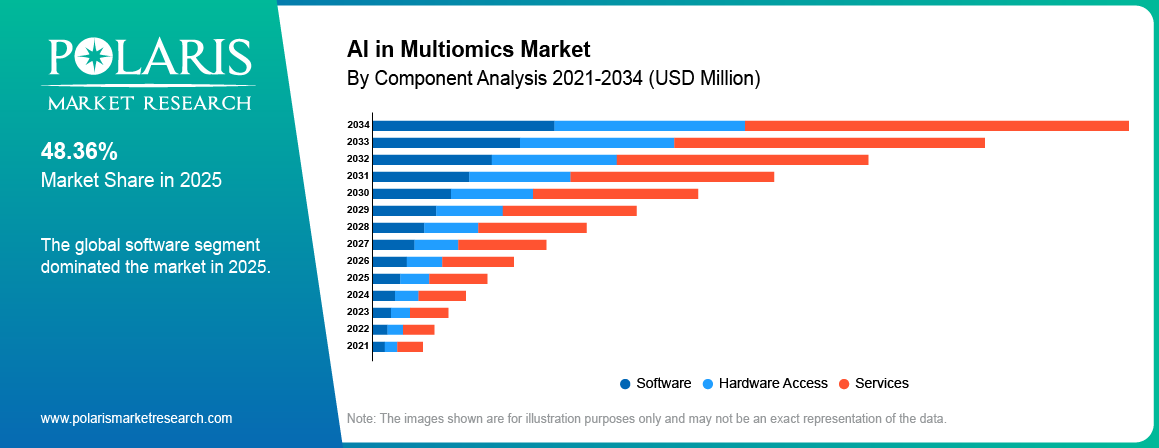
- The software segment dominated the market in 2025 with a 48.36% share, driven by increasing use of AI-powered bioinformatics, multi-omics data integration, predictive analytics, and computational biology platforms.
- The cloud deployment segment accounted for 57.84% of the market in 2025, owing to its scalability, faster processing of large multi-omics datasets, lower infrastructure costs, and easier collaboration among research organizations.
- The precision & personalized medicine segment is projected to register the fastest CAGR of 31.86% during 2026–2034, supported by growing demand for patient-specific therapeutic selection, disease risk prediction, and AI-assisted integration of genomic and molecular data.
- The genomics segment constituted the largest share of the overall market in 2025 at 31.72%, due to widespread adoption of genomic sequencing and the increasing use of AI for variant interpretation, disease prediction, and drug-target identification.
Note: Figures and projections outlined in this report are the result of Polaris Market Research’s proprietary analytical processes, grounded in the latest available datasets and market observation
What is AI in Multiomics?
AI in multiomics is characterized by the application of artificial intelligence solutions in the analysis and integration of multimodal biological information, such as genomics, transcriptomics, proteomics, metabolomics, epigenomics, single-cell multiomics, and spatial multiomics data. The use of AI in multiomics helps to detect disease mechanisms, to find out biomarkers, and to facilitate the process of drug discovery through efficient data analysis.
Participants in the AI in multiomics value chain include sequencing technology providers, omics data generation companies, AI software providers, cloud computing platforms, bioinformatics companies, pharma companies, research institutions, healthcare facilities, and regulatory authorities. They cooperate to convert complicated biological data into clinical and research insight.
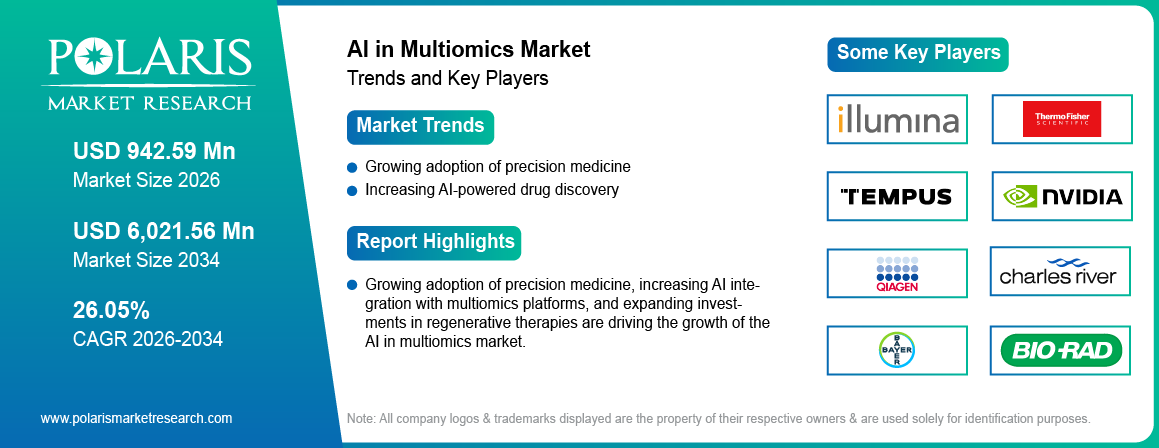
Rise in investments for the development of precision medicine, increasing use of multi-omics research, a decline in the cost of sequencing, and continuous innovation in artificial intelligence technologies have been driving the growth of the market. In October 2025, Illumina launched its 5-base solution, enabling simultaneous genomic variant and DNA methylation analysis from a single sample to advance scalable multiomics research and precision medicine(Source: www.illumina.com).The growing use of AI-enabled solutions is helping organizations to increase efficiency in their research work and develop customized treatments and reduce drug discovery time.
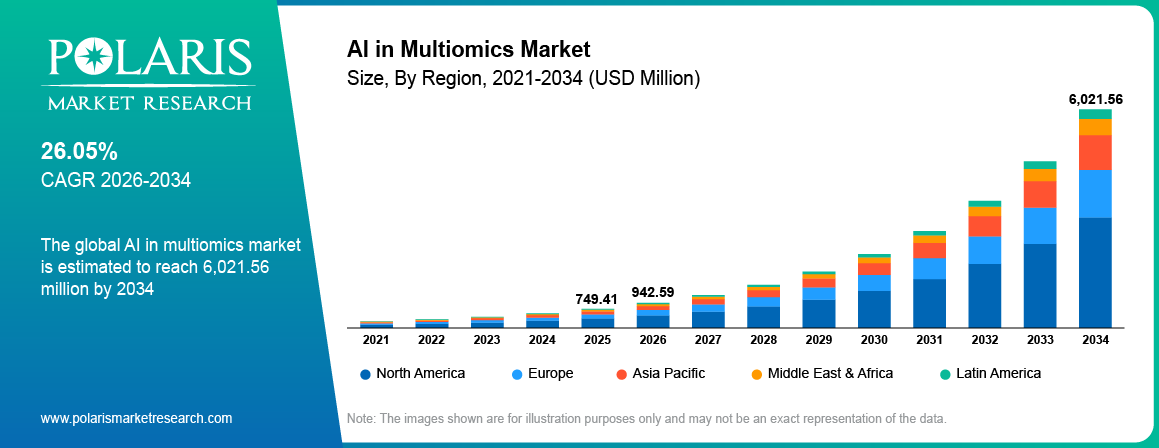
Source: Polaris Market Research Analysis
AI in Multiomics Market Driver Impact Analysis
The AI in multiomics market is projected to witness strong growth during the forecast period due to increasing demand for AI-driven biological data analysis and precision healthcare. Growing adoption of multiomics technologies, expanding pharmaceutical research, and rising investments in artificial intelligence are supporting market expansion. In February 2025, Illumina partnered with NVIDIA to enhance AI-driven multiomic data analysis and upgraded the NovaSeq X Series with new software, application kits, and a single-flow-cell system for multiomic workflows(Source: www.sec.gov). Strong growth is also expected due to precision medicine, regenerative therapies, and organoid commercialization.
| Market Driver | Est. CAGR Impact | Geographic Relevance | Impact Timeline |
| Precision medicine adoption | +2.2% | Global | Short to Medium Term |
| AI-based drug discovery | +1.9% | North America, Europe | Medium Term |
| Growth in multiomics research | +1.6% | Global | Medium Term |
| Cloud bioinformatics platforms | +1.3% | Global | Long Term |
| Regenerative medicine investments | +1.0% | North America, Asia Pacific | Long Term |
Source: Polaris Market Research Analysis. CAGR reflect Polaris proprietary sizing methodology.
AI in Multiomics Market Drivers, Restraints & Opportunities
How is Growing Adoption of Precision Medicine Driving the AI in Multiomics Market?
AI applications in multiomics are growing within healthcare organizations as a way of improving biomarker identification, genomics AI interpretation, and the development of personalized therapies. With AI, researchers perform analyses on large biological data more efficiently and quickly to get clinical results. The investment that is being put into precision medicine continues to drive up the use of AI-powered multiomics platforms in research and healthcare organizations. In June 2026, the MAP-D Initiative, led by the FNIH announced the launch of a USD 22 million pilot of the USD 70+ million AI-powered precision medicine program for depression studies(Source: www.prnewswire.com ).
How is AI-Powered Drug Discovery Accelerating Market Growth?
Pharmaceutical companies and biotechnology organizations have begun using artificial intelligence (AI) in multiomics applications for helping in identifying targets and biomarkers and speeding up the drug development process. The use of AI-driven tools enables faster processing of massive amounts of biological data with higher accuracy. Specifically, according to the research conducted by Carnegie Mellon University, the use of AI-driven drug discovery technology allows biotechnology firms to save up to 70% on their drug development costs (Source: www.ddw-online.com ).
What Challenges Threaten AI in Multiomics Market Expansion?
Data Integration and Regulatory Challenges
Multiomics AI requires the combination of different types of biological data coming from several different technological platforms. Ensuring data quality, compatibility, confidentiality, and regulatory compliance is difficult even for scientific and health care organizations. These aspects complicate and slow down the implementation process.
What Opportunities Exist in the AI in Multiomics Market?
Expanding Applications in Regenerative Medicine
The rising applications of AI in regenerative medicine are providing immense growth opportunities for the market. Scientists have started using AI-based multiomics platforms to conduct analysis on stem cells, organoids, and tissue engineering. The rise in investments being made in the research and commercialization of regenerative therapies is likely to benefit market growth in the coming years. For instance, the NIDCR has spent over USD 73 million in FY2024 on research in regenerative medicine to develop and translate regenerative therapies into clinics (Source: www.nidcr.nih.gov ).
Source: Polaris Market Research Analysis
AI in Multiomics Market Segmentation Analysis
The report provides a comprehensive analysis of the AI in multiomics market by component, omics type, deployment, application, and end user to identify key revenue-generating and high-growth segments.
Market by Component
Which Component Dominated the Market?
The software segment dominated the market in 2025 with a 48.36% share due to increasing adoption of AI-powered analytics platforms for multiomics data integration and interpretation. The software segment features advanced genomics AI interpretation, proteomics integration, and multimodal biological data analysis. In January 2026, Illumina launched Illumina Connected Multiomics, a cloud-based platform for AI-powered multiomic data analysis and visualization(Source: www.prnewswire.com). Increasing investment in precision medicine and drug discovery through AI software improved the position of the segment in the market.
Which Component is Projected to Grow at the Fastest CAGR?
The services segment is projected to grow at the fastest CAGR of 28.9% during the forecast period. Many organizations are turning to AI-driven multiomics by looking for consulting services, implementation support, cloud-based solutions, and bioinformatics help. Rising outsourcing of complex data analysis is further supporting segment growth.
Market by Omics Type
Which Omics Type Dominates the Market?
The genomics segment constituted the largest share of the overall market in 2025 at 31.72% due to the extensive use of genomics in diagnosis, personalized medicine, and genetic research. The rising use of next-generation sequencing and big genomic datasets helped in employing AI in genomic data analysis. Strong investments in human genome research also contributed to market growth.
Which Omics Type is Projected to Grow at the Fastest CAGR?
The spatial multiomics segment is projected to grow at the fastest CAGR of 27.47% during the forecast period. Scientists are making increasing use of AI in conjunction with spatial biology for understanding tissue structure and disease progression. Growing commercialization of spatial transcriptomics platforms is expected to accelerate adoption.
Market by Deployment
Which Deployment Segment Dominated the Market?
The cloud deployment segment accounted for 57.84% of the market in 2025 due to its scalability, reduced infrastructure costs, and efficient processing of huge multiomics data. Cloud computing allows for the use of advanced AI software without the need for hardware purchase by the researcher. Increasing adoption of cloud-based bioinformatics solutions continues to drive market growth.
Which Deployment Segment is Projected to Grow at the Fastest CAGR?
The hybrid segment is projected to grow at the fastest CAGR during the forecast period. Deployment of research firms is trending towards hybrid methods that ensure cloud scalability along with data security on their own premises. Hybrid deployment is helping organizations fulfill compliance needs and data privacy concerns.
Market by Application
Which Application Dominated the Market?
The drug discovery & development segment accounted for the highest market share of 31.1% in 2025 owing to growing usage of AI in target identification, biomarker discovery, and clinical trials. The pharmaceutical industry is making extensive investments in AI-based multiomics systems to increase research productivity and cut development costs.
Which Application is Projected to Grow at the Fastest CAGR?
The precision & personalized medicine segment is projected to register the fastest CAGR of 31.86% during the forecast period. AI-driven multiomics has made it possible for health care providers to tailor therapies according to an individual's biological makeup. Rising adoption of precision healthcare is expected to support long-term market growth.
Market by End User
Which End User Dominated the Market?
The pharmaceuticals & biotechnologies companies segment held the largest market share of 38.0% in 2025 due to rising spending on drug discovery, biomarker discovery, and genomics through artificial intelligence. These companies are using innovative multiomics platforms in order to increase efficiency in research and product development.
Which End User is Projected to Grow at the Fastest CAGR?
The academic & research institutes segment is projected to grow at the fastest CAGR of 26.50% during the forecast period. Rising government funding for genomics research, a rising number of precision medicine programs, and collaborations between research institutes and biotechnology firms are boosting the segment’s growth.
Segment Summary Table
| Segment | Category | 2025 Status | Forecast CAGR | Key Driver |
| Software | Component | Largest Share | High | AI-powered data analytics |
| Services | Component | Fastest Growing | Highest | Bioinformatics consulting |
| Genomics | Omics Type | Largest Share | High | Growing genomic research |
| Spatial Multiomics | Omics Type | Fastest Growing | Highest | Spatial biology adoption |
| Drug Discovery & Development | Application | Largest Share | High | Pharmaceutical R&D investments |
| Precision & Personalized Medicine | Application | Fastest Growing | Highest | Personalized healthcare adoption |
| Pharmaceutical & Biotechnology Companies | End User | Largest Share | High | Increasing AI investments |
| Academic & Research Institutes | End User | Fastest Growing | Highest | Rising genomics research funding |
Source: Polaris Market Research Analysis. Segment share and CAGR reflect Polaris proprietary sizing methodology.
AI in Multiomics Regional Market Analysis
North America AI in Multiomics Market
North America region accounted for the major share in the global market of multiomics with the use of AI in 2025 due to the growing investments in biotechnology research, improved healthcare infrastructure, and early adoption of AI technologies. In April 2025, Signios Bio announced the launch of its new AI-powered multiomics platform to expedite precision medicine, biomarker discovery, and drug development (Source: www.signiosbio.com).The US dominates the regional market owing to the growing pharmaceutical R&D operations and expansion of the precision medicine programs in the country.
Europe AI in Multiomics Market
Europe’s market share was substantial in 2025 due to the increasing application of AI in life sciences and regulations aimed at healthcare innovations. Some of the nations like Germany, the UK, and France are working towards precision medicine, genomics, and digital healthcare facilities. The European Union is spending USD 5.1 billion through its EU4Health Programme (2021-2027) (Source: health.ec.europa.eu).
Asia Pacific AI in Multiomics Market
Asia Pacific region is anticipated to exhibit the highest CAGR during the forecast period owing to increasing research in biotechnology, growing investments in the healthcare sector, and fast adoption of artificial intelligence. The bioeconomy of India has increased from USD 10 billion in 2014 to USD 165.7 billion in 2024 and it is estimated to increase to USD 300 billion in 2030, thus promoting biotechnology with the help of AI and multiomics technologies (Source: www.pib.gov.in). Additionally, there has been increasing demand for AI multiomics platforms in China, Japan, India, South Korea, and Australia.
Latin America AI in Multiomics Market
Latin America is experiencing steady growth on account of rising investments in healthcare research and biotechnology. Brazil and Mexico are leading the regional market with rising adoption of genomics research and personalized medicine initiatives. Growing collaborations with global biotechnology companies are creating new opportunities for AI in multiomics solutions.
Middle East & Africa AI in Multiomics Market
The Middle East & Africa market is expected to grow steadily during the forecast period due to increasing investments in healthcare modernization and genomic research. Saudi Arabia, the UAE, and South Africa are expanding precision medicine programs and strengthening biotechnology research capabilities. Increasing involvement of governments in promoting healthcare innovations is a key factor in fostering market growth in the coming years.
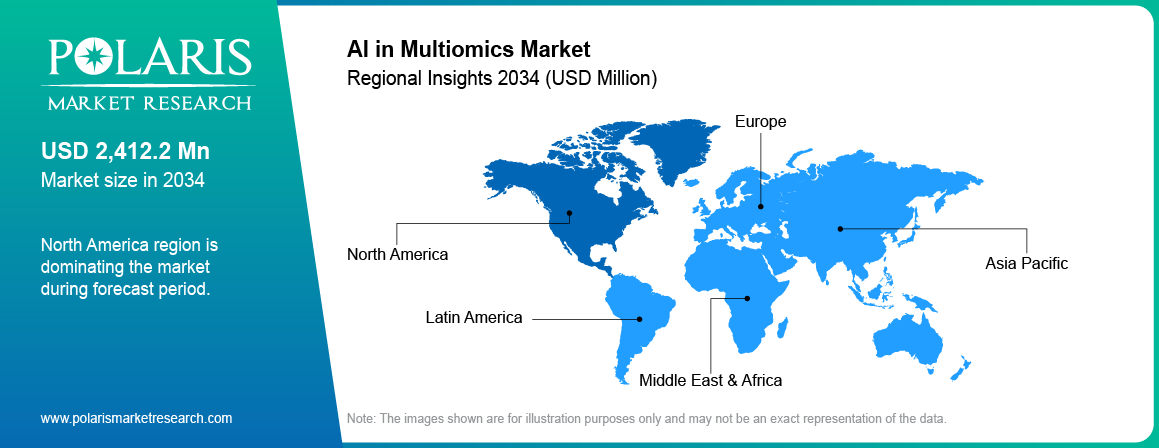
Source: Polaris Market Research Analysis
Regulatory Heatmap by Country
| Country | Policy Environment | Key Regulations | Market Implication | Trend |
| US | Favorable | FDA AI-enabled medical device guidance | Supports clinical adoption of AI solutions | Expanding |
| Canada | Developing | National AI Strategy | Encourages AI research and innovation | Developing |
| Germany | Favorable | EU AI Act | Strengthens responsible AI deployment | Expanding |
| UK | Favorable | AI Regulation Framework | Supports innovation in healthcare AI | Growing |
| China | Favorable | New Generation AI Development Plan | Accelerates AI commercialization | Expanding |
| Japan | Favorable | AI Governance Guidelines | Promotes AI adoption in healthcare | Growing |
| India | Developing | IndiaAI Mission | Supports AI ecosystem development | Expanding |
| Australia | Favorable | National Digital Health Strategy | Encourages digital healthcare innovation | Growing |
Source: FDA, Government of Canada, European Commission, UK Government, National Development and Reform Commission (China), METI, IndiaAI Mission, Australian Digital Health Agency
Competitive Landscape
The AI in multiomics market is moderately fragmented, with competition among biotechnology companies, sequencing technology providers, AI software developers, cloud platform providers, and bioinformatics firms. Companies compete based on AI capabilities, multiomic data platform performance, data integration, scalability, and precision medicine applications. The rise in the need for AI-based biological data analysis is prompting vendors to develop their offerings and enhance their global footprint.
The key market players are emphasizing partnerships, mergers and acquisitions, the launch of new products, and investments in AI-based analytics to gain an edge over their competition. Companies are also expanding capabilities in proteomics integration, spatial multiomics, and foundation models in biology to improve biomarker discovery, genomic AI interpretation, and personalized medicine research.
Competitive Positioning Table
| Company | Est. Market Position | Primary Focus | Geographic Focus | In Report |
| Illumina, Inc. | Top Tier | Genomics & AI Platforms | Global | Yes |
| Thermo Fisher Scientific Inc. | Top Tier | Multiomics Solutions | Global | Yes |
| Tempus AI, Inc. | Leading Innovator | AI-driven Precision Medicine | North America | Yes |
| 10x Genomics | Market Leader | Spatial Multiomics | Global | Yes |
| Agilent Technologies | Strong Player | Omics Analytics | Global | Yes |
| Bruker Corporation | Major Player | Proteomics Technologies | Global | Yes |
| SOPHiA GENETICS | Emerging Player | Clinical AI Analytics | Europe | Yes |
Source: Company filings, press release, and Polaris Market Research Analysis
Technology and Innovation Landscape 2025-2026
AI is driving innovation in the multiomics market through advancements in machine learning, cloud computing, spatial multiomics, and multiomic data platforms. Organizations are investing in scalable AI solutions that improve biomarker discovery, disease prediction, genomic AI interpretation, and precision medicine research. Adoption of cloud-based bioinformatics platforms has further enhanced the efficiency of biological data analysis.
Continuous innovations in single-cell multi-omics, integration with proteomics, and analysis of multimodal biological data have been making the AI-based research platforms more capable than ever before. Also, companies are focusing on foundation models in biology for better biological data interpretation, faster drug discovery, and precision medicine of the next generation.
| Technology | Adoption Stage | Key Development | Market Impact |
| AI-powered Multiomics Platforms | Growing | Integrated biological data analysis | Improves research efficiency |
| Spatial Multiomics | Early Commercial | AI-enabled tissue analysis | Supports precision medicine |
| Cloud Bioinformatics | Mainstream | Scalable analytics platforms | Accelerates data processing |
| Machine Learning Models | Growing | Biomarker prediction | Improves drug discovery |
| Generative AI | Early Commercial | Biological data interpretation | Enhances research productivity |
| Foundation Models in Biology | Early Commercial | AI models trained on multimodal biological datasets | Improves biological prediction accuracy |
Source: Polaris Market Research Analysis, press release, and IP & patent filings
Who Buys This AI in Multiomics Research Report and Why?
Multiomics market research using artificial intelligence provides pharmaceutical companies, biotech companies, healthcare organizations, research institutions, and investors the information needed to assess technology adoption, competition analysis, and new market openings. The report offers insightful information regarding trends in the industry, regulations, and technology advancements.
The research also allows stakeholders to identify market segments with high growth, regional opportunities, investment potential, and competition strategy. Companies utilize the findings as a means to assist in product development, growth, partnership assessment, and investment strategies in the multiomics industry that relies on artificial intelligence.
| Buyer / Investor Type | Primary Use Case | Key Insight Sought | Decision Horizon |
| Pharmaceutical & Biotechnology Companies | Drug discovery planning | AI adoption trends | 2–5 Years |
| Research Institutes | Research strategy | Technology developments | 2–5 Years |
| Healthcare Providers | Precision medicine adoption | Clinical applications | 1–3 Years |
| Private Equity & Venture Capital | Investment analysis | Market attractiveness | 3–7 Years |
| Technology Providers | Product development | Emerging opportunities | 1–3 Years |
Source: Polaris Market Research Analysis
What are the Barriers to Entering the AI in Multiomics Market?
Data Integration Difficulties
AI in multiomics platforms involves combining data from genomics, transcriptomics, proteomics, metabolomics, and other omic disciplines. Data quality, data interoperability, and data formatting remain significant problems for firms. This is due to the aforementioned issues that might increase the time taken to implement AI and the accuracy of the results produced by AI.
High Setup Costs
The development of AI-driven multiomics platforms is expected to require considerable expenditure on artificial intelligence, bioinformatics tools, cloud computing, and computing power. In addition, companies have to invest in the latest sequencing tools and personnel, making it challenging and expensive to enter the market.
Strict Regulatory Issues
AI-based multiomics solution is expected to have to satisfy strict regulations and privacy laws related to healthcare applications before its commercial deployment. Compliance with regulations regarding data security, data governance, and clinical validations complicate the implementation process and prolong the development period.
Lack of Trained Professionals
There is a shortage of experts in the field of artificial intelligence, bioinformatics, genomics, and computational biology. The shortage of talent affects negatively the development and implementation of new technologies and may lead to increased costs for companies that implement AI-enabled multiomics platforms.
Validation Process
Validation of artificial intelligence-based multiomics platforms is essential in ensuring that the data analysis performed is accurate, reliable, and reproducible. Healthcare organizations and pharmaceutical companies need convincing clinical evidence before implementing such solutions.
Premium Insights and Forward Outlook
AI is Transforming Precision Medicine
AI is proving to be highly significant for precision medicine, biomarkers, and analysis of multimodal biological data. Multiomics platforms based on AI technology have been growing popular in healthcare organizations in order to diagnose diseases, find therapeutic targets, and create individualized treatments. The increasing use of AI for precision medicine is expected to help the industry grow over time.
Continuous developments in machine learning, genomic AI analysis, and cloud bioinformatics are contributing to the increasing precision and efficiency in processing biological data. These developments help in speeding up the creation of clinical insights and facilitating the development of the next generation of treatments.
Regenerative Medicine Creates Long-Term Growth Opportunities
The growing focus on regenerative medicine, stem cell research, and organoids is set to drive the need for AI-based multiomics platforms. The rising use of AI technologies in analyzing biological data sets and advancing regenerative medicine therapies is being witnessed across the research community. Growing use cases of tissue engineering and cell therapy are opening up new opportunities for the market.
Constant advances in spatial multiomics, single-cell multiomics, and foundation models in biology are also expected to bolster the use of AI in life science research. Increasing collaboration between biotechnology companies, research organizations, and healthcare providers is expected to accelerate technology adoption throughout the forecast period.
Cost Benchmarking Table
| Product | Est. Price Range | Key Cost Driver | Complexity Tier |
| Cloud-based AI Platform | Subscription-Based | Data storage and computing | Medium |
| Enterprise AI Multiomics Platform | USD 200,000–1 Million+ | Platform customization | High |
| AI Bioinformatics Services | Project-Based | Data complexity | Medium |
| Multiomics Analytics Software | Subscription Based | AI capabilities | Medium |
Source: Polaris Market Research Analysis, public pricing sources, and company filings
Key Players in the AI in Multiomics Market
- 10x Genomics
- Agilent Technologies
- Bayer Crop Science
- Bio Rad Laboratories, Inc.
- BGI Group
- Bruker Corporation
- Charles River Laboratories
- Corteva Agriscience
- Danaher Corporation (Beckman Coulter)
- DNAnexus, Inc.
- F. Hoffmann La Roche Ltd.
- Fabric Genomics, Inc.
- Illumina, Inc.
- Inari Agriculture
- Microsoft Corporation
- NVIDIA Corporation
- PerkinElmer, Inc.
- QIAGEN N.V.
- SOPHiA GENETICS
- Tempus AI, Inc.
- Thermo Fisher Scientific Inc.
Recent Industry Developments in the AI in Multiomics Market
- July 2026: Tempus unveiled the launch of its pharmacogenomics test, OneOme, at a nationwide scale, helping enhance precision medicine through DNA-based drug selection and personalized therapies. (source: investors.tempus.com)
- June 2026: 10x Genomics acquired Proteintech Genomics to extend its capability in proteomics and support multiomics and single cell research. (source: www.prnewswire.com)
- May 2026: QIAGEN and NVIDIA are combining forces on drug discovery. The deal, announced at the BIO-IT World Conference in Boston, wires NVIDIA's BioNeMo platform and its accelerated computing into QIAGEN Digital Insights' biomedical knowledge base. The pitch is graph-based AI that helps researchers trace disease mechanisms, therapeutic targets, and biomarkers, basically letting them ask sharper questions of a knowledge base that's been sitting there for years. (Source: www.qiagen.com)
- February 2026: Illumina unveiled TruPath Genome at AGBT. A NovaSeq X Series roadmap came with it, but the real story was the cancer research from partner labs, built on Illumina's spatial and multiomic tools, that got shared alongside the launch. (Source: www.prnewswire.com)
- January 2026: Illumina released a cloud platform driven by AI technology for analyzing large-scale multiomic data. (source: www.prnewswire.com)
AI in Multiomics Market Segmentation
By Component Outlook (Revenue, USD Million, 2021–2034)
- Software
- Hardware
- Services
By Omics Type Outlook (Revenue, USD Million, 2021–2034)
- Genomics
- Transcriptomics
- Proteomics
- Metabolomics
- Epigenomics
- Spatial Multiomics
By Deployment Outlook (Revenue, USD Million, 2021–2034)
- Cloud
- On-Premises
- Hybrid
By Application Outlook (Revenue, USD Million, 2021–2034)
- Drug Discovery & Development
- Precision & Personalized Medicine
- Biomarker Discovery
- Clinical Diagnostics
- Agricultural Research
- Others
By End User Outlook (Revenue, USD Million, 2021–2034)
- Pharmaceutical & Biotechnology Companies
- Academic & Research Institutes
- Healthcare Providers
- Contract Research Organizations (CROs)
- Others
By Regional Outlook (Revenue, USD Million, 2021-2034)
- North America
- US
- Canada
- Europe
- Germany
- France
- UK
- Italy
- Spain
- Netherlands
- Russia
- Rest of Europe
- Asia Pacific
- China
- Japan
- India
- Malaysia
- South Korea
- Indonesia
- Australia
- Vietnam
- Rest of Asia Pacific
- Middle East & Africa
- Saudi Arabia
- UAE
- Israel
- South Africa
- Rest of Middle East & Africa
- Latin America
- Mexico
- Brazil
- Argentina
- Rest of Latin America
Report Scope
| Report Attributes | Details |
| Market Size in 2025 | USD 749.41 Million |
| Market Size in 2026 | USD 942.59 Million |
| Revenue Forecast by 2034 | USD 6,021.56 Million |
| CAGR | 26.05% from 2026 to 2034 |
| Base Year | 2025 |
| Historical Data | 2021–2024 |
| Forecast Period | 2026–2034 |
| Quantitative Units | Revenue in USD Million and CAGR from 2026 to 2034 |
| Report Coverage | Revenue Forecast, Competitive Landscape, Growth Factors, and Industry Trends |
| Segments Covered |
|
| Regional Scope |
|
| Competitive Landscape |
|
| Report Format |
|
| Customization | Report customization as per your requirements with respect to countries, regions, and segmentation. |
AI in Multiomics Market FAQ's
The global market size was valued at USD 749.41 million in 2025 and is projected to grow to USD 6,021.56 million by 2034.
North America held the major share of the AI in Multi-Omics Market in 2025, accounting for approximately 39.68% of global revenue owing to robust research in biotechnology, rising investment in the pharmaceutical sector, and AI infrastructure.
Some of the leading players operating in the market include Illumina, Inc., Thermo Fisher Scientific Inc., Tempus AI, Inc., 10x Genomics, Agilent Technologies, QIAGEN N.V., Charles River Laboratories, Corteva Agriscience, SOPHiA GENETICS, NVIDIA Corporation, Bio-Rad Laboratories, Inc., and F. Hoffmann-La Roche Ltd.
AI multiomics is an artificial intelligence-based platform that can be used to study or analyze multiple omics data sets.
FDA's guidelines have provided help in the development and implementation of AI-aided multiomics diagnostic tools in a secure manner.
The EHDS and the EU AI Act have enhanced the accessibility and compliance of data for AI-aided multiomics platforms.
High development costs, complex data integration, and regulatory compliance remain the key barriers for new entrants.
Spatial multiomics and precision & personalized medicine are projected to grow at 31.86% CAGR during the forecast period.
Download Sample Report of AI in Multiomics Market
Please fill out the form to request a customized copy of the research report.


