
Heat Pump Market Size, Share & Growth Forecast, 2026-2034
REPORT DETAILS
Heat Pump Market Summary
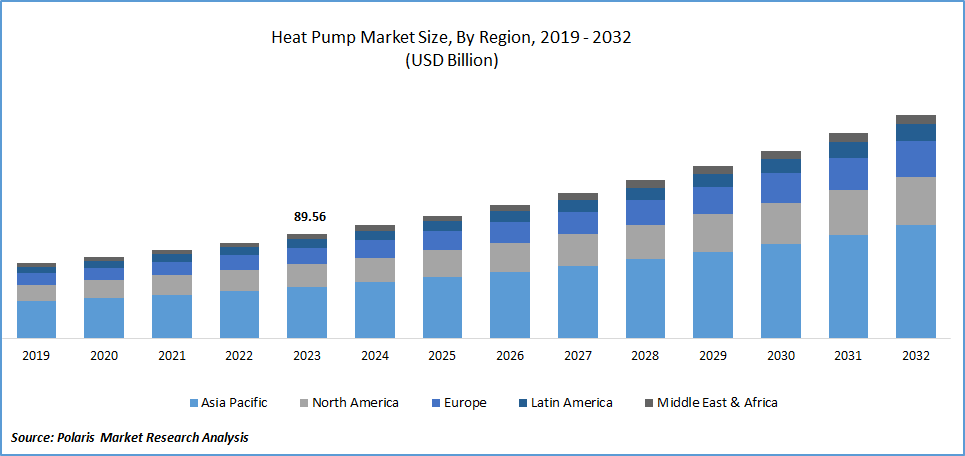
Global heat pump market size was valued at USD 111.46 billion in 2025 and is anticipated to exhibit the CAGR of 8.9% during the forecast period. The growth is driven by rising fuel prices, increasing construction activities, and technological advancement.
Market Statistics
Key Takeaways
- Asia Pacific accounted for a significant market share of 58.10% in 2025. Increasing government initiatives promoting energy efficiency boost market expansion.
- The Europe heat pump market is expected to experience a significant CAGR of 19.3% during the forecast period. Rising awareness of environmental concerns prompts consumers and businesses to choose heat pumps over traditional systems. This factor fuels the growth of the market.
- The air source segment held a significant market share of 78.12% in 2025. Increasing technological advancements continuously improve their efficiency and performance. This reinforces their market position and drives demand.
- The 10-20 kW segment held a considerable market share of 34.20% in 2025. Growing environmental concerns drive the preference for energy-efficient heating and cooling solutions. This factor is elevating the market share of the 10-20 kW segment.
- The electric segment held a significant revenue share of over 86.13% in 2025. There's a noticeable trend towards electrification in heating and cooling systems, which drives the segment.
- The residential segment held a significant heat pump market share of 68.61% in 2025. Rapid urbanization and population growth increase the demand for residential heating and cooling solutions. The trend toward renovating existing homes with energy-efficient HVAC systems contributes to its dominance
Note: Figures and projections outlined in this report are the result of Polaris Market Research’s proprietary analytical processes, grounded in the latest available datasets and market observations.
Industry Dynamics
- Rising demand for energy-efficient heating and cooling solutions drives the requirement for heat pumps. Heat pumps consume less electricity and offer higher efficiency than conventional HVAC systems.
- Government decarbonization policies and net-zero emission targets are accelerating heat pump adoption.
- There is an increasing costs of electricity, gas, and fuel. It encourages consumers and businesses to shift toward cost-effective and energy-saving heat pump systems.
- The high initial cost of heat pumps hinders the growth of the market.
- Technological advancements such as smart heat pumps, inverter technology, and hybrid systems are expected to offer lucrative opportunities in the coming years
Heat Pump in Simple Terms
A heat pump is a system that moves heat from one place to another. It does not generate heat directly like a furnace or boiler. Heat pumps can take heat from the air, ground, or water. It transfers heat indoors for heating or outdoors for cooling. This makes it highly energy efficient
Rising fuel prices are propelling the market. As traditional heating methods become costlier, consumers and businesses seek more economical alternatives. Heat pumps offer a solution by utilizing renewable energy sources like air, water, or the ground for heating and cooling. By harnessing ambient heat instead of relying on expensive fuel combustion, heat pumps provide significant energy savings and reduce carbon emissions. Government incentives, such as tax credits and rebates, further encourage the adoption of these eco-friendly systems. With escalating fuel costs, the economic and environmental benefits of heat pumps make them increasingly attractive, driving substantial growth in the market.
Source: Polaris Market Research Analysis
In addition, companies operating in the market are introducing new products to expand market reach and strengthen their presence.
For instance, in November 2023, Daikin unveiled innovative low-carbon VRV heat pumps tailored for commercial structures. This air-to-air heat pump solution, the VRV 5 system, delivers highly energy-efficient heating and cooling throughout the year for commercial buildings.
Government incentives and regulations play a crucial role in driving the market. Worldwide, governments are incentivizing energy efficiency and carbon emission reduction through measures like tax credits and rebates. Stringent regulations phasing out inefficient heating and cooling systems further boost heat pump adoption. Mandates requiring energy-efficient solutions in new construction projects also contribute to market growth. With sustainability a priority, heat pumps offer an environmentally friendly alternative. As policymakers continue to prioritize climate action, the demand for heat pumps rises. Strengthening regulations and expanding incentives are expected to drive further heat pump adoption, fostering market expansion.
Industry Growth Drivers
Growing Demand for Energy-Efficient Heating and Cooling Solutions is Projected to Spur the Product Demand
The market is growing rapidly due to the increasing demand for energy-efficient heating and cooling solutions. As environmental awareness grows, consumers and businesses seek cost-effective and eco-friendly alternatives. Heat pumps, transferring heat rather than generating it through combustion, offer efficient heating and cooling with reduced energy consumption and carbon emissions. Government initiatives promoting energy efficiency further boost market growth, with incentives like tax credits encouraging adoption. Additionally, technological advancements such as variable-speed compressors enhance performance and comfort. With rising demand for eco-friendly solutions, the market is poised for sustained expansion, offering opportunities for innovation and investment.
Increasing Construction Activities are Expected to Drive Heat Pump Market Growth
Increasing construction activities worldwide are fueling the heat pump market growth. Urbanization and infrastructure development drive demand for efficient heating and cooling solutions, increasing the adoption of heat pumps. These systems offer versatile solutions for residential, commercial, and industrial projects. Developers and homeowners increasingly prefer heat pumps. Technological advancements, including enhanced energy efficiency and smart controls, boost their appeal. With construction activities on the rise globally, the heat pump market is poised for sustained expansion.
Source: Polaris Market Research Analysis
Industry Challenges
The High Initial Cost is Likely to Impede the Heat Pump Market Growth
The high initial cost acts as a constraint on the widespread adoption of heat pumps. Although heat pumps offer long-term energy savings and environmental benefits, their upfront purchase and installation expenses can deter many potential buyers. This obstacle is particularly pronounced in regions where traditional heating and cooling systems offer lower upfront costs. Moreover, retrofitting existing buildings with heat pump systems can entail substantial expenses, further limiting their adoption. However, technological advancements, government incentives, and financing options may help mitigate this barrier, eventually leading to increased adoption and market growth.
Report Segmentation
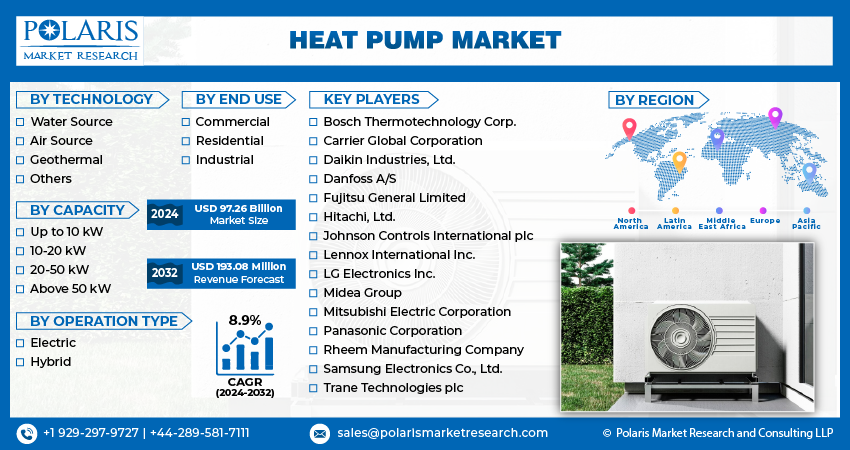
The heat pump market analysis is primarily segmented based on technology, capacity, operation type, end use, and region.
| By Technology | By Capacity | By Operation Type | By End Use | By Region |
|
|
|
|
|
Source: Polaris Market Research Analysis
By Technology Analysis
The Air Source Segment Held a Significant Heat Pump Market Share in 2025
Air source heat pumps are more cost-effective than ground source counterparts, making them appealing to a broader consumer base. Their versatility enables deployment across residential, commercial, and industrial settings, further driving adoption. Additionally, the ease of installation reduces upfront costs and accelerates deployment. Air source heat pumps are well-suited for moderate climates, offering reliable heating and cooling solutions year-round. Furthermore, ongoing technological advancements continuously improve their efficiency and performance, reinforcing their market position and driving demand.
Comparison Matrix: Air Source vs Ground Source vs Water Source Heat Pumps
| Type | Heat Source | Installation Cost | Efficiency Level | Major Use Cases | Key Advantage |
| Air Source Heat Pump | Outside air | Low to Medium | High | Residential homes, apartments, and light commercial buildings | Easy installation and lower upfront cost |
| Ground Source Heat Pump | Underground soil | High | Very High | Large homes, commercial buildings, and cold climate regions | Stable performance and highest energy efficiency |
| Water Source Heat Pump | Nearby water bodies (lake, river, groundwater) | Medium to High | Very High | Buildings near reliable water sources, and industrial facilities | Strong efficiency with consistent water temperatures |
Source: Polaris Market Research Analysis
By Capacity Analysis
The 10-20 kW Segment Held a Considerable Heat Pump Market Share in 2025
It caters to residential heating and cooling needs, which represent a substantial portion of the market due to increased residential construction and renovations. Additionally, these units are suitable for medium-sized commercial buildings like offices and retail stores. Their cost-effectiveness makes them appealing options for both residential and small to medium-sized commercial applications. Moreover, stringent energy efficiency regulations encourage their adoption, further boosting demand. Growing environmental concerns drive the preference for energy-efficient heating and cooling solutions, elevating the market share of the 10-20 kW segment.
By Operation Type Analysis
The Electric Segment Held a Significant Heat Pump Revenue Share in 2025
There’s a noticeable trend towards electrification in heating and cooling systems, accelerated by environmental concerns and energy efficiency objectives. Electric heat pumps emit fewer greenhouse gases, aligning with sustainability goals and driving adoption. Renowned for their energy efficiency, electric heat pumps offer significant long-term savings on energy bills, appealing to cost-conscious consumers and businesses.
By End-Use Analysis
The Residential Segment Held a Significant Heat Pump Revenue Share in 2025
Rapid urbanization and population growth increase the demand for residential heating and cooling solutions. The trend towards renovating existing homes with energy-efficient HVAC systems also contributes to its dominance. Homeowners prioritize energy efficiency to reduce utility bills and environmental impact, making heat pumps an attractive option. Government incentives, including tax credits and rebates, further boost their adoption. Additionally, growing environmental awareness prompts homeowners to opt for eco-friendly heating and cooling solutions like heat pumps, further elevating their market share in the residential segment.
Source: Polaris Market Research Analysis
Regional Insights
Asia-Pacific Region Accounted for a Significant Heat Pump Market Share in 2025
In 2025, the Asia-Pacific region accounted for a significant heat pump market share. High population density and rapid urbanization drive demand for HVAC systems in new and existing buildings. Government initiatives promoting energy efficiency through incentives and regulations further boost adoption. The growing middle class in countries like China and India enhances affordability and purchasing power for HVAC solutions. Additionally, the region's diverse climates, including extreme temperatures, make energy-efficient heating and cooling systems like heat pumps essential.
Europe Heat Pump Market Insights
Europe is expected to experience significant growth during the forecast period. Government initiatives promoting energy efficiency and carbon reduction, along with subsidies and regulations, incentivize heat pump adoption. The EU's commitment to phasing out fossil fuels aligns with heat pump use, which relies on renewable energy sources. Renewable energy targets further drive heat pump adoption as they contribute to sustainable energy goals. The Energy Performance of Buildings Directive mandates stricter energy efficiency standards, boosting demand. Rising awareness of environmental issues prompts consumers and businesses to choose heat pumps over traditional systems.

Source: Polaris Market Research Analysis
Heat Pump Market Competitive Landscape
The heat pump market comprises a wide range of players, and the entry of new competitors is poised to escalate competition. Established leaders continuously improve their technologies, aiming to maintain a competitive edge through a focus on efficiency, reliability, and safety. These companies prioritize strategic actions like forming partnerships, enhancing product ranges, and engaging in collaborative ventures. Their primary aim is to outperform rivals in the market, securing a significant heat pump market share.
Key Companies in the Heat Pump Market
- Bosch Thermotechnology Corp.
- Carrier Global Corporation
- Daikin Industries, Ltd.
- Danfoss A/S
- Fujitsu General Limited
- Hitachi, Ltd.
- Johnson Controls International plc
- Lennox International Inc.
- LG Electronics Inc.
- Midea Group
- Mitsubishi Electric Corporation
- Panasonic Corporation
- Rheem Manufacturing Company
- Samsung Electronics Co., Ltd.
- Trane Technologies plc
Recent Developments
January 2026: PHNIX launched airMono, an innovative R290 Indoor Monoblock Heat Pump. It is specifically engineered for the European urban landscape. airMono offers a high-performance 3-in-1 (Heating, Cooling, and Domestic Hot Water) solution. (Source: phnix-e.com)
In October 2025, Mitsubishi Heavy Industries introduced new air-to-water heat pumps for the European market using R290, a low-impact natural refrigerant. The compact monobloc design simplifies installation by eliminating the need for refrigerant piping indoors. These systems support space heating, cooling, and hot water supply. The launch aligns with Europe’s push toward cleaner alternatives to conventional boilers. (Source: mhi.com)
In August 2025, Carrier launched a new modular, reversible heat pump designed for efficient heating and cooling in commercial buildings. The modular architecture allows flexible capacity expansion to match different project needs. It is engineered to deliver high performance while reducing energy consumption and emissions. The product supports the shift toward low-carbon HVAC solutions in commercial applications. (Source: carrier.com)
Future of Heat Pump Market
The heat pump market is expected to witness fastest growth rate in the coming years. Rapid electrification of heating systems and the global shift toward low-carbon energy solutions will boost the growth. Net-zero emission targets and stricter building efficiency regulations will accelerate adoption across residential, commercial, and industrial sectors. Integration with renewable energy sources will further improve system sustainability and reduce operating costs. Demand for smart heat pumps with IoT-enabled controls, inverter technology, and hybrid systems will rise in the coming years. They enhance performance and support wider market expansion worldwide.
Report Coverage
The heat pump market report emphasizes key regions across the globe to provide users with a better understanding of the product. It also provides market insights into recent developments and trends and analyzes the technologies that are gaining traction around the globe. Furthermore, the report covers an in-depth qualitative analysis pertaining to various paradigm shifts associated with the transformation of these solutions.
The report provides a detailed analysis of the market while focusing on various key aspects such as competitive analysis, technologies, capacities, modes of operation, end uses, and their futuristic growth opportunities.
Heat Pump Market Report Scope
| Report Attributes | Details |
| Market size value in 2025 | USD 111.46 billion |
| Market size value in 2026 | USD 121.22 billion |
| Revenue Forecast in 2034 | USD 240.51 billion |
| CAGR | 8.9% from 2026 – 2034 |
| Base year | 2025 |
| Historical data | 2021 – 2024 |
| Forecast period | 2026 – 2034 |
| Quantitative units | Revenue in USD billion and CAGR from 2026 to 2034 |
| Segments Covered |
|
| Regional scope |
|
| Competitive Landscape |
|
| Report Format |
|
| Customization | Report customization as per your requirements with respect to countries, regions, and segmentation. |
Source: Polaris Market Research Analysis
Heat Pump Market FAQ's
Heat Pump Market Size Worth $240.51 Billion By 2034
The top market players in Heat Pump Market are Bosch Thermotechnology Corp., Carrier Global Corporation, Daikin Industries, Ltd
Asia-Pacific is region contribute notably towards the Heat Pump Market.
Heat Pump Market exhibiting the CAGR of 8.9% during the forecast period.
Heat Pump Market report covering key segments are technology, capacity, operation type, end use, and region.
Download Sample Report of Heat Pump Market
Please fill out the form to request a customized copy of the research report.


