
Influencer Marketing Platform Market Share, Size, Trends, Growth Analysis, 2026 - 2034
REPORT DETAILS
Influencer Marketing Platform Market Summary
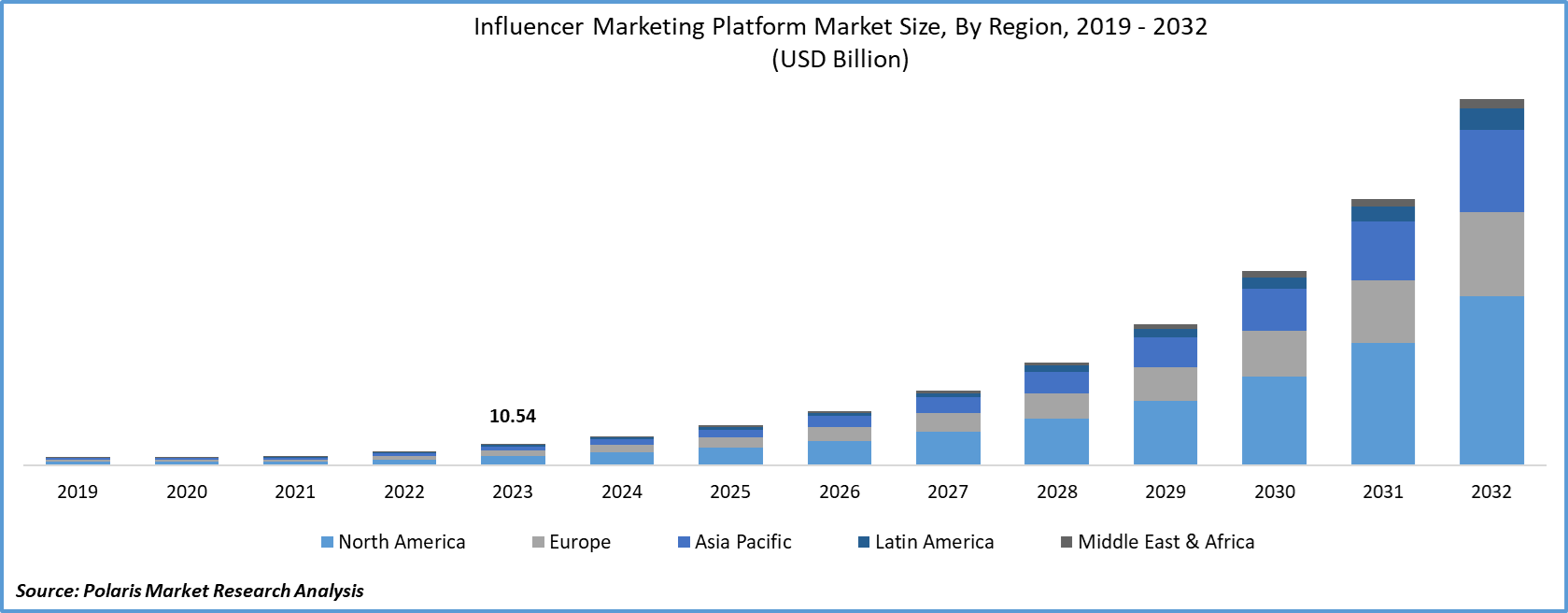
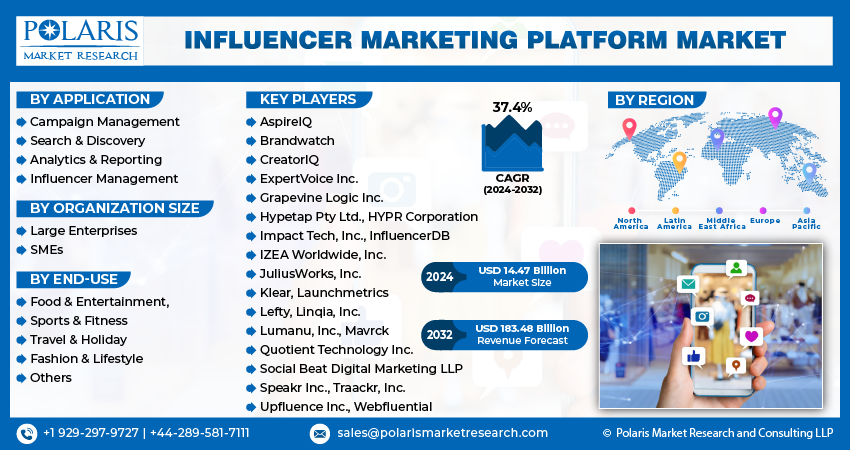
The global influencer marketing platform market size was valued at USD 11,286.36 million in 2025. The market is projected to grow at a CAGR of 33.71% from 2026 to 2034. Key factors driving demand for influencer marketing platforms include the rising adoption of social media and the growing popularity of micro- and nano-influencers. The market is also benefiting from the growing emphasis on compliance and transparency.
Market Statistics
Key Takeaways
- In 2025, North America had 39.52% of the total revenue share . This is due to the widespread use of social media in North America.
- The market value in Europe is expected to hit USD 42,365.36 million by 2034 . Data protection acts make collaboration with influencers more feasible in Europe.
- The campaign management category captured 34.71% revenue share in 2025 . The large revenue share results from the importance of influencer marketing platforms in managing influencer campaigns.
- The large enterprises category recorded 57.27% share in 2025 . The significant market share is due to their large marketing budgets.
- The fashion & lifestyle category had 30.23% revenue share in 2025 . The revenue share is driven by the high level of engagement in the category.
Note: Figures and projections outlined in this report are the result of Polaris Market Research’s proprietary analytical processes, grounded in the latest available datasets and market observations.
Industry Dynamics
- Rising popularity of micro and nano-influencers drives the market expansion.
- Growing use of social media platforms fuels the industry growth.
- Increasing shift toward social media platforms and Over-the-Top (OTT) channels is expected to create lucrative opportunities during the forecast period.
- In influencer marketing, complexity related to the measurement of return on investment (ROI) hinders the market growth.
AI Impact on Influencer Marketing Platform Market
- Artificial intelligence (AI) identifies suspicious engagement patterns and fake followers, which helps improve brand safety.
- Marketing experts use AI and machine learning models to run influencer campaigns.
- AI tools are utilized to analyze audience data for improved conversion rates and more precise targeting.
- AI-generated virtual influencers are gaining popularity. These personalities provide a scalable and consistent brand representation.
Source: Polaris Market Research Analysis
Influencer marketing platforms serve as intermediaries that connect brands with influencers, enabling businesses to reach targeted audiences in a more personalized and engaging manner. Influencer marketing platforms streamline the process of identifying, managing, and measuring the effectiveness of influencer collaborations by leveraging advanced analytics, artificial intelligence, and data-driven insights.
One of the major benefits of influencer marketing platforms is their ability to provide brands with access to niche audiences through trusted personalities. Unlike traditional advertising, which often struggles to establish credibility, influencer marketing provides authenticity and peer recommendations. These platforms enable brands to collaborate with influencers who align with their values and target demographics, leading to higher engagement rates and increased conversion potential. Additionally, the ability of these platforms to track performance metrics such as engagement rates, impressions, and ROI drives businesses to optimize their campaigns for maximum impact. These benefits of influencer marketing platforms are driving their adoption among emerging and established businesses.
The rapid adoption of social media platforms across the globe is driving the influence marketing platform market growth. Influencers are gaining larger followings and niche communities on social media platforms such as YouTube, Instagram, and others, making them more valuable partners for marketing campaigns. Brands are recognizing the potential of influencers and are willing to collaborate to drive engagement and sales, leading to higher demand for influencer marketing platforms that connect them with suitable creators. The rise in the popularity of features such as live streaming on social media platforms is further boosting the need for specialized tools to manage campaigns, track performance, and measure ROI, boosting the need for an influencer marketing platform.
Influencer Marketing Platforms vs Traditional Digital Advertising
| Factors | Influencer Marketing Platforms | Traditional Digital Advertising |
| Trust | More consumer trust due to authenticity of creators | Less consumer trust than created by influencers |
| Interaction | High audience engagement | Lower audience engagement than with influencer marketing |
| Personalization | Highly personalized audience reach | Broad audience reach |
| Tracking | Tracking of ROI through influencer analytics | Standard tracking for ROI |
| Content | Content created by the creator | Advertisement created by the brand |
Source: Polaris Market Research Analysis
Industry Dynamics
Increasing Popularity of Micro and Nano-Influencers
Brands are now shifting their focus from celebrity influencers to micro and nano-influencers, who are offering higher engagement rates and niche audience targeting. These smaller influencers have a more loyal and interactive follower base, making them valuable for brands seeking authentic connections with consumers, leading to high adoption of influencer marketing platforms as these platforms facilitate the discovery and collaboration process, allowing businesses to maximize campaign effectiveness by working with the right content creators.
Growing Emphasis on Compliance and Transparency
Governments and regulatory bodies are enforcing disclosure guidelines to ensure ethical advertising practices. This is driving brands to invest in influencer marketing platforms as these platforms provide automated compliance tools, real-time reporting, and transparent tracking systems that help brands adhere to government regulations while maintaining consumer trust and credibility. Therefore, as governments globally increase strict regulations for compliance and transparency, the demand for influencer marketing platforms also rises.
Growth of the Creator Economy
Rapid expansion of the creator economy is driving up the requirement for influencer marketing platforms globally. Millions of social media creators are making money through brand collaborations, sponsorships, affiliate programs, subscription services, and other e-commerce initiatives. Influencer marketing platforms are being used by businesses more often to facilitate their collaborations with creators and make audience targeting and campaign management easier.
Importance of Analytics and ROI Measurement
There have been rising trends in tracking ROI within influencer marketing. The tools used in influencer marketing provide data about the number of impressions, conversion rates, engagement rates, demographic data, click-through rates, and the performance of the entire campaign. The data helps improve marketing campaigns and make advertising more efficient.
Source: Polaris Market Research Analysis
Segmental Insights
Application Analysis
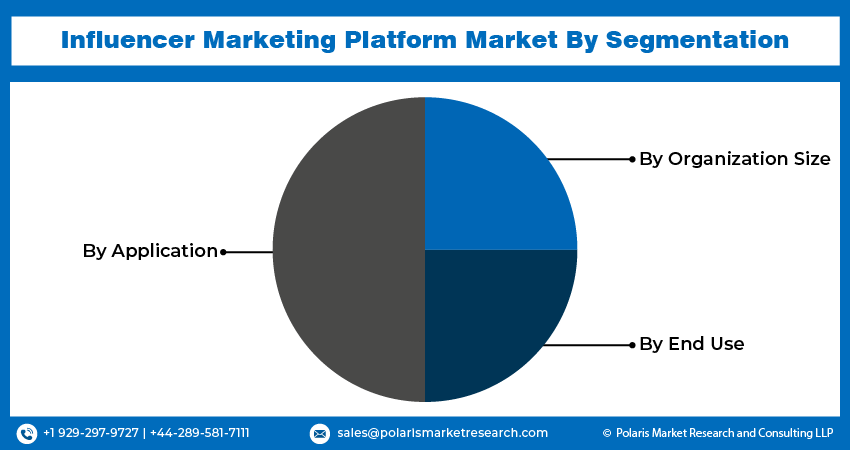
Based on application, the segmentation includes campaign management, search & discovery, analytics & reporting, and influencer management. The campaign management segment accounted for 34.71% revenue market share in 2025 due to the crucial role of influencer marketing platforms in streamlining end-to-end influencer initiatives. Brands increasingly prioritize these platforms to manage content creation, scheduling, approvals, budgeting, and real-time collaboration. Furthermore, the rise of micro and nano influencers created the need for robust campaign management tools that can coordinate large volumes of content partnerships simultaneously, thereby increasing influencer marketing platform reliance.
The analytics & reporting segment is projected to register a CAGR of 34.22% from 2026 to 2034. This growth is attributed to the growing emphasis on data-driven decision-making. Brands are now demanding detailed metrics such as engagement rates, conversions, audience demographics, and ROI to validate influencer performance, leading to high adoption of influencer marketing platforms. The proliferation of performance-based partnerships is further fueling the need for reliable analytics.
Organization Size Analysis
In terms of organization size, the segmentation includes large enterprises and SMEs. The large enterprises segment held 57.27% market share in 2025 due to their substantial marketing budgets and strategic focus on brand visibility across multiple digital channels. These organizations heavily leveraged influencer partnerships to enhance consumer engagement, build brand authenticity, and drive conversions at scale. The ability of these organizations to invest in advanced platform solutions, including influencer marketing platforms, allowed them to manage large-scale influencer campaigns, integrate AI-powered analytics, and collaborate with top-tier content creators across the globe in 2024.
End Use Analysis
In terms of end use, the segmentation includes food & entertainment, sports & fitness, travel & holiday, fashion & lifestyle, and others. The fashion & lifestyle segment held 30.23% revenue market share in 2025. Fashion and lifestyle brands heavily invest in influencer collaborations due to the visual and aspirational nature of fashion and lifestyle content, which resonates strongly with audiences on platforms such as Instagram, TikTok, and YouTube. The rise of fast fashion, sustainable brands, and luxury collaborations further fueled demand for influencer marketing platforms, as influencers effectively showcased trends, unboxings, and styling tips. Additionally, the segment benefited from high engagement rates, with consumers trusting influencers for product recommendations more than traditional advertising.
The sports & fitness segment is estimated to register a CAGR of 34.53% during 2026–2034. This growth is attributed to the growing global focus on health and wellness. Influencers in this segment are using market platforms to share workout routines, supplement reviews, and wellness tips, creating highly engaged communities. Furthermore, the popularity of home workouts and athleisure wear continues to surge, making sports & fitness a high-growth area for influencer-driven marketing strategies.
Source: Polaris Market Research Analysis
Regional Analysis
The North America influencer marketing platform market accounted for 39.52% of the global market share in 2025. This dominance is attributed to the high social media penetration, with platforms such as Instagram, TikTok, and YouTube dominating user engagement. Brands in the region are increasingly leveraged influencer marketing to reach younger demographics, particularly Gen Z and Millennials, who prefer authentic, peer-driven content over traditional ads. Additionally, the rise of e-commerce and social commerce has made influencer collaborations a key strategy for driving sales in the region. The region’s mature digital advertising ecosystem further fueled the market growth.
US Influencer Marketing Platform Market Insight
The US dominated the market in North America in 2025 with holding 78.32% revenue share. This dominance is attributed to the growth of micro and nano-influencers, which propelled brands to adopt influencer marketing platforms to target niche audiences cost-effectively. Additionally, consumers in the country increasingly showed distrust in traditional advertising, making influencer marketing more effective for brand credibility, leading to market expansion.
Europe Influencer Marketing Platform Market Trends
The market in Europe is projected to reach USD 42,365.36 million by 2034. This growth is attributed to the strict data privacy laws, which limit traditional digital advertising, making influencer collaborations a more compliant alternative, driving market demand. European consumers also value authenticity, leading brands to partner with local influencers for culturally relevant campaigns through influencer marketing platforms.
Germany Influencer Marketing Platform Market Overview
The influencer marketing platform industry in Germany is projected to hold 33.54% revenue share of the total European market by 2034. This is due to high internet penetration and a strong preference for trustworthy, transparent endorsements. German consumers are doubtful of traditional advertising, making influencer partnerships, especially with micro-influencers, more effective. Additionally, Germany’s strict advertising disclosure laws, such as the Werberecht regulations, are pushing brands toward influencer marketing platforms.
Asia Pacific Influencer Marketing Platform Market
The market in Asia Pacific is expected to reach USD 36,871.45 million by 2034. This growth is attributed to growing social media usage, particularly in countries such as India, China, and Southeast Asia. Additionally, the cultural emphasis on celebrity and key opinion leader endorsements is boosting influencer marketing platform demand. Affordable influencer rates and growing mobile usage are further propelling the adoption of influencer marketing platforms across emerging countries in the region.

Source: Polaris Market Research Analysis
Key Players and Competitive Analysis
The influencer marketing platform industry features a dynamic mix of established and emerging players, each offering unique capabilities to meet diverse brand needs. Major platforms such as AspireIQ and CreatorIQ are highly efficient in end-to-end campaign management, providing robust tools for influencer discovery, relationship management, and performance analytics. Brandwatch and Traackr differentiate themselves with advanced social listening and audience insights, helping brands identify the right influencers based on real-time data. Meanwhile, Impact Tech and Upfluence focus on scalable influencer partnerships, integrating affiliate marketing and e-commerce solutions to drive measurable ROI.
A few prominent companies in the influencer marketing platform market are AspireIQ; Brandwatch; CreatorIQ; ExpertVoice Inc.; Hypetap Pty Ltd; Impact Tech, Inc.; IZEA Worldwide, Inc.; JuliusWorks, Inc.; Klear; Later; Launchmetrics; Lefty; Linqia, Inc.; Quotient Technology Inc.; Social Beat Digital Marketing LLP; Traackr Inc.; Upfluence Inc.; and Webfluential.
Key Players
- AspireIQ
- Brandwatch
- CreatorIQ
- ExpertVoice Inc.
- Hypetap Pty Ltd
- Impact Tech, Inc.
- IZEA Worldwide, Inc.
- JuliusWorks, Inc.
- Klear
- Later
- Launchmetrics
- Lefty
- Linqia, Inc.
- Quotient Technology Inc.
- Social Beat Digital Marketing LLP
- Traackr Inc.
- Upfluence Inc.
- Webfluential
Industry Developments
-
May 2026: Meltwater introduced its 2026 Mid-Year Product Release. The company stated that the release is designed to enable companies to move beyond monitoring to uncover critical insights. The new release also helps identify emerging risks and opportunities. (source: meltwater.com)
-
February 2026: Sprout Social introduced its rebranded influencer marketing platform, Sprout Social Influencer Marketing. According to Sprout Social, the rebranded platform will change the way brands discover, activate, and scale influencer partnerships. (source: sproutsocial.com)
Influencer Marketing Platform Market Segmentation
By Application Outlook (Revenue, USD Million, 2021–2034)
- Campaign Management
- Search & Discovery
- Analytics & Reporting
- Influencer Management
By Organization Size Outlook (Revenue, USD Million, 2021–2034)
- Large Enterprises
- SMEs
By End Use Outlook (Revenue, USD Million, 2021–2034)
- Food & Entertainment
- Sports & Fitness
- Travel & Holiday
- Fashion & Lifestyle
- Others
By Regional Outlook (Revenue, USD Million, 2021–2034)
- North America
- US
- Canada
- Europe
- Germany
- France
- UK
- Italy
- Spain
- Netherlands
- Russia
- Rest of Europe
- Asia Pacific
- China
- Japan
- India
- Malaysia
- South Korea
- Indonesia
- Australia
- Vietnam
- Rest of Asia Pacific
- Middle East & Africa
- Saudi Arabia
- UAE
- Israel
- South Africa
- Rest of Middle East & Africa
- Latin America
- Mexico
- Brazil
- Argentina
- Rest of Latin America
Influencer Marketing Platform Market Report Scope
| Report Attributes | Details |
| Market Size in 2025 | USD 11,286.36 Million |
| Market Size in 2026 | USD 13.256.11 Million |
| Revenue Forecast by 2034 | USD 154,201.17 Million |
| CAGR | 33.71% from 2026 to 2034 |
| Base Year | 2025 |
| Historical Data | 2021–2024 |
| Forecast Period | 2026–2034 |
| Quantitative Units | Revenue in USD Million and CAGR from 2026 to 2034 |
| Report Coverage | Revenue Forecast, Competitive Landscape, Growth Factors, and Industry Trends |
| Segments Covered |
|
| Regional Scope |
|
| Competitive Landscape |
|
| Report Format |
|
| Customization | Report customization as per your requirements with respect to countries, regions, and segmentation. |
Source: Polaris Market Research Analysis
Influencer Marketing Platform Market FAQ's
The global market size was valued at USD 11,286.36 million in 2025 and is projected to grow to USD 154,201.17 million by 2034.
The global market is projected to register a CAGR of 33.71% during the forecast period.
North America dominated the market with 39.52% share in 2025.
A few of the key players in the market are AspireIQ; Brandwatch; CreatorIQ; ExpertVoice Inc.; Hypetap Pty Ltd; Impact Tech, Inc.; IZEA Worldwide, Inc.; JuliusWorks, Inc.; Klear; Later; Launchmetrics; Lefty; Linqia, Inc.; Quotient Technology Inc.; Social Beat Digital Marketing LLP; Traackr Inc.; Upfluence Inc.; and Webfluential.
The campaign management segment dominated the market with 34.71% share in 2025.
The sports & fitness segment is expected to witness the fastest growth during the forecast period.
Download Sample Report of Influencer Marketing Platform Market
Please fill out the form to request a customized copy of the research report.


