
Leukapheresis Market Share, Size, Trends, Industry Analysis Report, 2026 - 2034
REPORT DETAILS
What is the Leukapheresis Market Size?
The global leukapheresis market was valued at USD 93.09 million in 2025. The leukapheresis market CAGR is projected to be 8.8% during the forecast period.
Market Statistics
Key Takeaways
- The leukapheresis device segment held the largest share in the global market. This is driven by increasing adoption of advanced cell separation technologies. Buyers increasingly prefer automated, closed systems that help achieve consistent cell yields, reduce the risk of contamination, and facilitate standardized cell collection across various sites.
- The research application is expected to witness the highest CAGR during the forecast period, driven by growing focus on personalized medicine. The growing demand for PBMC and T-cell collections for immuno-oncology research, early-stage research, and cell therapy process development also drives research growth.
- The blood component providers and blood centers segment is anticipated to register the fastest growth over the study period, driven by rising demand for leukocyte-depleted blood components. Blood centers are also expanding their contract collection services for biopharma clients, where chain-of-identity and chain-of-custody requirements are critical for autologous cell therapy programs.
- North America dominated the leukapheresis market. The regional market is driven by growing healthcare infrastructure and high clinical trial activity. Strong commercialization of cell and gene therapies and higher adoption of advanced apheresis platforms continue to support regional leadership.
- The Asia Pacific leukapheresis market is anticipated to be the fastest-growing market. The rise in clinical trials and investments in oncology and advanced therapies is fueling the adoption of leukapheresis capabilities in the Asia Pacific.
This industry growth is attributed to the rising prevalence of leukemia, the increasing demand for leukopaks with high leukocyte concentrations, and the growing application of leukopaks in research.
The market sizing includes revenue from the use of leukapheresis machines and the consumables that are used for the collection of cells for therapeutic and research purposes. The market is primarily driven by the growing demand for high-quality cell starting materials such as leukopaks and PBMCs. These starting materials are essential for cell and gene therapies, including CAR-T manufacturing.
Industry Dynamics
- The market is driven by the rising incidence of hematologic disorders and cancer patients.
- Expanding applications of leukapheresis in CAR-T cell therapy are fueling the market growth.
- High procedural and equipment costs hinder the market growth during the forecast period.
- Advancements in automation, closed-system technologies, and improved cell collection efficiency present new opportunities in the market.
- In various applications of therapy and research, performance is increasingly measured by the efficiency of collection, the yield of target cells, the standardization of the process, and the downstream use of leukapheresis products such as leukopaks and PBMCs.
Source: Polaris Market Research Analysis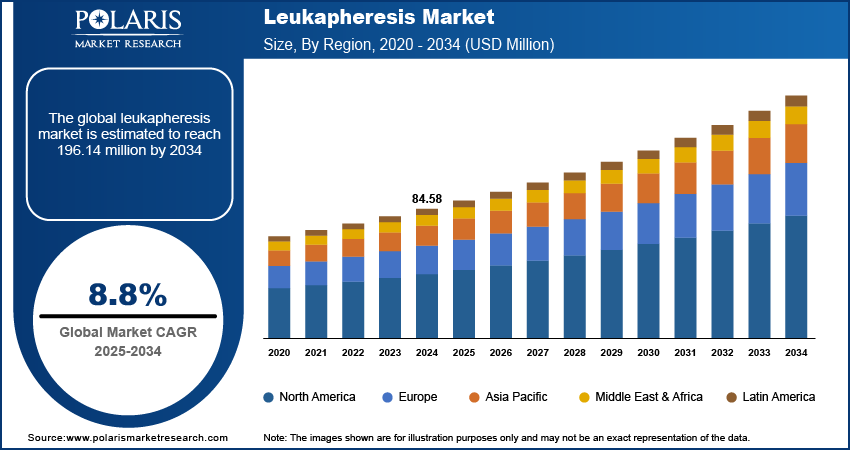
Industry Dynamics
Which are the Factors Driving the Leukapheresis Market Growth?
Rising Incidence and Prevalence of Leukemia
The increasing incidence and prevalence of leukemia are major drivers of the leukapheresis market growth. The need for the effective management of leukemia has increased substantially because of the rising incidence of cancer worldwide due to an aging population, environmental factors, and lifestyle changes. The number of patients who need leukocyte reduction or white cell procurement is increasing because more and more patients are being diagnosed every year, and they are also living longer with chronic or relapsing diseases. This is especially true for acute and aggressive forms of leukemia, where hyperleukocytosis is common. Thus, leukapheresis has become a critical emergency procedure for rapidly reducing circulating blasts and preventing complications of leukostasis.
Leukapheresis is employed both clinically to reduce abnormally high white blood cell counts (therapeutic leukapheresis) and operationally to harvest white blood cells for subsequent use in research and cell therapy manufacturing.
Growing Adoption of Leukapheresis in Cell-based Therapies
Leukapheresis is being increasingly used in cell therapy, especially in CAR-T cell and stem cell research. This has enhanced its clinical efficacy. Hospitals, research institutions, and biotech firms are increasingly relying on leukapheresis to provide high-quality cell production for personalized therapy. The rising incidence of leukemia has also fueled investments in innovative apheresis technology to improve efficiency and patient acceptability. Taken together, these factors underscore the role of the rising incidence of leukemia in the developed and developing worlds as a primary driver of the market.
In CAR-T cell processes, leukapheresis is a very important initial step in T-cell harvesting, as the specifications of the leukopak, including cell viability, composition, sterility, and storage conditions, directly affect the success of the downstream manufacturing process and overall manufacturing outcomes.
Supportive Reimbursement Policies
The leukapheresis market is growing because government reimbursement policies from Medicare and private insurers support the use of leukapheresis treatment. The policies provide financial protection through payment methods that cover all leukapheresis treatments needed for blood disorders, including leukemia, and stem cell transplants. Medicare publishes updates to its outpatient payment rates, which currently include leukapheresis in both its bundled payment systems and its separate payment systems for CAR T-cell therapies. The financial support from this coverage enables healthcare providers and patients to share the costs, resulting in more people receiving treatment. Hospitals receive financial support to purchase leukapheresis technology and employ experts, enabling them to perform more procedures and grow their market share, as reimbursement rates support these investments. The current advocacy efforts aim to achieve better reimbursement rates for leukapheresis services due to their specialized and essential service requirements.
Source: Polaris Market Research Analysis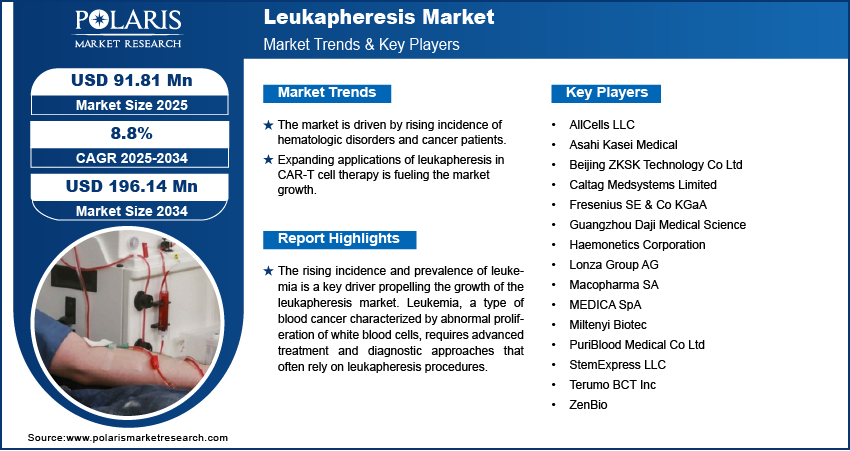
Market Segmentation
The leukapheresis market is primarily segmented on the basis of type, leukopak, indication, application, end-use, and region.
Insight by Type
Based on type, the market is segmented into devices and disposables. The devices segment held the largest share in the global market in 2025. The increasing adoption of therapeutic leukapheresis procedures and devices used for leukemia treatment contributes to the segment’s leading position. The growing adoption of these devices and the rising number of blood collection centers using them are other major factors supporting the segment’s growth.
The adoption of leukapheresis devices is reinforced by the need for greater throughput, better automation, safer closed-system processing, and cell collection consistency, especially when the output from leukapheresis procedures is relevant to cell therapy. Recent innovations focus on improving cell separation accuracy, enabling real-time monitoring, and standardizing processes at the collection facility.
Insight by Application
On the basis of application, the global market is categorized into research and therapeutic. The research application is expected to witness the highest CAGR during the forecast period, owing to an increasing number of research activities focused on leukapheresis and increasing healthcare spending by the government. For instance, research studies are being conducted to hypothesize. Chimeric antigen receptor (CAR) T cell therapy may be offered to people with cancer. Moreover, leukapheresis is considered the first step in such treatment.
Other main drivers of growth in research applications include expanding pipelines of cell and gene therapies, growing demand for PBMC and T-cell starting material, and the rising use of leukapheresis in translational immunology and oncology research.
Insight By End-Use
The leukapheresis market is categorized into blood component providers and blood centers, academic and research institutes, pharmaceutical and biotechnology companies, and hospital and transfusion centers. The blood component providers and blood centers segment is anticipated to register the highest growth over the study period, owing to factors such as the rising number of blood donations and the growing number of research studies using these cells to treat diseases such as cancer.
Blood centers are increasingly serving as scalable collection hubs for leukocyte-reduced blood components and contract collections for biopharmaceutical companies, where strong standardization, traceability, and quality systems support repeat and long-term demand.
Source: Polaris Market Research Analysis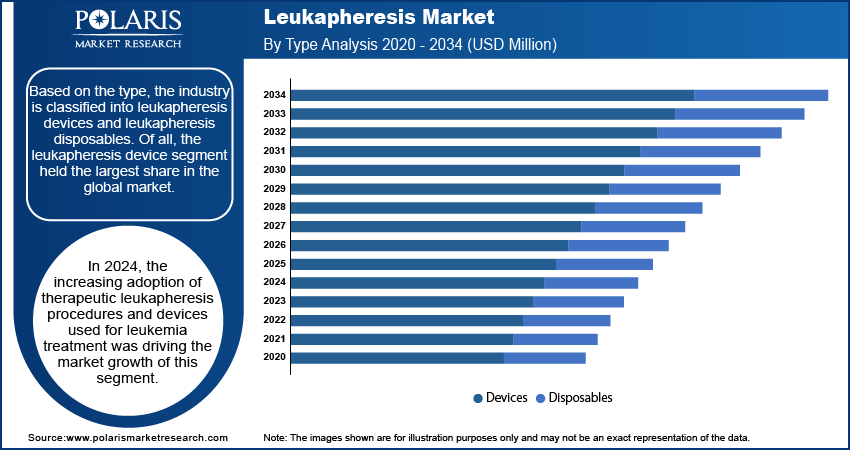
Geographic Overview
North America
The North America leukapheresis market held the largest market share due to its robust healthcare infrastructure, the large number of patients with leukemia, and continued investment in research. The region has also witnessed an increasing trend in the adoption of advanced cancer therapies, which has contributed to the growing adoption of leukapheresis procedures. In addition, North America has key market players who continue to drive the market through new product development, collaborations, and expansion.
Why North America leads?
- High number of ongoing clinical trials for cell-based cancer therapies
- Early commercialization of cell and gene therapies
- Well-developed infrastructure for collection and processing
- Favorable reimbursement and insurance coverage for advanced therapies
The increasing incidence of leukemia further increases demand in this market. According to the American Cancer Society, there were 60,530 new cases and 23,100 deaths due to leukemia in 2020. Acute Myeloid Leukemia (AML) contributed significantly to this number, with 19,940 cases in the U.S. alone. This further fuels the demand for effective treatment options, thus driving the market.
Asia Pacific
The Asia Pacific leukapheresis market is anticipated to witness the fastest growth. This is due to the increasing number of cell therapy clinical trial sites, investment in cancer care, and the number of patients diagnosed with leukemia and cancer. Governments and private companies are also investing in healthcare infrastructure, including the expansion of blood centers. This has improved access to advanced care, thereby driving the adoption of leukapheresis in the Asia Pacific.
Source: Polaris Market Research Analysis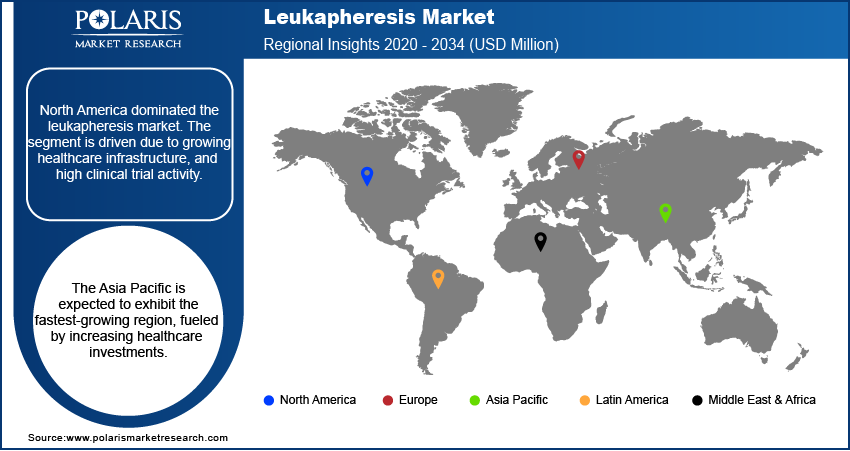
Competitive Insights
Who Are the Key Players Operating in the Leukapheresis Market?
A few of the key players operating in the global market include AllCells, LLC, StemExpress, LLC., Haemonetics Corporation, Caltag Medsystems Limited, Lonza Group AG, ZenBio, Asahi Kasei Medical, Terumo BCT, Inc., Macopharma SA, Miltenyi Biotec, Fresenius SE & Co. KGaA, Guangzhou Daji Medical Science, MEDICA S.p.A, PuriBlood Medical Co. Ltd., and Beijing ZKSK Technology Co. Ltd.
How Buyers Assess Vendors?
- Product capability: Ability to supply both devices and consumables
- Service strength: Geographical reach and rapid technical support
- Training and support: Ease of staff training and operational assistance
- Proven processes: Ability to leverage validated collection processes
- Quality strength: Ability to deliver on leukopak requirements for cell and gene therapy programs
These factors of product capability, service strength, and quality are important in the vendor selection process, particularly as the demand from cell-based therapies continues to increase.
List of Key Companies
- AllCells, LLC
- Asahi Kasei Medical
- Beijing ZKSK Technology Co. Ltd.
- Caltag Medsystems Limited
- Fresenius SE & Co. KGaA
- Guangzhou Daji Medical Science
- Haemonetics Corporation
- Lonza Group AG
- Macopharma SA
- MEDICA S.p.A
- Miltenyi Biotec
- PuriBlood Medical Co. Ltd.
- StemExpress, LLC.
- Terumo BCT, Inc.
- ZenBio
Recent Developments
- March 2024: The FDA approved Bristol Myers Squibb’s Breyanzi, a CAR T-cell therapy for adult leukemia and lymphoma patients.
- August 2023: The FDA granted approval for Terumo’s Reveos System. The system automates whole blood processing, with the goal of improving U.S. blood component supply efficiency.
- May 2023: Akadeum Life Sciences launched advanced BACS Microbubble products for simpler T-cell and PBMC isolation from leukapheresis samples.
Leukapheresis Market Segmentation
By Type Outlook (Revenue, USD Million, 2021–2034)
- Devices
- Apheresis Devices
- Columns & Cell Separators
- Leuko-reduction Filters
- Disposables
By Leukopak Outlook (Revenue, USD Million, 2021–2034)
- Mobilized Leukopaks
- Non-Mobilized Leukopaks
- Diseased Leukopaks
- Peripheral Blood Mononuclear Cells (Pbmc)
By Indication Outlook (Revenue, USD Million, 2021–2034)
- Leukemia
- AML
- ALL
- CLL
- Lymphoma
- Multiple Myeloma
By Application Outlook (Revenue, USD Million, 2021–2034)
- Research
- Therapeutic
By End-Use Outlook (Revenue, USD Million, 2021–2034)
- Blood Component Providers and Blood Centers
- Academic and Research Institutes
- Pharmaceutical and Biotechnology Companies
- Hospitals and Transfusion Centers
By Regional Outlook (Revenue, USD Million, 2021–2034)
- North America
- US
- Canada
- Europe
- Germany
- France
- UK
- Italy
- Spain
- Netherlands
- Russia
- Rest of Europe
- Asia Pacific
- China
- Japan
- India
- Malaysia
- South Korea
- Indonesia
- Australia
- Vietnam
- Rest of Asia Pacific
- Middle East & Africa
- Saudi Arabia
- UAE
- Israel
- South Africa
- Rest of Middle East & Africa
- Latin America
- Mexico
- Brazil
- Argentina
- Rest of Latin America
Leukapheresis Market Report Scope
| Report Attributes | Details |
| Market Size in 2025 | USD 93.09 million |
| Market Size in 2026 | USD 101.20 million |
| Revenue Forecast by 2034 | USD 199.38 million |
| CAGR | 8.8% |
| Base Year | 2025 |
| Historical Data | 2021–2024 |
| Forecast Period | 2026–2034 |
| Quantitative Units | Revenue in USD million, and CAGR from 2026 to 2034 |
| Report Coverage | Revenue Forecast, Market Competitive Landscape, Growth Factors, and Trends |
| Segments Covered |
|
| Regional Scope |
|
| Competitive Landscape | Leukapheresis Industry Trend Analysis (2025) Company profiles/industry participants profiling include company overview, financial information, product/service benchmarking, and recent developments |
| Report Format | PDF + Excel |
| Customization | Report customization as per your requirements with respect to countries, regions, and segmentation. |
Source: Polaris Market Research Analysis
Leukapheresis Market FAQ's
The leukapheresis market stood at USD 93.09 million in 2025. The market is projected to account for a CAGR of 8.8% between 2026 and 2034.
Leukapheresis is a process used to separate white blood cells from blood samples for the treatment of leukemia and hyperleukocytosis, research, preparation of CAR-T cell therapy, and stem cell collection for transplant procedures.
The market for leukapheresis is driven by the rising prevalence of leukemia and the growing demand for leukopaks with high leukocyte concentrations. The market also benefits from the rising adoption of CAR-T cell therapy.
The market comprises leukapheresis equipment (centrifugation-based and membrane filtration systems) and disposables (collection sets, tubing, and filters) used in therapeutic and research settings worldwide.
The research applications lead the market. This is due to increasing clinical trials and the development of CAR-T cell therapy.
Download Sample Report of Leukapheresis Market
Please fill out the form to request a customized copy of the research report.


