
Molecular Cytogenetics Market Size, Share, Trends & Forecast, 2026-2034
REPORT DETAILS
Molecular Cytogenetics Market Size & Forecast, 2025-2034
The global molecular cytogenetics market was valued at USD 2.77 billion in 2025 and is expected to record a CAGR of 7.80% from 2026 to 2034. Increasing prevalence of cancer drives the market growth. Also, rising advancements in chromosome analysis tools and a shift toward personalized medicine will boost the market expansion in the coming years.
Market Statistics
Molecular Cytogenetics Market Key Takeaways: Size, Products, Applications & Regions
- North America dominated the global market with 41.8% revenue share in 2025. The leading position is attributed to its advanced healthcare infrastructure and rising research funding in molecular cytogenetics.
- The Asia Pacific market is expected to register the highest CAGR of 9.8% during the forecast period. The region's participation in various workshops and interventions propels the regional market expansion.
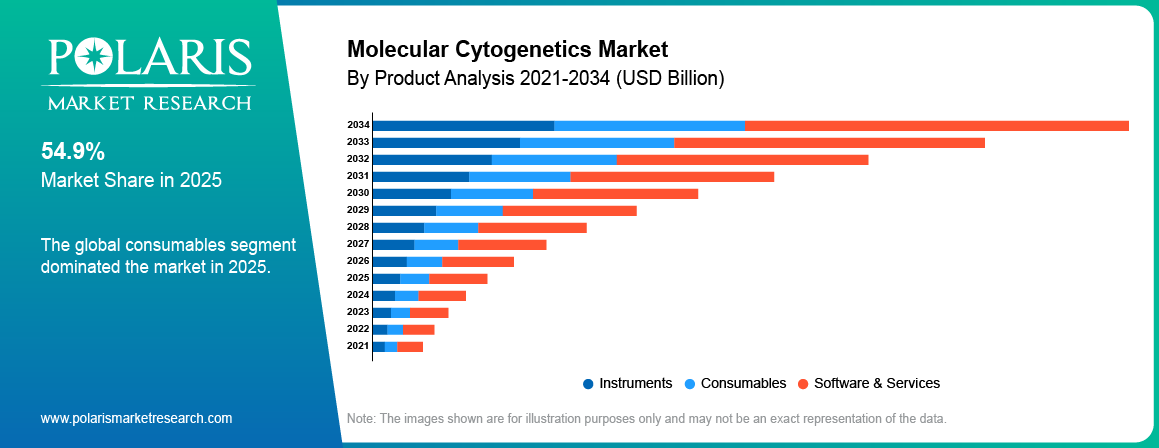
- The consumables segment held the largest share of 54.9% in 2025. Increasing awareness of genetic diseases, cancer, and personalized medicine fosters the segment growth.
- The oncology segment held a significant market share of 48.6% in 2025. This dominance is attributed to the rising incidence of cancer cases.
- The research labs segment held a significant market share of 43.5% in 2025. Rising technological advancements contributed to the segment dominance.
Note: Figures and projections outlined in this report are the result of Polaris Market Research’s proprietary analytical processes, grounded in the latest available datasets and market observations.
What Is Molecular Cytogenetics? Definition, Techniques & Market Scope
Molecular cytogenetics is a branch of genetics. The technique combines molecular biology and cytogenetics techniques. The technique is used for chromosome analysis and detection of genetic problems. Molecular cytogenetics uses Fluorescence in Situ Hybridization (FISH), Comparative Genomic Hybridization (CGH), etc. They help in cancer diagnosis, prenatal diagnosis, genetic disorders, and personalized medicine.
The research report offers a quantitative and qualitative analysis of the Molecular Cytogenetics Market to enable effective decision-making. It covers the key trends and growth opportunities anticipated to have a favorable impact on the market. Besides, the study covers segment and regional revenue forecasts for market assessment.
Key factors propelling the growth of the market include the escalating number of oncology cases, advancements in chromosome analysis tools, and a shift towards personalized medicine. Additionally, the market is benefiting from the growing number of workshops and conferences focused on cytogenetic analysis. For instance, in April 2023, the University of Madras organized a workshop covering genomic techniques in the clinical diagnostics, with a specific emphasis on cytogenetics.
How Molecular Cytogenetics Works: FISH, CGH, Karyotyping & Digital Analysis
Molecular cytogenetics is the combination of molecular biology technology and chromosome study. It assists in identifying genetic disorders that cannot be diagnosed using regular chromosome study.
- Sample is collected from patient body.
- DNA or chromosomes are isolated.
- FISH, CGH, or other molecular cytogenetic techniques are applied.
- Chromosomal abnormalities are identified.
- Results are analyzed with the use of imaging and bioinformatics software.
- Physicians use findings for diagnosis, prognosis, and treatment decisions.
The increasing abundance of genomic data is driving the demand for molecular cytogenetics, supported by the integration of multi-omics data and advancements in bioinformatics tools and algorithms. These tools play a crucial role in managing, analyzing, interpreting, and discovering meaningful associations within the vast amount of genetic information available. By efficiently handling the complexity of multi-omics data, bioinformatics tools aid researchers and clinicians in identifying correlations between genetic alterations and disease phenotypes.
As the volume of genomic data continues to grow, the capabilities of molecular cytogenetics, coupled with sophisticated bioinformatics tools, become essential for extracting valuable insights. The integration of multi-omics data and the development of robust analytical tools contribute to a deeper understanding of genetic factors associated with diseases. Consequently, the expanding genomic pool is expected to drive the demand for molecular cytogenetics, as it becomes an integral component in uncovering and comprehending the complexities of the genetic landscape during the forecast period.
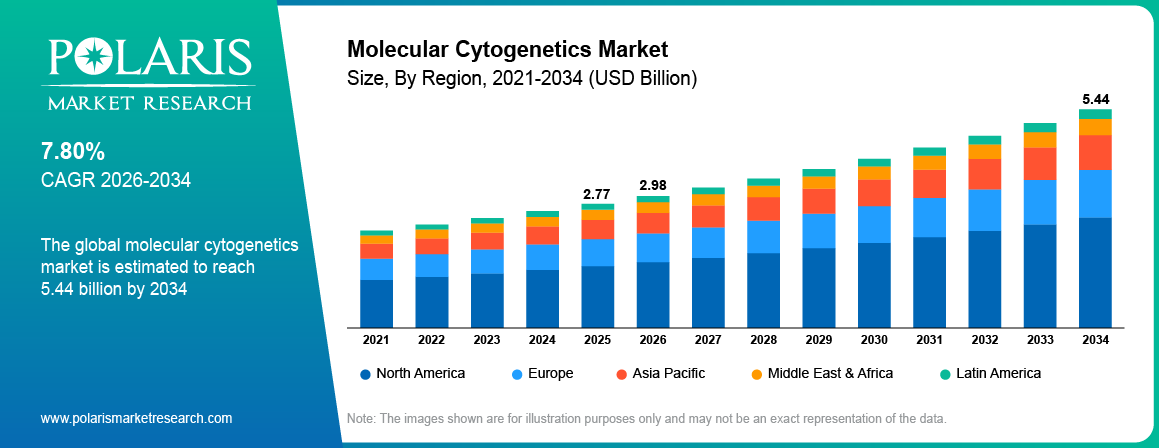
Source: Polaris Market Research Analysis
To Understand More About this Research: Download Sample Report
The molecular cytogenetics industry has experienced positive effects from the COVID-19 pandemic in various aspects. Firstly, the imperative for swift and precise diagnostic testing during the pandemic prompted the expedited development and adoption of advanced molecular cytogenetic techniques. These advancements facilitated the quicker and more efficient identification of genetic abnormalities linked to COVID-19 and other diseases. Furthermore, the pandemic underscored the significance of genomic surveillance, resulting in heightened investments in molecular cytogenetic research and infrastructure. This increased focus has contributed to advancements in our comprehension of viral genomics and transmission dynamics.
Molecular Cytogenetics Use Cases: Oncology, Prenatal Testing, Genetic Disorders & Precision Medicine
| Application | Real-World Use Case |
| Leukemia and Lymphoma Diagnosis | Molecular cytogenetics is used to detect chromosomal translocations and gene rearrangements, such as BCR-ABL and MYC abnormalities. It supports accurate diagnosis, prognosis, and treatment selection. |
| Breast Cancer Biomarker Detection | It identifies HER2 gene amplification using FISH. FISH determines eligibility for targeted therapies. It improves treatment outcomes. |
| Prenatal Chromosomal Abnormality Screening | In prenatal diagnosis, it identifies chromosomal abnormalities of the fetus like trisomies and chromosomal structural abnormalities. |
| Down Syndrome Testing | The test can confirm trisomy 21 by using chromosome-specific probes. It enables rapid and accurate diagnosis. |
Source: Polaris Market Research Analysis
Molecular Cytogenetics Market Dynamics: Drivers, Opportunities, Restraints & Challenges
Growth Drivers
Rising Cancer and Chromosomal-Disorder Burden Increases Cytogenetic Testing Demand
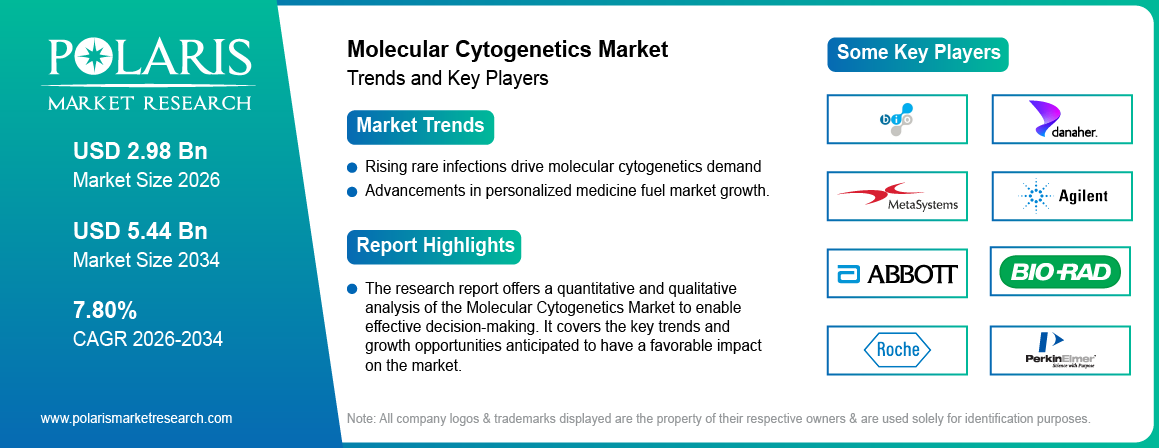
Increasing incidence of rare infections is anticipated to drive the market's demand. The expanding understanding and correlation of features within the human genomic pool have opened avenues for numerous research and development initiatives aimed at creating personalized medicines. Additionally, market players are introducing innovative molecular cytogenetics tools to enhance patient care and outcomes. This reflects a commitment to advancing medical technologies and improving the effectiveness of diagnostic and therapeutic interventions in the field of molecular cytogenetics.
Cancer stands as a leading global cause of death, responsible for approximately 10 million fatalities in 2020. As highlighted in a February 2022 WHO article, nearly 400,000 children are diagnosed with cancer annually. Molecular cytogenetics plays a crucial role in the realm of cytology, epigenetics, and genetic imaging, enabling the detection of chromosomal changes in individuals with cancer. Consequently, the rising prevalence of cancer is anticipated to present lucrative opportunities for the molecular cytogenetics market.
Molecular Cytogenetics Market Challenges: Cost, Workforce, Reimbursement & Validation
| Challenge | Impact |
| High instrument and consumables costs | Hinders adoption in smaller labs and developing markets |
| Rising requirement for specialized laboratory infrastructure | Restrains testing to well-equipped clinical and research centers |
| Shortage of skilled and experienced cytogenetic professionals | Creates bottlenecks in sample processing and result interpretation |
| Limited reimbursement policies | Slows patient access to advanced genetic testing |
| Complex data interpretation requirements | Boosts reliance on trained specialists and validated software |
Source: Polaris Market Research Analysis
Source: Polaris Market Research Analysis
Molecular Cytogenetics Market Segmentation by Product, Technique, Application, End User & Region
The market is primarily segmented based on application, technology, product, end use, and region.
| By Product | By Application | By Technology | By End Use | By Region |
|
|
|
|
|
Source: Polaris Market Research Analysis
Molecular Cytogenetics Market by Product: Instruments, Consumables, Software & Services
Consumables Led the Molecular Cytogenetics Market with 54.9% Share in 2025
Consumables segment accounted for the largest share. Rise in awareness of the genetic diseases, cancer, & personalized medicine have generated a heightened demand for diagnostic & research tests. This surge in demand directly translates into an increased necessity for consumables utilized in molecular cytogenetic testing. As per a CDC article published in April 2022, approximately 21.6%, or around 4 million people in the U.S., underwent cancer screening in 2020. The growing awareness among individuals is driving the demand for molecular cytogenetics, thereby fostering the growth of the segment.
Services segment will grow rapidly. The swift progress in the genomic technologies, including NGS & array-based platforms, has led to the generation of substantial amounts of data in the field of molecular cytogenetics. Bioinformatics based data analysis algorithms play a crucial role in handling and analyzing these extensive genomic datasets. Consequently, the escalating advancements in software are expected to drive the demand for the molecular cytogenetics.
Molecular Cytogenetics Market by Application: Oncology, Genetic Disorders, Prenatal & Precision Medicine
Oncology Accounted for 48.6% of Molecular Cytogenetics Revenue in 2025
Oncology segment held the significant market share. This dominance is attributed to the escalating global incidence of cancer cases. Molecular cytogenetics plays a pivotal role in genetically characterizing tumors, offering valuable insights into the genomic alterations & chromosomal abnormalities aligned with the cancer. Additionally, the rise of personalized medicine in oncology has spurred the utilization of molecular cytogenetics. Through the analysis of genetic alterations in the tumors, molecular cytogenetics aids in identifying therapeutic targets and selecting optimal treatment strategies for individual patients.
Personalized medicine segment is expected to gain substantial growth rate. The swift progress in genomic technologies has greatly expedited the integration of molecular cytogenetics into personalized medicine. The rise of targeted therapies, designed to selectively inhibit specific molecular targets within disease pathways, has brought about a paradigm shift in the realm of personalized medicine. Consequently, the escalating number of clinical trials is poised to drive increased demand for molecular cytogenetics in this domain.
Molecular cytogenetics becomes a very important aspect in diagnosing congenital genetic disorders, especially when normal procedures are unable to provide satisfactory diagnosis.
- Diagnosis of congenital chromosomal disorders such as microdeletion and microduplication syndromes
- Diagnosis of chromosomal deletion and duplication that lead to developmental problems
- Provides accurate diagnosis of disease that present similar symptoms
- Provides quick and definite diagnosis of rare genetic diseases where one will have to make a long journey for diagnosis
Prenatal Molecular Cytogenetics: FISH, Chromosomal Microarray & Confirmatory Testing
The field of molecular cytogenetics is increasingly being used as an essential tool in prenatal medicine, which allows for identifying chromosomal abnormalities in prenatal samples and taking informed decisions throughout the pregnancy.
- Detects chromosomal anomalies like trisomies, deletions, and duplications in prenatal samples
- Aids early detection of genetic diseases using amniocentesis and chorionic villus sampling
- Allows risk assessment and counseling in high-risk pregnancies
- Supplements noninvasive prenatal testing (NIPT) by confirming abnormal screening outcomes
- Increased adoption in obstetric medicine is further justified by the growing numbers of high-risk pregnancies due to advanced maternal age
Molecular Cytogenetics Market by End User: Clinical Labs, Hospitals, Research Institutes & Biopharma
Clinical & Research Laboratories Held 43.5% Share in 2025
Research labs segment held the significant market share. Technological advancements have brought about a revolution in molecular cytogenetics, transforming it into an indispensable tool in clinical diagnostics. It facilitates the identification of chromosomal abnormalities linked to genetic disorders, cancer, and prenatal abnormalities. For instance, as per the article published by the UC San Diego Health in April 2023, molecular cytogenetics plays a crucial role in benefiting patients by offering genetic testing services, including chromosomal analysis, to various healthcare professionals and individuals, thereby contributing to better individual health.
FISH vs CGH vs Karyotyping: Resolution, Use Cases, Strengths & Limitations
| Technology | Primary Purpose | Key Advantage |
| Fluorescence In Situ Hybridization (FISH) | Targeted genetic analysis | High sensitivity and rapid detection of specific chromosomal abnormalities |
| Comparative Genomic Hybridization (CGH) | Genome-wide copy number analysis | Higher resolution for identifying chromosomal gains and losses across the entire genome |
| Traditional Karyotyping | Chromosome visualization | Cost-effective overview of chromosome number and large structural abnormalities |
Source: Polaris Market Research Analysis
AI in Molecular Cytogenetics: Karyotyping, FISH Imaging & Workflow Automation
Artificial intelligence is reshaping how cytogenetic data is processed, directly supporting growth in the market's Software & Services product segment. AI image analysis systems help in reducing the manual effort involved in the process of karyotyping and FISH analysis. AI helps in enhancing consistency in laboratories.
- Automated analysis of images of chromosomes and marking of abnormalities
- Reduction of time taken to conduct diagnosis in high-throughput laboratories
- Reducing the burden of manual analysis of trained cytogeneticists
- Increasing efficiency and scalability of large number of samples
- Facilitating incorporation of AI-based software platforms into the laboratory workflow and satisfying the need of software & services segment
Source: Polaris Market Research Analysis
Molecular Cytogenetics Market Regional Analysis: North America, Europe, Asia Pacific, Latin America & MEA
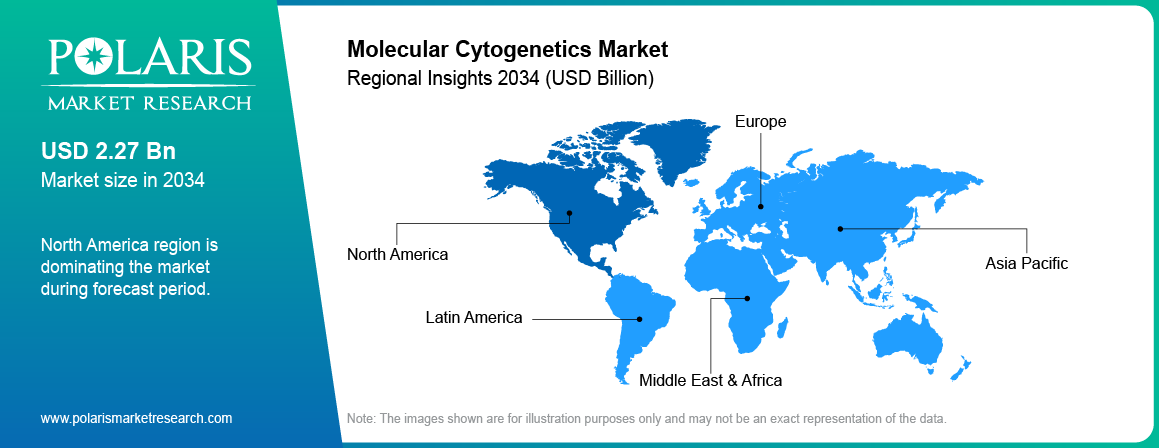
North America Led the Molecular Cytogenetics Market with 41.8% Share in 2025
North America dominated the global market. The region benefits from advanced healthcare infrastructure, increased research funding in molecular cytogenetics, heightened awareness regarding advanced laboratory techniques, and a high prevalence of genetic and chronic diseases. For instance, according to the CDC, approximately 6,000 babies are born with Down syndrome in the U.S. each year. The presence of an effective regulatory framework for overseeing genetic tests has positively influenced the growth of the market in the region.
Asia Pacific Molecular Cytogenetics Market to Grow at 9.8% CAGR
The Asia Pacific will grow with substantial pace. The ongoing economic growth in China and India is poised to elevate consumer purchasing power, contributing to regional expansion. Additionally, the region's participation in various workshops and interventions, coupled with advancements in disease management and human genetics, is driving growth. These developments are anticipated to enhance awareness regarding the importance of advanced therapies and diagnostics among the regional population, ultimately fostering market growth in the years to come.
Source: Polaris Market Research Analysis
Molecular Cytogenetics Market Competitive Landscape & Leading Companies
Companies are directing their efforts towards expanding operations, creating innovative medical devices, and advancing technologies. Additionally, major players are adopting strategic initiatives, including partnerships, mergers, and acquisitions, to drive novel product development.
Leading Molecular Cytogenetics Companies by Probes, Imaging, Arrays & Software
- BIOVIEW
- Danaher
- MetaSystems
- Agilent Technologies, Inc.
- Abbott
- Bio-Rad Laboratories, Inc.
- Illumina, Inc.
- Oxford Gene Technology
- F. Hoffmann-La Roche Ltd
- PerkinElmer Inc.
Recent Molecular Cytogenetics Product, AI, FISH & Regulatory Developments, 2025-2026
- February 2026: Neuberg Sehgal Path Lab announced the launch of cytogenetics testing technology at its facilities in Mumbai. The diagnostic tool is designed to innovate cancer diagnostics and prenatal testing. (Source: expresshealthcare.in)
- In April 2025, Leica Biosystems introduced the Aperio FL Digital System, an advanced fluorescent digital pathology scanner featuring multi-modal whole slide imaging (WSI). The platform supports brightfield, fluorescence, and FISH applications with high-resolution oil immersion scanning, designed to improve the accuracy and efficiency of pathology research.
- In January 2025, Roche obtained 510(k) clearance from the U.S. FDA for the VENTANA Kappa and Lambda Dual ISH mRNA Probe Cocktail. This marks the first clinically approved in situ hybridization (ISH) assay capable of sensitively assessing the full spectrum of B-cell lymphoma subtypes.
Molecular Cytogenetics Market Future Outlook: OGM, AI, Cytogenomics & Precision Medicine
The future of the molecular cytogenetics market will be driven by increasing adoption of precision medicine, growing demand for cancer diagnostics, expansion of prenatal genetic testing, and advances in digital cytogenetics. The application of artificial intelligence in image analysis, laboratory automation, and combination with genomics will bring more improvement in diagnosis efficiency and accuracy. In connection with the development of healthcare institutions toward personalized treatment strategies, molecular cytogenetics will play an important role in genetic diagnostics and oncology.
Molecular Cytogenetics Market Scope, Segmentation & Forecast Period
| Report Attributes | Details |
| Market size value in 2025 | USD 2.77 billion |
| Market size value in 2026 | USD 2.98 billion |
| Revenue forecast in 2034 | USD 5.44 billion |
| CAGR | 7.80% from 2026 – 2034 |
| Base year | 2025 |
| Historical data | 2021 – 2024 |
| Forecast period | 2026 – 2034 |
| Quantitative units | Revenue in USD billion and CAGR from 2026 to 2034 |
| Segments covered | By Application, By Technology, By Product, By End Use, By Region |
| Regional scope | North America, Europe, Asia Pacific, Latin America; Middle East & Africa |
| Customization | Report customization as per your requirements with respect to countries, region and segmentation. |
Source: Polaris Market Research Analysis
We strive to offer our clients the finest in market research with the most reliable and accurate research findings. We use industry-standard methodologies to offer a comprehensive and authentic analysis of the Molecular Cytogenetics Market. Besides, we have stringent data-quality checks in place to enable data-driven decision-making for you.
Molecular Cytogenetics Market FAQs
The Molecular Cytogenetics Market report covering key segments are application, technology, product, end use, and region.
Molecular Cytogenetics Market Size Worth $5.44 Billion By 2034
The global molecular cytogenetics market is expected to grow at a CAGR of 7.80% during the forecast period.
North America is leading the global market
key driving factors in Molecular Cytogenetics Market are Increasing Incidence of Genetic Disorders
The field of molecular cytogenetics is characterized by determining the chromosomal abnormalities, gene amplifications, translocation, and deletion associated with the development of different cancers. The techniques used in this regard include FISH and CGH, along with other techniques.
Molecular cytogenetics helps diagnose the chromosomal abnormalities of the fetus, including trisomy, microdeletion, duplication, and structural abnormalities. It helps in prenatal diagnosis in determining the genetic abnormalities.
Cytogenetics is useful in personalized medicine by determining patient-specific genetic abnormalities and their effects on the disease course and response to treatment. It allows for determination of effective treatment of patients and monitoring of treatment success.
Download Sample Report of Molecular Cytogenetics Market
Please fill out the form to request a customized copy of the research report.


