
Pet Wearable Market Share, Size, Trends, Industry Analysis Report, 2026-2034
REPORT DETAILS
Pet Wearable Market Summary
The global pet wearable market size was valued at USD 3.71 billion in 2025 and is projected to exhibit a CAGR of 14.9% from 2026 to 2034. The growth is driven by rising pet humanization, surge in pet ownership, and technological advancement.
Market Statistics
Key Takeaways
- North America led the market with a 37.8% revenue share in 2025. The increasing trend of pet adoption and growing concerns for pet health and safety contributed to the region's dominance.
- The U.S. held the largest share of over 80.5% of the North American market in 2025. Increasing per capita expenditure of pet owners and the early adoption of advanced products and services drive market growth in the country.
- The Asia Pacific pet wearable market is expected to register the fastest growth, expanding at a 10.9% CAGR during the forecast period. This rapid expansion is driven by increasing pet ownership and the rising trend of pet humanization across the region.
- In 2025, the smart collars segment accounted for the largest share of 34.3%. These collars provide constant connectivity features, geofencing alerts, and smartphone app control, making them a preferred choice for pet tracking and monitoring.
- The RFID segment held the largest revenue share of 42.58% in 2025. Growing adoption of RFID tags is attributed to their features, such as lightweight and compact size.
Note: Figures and projections outlined in this report are the result of Polaris Market Research’s proprietary analytical processes, grounded in the latest available datasets and market observations.
Industry Dynamics
- Rising pet ownership is increasing demand for wearable devices. These devices help owners monitor pet safety, health, and daily activities.
- Increasing demand for pet safety and tracking propels the adoption of GPS collars, RFID tags, and smart location trackers.
- Pet health monitoring is expanding through smart wearables. The devices track activity, heart rate, sleep, and early signs of illness.
- IoT adoption in pet care is improving real-time monitoring through connected devices linked with mobile apps and cloud platforms.
- Consumer spending on smart pet devices is rising as pet owners prefer advanced technology for convenience and better pet care.
- Continuous product innovation in smart collars and trackers is supporting market growth with features like virtual fencing and health alerts.
AI Impact on the Pet Wearable Market
- AI-powered analytics improve real-time tracking of pet activity, sleep, and heart rate for better health monitoring.
- Machine learning (ML) helps detect abnormal patterns, such as anxiety, obesity, or reduced movement for early preventive care.
- AI integration with GPS and geofencing enhances pet safety through smarter location tracking and escape alerts.
- Connected AI wearables linked with apps and cloud platforms support remote monitoring and personalized wellness insights.
- AI-driven wearable data helps veterinarians and pet insurance providers deliver accurate and data-based services
What are Pet Wearables?
Pet wearables are small devices that can be worn on a pet’s body to monitor and track pet activities on a daily basis. These wearables also monitor pet health by tracking their heart rate, sleep patterns, and calories burned. Also, they have location tracking features that help pet owners know their pet’s location. Smart collars, motion sensors, vests, and harnesses are a few commonly used pet wearables.
Source: Polaris Market Research Analysis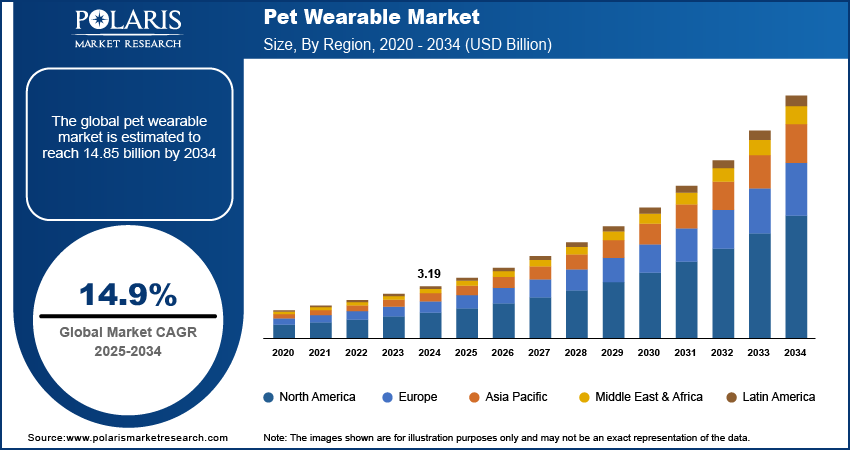
The surge in pet ownership, innovations and significant investments in pet tracking technologies, growing awareness about pet mental and physical fitness, and rising expenditure on pets/animals are among the key factors driving the pet wearable market demand. Concerns over pet obesity and the rising popularity of pet insurance also fuel the adoption of pet wearables.
The connectivity of Internet of Things (IoT) devices, which supports the transmission of real-time data concerning pet health to pet owners and veterinarians, is anticipated to play a crucial role in shaping the pet wearable market development in the coming years. The emerging demand for remote monitoring and tracking of pets in major economies such as the US and Europe is anticipated to create increased market opportunities for pet wearable companies during the forecast period.
Factors such as privacy issues, the lack of regulatory framework as proposed by pet well-wisher associations such as PETA, the short shelf-life of batteries, data misuse, and operational limitations among pet owners hinder the pet wearable market expansion.
Real-World Applications of Pet Wearables
- GPS tracking helps pet owners quickly locate lost pets through smart collars with real-time location monitoring.
- Activity tracking enables owners to monitor daily exercise, steps, and calorie burn. It helps maintain pet fitness and weight control.
- Health monitoring wearables track heart rate, sleep patterns, and temperature to support early disease detection and preventive care.
- Geofencing alerts notify owners when pets move outside safe zones, improving safety and preventing escapes
Market Dynamics
Rising Pet Humanization
The pet humanization trend, which involves treating pets like family members and applying human lifestyles and dietary patterns to them, has led to increased demand for advanced devices among pet owners. Market participants are catering to this demand by introducing pet wearables for pets like cats, dogs, and other animals. These devices can track a pet’s activity level and detect if it is too hyperactive or sedentary. Also, pet wearables can assist with disease detection and behavioral difficulties. Thus, the rising awareness about pet health contributes to the pet wearable market growth.
Technological Advancements and Innovations
The incorporation of advanced technologies such as artificial intelligence (AI), machine learning (ML), and IoT fuels the pet wearable market development. By leveraging AI and IoT technologies, ordinary pet wearable products can be improved to provide smart capabilities for analyzing and interpreting pet health information. These smart pet wearables can effectively monitor pet health trends, analyze behaviors, and detect changes. Also, they can assess the impact of nutrition and exercise on the pet. That way, pet owners can take quick action and maintain the overall well-being of their pets. Thus, the rising technological advancements and innovations in pet wearables will boost the pet wearable market growth during the forecast period.
Source: Polaris Market Research Analysis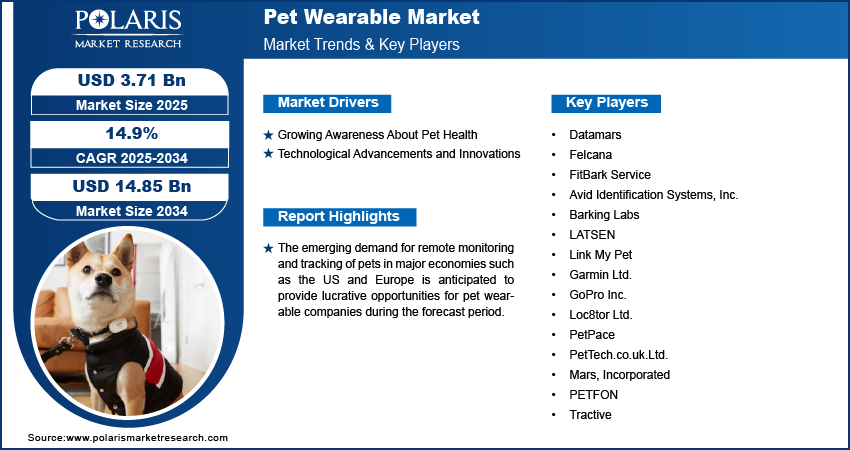
Market Segment Insights
Market Outlook – Based on Product
The pet wearable market, based on product, is segmented into smart collars, activity trackers, pet emotion sensors, smart vests, smart cameras, and smart harnesses. In 2025, the smart collars segment accounted for the largest share of 34.3%. Smart collars connect wirelessly to the pet owner’s/livestock keeper's smartphone, allowing them to monitor their pet’s or animal’s fitness, health, training, and food behaviors. The hectic lifestyle and long working hours of individuals are driving the demand for smart, connected pet collars to get real-time insights into their pets/livestock health and well-being. Factors such as herd management for livestock keepers and the rising need for pet health monitoring and location tracking further drive the growth of the segment.
Market Assessment – Based on Technology
The pet wearable market, based on technology, is segmented into GPS, RFID devices, Bluetooth, and sensors. The RFID segment held the largest pet wearable market revenue share of 42.58% in 2025. Accuracy and reliability are two major advantages of RFID technology that are driving the segment’s robust growth in the market. RFID pet wearables can help with tracking lost pets. Also, they can be linked to the pet’s health records, providing easy access to the pet’s disease history, vaccination history, and other vital data. Further, RFID tags are lightweight and compact as compared to other animal tracking technologies, such as satellite telemetry and GPS.
Source: Polaris Market Research Analysis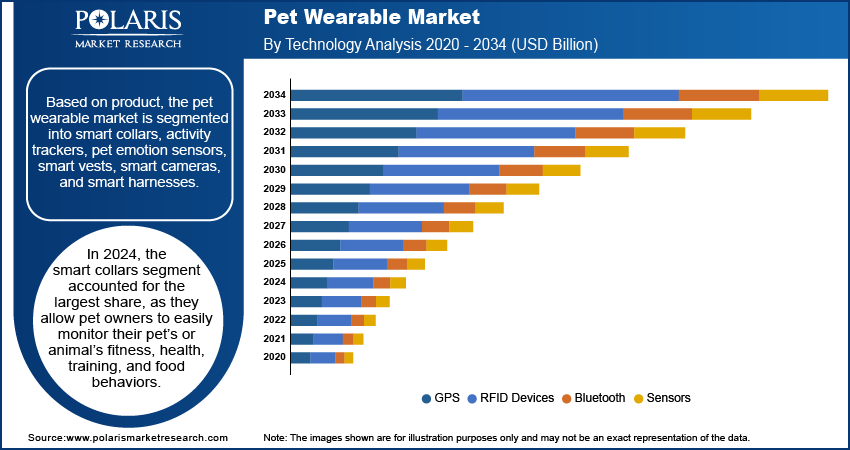
Market Regional Analysis
The market report offers pet wearable market insights into North America, Asia Pacific, Europe, Latin America, and the Middle East and Africa. North America dominated the market with the largest revenue share of 37.8% in 2025. The regional market growth is driven by several factors, including the increasing trend of pet adoption, growing concerns related to feedstock health, rising per capita expenditure of pet owners, the presence of innovative companies, and the adoption of advanced products and services by pet owners. In addition, the growing penetration of pet insurance and the presence of various dedicated pet care associations boost the regional market growth.
The Asia Pacific pet wearable market accounted for a revenue share of 23.34% in 2025. The growth can be attributed to the increasing incidence of chronic conditions in pets and growing expenditure on pets due to rising disposable income. Further, the growing investments in pet technologies and the integration of AI and ML algorithms support the regional market expansion.
Source: Polaris Market Research Analysis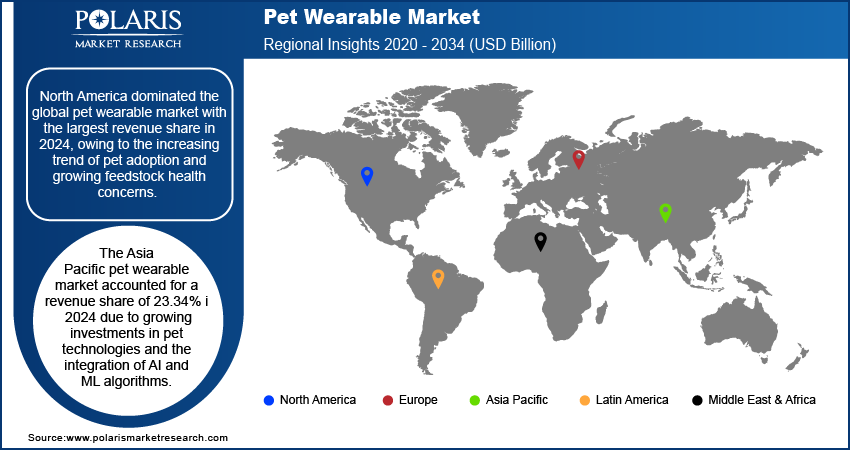
Key Players and Competitive Insights
The pet wearable market has the presence of established players and new entrants. The leading market players focus on offering advanced products to improve their offerings. Also, they are undertaking various strategic initiatives such as collaborations, mergers and acquisitions, and partnerships to expand their market share. To expand and survive in a more competitive and rising market environment, the pet wearable market players must offer innovative solutions.
Manufacturing locally is one of the key business strategies used by manufacturers to benefit clients and increase market share. In recent years, the market for pet wearables has witnessed several technological and innovation breakthroughs. The pet wearable market research report offers a market assessment of all the leading players such as Datamars; Felcana; FitBark Service; Avid Identification Systems, Inc.; Barking Labs; LATSEN; Link My Pet; Garmin Ltd.; GoPro Inc.; Loc8tor Ltd.; PetPace; PetTech.co.uk.Ltd.; Mars, Incorporated; PETFON; and Tractive.
List of Key Companies
- Datamars
- Felcana
- FitBark Service
- Avid Identification Systems, Inc.
- Barking Labs
- LATSEN
- Link My Pet
- Garmin Ltd.
- GoPro Inc.
- Loc8tor Ltd.
- PetPace
- PetTech.co.uk.Ltd.
- Mars, Incorporated
- PETFON
- Tractive
Industry Developments
- April 2026: Tractive launched next-generation pet health intelligence, introducing DOG 6 XL and CAT 6 Mini trackers with advanced GPS, vital monitoring, and AI insights. The update expanded connected pet care, improved tracking accuracy, and enabled owners to monitor pets’ health and behavior more effectively. (Source: tractive.com)
- December 2025: Pet emotional intelligence startup Traini, based on Palo Alto, completed a $7.5 million funding round. With this, the company aims to develop intelligent systems that understand pet emotions and intentions. It will help enable communication between humans and pets. (Source: Business Wire)
Future of Pet Wearable Market
The pet wearable market is expected to grow quickly. This growth comes from AI-powered health insights that help with early disease detection and personalized pet care. The use of mobile apps and cloud platforms will improve real-time monitoring and remote access for pet owners. Smart collars with GPS, activity tracking, and biometric sensors will see greater adoption due to increasing product innovation. The growing trend of treating pets like family and higher spending on premium pet care will boost demand. Moreover, the need for real-time tracking and safety solutions like geofencing and location alerts will help the market grow in the long run.
Market Segmentation
By Product Outlook
- Smart Collars
- Activity Trackers
- Pet Emotion Sensors
- Smart Vests
- Smart Cameras
- Smart Harnesses
By Technology Outlook
- GPS
- RFID Devices
- Bluetooth
- Sensors
By Animal Type Outlook
- Dogs
- Cats
- Other Animals
By Application Outlook
- Identification & Tracking
- Medical Diagnosis & Treatment
- Behavior Monitoring & Control
- Safety & Security
- Facilitation
By Regional Outlook
- North America
- US
- Canada
- Europe
- Germany
- France
- UK
- Italy
- Spain
- Netherlands
- Russia
- Rest of Europe
- Asia Pacific
- China
- Japan
- India
- Malaysia
- South Korea
- Indonesia
- Australia
- Rest of Asia Pacific
- Middle East & Africa
- Saudi Arabia
- UAE
- Israel
- South Africa
- Rest of the Middle East & Africa
- Latin America
- Mexico
- Brazil
- Argentina
- Rest of Latin America
Pet Wearable Market Report Scope
| Report Attributes | Details |
| Market Size Value in 2025 | USD 3.71 billion |
| Market Size Value in 2026 | USD 4.29 billion |
| Revenue Forecast by 2034 | USD 14.85 billion |
| CAGR | 14.9% from 2026 to 2034 |
| Base Year | 2025 |
| Historical Data | 2021–2024 |
| Forecast Period | 2026–2034 |
| Quantitative Units | Revenue in USD billion and CAGR from 2026 to 2034 |
| Report Coverage | Revenue Forecast, Market Competitive Landscape, Growth Factors, and Trends |
| Segments Covered |
|
| Regional Scope |
|
| Competitive Landscape |
|
| Report Format |
|
| Customization | Report customization as per your requirements with respect to countries, regions, and segmentation. |
Source: Polaris Market Research Analysis
Pet Wearable Market FAQ's
The market size was valued at USD 3.71 billion in 2025 and is projected to grow to USD 14.85 billion by 2034.
The market is projected to register a CAGR of 14.9% from 2026 to 2034.
North America accounted for the largest region-wise market share of 37.8% in 2025.
Datamars; Felcana; FitBark Service; Avid Identification Systems, Inc.; Barking Labs; LATSEN; Link My Pet; Garmin Ltd.; GoPro Inc.; Loc8tor Ltd.; PetPace; PetTech.co.uk.Ltd.; Mars, Incorporated; PETFON; and Tractive are a few key players in the market.
The smart collar segment accounted for the largest market share of 34.3% in 2025.
The RFID segment held the largest market share of 42.58% in 2025.
Download Sample Report of Pet Wearable Market
Please fill out the form to request a customized copy of the research report.


