
Animal Feed Additives Market Size, Industry Analysis, 2026 - 2034
REPORT DETAILS
Animal Feed Additives Market Summary
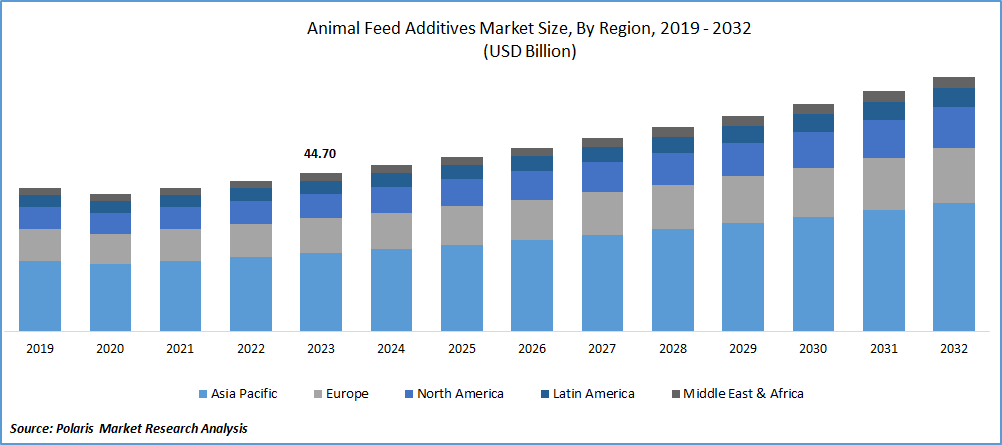
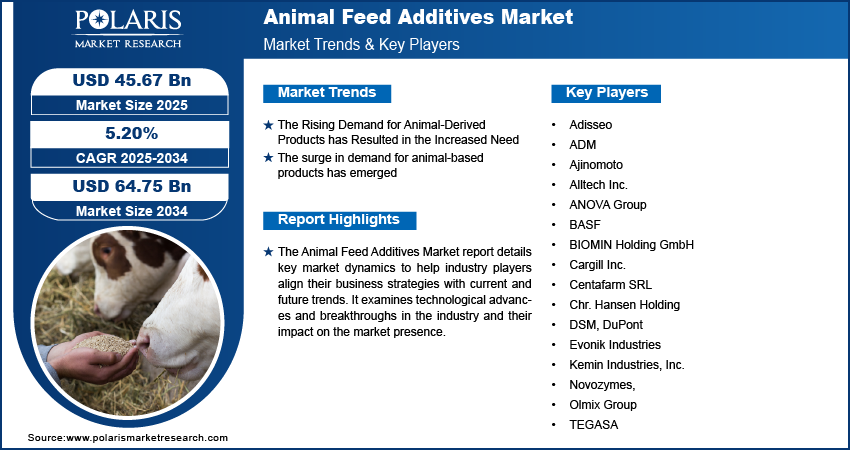
The global animal feed additives market was valued at USD 44.41 billion in 2025 and is expected to register a CAGR of 5.65% from 2026 to 2034. The growth is driven by the expanding livestock industry and the rising need for enhanced animal nutrition and health. Growing awareness regarding the benefits of food additives propels the industry expansion.
Market Statistics
Key Takeaways
- Asia Pacific emerged as the dominant region with a 36.0% share in 2025. This is due to its robust agricultural sector and a significant presence of livestock farming operations.
- North America is expected to register a significant CAGR of 4.81%. It is owing to a growing awareness and emphasis on animal welfare and health.
- The amino acids segment dominated with a 18.0% revenue share in 2025. Amino acids are the building blocks of proteins essential for the growth and overall health of animals.
- The dry segment is projected to grow at a 4.96% CAGR. Dry animal feed additives have gained attention due to their convenience in storage and transportation.
- The poultry segment accounted for a 36.0% market share in 2025. This is owing to increased demand for affordable and accessible poultry meat and eggs.
Note: Figures and projections outlined in this report are the result of Polaris Market Research’s proprietary analytical processes, grounded in the latest available datasets and market observations.
Industry Dynamics
- The rising demand for animal-derived products contributed to the increased need for animal feed additives
- Advancements in animal nutrition science and the rising need for balanced diets of animals boost the industry expansion.
- Increasing imposition of stringent regulations on the use of antibiotics and other chemical additives hinders the demand for animal feed additives.
- Increasing demand for nutritional supplements is expected to offer lucrative opportunities during the forecast period.
AI Impact on Animal Feed Additives Market
- Artificial intelligence (AI) algorithms analyze livestock age, growth stage, and health conditions to optimize feed recipes and deliver tailored nutrition..
- AI tools help predict optimal production parameters, reducing over-formulation, moisture-related errors, and rework during manufacturing.
- These tools are also used to manage inventory and ingredient purchasing by predicting demand and making sourcing strategies.
Source: Polaris Market Research Analysis
Know more about this report: Download Sample Report
What are Animal Feed Additives?
Animal feed additives refer to substances incorporated into animal feeds to enhance their nutritional content, improve overall animal health, and optimize performance. These additives can include vitamins, minerals, amino acids, enzymes, and other bioactive ingredients. The primary goal of using these additives is to ensure the well-being of the animals, promote efficient growth, and enhance the quality of animal products such as meat, milk, and eggs.
The global increase in demand for animal-derived products, driven by population growth and rising incomes, has intensified animal farming practices. To meet the increased demand for animal products, farmers are increasingly turning to feed additives to maximize production efficiency and maintain the health of their livestock. Also, advancements in animal nutrition science and a growing awareness of the importance of balanced diets for animals contribute to the expanding market for feed additives. The animal feed additives market is expected to witness sustained growth due to ongoing research and development efforts aimed at producing innovative and sustainable feed additives. The increasing focus on organic and natural alternatives, combined with advancements in biotechnology, presents opportunities for industry players to address both the growing demand for animal products and the need for environmentally friendly and sustainable farming practices.
However, regulatory constraints and concerns regarding the environmental impact of intensive animal farming practices have led to increased scrutiny of the use of certain additives. Stricter regulations on the use of antibiotics and other chemical additives in some regions affect the market dynamics. The volatile prices of raw materials for feed additives influence the production costs, potentially impacting the overall industry.
The animal feed additive industry report details key dynamics to help industry players align their business strategies with current and future trends. It examines technological advances and breakthroughs in the industry and their impact on the market presence. Furthermore, a detailed regional analysis of the industry at the local, national, and global levels has been provided.
Natural vs Synthetic Feed Additives
| Factor | Natural Feed Additives | Synthetic Feed Additives |
| Method of Production | Naturally obtained from plants, herbs, microorganisms, and fermentation techniques | Manufactured using synthetic methods or industrial processes |
| Price | Generally more costly than synthetic feed additives, owing to their production method | Cheaper than natural additives and easier to manufacture on a large scale |
| Effectiveness | Contributes to the wellbeing of animals naturally | Provides specific results in relation to nutrition or performance |
| Sustainability | More eco-friendly in comparison to synthetic additives | Ecologically unsustainable due to intensive use of resources in manufacturing |
| Regulatory Acceptance | Preferred in organic farms and those that avoid antibiotics | Often used in conventional livestock farms, but are subject to safety regulations |
| Consumer Demand | Growing customer demands and preferences due to clean label products | Efficient and economic but raises health concerns for some customers |
Growth Drivers
The Rising Demand for Animal-Derived Products has Resulted in the Increased Need for Animal Feed Additives
The surge in demand for animal-based products has emerged as an important driver for the flourishing animal feed additives market. As the world population continues to expand, followed by rising incomes and changing dietary preferences, the demand for meat, milk, and other animal-derived products has witnessed significant growth. This increased demand places greater pressure on the livestock identification and poultry industries to increase production efficiency and output. Animal feed micronutrient play an important role in meeting these challenges by enhancing the nutritional content of animal feeds, promoting animal health, and ultimately boosting overall productivity.
Farmers and producers are increasingly turning to feed additives as a positive tool to address the increased demand for high-quality animal products. These additives not only contribute to improved animal growth but also play a vital role in ensuring the performance of the animals.
Precision Animal Nutrition Trends
There is an increasing need for precision animal nutrition among livestock producers in order to boost productivity and lower feeding costs. This entails offering nutrients to animals according to their unique requirements through various parameters, such as the type of animal, age, among others. There are technologies for monitoring and managing feed for animals. Precision animal nutrition not only boosts health but also minimizes wastage and enhances sustainability in agricultural practices.
Feed Safety Regulations and Compliance
Feed safety regulations help ensure that feed additives used by animals are not harmful and are used as intended. The criteria set out under feed safety regulations include those relating to the quality of ingredients used, processing, labeling, and other additions. These regulations are enacted to protect the wellbeing of animals and to ensure food safety by optimizing the quality of products like meat, milk, and eggs produced by these animals. This is especially necessary due to issues of antimicrobial resistance and sustainable agriculture, among others.
Source: Polaris Market Research Analysis
Report Segmentation
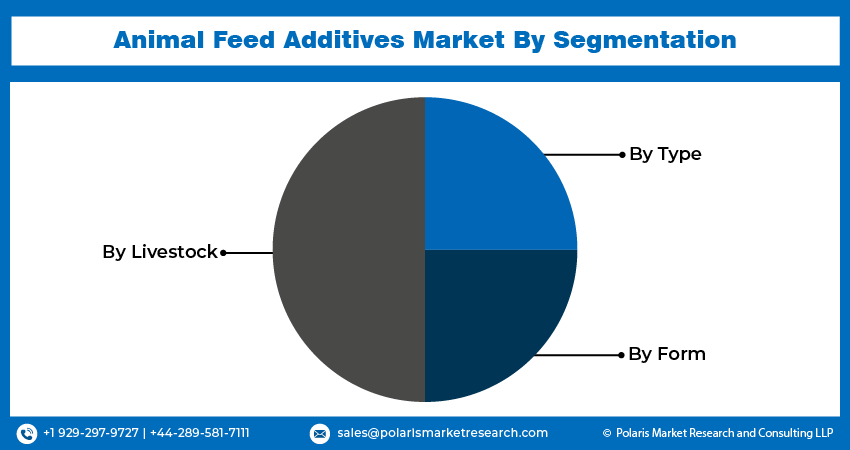
The market is primarily segmented based on livestock, type, form, and region.
| By Livestock | By Type | By Form | By Region |
|
|
|
|
Source: Polaris Market Research Analysis
To Understand the Scope of this Report: Request Customization
By Type Analysis
In 2025, the amino acids segment dominated the animal feed additives market with 18.0% share, capturing the highest market share since amino acids are the building blocks of proteins essential for the growth, development, and overall health of animals. As animals often cannot synthesize all the necessary amino acids independently, they must obtain them through their diet. In animal feed additives, amino acids are commonly included to supplement and balance the amino acid of feed, ensuring that animals receive a complete nutritional supply.
This is particularly important in intensive animal farming practices, where the demand for high-quality and nutritionally balanced feed is essential to achieve optimal growth rates and enhanced productivity. The emphasis on maximizing animal performance and improving feed efficiency has driven the demand for amino acid-based additives, making it the leading segment in the animal feed additives market.
By Form Analysis
Dry animal feed additives is expected to witness 4.96% CAGR during the forecast period, including powders, granules, and pellets, have gained attention primarily due to their convenience in handling, storage, and transportation. The dry form allows for easy integration into various types of animal feed, ensuring uniform distribution and accurate dosing during the feed manufacturing process. This results in enhanced accuracy in meeting the nutritional requirements of animals.
Also, the dry form of animal feed additives offers improved stability and shelf life compared to their liquid additives. This stability is important in maintaining the effectiveness of the additives over time, especially during storage and transportation, where exposure to environmental factors impacts the quality of the product. The ease of storage also causes cost savings for both manufacturers and end-users, as it reduces the need for specialized facilities and lowers the risk of spoilage or degradation.
Along with this, the dry form provides flexibility in formulation, allowing for the combination of multiple additives and active ingredients in a single blend. As the animal feed industry continues to focus on efficiency, precision, and cost-effectiveness, the dry form of animal feed additives emerges as the preferred choice, contributing to its estimated dominance in the market.
Source: Polaris Market Research Analysis
Regional Insights
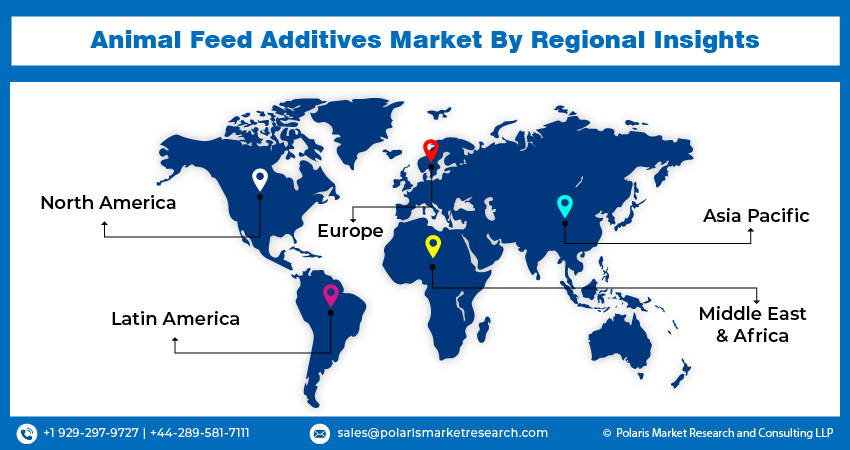
The Asia Pacific region emerged as the dominant region in the global animal feed additives market with 36.0% share in 2025 because the robust agricultural sector and a significant presence of livestock farming operations played an important role. With a significant population engaged in agriculture and animal husbandry, there is a consistently high demand for animal feed additives to enhance the nutritional quality of feeds and improve overall animal health. Also, the rising population and increasing disposable incomes in many Asia Pacific countries have led to a growing demand for meat and dairy products. This surge in demand for animal-derived products has driven the need for efficient and high-quality animal nutrition, thereby boosting the adoption of feed additives.
Governments and regulatory bodies in the Asia Pacific have implemented measures to promote the use of safe and effective animal feed additives, further propelling growth opportunities. The prevalence of intensive and industrialized farming practices in countries like China, India, and Southeast Asian nations has led to an increased dependence on scientifically formulated feeds, raising the demand for additives to gain better feed efficiency and productive.
North America is expected to grow with a significant CAGR of 4.81% during 2026-2034, since there is a growing awareness and emphasis on animal welfare and health. This has led to increased adoption of advanced nutritional strategies, including the incorporation of high-quality feed additives. Consumers in North America are increasingly interested in the quality and safety of animal products, driving the demand for additives that enhance the nutritional content of animal feeds. The prevalence of intensive livestock farming practices in North America, particularly in the production of poultry and swine, has created a significant market for feed additives aimed at improving feed efficiency, growth rates, and overall animal performance.
Source: Polaris Market Research Analysis
Key Market Players & Competitive Analysis Report
The product's quality heavily influences the market’s competition, the number of manufacturers and distributors, and their geographical locations. Several participants and stakeholders are focusing on expanding their manufacturing capacities as well. Over the last five years, major market participants such as DSM, BASF, and Evonik have been very active in M&A activities. These businesses provide a diverse range of products. In addition, key companies are conducting research and development to provide customers with efficient products.
List of Key Companies in the global market
- Adisseo
- ADM
- Ajinomoto
- Alltech Inc.
- Novus International, Inc.
- BASF
- BIOMIN Holding GmbH
- Cargill Inc.
- Centafarm SRL
- Chr. Hansen Holding
- DSM
- International Flavors & Fragrances Inc. (IFF)
- Evonik Industries
- Kemin Industries, Inc.
- Novozymes,
- Olmix Group
- TEGASA
Recent Developments
- June 2026: Angel Yeast presented its latest yeast-based innovations for animal nutrition at the 16th International Feed Congress and Exhibition (TUYEM). According to the company, these innovations aim at optimizing feed efficiency as well as the sustainable production of animals. (source: prnewswire.com)
- January 2026: Woolworths Group (Australia) began a multi-year commercial trial of SeaFeed, a seaweed-based cattle feed supplement designed to cut methane emissions, using water-delivered and dry lick dosing, with results tracked under real farm conditions. (Source: woolworthsgroup.com.au)
- March 2025: Kemin Industries launched PROSIDIUM, a novel feed pathogen control solution using peroxy acids. It helps producers mitigate Salmonella and viral risks in animal feed, enhancing food safety standards without promotional claims. (Source: prnewswire.com)
Animal Feed Additives Market Report Scope
| Report Attributes | Details |
| Market size value in 2025 | USD 44.41 billion |
| Market size value in 2026 | USD 46.90 billion |
| Revenue Forecast in 2034 | USD 72.86 billion |
| CAGR | 5.65% from 2026 – 2034 |
| Base year | 2025 |
| Historical data | 2021 – 2024 |
| Forecast period | 2026 – 2034 |
| Quantitative units | Revenue in USD billion and CAGR from 2026 to 2034 |
| Segments Covered | By Livestock, By Type, By Form, By Region |
| Regional scope | North America, Europe, Asia Pacific, Latin America, Middle East & Africa |
| Customization | Report customization as per your requirements concerning countries, regions, and segmentation. |
Source: Polaris Market Research Analysis
In today’s hyper-connected world, running a business around the clock is no longer an option. And at Polaris Market Research, we get that. Our sales & analyst team is available 24x7 to assist you. Get all your queries and questions answered about the Animal Feed Additives Market report with a phone call or email, as and when needed.
Browse Our Top Selling Reports
Europe Homogeneous Precious Metal Catalyst Market Size, Share 2024 Research Report
Reciprocating Pumps Market Size, Share 2024 Research Report
Floral Tea Market Size, Share 2024 Research Report
Animal Feed Additives Market FAQ's
The Animal Feed Additives Market covering key segments are on livestock, type, form, and region.
Animal Feed Additives Market Size Worth USD 72.86 billion By 2034 .
The global animal feed additives market is expected to grow at a CAGR of 5.65% during the forecast period.
Asia Pacific emerged as the dominant region with a 36.0% share in 2025.
the key driving factors in Animal Feed Additives Market are, Advancements in animal nutrition science and the need for balanced diets of animals expanding the market for feed additives.
Download Sample Report of Animal Feed Additives Market
Please fill out the form to request a customized copy of the research report.


