
Autoimmune Disease Diagnostics Market Growth Analysis, 2026-2034
REPORT DETAILS
Autoimmune Disease Diagnostics Market Summary and Key Insights
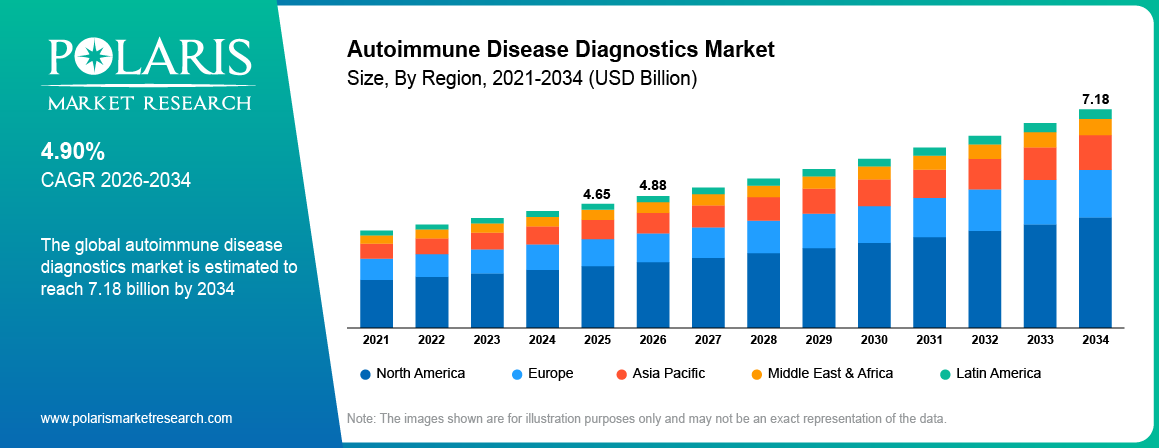
The global autoimmune disease diagnostics market size was valued at USD 4.65 billion in 2025. The market is projected to grow at a CAGR of 4.90% from 2026 to 2034. Rising global prevalence of autoimmune disorders and a heightened clinical push for early and accurate disease detection are a few of the key factors driving market growth.
Market Statistics
Key Takeaways
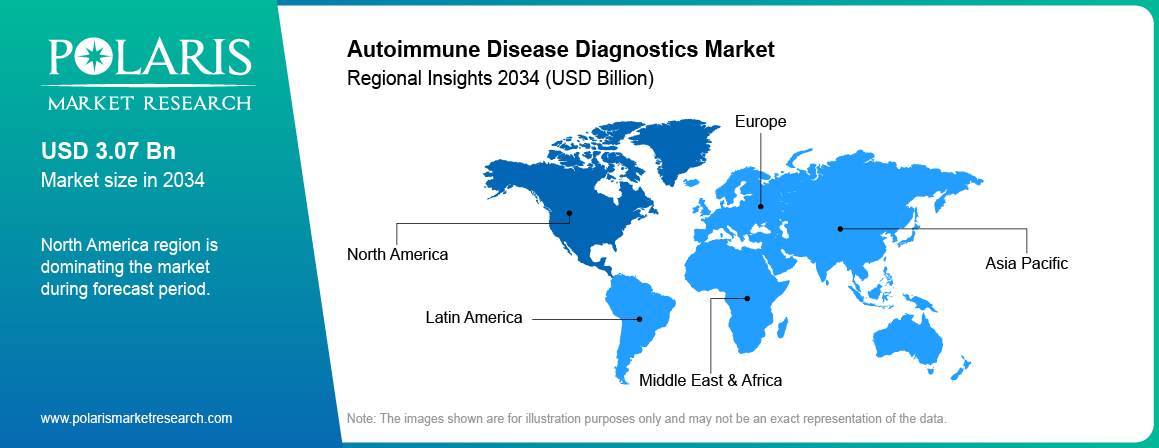
- North America dominated with a 42.8% share in 2025. This is due to its significant investments in medical R&D.
- Asia Pacific is projected to grow at a 10.9% CAGR. Increasing healthcare investments and rising awareness of autoimmune diseases drive the regional market growth.
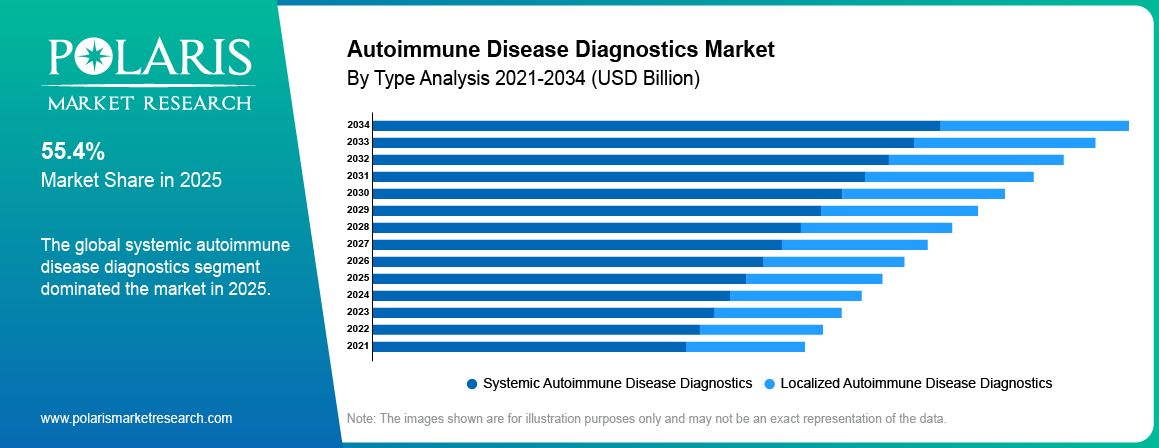
- The Systemic Autoimmune Disease Diagnostics segment dominated with a 55.4% share in 2025. The growing prevalence of systemic autoimmune diseases contributes to the segment’s leading position.
- The Antinuclear Antibody Tests segment led with a 39.7% share in 2025. This is owing to advancements in diagnostic technologies.
- The Diagnostics Centers segment is projected to account for a 11.8% CAGR. The increasing adoption of automated laboratory systems across diagnostics centers drives the segment’s growth.
Note: Figures and projections outlined in this report are the result of Polaris Market Research’s proprietary analytical processes, grounded in the latest available datasets and market observations.
Industry Dynamics
- Growing awareness of autoimmune diseases among people and healthcare professionals has led to increased screening and early detection efforts.
- Increased investments in healthcare infrastructure and services are providing essential resources for advancing diagnostic technologies.
- The shift toward multiplexing and automation is creating several market opportunities.
- High autoimmune disease testing costs may present market challenges.
AI Impact on Autoimmune Disease Diagnostics Market
- AI helps in diagnosing autoimmune diseases by using lab data, imaging, and patient information to detect autoimmune diseases at an early stage.
- This technology helps healthcare professionals identify any pattern of diseases and assist them in differentiating complicated autoimmune diseases.
- AI assists in streamlining the diagnostic process by speeding up the analysis of data.
- Continuous analysis of data helps in monitoring, planning, and predicting any disease.
Autoimmune Disease Diagnostics Market in Simple Terms
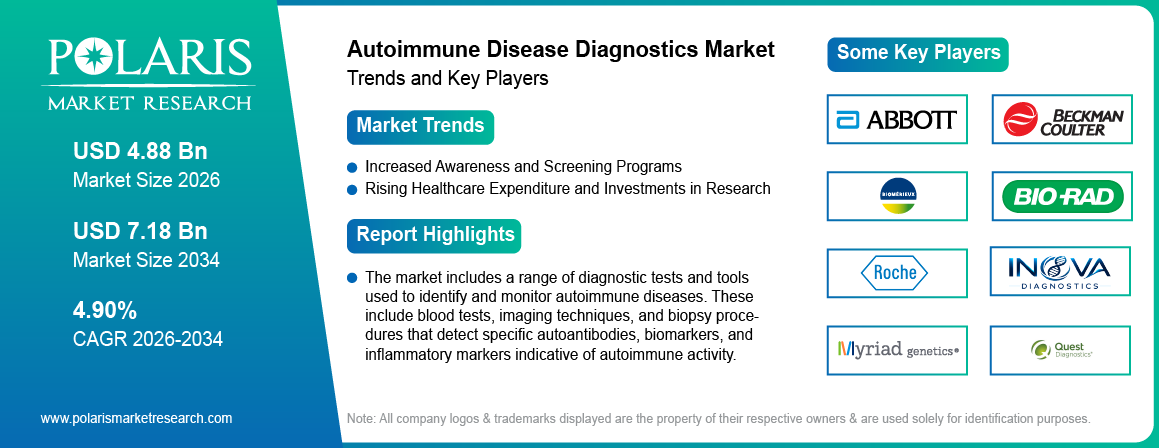
The market includes a range of diagnostic tests and tools used to identify and monitor autoimmune diseases. These include blood tests, imaging techniques, and biopsy procedures that detect specific autoantibodies, biomarkers, and inflammatory markers indicative of autoimmune activity.
The rise in the prevalence of autoimmune diseases is a significant driver of the market demand. Conditions such as rheumatoid arthritis, lupus, and multiple sclerosis are becoming more common, leading to a higher demand for diagnostic tests. This increase is due to better awareness and understanding of these diseases among both patients and healthcare providers. Additionally, environmental factors, such as pollution and dietary changes, as well as genetic predispositions, play significant roles in the rising incidence of these diseases. The growing number of diagnosed cases necessitates early and precise diagnostic methods to manage and treat these chronic conditions effectively, thereby driving the autoimmune disease diagnostics market expansion.
Source: Polaris Market Research Analysis
To Understand More About this Research: Download Sample Report
In March 2025, according to the National Health Council, 50 million Americans suffer from autoimmune diseases; among them, 75% are women, highlighting the substantial and growing need for effective diagnostic solutions.
Technological advancements in diagnostics have significantly improved the accuracy, efficiency, and accessibility of tests for autoimmune diseases. Innovations such as multiplex assays, advanced imaging techniques, and next-generation sequencing (NGS) have enhanced the ability to detect autoimmune markers early and accurately, facilitating timely intervention and management. For instance, in September 2023, NeoDx Biotech Labs launched a REAL-TIME PCR Technology-driven in vitro diagnostic (IVD) kit designed for autoimmune disorders, enabling healthcare services to enhance their testing capabilities.
How Autoimmune Disease Diagnostics Work?
Patient Evaluation: The diagnostic process starts with an analysis of symptoms, the patient’s medical history, and a physical examination to see whether a person may have an autoimmune disorder.
Sampling: Blood samples and other types of body specimens are collected for studying antibodies, markers of inflammation, and other components of the immune system.
Laboratory Tests: Modern laboratory techniques allow the discovery of autoantibodies, biomarkers, and disorders of immunity in patients with various autoimmune diseases.
Result Interpretation: The presence of the autoimmune disorder and the kind of disease is determined through laboratory findings and clinical presentations.
Treatment and Disease Management: The information obtained from the process of diagnostics is used by doctors for treatment and management of the disease.
Traditional Diagnostics vs Advanced Autoimmune Disease Diagnostics
| Factor | Traditional Diagnostics | Advanced Diagnostics |
| Method of Testing | Simple clinical and laboratory tests | Autoantibody testing, molecular diagnostics, and biomarker testing |
| Diagnostic Accuracy | Moderate | Increased accuracy and specificity |
| Detection of Disease | Later in the progression of the disease | Earlier detection of the disease |
| Immune Biomarker Testing | Limited | Full immune biomarker testing |
| Support for Treatment | General disease diagnosis | Individualized treatment |
| Monitoring of Disease | Periodic clinical check-ups | Regular monitoring through modern biomarkers |
Source: Polaris Market Research Analysis
Market Trends
Increased Awareness and Screening Programs
There is a growing awareness of autoimmune diseases among people and healthcare professionals, leading to increased screening and early detection efforts. Public health campaigns and educational programs are encouraging individuals to seek medical advice for symptoms that may indicate an autoimmune condition. This positive approach is driving the demand for diagnostic tests. The National Institutes of Health (NIH) has launched several initiatives aimed at raising awareness about autoimmune diseases, resulting in more individuals undergoing routine screenings and early diagnostic testing.
In March 2025, according to the National Heath Council, Autoimmune Awareness Month aims to increase awareness and understanding of autoimmune diseases. Recognizing autoimmune diseases as a serious health concern is more important than ever, given the rising incidence rates. This heightened awareness encourages more routine screenings and early diagnostic testing, boosting the demand for advanced diagnostic tools and technologies in the market.
Rising Healthcare Expenditure and Investments in Research
Increased investments in healthcare infrastructure and services are providing essential resources for the advancement of diagnostic technologies. The US government’s substantial funding for the National Institutes of Health (NIH) supports the development of advanced diagnostic tools and research on autoimmune diseases. This financial support enables the creation of sophisticated diagnostic systems and increases the range of available testing options, facilitating earlier and more accurate disease detection.
In September 2025, the National Organization for Rare Disorders (NORD) announced a new round of seed funding grants to advance clinical research on a number of rare diseases that are grossly underfunded. Seed grants demonstrate how specialized funding drives clinical advances in research and contributes to the creation of new diagnostic and treatment procedures.
Substantial investments in research and development by government and private sectors are driving advancements in autoimmune disease diagnostics. Collaborative efforts among various stakeholders, including public health agencies, research institutions, and industry leaders, are accelerating the development of novel biomarkers and improved diagnostic methods.
In May 2025, data from Progentec’s technology-based clinical validation projects revealed that the use of artificial intelligence platforms and digital signals brought down the diagnostic process for SLE patients to one year, marking an 80% decrease from the previous 5-7 years taken traditionally. This advancement, following the establishment of the research collaboration with GlaxoSmithKline in 2021, is an important milestone in treating people with lupus.
Personalized Medicine in Autoimmune Disease Management
The use of personalized medicine has proved to be increasingly important in managing autoimmune diseases since it facilitates personalized treatment of patients with such diseases. Diagnostics allow for the identification of biomarkers, autoantibodies, and immune system characteristics associated with autoimmune disease development and treatment. Healthcare professionals use such information to select appropriate treatments, thus avoiding inappropriate treatments. Monitoring enables adjustments in treatment plans as the disease progresses. Such an approach makes it possible to increase the efficiency of treatment and minimize side effects. As precision diagnostics continues to advance, personalization of treatment becomes increasingly possible for autoimmune diseases.
Sustainable Diagnostic Practices
Sustainability has gained a lot of importance in relation to the diagnosis of autoimmune disorders as health care institutions try to reduce their impact on the environment while ensuring high levels of diagnostic quality. Labs are increasingly making use of energy-efficient equipment, reducing lab waste, and utilizing recyclable materials. In addition, companies are coming up with eco-friendly diagnostic kits and minimizing the use of toxic substances during the production process. Laboratory operations have also been automated to make the process more efficient and avoid unnecessary tests.
Source: Polaris Market Research Analysis
Segmental Insights
Type Insights
In 2025, the systemic autoimmune disease diagnostics segment dominated the market. Systemic autoimmune diseases, require comprehensive testing to detect a range of biomarkers and autoantibodies, driving significant demand for diagnostic tools and technologies in this segment.
The growing prevalence of systemic autoimmune diseases and increased awareness among healthcare providers and patients contribute to higher diagnostic activity in this segment. The growing adoption of high-throughput screening methods by laboratories to detect a range of autoantibodies associated with systemic autoimmune diseases.
In May 2025, the collaboration between Mayo Clinic Laboratories, a leading global reference laboratory, and Progentec Diagnostics, a company specializing in digital health and biomarker technologies, launched advanced biomarker testing services for autoimmune conditions. These innovative tests improve early and accurate diagnosis, enhancing disease management and treatment outcomes, which supports the growing demand for precise diagnostic tools in this segment.
Test Type Insights
The antinuclear antibody tests category dominated the market owing to the increasing prevalence of autoimmune diseases and advancements in diagnostic technologies. The market for ANA tests is expanding rapidly as they offer crucial insights for early diagnosis and management of these complex conditions.
The growth for the antinuclear antibody tests segment is driven by a rising awareness of autoimmune diseases, improvements in test accuracy, and a broader adoption of ANA testing in clinical settings. Additionally, the expansion of diagnostic laboratories and increasing healthcare investments in autoimmune disease diagnostics further contribute to the segment's growth. Antinuclear antibody (ANA) tests are used to detect the presence of antinuclear antibodies in the blood. Myasthenia gravis is a genetically predisposed autoimmune disease. The development of myasthenia gravis can also have an impact on this market.
In August 2022, according to NCBI, Myasthenia gravis (MG) is prevalent in the US, with 20 cases per 100,000 population. It shows a female predominance in individuals under 40 and a male predominance in those over 50. While childhood MG is rare in Western populations, it is prevalent in Asian countries, affecting around 50% of patients under 15 years old. The rising incidence of autoimmune diseases is driving the demand for Antinuclear Antibody (ANA) tests, contributing to the growth of the market.
Use Cases of Autoimmune Disease Diagnostics
| Application | Purpose |
| Early Disease Diagnosis | Early detection of autoimmune diseases before any major complication arises |
| Diagnosis of Rheumatoid Arthritis | Test for the presence of markers of rheumatoid arthritis diagnostics antibodies and inflammation |
| Lupus Diagnostic Testing | Assists in the diagnosis of systemic lupus erythematosus based on autoimmune markers |
| Autoimmune Diseases of the Thyroid | Detection of autoimmune diseases of the thyroid like Hashimoto’s thyroiditis and Graves’ disease |
| Disease Monitoring | Assesses progress of disease and response to treatment |
| Treatment | Helps doctors choose proper treatments |
| Research | Contributes to autoimmune diseases clinical research |
Source: Polaris Market Research Analysis
Source: Polaris Market Research Analysis
Cost and Accessibility Factors
Access and cost continue to be factors in the utilization of diagnostic tools for autoimmune conditions. Advanced technologies such as molecular diagnostics and autoantibody profiles need specialized equipment and expertise, hence increased costs. In some geographical locations, lower funding and few centers that specialize in these services lead to delays in diagnosing and treating the condition. Some remote locations may struggle to have access to advanced diagnostic tools due to limited availability of health care centers. But with improvements in technology and automation, accessing such diagnostic tools is becoming increasingly easy.
Regional Insights
North America dominated the market in 2025, primarily due to its advanced healthcare infrastructure and significant investments in medical research and development. The US, in particular, leads the market with its well-established healthcare system; high rates of autoimmune conditions such as rheumatoid arthritis, lupus, and multiple sclerosis; and a strong focus on precision medicine. The high prevalence of autoimmune diseases drives the autoimmune disease diagnostics market expansion in North America.
In March 2024, according to the National Health Council, about 50 million Americans have autoimmune diseases. Case of autoimmune conditions are increasing rapidly, with studies showing a 3-12% rise each year. Additionally, Type 1 diabetes cases have nearly doubled in adults over the past 40 years, and celiac disease cases have increased five-fold in the last 30 years, doubling every 15 years.
The presence of major diagnostic companies such as Quest Diagnostics, Thermo Fisher Scientific, and Abbott strengthens the region's dominance. Additionally, the substantial funding from public and private sectors for research and development contributes to continuous advancements in diagnostic technologies, reinforcing North America's leading position.
Asia Pacific autoimmune disease diagnostics market is driven by the increasing healthcare investments, rising awareness of autoimmune diseases, and improving healthcare infrastructure. Countries such as China, India, and Japan are experiencing rapid growth in their healthcare sectors, leading to enhanced diagnostic capabilities and greater access to advanced testing technologies. The increasing prevalence of autoimmune diseases in these rapidly developing economies, coupled with a growing focus on improving healthcare standards, is contributing to the region's rapid market expansion.
The prevalence of Autoimmune Hepatitis (AIH) is increasing, with reported rates of 19.44, 22.80, and 12.99 per 100,000 people in different parts of Asia. A meta-analysis of AIH studies has shown consistent annual incidence rates, ranging from 1.00 to 1.37 per 100,000 people. This rise in incidence has led to greater awareness of the disease and improvements in diagnostic capabilities. These developments have contributed to the growth of the industry.
The rising middle-class population with higher healthcare spending capacity and government initiatives to improve healthcare access further fuel the market's growth. The Asia Pacific region's fast-paced development in healthcare and rising demand for advanced diagnostic solutions position it as the most dynamic and rapidly expanding market in the autoimmune disease diagnostics sector.
Source: Polaris Market Research Analysis
Key Players and Competitive Insights
This industrfeatures a broad array of participants, including major diagnostic corporations, specialized biotechnology firms, and emerging startups. Major players in the industry offer a wide range of advanced diagnostic technologies and extensive product portfolios, focusing on innovation to enhance early and accurate detection of autoimmune diseases. These companies invest significantly in research and development to maintain their position. Specialized firms target niche areas within autoimmune diagnostics, such as novel biomarkers or personalized testing solutions, contributing to a diverse market offering. Emerging startups are introducing innovative technologies and approaches, often leveraging advancements in digital health and precision medicine.
The market is characterized by a dynamic environment driven by strategic collaborations, partnerships, and acquisitions, which help expand capabilities and reach. This continuous innovation and improvement in diagnostic technologies enhance the accuracy and efficiency of autoimmune disease testing. A few major players in the industry include Abbott; AESKU.DIAGNOSTICS; Beckman Coulter, Inc.; BIOMÉRIEUX; Bio-Rad Laboratories, Inc.; EUROIMMUN; F. Hoffmann-La Roche Ltd; Inova Diagnostics (Werfen Group); Myriad Genetics, Inc.; Quest Diagnostics; Scipher Medicine; Siemens Healthcare Private Limited; and Thermo Fisher Scientific Inc.
Bio-Rad Laboratories, Inc. is a US-based company that develops and manufactures products for the life science research and clinical diagnostics markets. Bio-Rad was founded in 1952 in Berkeley. Their products are used in a variety of applications, including bioprocess analytics, cell research, gene expression analysis, immunology, and mutation detection. Bio-Rad's products are used by customers such as university and research institutions, hospitals, public health and commercial laboratories, biotechnology and pharmaceutical companies, and applied laboratories. The company is renowned for its expertise and innovation in autoantibody testing, which began with the introduction of the Kallestad IFA. The company provides comprehensive autoantibody testing solutions, including the BioPlex 2200 System, which enables laboratories to achieve greater results with reduced effort.
F. Hoffmann-La Roche Ltd, also known as Roche, is a Swiss multinational healthcare company that specializes in drugs and diagnostics. Roche's products and services are used by hospitals, healthcare professionals, researchers, pharmacists, and commercial laboratories. The company's research focuses on developing new treatments, medicines, and diagnostics to prevent, diagnose, and treat diseases. Roche operates worldwide under two divisions—pharmaceuticals and diagnostics. The company's portfolio includes a range of advanced immunoassays and molecular diagnostic tests designed to identify and manage autoimmune conditions with precision. Roche’s diagnostic platforms are renowned for their accuracy and reliability, providing critical insights that aid in the early detection and effective management of autoimmune diseases. There innovation and research for developing new diagnostic tools enhance patient outcomes and support personalized medicine approaches in autoimmune disease management.
List of Key Companies
- Abbott
- AESKU.DIAGNOSTICS
- Beckman Coulter, Inc.
- BIOMÉRIEUX
- Bio-Rad Laboratories, Inc.
- EUROIMMUN
- F. Hoffmann-La Roche Ltd
- Inova Diagnostics (Werfen Group)
- Myriad Genetics, Inc.
- Quest Diagnostics
- Scipher Medicine
- Siemens Healthcare Private Limited
- Thermo Fisher Scientific Inc.
The outlook of the autoimmune disease diagnostics market seems promising with the rising prevalence of autoimmune disorders and the need for an early diagnosis on the rise. The discovery of new biomarkers, improvements in the field of molecular diagnostics, multiplex assays, and next-generation sequencing techniques are anticipated to enhance the accuracy of diagnostic processes. The increasing applications of personalized medicine will drive the demand for advanced diagnostic procedures that will assist in determining the course of action. Research and development activities in healthcare infrastructure, automation, and diagnostics will facilitate better availability of testing services. The increased awareness about autoimmune disorders will fuel the growth of the autoimmune diagnostics market in the upcoming years in both mature and emerging markets.
Industry Developments
- April 2026: Progentec Diagnostics, Inc. announced the publication of new research in Lupus Science & Medicine. The company also revealed the award of an Oklahoma Center for the Advancement of Science and Technology (OCAST) Industry Innovation Grant for the further development of its lupus classification risk blood test. (source: prnewswire.com)
- January 2026: 10x Genomics, Inc. announced a collaboration with Brigham & Women's Hospital. The company stated that the collaboration focuses on analyzing peripheral blood samples from patients living with systemic lupus erythematosus (SLE), rheumatoid arthritis (RA), and giant cell arteritis (GCA). The study intends to uncover immune signatures associated with disease activity, remission, flare, and therapeutic response. (source: prnewswire.com)
Autoimmune Disease Diagnostics Market Segmentation
By Product Outlook
- Consumables and Assay Kits
- Instruments
By Type Outlook
- Systemic Autoimmune Disease Diagnostics
- Rheumatoid Arthritis
- Ankylosing Spondylitis
- Systemic Lupus Erythematosus (SLE)
- Others
- Localized Autoimmune Disease Diagnostics
- Multiple Sclerosis
- Type 1 Diabetes
- Hashimoto's Thyroiditis
- Idiopathic Thrombocytopenic Purpura
- Others
By Test Ty pe Outlook
- Antinuclear Antibody (ANA) Tests
- Autoantibody Tests
- Complete Blood Count (CBC)
- Comprehensive Metabolic Panel
- C-Reactive Protein (CRP)
- Others
By End User Outlook
- Hospitals
- Diagnostics Centers
- Research Laboratories
By Regional Outlook
- North America
- US
- Canada
- Europe
- Germany
- France
- UK
- Italy
- Spain
- Netherlands
- Russia
- Rest of Europe
- Asia Pacific
- China
- Japan
- India
- Malaysia
- South Korea
- Indonesia
- Australia
- Vietnam
- Rest of Asia Pacific
- Middle East & Africa
- Saudi Arabia
- UAE
- Israel
- South Africa
- Rest of Middle East & Africa
- Latin America
- Mexico
- Brazil
- Argentina
- Rest of Latin America
Autoimmune Disease Diagnostics Market Report Scope
| Report Attributes | Details |
| Market Size in 2025 | USD 4.65 Billion |
| Market Size in 2026 | USD 4.88 Billion |
| Revenue Forecast by 2034 | USD 7.18 Billion |
| CAGR | 4.90% from 2026 to 2034 |
| Base Year | 2025 |
| Historical Data | 2021–2024 |
| Forecast Period | 2026–2034 |
| Quantitative Units | Revenue in USD million and CAGR from 2026 to 2034 |
| Report Coverage | Revenue Forecast, Market Competitive Landscape, Growth Factors, and Trends |
| Segments Covered |
|
| Regional Scope |
|
| Competitive Landscape |
|
| Report Format |
|
| Customization | Report customization as per your requirements with respect to countries, regions, and segmentation. |
Source: Polaris Market Research Analysis
Autoimmune Disease Diagnostics Market Frequently Asked Questions
• The global autoimmune disease diagnostics market size was valued at USD 4.65 Billion in 2025 and is projected to be valued at USD 7.18 Billion by 2034.
The global market is projected to register a CAGR of 4.90% during 2026–2034.
North America held the largest share of the global market in 2025 due to its advanced healthcare infrastructure and significant investments in medical research and development.
A few key players in the market are Abbott; AESKU.DIAGNOSTICS; Beckman Coulter, Inc.; BIOMÉRIEUX; Bio-Rad Laboratories, Inc.; EUROIMMUN; F. Hoffmann-La Roche Ltd; Inova Diagnostics (Werfen Group); Myriad Genetics, Inc.; Quest Diagnostics; Scipher Medicine; Siemens Healthcare Private Limited; and Thermo Fisher Scientific Inc.
The systemic autoimmune diseases segment dominated the market in 2025 due to the growing prevalence of systemic autoimmune diseases and increased awareness among healthcare providers
The antinuclear antibody (ANA) tests segment held the largest share of the global market in 2025 due to advancements in diagnostic technologies.
These are diagnostic procedures that are conducted to diagnose diseases associated with immune systems that attack their own tissues. These diagnostic procedures help in diagnosing the disease, monitoring the disease, and making decisions regarding treatment of the disease.
The growth of the autoimmune disease diagnostics market is driven by the increase in the number of autoimmune diseases, an increase in demand for early diagnosis, innovations in diagnostic procedures, and personalized medicine.
Innovations such as molecular diagnostics, biomarkers, multiplex assays, and next generation sequencing have enhanced the benefits of these diagnostic procedures.
Download Sample Report of Autoimmune Disease Diagnostics Market
Please fill out the form to request a customized copy of the research report.


