
Sepsis Diagnostics Market Size, Share, Trends & Forecast, 2026-2034
REPORT DETAILS
Sepsis Diagnostics Market Summary
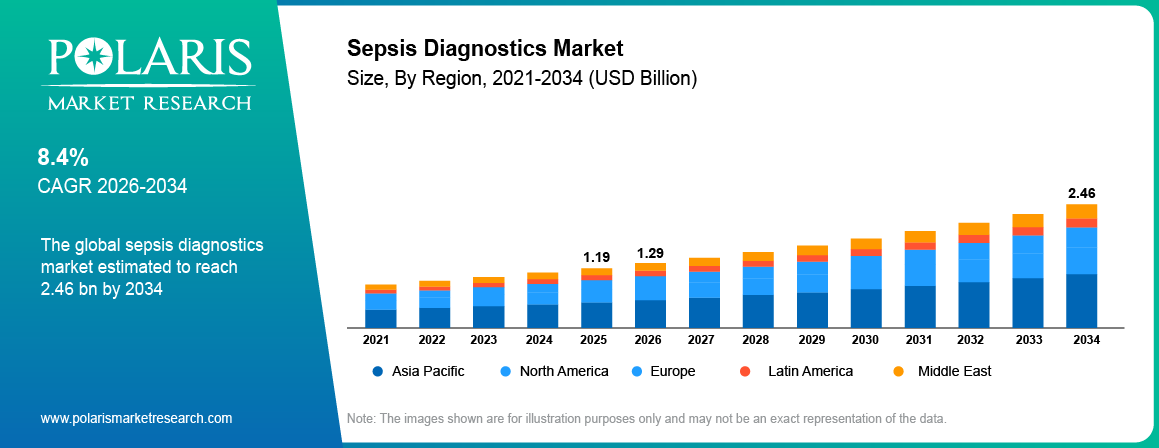
The sepsis diagnostics market size was valued at USD 1.19 billion in 2025. It is projected to exhibit a CAGR of 8.4% from 2026 to 2034. Rising number of sepsis cases and the need for early diagnosis are supporting market growth. Increasing use of advanced diagnostic tests and better healthcare facilities is also contributing to overall market growth.
Market Statistics
Sepsis Diagnostics Market Key Takeaways
- North America held the largest share of the market at 44.5% in 2025. Strong healthcare systems and early use of diagnostic technologies supported its growth.
- Asia Pacific is expected to grow at a CAGR of 9.6% during 2026–2034. Higher healthcare spending and a growing patient population are driving the market.
- Assay kits & reagents are expected to grow at a CAGR of 8.8% during the forecast period. Regular use in sepsis testing is helping demand.
- Point-of-care testing is expected to witness growth of CAGR 9.3% during the forecast period. The segment is witnessing high growth owing to its ability to provide faster results and enable physicians to start treatment earlier.
- Microbiology segment accounted for 49.11% of market revenue in 2025. It is still being used extensively to identify disease-causing pathogens in clinical setting.
Note: Figures and projections outlined in this report are the result of Polaris Market Research’s proprietary analytical processes, grounded in the latest available datasets and market observations.
Sepsis Diagnostics Market Definition & Overview
Sepsis diagnostics are medical tests used to detect sepsis and identify the cause of infection. These tests help doctors understand the patient’s condition and make faster treatment decisions. They can help identify pathogens, check antimicrobial susceptibility, and assess the body’s response to infection.
The sepsis diagnostics market includes microbiology, molecular, immunoassay, and host-response diagnostic technologies. It also includes instruments, reagents, assay kits, and other consumables. Microbiology testing includes methods such as blood culture and antimicrobial susceptibility testing. Molecular diagnostics include PCR, syndromic panels, and other nucleic-acid-based tests. Host-response diagnostics use biomarkers and immune response patterns to support sepsis assessment.
Sepsis diagnostic tests are used in both laboratories and point-of-care settings. Key care settings include emergency departments, intensive care units, and hospital wards. Homecare is not considered a major sepsis diagnostic channel because suspected sepsis usually requires clinical assessment and hospital-based testing.
The market is driven by the need for faster diagnosis and early treatment. There is also growing demand for rapid pathogen identification and better antimicrobial use. Advances in molecular and host-response diagnostics are adding new options to traditional culture-based testing. Regulatory changes, clinical evidence, and adoption by healthcare providers also influence the market.
How Is Sepsis Diagnosed? Step-by-Step Diagnostic Pathway
Sepsis diagnosis starts when a healthcare provider suspects an infection with signs of organ dysfunction. The diagnostic process usually follows several steps.
- Clinical suspicion: Doctors assess symptoms, medical history, vital signs, and signs of infection. They look for changes that may indicate sepsis or worsening illness.
- qSOFA/SOFA assessment: Clinical scoring tools such as qSOFA and SOFA may be used to assess the risk of organ dysfunction. These tools support clinical assessment but are not used alone to diagnose sepsis.
- Cultures and lactate testing: Blood cultures and other relevant cultures are collected to identify possible pathogens. Blood lactate may also be measured to assess the severity of the patient’s condition.
- Biomarker and host-response testing: Biomarkers and host-response tests can provide additional information about infection and the body’s response. These tests may support faster clinical decisions.
- Molecular identification and AST: Molecular tests can help identify pathogens more quickly than traditional culture methods in some cases. Antimicrobial susceptibility testing (AST) helps guide antibiotic selection.
- Treatment and de-escalation: Test results are reviewed along with the patient’s clinical condition. Antibiotic treatment may then be adjusted, narrowed, or stopped when appropriate to support targeted treatment and antimicrobial stewardship.
Sepsis Diagnostic Technologies Compared
| Technology | What It Measures | Typical Time to Result | Main Strength | Main Limitation | Best-Fit Setting |
| Blood Culture (Microbiology) | Growth of bacteria or fungi from a blood sample | 24–72 hours for positivity; longer for full identification and AST | Provides confirmatory results and supports antimicrobial susceptibility testing | Slow and may be negative in some sepsis cases | Central laboratory |
| Molecular ID After Positive Culture | Pathogen DNA and resistance markers after a culture becomes positive | About 1 hour after culture positivity | Provides rapid species identification and resistance information | Requires a positive culture first | Central laboratory |
| Direct-from-Blood Molecular Testing | Pathogen DNA directly from whole blood | About 3–5 hours | Does not require waiting for culture growth | Covers a fixed range of pathogens and can be costly | Laboratory and high-risk ICU |
| Biomarker Immunoassays | Inflammation and perfusion markers such as PCT, CRP, lactate, and IL-6 | Less than 1 hour on many analyzers | Widely available and useful for supporting treatment decisions | Markers are not specific to sepsis | Laboratory and point-of-care |
| Host-Response Tests | Immune-cell activity or gene expression linked to the body’s response to infection | About 10–90 minutes | Supports early risk assessment, especially in suspected sepsis | Newer technology with developing reimbursement | Emergency department and acute care |
| AI Early Warning and Clinical Decision Support | EHR data such as vital signs, laboratory results, and clinical notes | Continuous | Can identify risk before clear clinical suspicion | Risk of alert fatigue and need for EHR integration | Hospital-wide |
Source: Polaris Market Research Analysis
FDA-Cleared and Pipeline Sepsis Diagnostics, 2019–2026
The sepsis diagnostics market has seen continued development in rapid molecular, host-response, and AI-based technologies. FDA clearances and clinical developments have expanded the range of tools available for faster diagnosis and risk assessment. The table below highlights selected technologies and developments from 2019 to 2026.
| Product | Company | Class | Regulatory Status | Result Time |
| TREWS | Bayesian Health | AI early warning using EHR data | FDA 510(k), May 2026 | Continuous |
| Sepsis ImmunoScore | Prenosis (Roche distribution) | AI-based risk score | FDA De Novo, April 2024 | Minutes after data input |
| TriVerity | Inflammatix | Host-response, 29-gene mRNA | FDA authorized, January 2025 | About 30 minutes |
| IntelliSep | Cytovale | Host-response, cellular analysis | FDA cleared | Less than 10 minutes |
| SeptiCyte RAPID | Immunexpress | Host-response, gene expression | FDA cleared; CE marked; TGA pediatric clearance | About 1 hour |
| MeMed BV | MeMed | Host-response, bacterial vs. viral | FDA cleared | About 15 minutes |
| T2Bacteria / T2Candida | T2 Biosystems | Direct-from-whole-blood molecular testing | FDA cleared | 3–5 hours |
| MALDI Biotyper CA | Bruker | Mass spectrometry microbial identification | FDA-cleared expanded claims, October 2025 | Minutes after culture positivity |
| DxH 900 Early Sepsis Indicator (MDW) | Beckman Coulter (Danaher) | Hematology biomarker | FDA cleared; CE marked | With routine CBC |
| Nu.Q Finger-Prick Test | Volition | Nucleosome point-of-care lateral flow test | Pipeline; announced April 2026 | Rapid point-of-care testing |
| iFAST One | iFAST Diagnostics | Rapid antimicrobial susceptibility testing | UKCA certified; EU rollout planned for 2026/27 | ≤3 hours from positive culture |
Source: Polaris Market Research Analysis
Market Dynamics
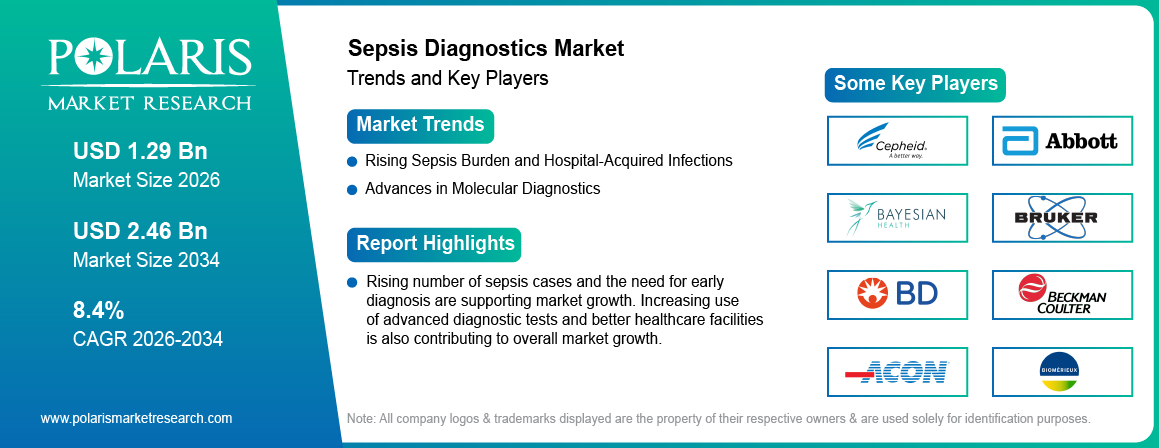
Sepsis diagnostics are changing as hospitals focus on earlier recognition, faster testing, and better antibiotic use. The high burden of sepsis is also increasing the need for reliable diagnostic tools. At the same time, newer molecular and host-response tests are creating opportunities beyond conventional culture-based testing.
Market Driver: Rising Sepsis Burden and Hospital-Acquired Infections
Sepsis remains a major burden on hospitals and healthcare systems. The CDC estimates that 1.7 million adults are hospitalized with sepsis each year in the U.S., with 350,000 resulting in hospital death or discharge to hospice. This high burden is increasing the need for faster diagnosis and better monitoring. Hospitals are also strengthening sepsis programs to improve patient outcomes and reduce delays in care (Source: cdc.gov).
Market Driver: Advances in Molecular Diagnostics
Molecular testing is helping reduce the time needed to identify pathogens in sepsis cases. A 2024 study found that the BioFire Blood Culture Identification 2 panel produced results about 1 day, 5 hours, and 35 minutes faster than culture. Another study found that rapid molecular identification reduced the median time to optimal antimicrobial therapy from 45.7 hours to 25.5 hours. These results support demand for faster pathogen identification and treatment decisions (Source: pmc.ncbi).
Market Opportunity: Host-Response Testing in Emergency Departments
Host-response testing offers an opportunity to improve early sepsis assessment in emergency departments. The IntelliSep test provides a result in less than 10 minutes from a blood sample. A study across five emergency departments included 572 patients and found that the test could support rapid sepsis risk assessment. Wider use in ED triage could help clinicians identify high-risk patients earlier and support faster care decisions (Source: pubmed.ncbi).
Market Opportunity: AI and Integrated Sepsis Diagnostic Platforms
AI can create new opportunities by combining patient data with diagnostic results. The CDC reported that 5,430 U.S. acute care and critical access hospitals participated in its 2025 NHSN annual survey. The survey found improvements across 24 of 28 sepsis program priorities. This growing focus on digital tools and sepsis programs creates scope for AI-based alerts, decision support, and integrated diagnostic platforms that fit existing hospital workflows (Source: cdc.gov).
Market Restraint: High Cost and Limited Access
The cost of advanced sepsis diagnostics can limit adoption, especially in smaller hospitals and resource-constrained settings. Molecular and host-response tests may require specialized instruments, trained staff, and additional laboratory support. Access can also vary between urban and rural healthcare facilities. These factors can make conventional culture and routine biomarkers more practical in some settings, even when faster technologies are available.
Role of Blood Culture Testing in Sepsis Diagnosis
Blood culture testing is the traditional gold-standard method for diagnosing sepsis. It provides information about the type of bacteria or fungi that is causing the infection so that the physician can confirm the source of infection. The test also helps in the selection of the correct antibiotics to treat the infection. Because of its proven reliability, blood culture testing is commonly used in hospitals and diagnostic laboratories.
Sepsis Biomarkers & Early Detection
To find infections early and understand how serious the condition is sepsis biomarkers help doctors. Procalcitonin (PCT) testing checks a marker that usually increases during bacterial infections and helps detect sepsis. C-reactive protein (CRP) monitoring is used to assess inflammation in the body and monitor the progress of the infection. The detection of inflammatory markers indicates the response of the body’s immune system to the infection. These tests help in the early risk assessment so that physicians can identify patients who need immediate care. They also improve clinical decision making by supporting doctors choose the right treatment and monitor the patient’s recovery.
Sepsis Diagnostics Market Segmentation Analysis
Product-Based Insights
The sepsis diagnostics market is segmented into instrument, blood culture media, assay kits & reagents, software, and related solutions. Among these, assay kits & reagents for sepsis hold the largest share and are projected to grow at a CAGR of 8.8% during the forecast period. They are largely used in routine testing across different workflows. These sepsis diagnostic products are used regularly, which supports repeat demand. Products such as blood culture media and other sepsis diagnostic consumables are essential in testing processes. Their wide use across systems strengthens the demand for sepsis testing kits.
The software segment is expected to grow at the fastest pace. Growth is driven by the increasing use of digital systems in labs and hospitals. Sepsis diagnostic software is now used beyond basic reporting. It helps with data analysis, result integration, and monitoring. The use of AI in sepsis diagnostics supports better insights and decisions. Tools like laboratory analytics software and sepsis reporting tools are becoming more common. The role of predictive sepsis software is also expanding as data-driven diagnostics gain importance.
Technology-Based Insights
By technology, the market is segmented into microbiology, molecular diagnostics, immunoassays, flow cytometry, and others. Microbiology sepsis testing holds the largest share, accounting for 49.11% of revenue in 2025. Techniques such as blood culture sepsis diagnostics are widely used for confirmation. These sepsis diagnostic technologies help with accurate pathogen confirmation in sepsis. Despite a longer turnaround time, culture-based sepsis testing remains trusted in clinical practice. Its strong adoption across hospitals and labs helps its leading position.
Molecular diagnostics is the fastest-growing segment. Molecular sepsis testing helps reduce turnaround time and improve detection accuracy. This segment includes PCR, syndromic panels, direct-from-blood molecular testing, and next-generation sequencing (NGS). PCR sepsis diagnostics and NGS sepsis diagnostics are becoming more common. Multiplex sepsis assays allow the detection of multiple pathogens in one test. These tools support rapid clinical decisions by reducing the time needed for pathogen identification. They are often used with traditional methods to improve diagnosis and treatment planning.
Immunoassays and flow cytometry are used in specific diagnostic settings. Immunoassay sepsis diagnostics support biomarker analysis in sepsis and help track disease progression. Flow cytometry sepsis testing is used for detailed immune assessment in complex cases. These methods contribute to advanced sepsis diagnostics by adding more clinical insights. They also support immune profiling in sepsis, helping improve understanding of patient response.
Method-Based Insights
By method, the sepsis diagnostics market is segmented into automated and conventional methods. Automated methods are gaining importance as hospitals and laboratories look for faster and more consistent testing. Automated systems can support sample processing, pathogen detection, result analysis, and reporting with less manual work. They also help reduce processing time and improve workflow efficiency. Their use is increasing with the adoption of advanced molecular, microbiology, and biomarker-based diagnostic systems.
Conventional methods continue to have a strong role in sepsis testing. The segment accounted for 42.6% of the market revenue in 2025. Blood culture and other manual laboratory procedures remain widely used for pathogen identification and confirmation. These methods are familiar to healthcare professionals and are available across many laboratories. However, longer processing times and greater manual involvement can limit their use when rapid results are needed.
Testing Type-Based Insights
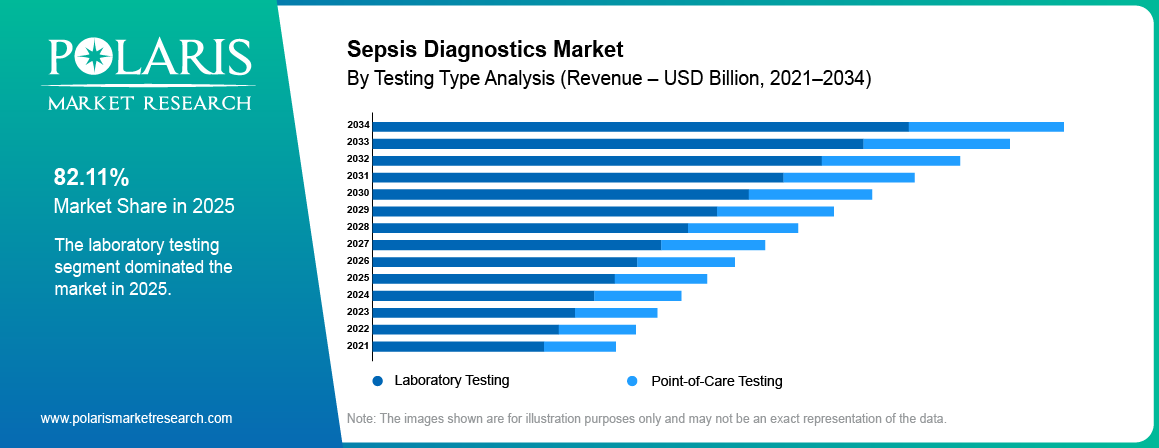
By testing type, the sepsis diagnostics market is segmented into point-of-care testing and laboratory testing. Laboratory testing holds the larger share of the market, accounting for 82.11% of market revenue in 2025. Centralized sepsis diagnostics in hospital laboratories support detailed analysis and confirmation. These laboratories use advanced systems and skilled staff to process complex tests and large sample volumes. Blood culture, molecular testing, and biomarker testing are commonly used in laboratory settings.
Point-of-care testing is gaining importance due to the need for faster results. It supports testing closer to the patient and can help in urgent care settings. Bedside sepsis diagnostics and portable testing systems are useful in emergency departments and intensive care units. Point-of-care testing is expected to witness significant growth of CAGR 9.3% during the forecast priod.
Both testing types support different needs in sepsis care. Laboratory testing supports confirmation and detailed analysis, while point-of-care testing supports faster initial assessment. Their combined use is helping healthcare providers build more connected sepsis diagnostic workflows.
Pathogen-Based Insights
Based on pathogen, the market is segmented into bacterial sepsis, fungal sepsis, viral sepsis, and others. Bacterial sepsis diagnostics hold the largest share, accounting for 84.9% of market revenue in 2025. Bacterial infections are a common cause of sepsis and drive demand for rapid pathogen identification. Hospitals use blood culture, molecular tests, and multiplex pathogen panels to support timely diagnosis and treatment decisions.
The differentiation between gram-positive and gram-negative bacteria is important for treatment decisions. Diagnosing these infections helps clinicians select suitable therapies and identify possible antimicrobial resistance. Multiplex pathogen panels can detect multiple organisms in a single test. These tools support faster pathogen identification and targeted treatment.
Viral sepsis diagnostics are also gaining attention as viral infections can contribute to severe systemic illness. The segment is projected to grow at a CAGR of 8.9% during the forecast period. Testing can help identify viral causes when bacterial infection is not confirmed. Molecular methods are commonly used for viral pathogen detection. Growing interest in broader pathogen identification is supporting the inclusion of viral sepsis within the sepsis diagnostics market.
Fungal sepsis diagnostics represent a smaller but important segment. These cases are more common in high-risk patients and can be difficult to identify. Invasive fungal infection testing supports diagnosis in critical care settings. Specialized testing helps clinicians identify fungal pathogens and select appropriate treatment.
Application / Care Setting-Based Insights
By application and care setting, the sepsis diagnostics market is segmented into emergency departments (ED), intensive care units (ICU), general wards, adult care, pediatric care, and neonatal care. The ED segment accounted for 34.8% of market revenue in 2025. Rapid testing in the ED can support early assessment and patient triage. ICU settings require frequent monitoring and advanced diagnostic testing for critically ill patients. General wards also use sepsis diagnostics to monitor patients with suspected or developing infections.
The market also covers adult, pediatric, and neonatal patients. Diagnostic needs can differ across these groups due to differences in symptoms, risk factors, and clinical assessment. The paediatric segment is expected to grow at a CAGR of 9.7% during the forecast period. Paediatric and neonatal sepsis require careful testing and monitoring, as signs can be less specific. Growing use of rapid and reliable diagnostic tools across these care settings is supporting wider adoption of sepsis diagnostics.
End User-Based Insights
By end user, the market is segmented into hospitals and clinics, pathology and reference laboratories, research institutes, and others. Hospitals and clinics’ sepsis diagnostics hold the largest share, accounting for 79.8% of market revenue in 2025. Clinics’ sepsis testing also supports early case identification. Most sepsis diagnoses in hospitals require fast testing and immediate decisions. These settings rely on critical care sepsis diagnostics for timely treatment. Strong demand and regular use support hospital procurement of sepsis tests.
Pathology and reference laboratories’ sepsis testing is expected to grow at the fastest pace, registering a CAGR of 9.5% during the forecast period. These laboratories support advanced and large-scale testing. The use of outsourced sepsis testing is increasing across healthcare systems. These labs provide specialized sepsis diagnostics for complex cases. They also support high-complexity sepsis testing using advanced technologies. This helps improve efficiency and diagnostic capability.
Sepsis diagnostics research institutes play a key role in market development. They support biomarker discovery and clinical validation studies. Their work drives sepsis diagnostic innovation and helps develop future solutions. Translational sepsis research also helps connect research with clinical use. These initiatives contribute to the development of new sepsis diagnostic platforms and support future market expansion.
Sepsis Diagnostics Market Segment Snapshot
| Segment | Sub-segments | Leading Segment (2025) | Fastest-Growing Segment | Growth Logic |
| Product | Instruments, blood culture media, assay kits & reagents, software | Assay kits & reagents | Software | Recurring consumable use and growing use of digital clinical decision support |
| Technology | Microbiology, molecular (PCR, syndromic, direct-from-blood, NGS), immunoassays, flow cytometry | Microbiology | Molecular | Need for faster pathogen identification and shorter turnaround times |
| Method | Automated, conventional | Automated | Automated | Automation can reduce manual work and support laboratory efficiency |
| Testing Type | Laboratory, point-of-care | Laboratory | Point-of-care | Growing demand for faster testing in emergency and acute care |
| Pathogen | Bacterial (Gram-positive/Gram-negative), fungal, viral, others | Bacterial | Fungal | Demand for specialized testing in high-risk and complex infections |
| Application / Care Setting | ED, ICU, general ward; adult, paediatric, neonatal | ED/ICU | Paediatric/neonatal | Growing focus on early diagnosis and patient-specific sepsis care |
| End User | Hospitals & clinics, pathology & reference laboratories, research institutes | Hospitals & clinics | Pathology & reference laboratories | Increasing demand for specialized and outsourced high-complexity testing |
Source: Polaris Market Research Analysis
Real-World Use Cases of Sepsis Diagnostics
Sepsis diagnostic technologies are being used in hospitals to support earlier detection, risk assessment, and treatment decisions. Real-world use cases show how these tools can fit into emergency care, intensive care, and hospital workflows. The following examples highlight selected deployments and clinical applications.
| Healthcare Organization | Diagnostic Use Case | Technology / Approach | Key Benefit |
| FMOL Health | Early sepsis risk identification | AI-based clinical decision support | Supports earlier identification of patients at risk of sepsis |
| Tampa General Hospital | Sepsis detection and clinical monitoring | AI and data-based sepsis tools | Supports faster clinical assessment and treatment decisions |
| Cleveland Clinic | Early detection and sepsis care | AI-enabled clinical decision support | Helps clinicians identify sepsis risk and improve response |
| Hospital Emergency Departments | Rapid assessment of suspected sepsis | Host-response and point-of-care diagnostics | Supports faster triage and early treatment decisions |
Source: Polaris Market Research Analysis
Sepsis Diagnostics Market by Region
The sepsis diagnostics market is covered across North America, Europe, Asia Pacific, Latin America, and the Middle East & Africa. Regional growth is influenced by healthcare infrastructure, diagnostic adoption, clinical awareness, and demand for faster testing.
North America
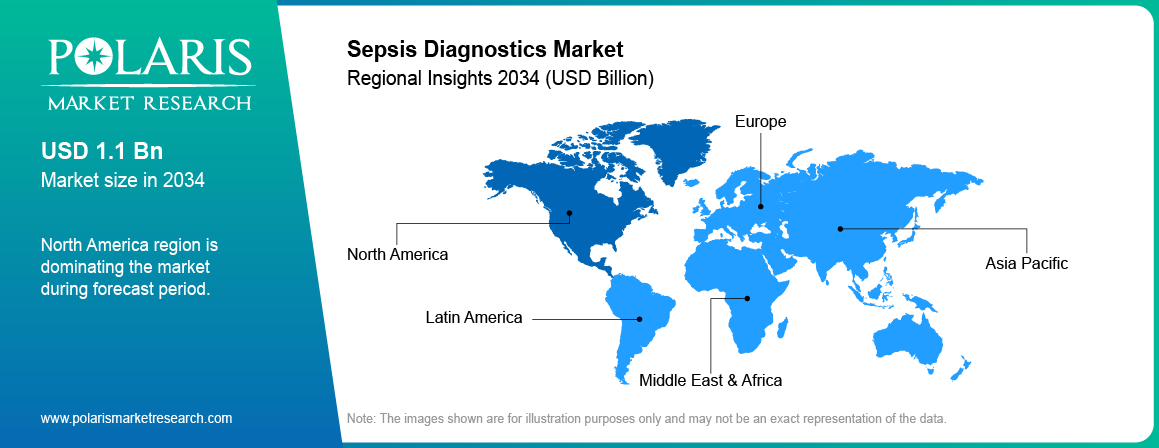
The North America sepsis diagnostics market held the largest share, accounting for 44.5% of revenue in 2025. The U.S. is the main contributor to the regional market. Strong hospital infrastructure and wider use of advanced diagnostic technologies support market growth. Demand for rapid molecular and host-response testing is also increasing as hospitals focus on earlier sepsis detection and better treatment decisions.
Europe
The Europe sepsis diagnostics market represents a significant share of the global market. Germany is one of the key markets in the region, supported by developed laboratory infrastructure and strong healthcare systems. The UK and France also contribute to regional demand. Greater focus on infection control, antimicrobial stewardship, and early sepsis management is supporting the adoption of advanced diagnostic technologies.
Asia Pacific
The Asia Pacific sepsis diagnostics market is expected to grow at the fastest pace, registering a CAGR of 9.6% during 2026–2034. China is a major contributor to regional growth. Rising healthcare spending and improving access to diagnostic services are supporting market expansion. India and Japan are also seeing greater demand for rapid testing as hospitals strengthen critical care and diagnostic capacity.
Latin America
The Latin America sepsis diagnostics market is gaining attention as healthcare access improves across the region. Brazil is a key market, supported by its large healthcare system and growing demand for diagnostic services. Mexico and Argentina also offer growth opportunities. Demand for affordable and accessible sepsis testing is increasing as healthcare providers focus on earlier diagnosis and improved patient management.
Middle East & Africa
The Middle East & Africa sepsis diagnostics market is developing steadily, supported by healthcare investments and improving diagnostic infrastructure. Saudi Arabia is a key market in the region, with continued investment in hospital and laboratory services. The UAE and South Africa also contribute to regional demand. Point-of-care testing is gaining importance as healthcare providers seek faster diagnosis and treatment decisions.
Sepsis Diagnostics Competitive Landscape & Leading Diagnostic Companies
Key players operating in the sepsis diagnostics market include Thermo Fisher Scientific, Abbott Laboratories, BioMérieux, Danaher Corporation, Roche Diagnostics, Siemens Healthineers, BD, QIAGEN, Sysmex Corporation, Beckman Coulter, Hologic, LumiraDx, Cepheid, ACON Laboratories, and Vericel Corporation. These sepsis diagnostics companies shape the current sepsis diagnostics competitive landscape through ongoing product development and market presence.
The market is gradually shifting toward faster and more practical solutions. Companies are working on sepsis diagnostic platforms that combine testing with interpretation. There is a steady focus on sepsis diagnostic innovation, especially in molecular testing and automation. Sepsis market competition now depends not only on accuracy, but also on speed and ease of use in clinical settings.
Different groups of players compete in different ways. Microbiology leaders in sepsis rely on long-standing hospital relationships and installed systems. Molecular sepsis diagnostics companies focus on faster detection and better specificity. Point-of-care sepsis innovators work on portable and easy-to-use solutions for frontline care. At the same time, sepsis analytics companies are becoming more relevant by helping interpret results. This shows clear diagnostic platform differentiation across the market.
Market position is influenced by ongoing developments. Companies are entering sepsis diagnostics partnerships to expand their reach. Regular sepsis diagnostics product launches and diagnostic regulatory approvals continue to shape the market. These actions reflect broader sepsis market strategy and current sepsis commercialization trends.
Abbott Laboratories is a well-established player in infectious disease diagnostics. Its offerings support Abbott’s sepsis diagnostics and expand access to point-of-care diagnostics by Abbott. The company benefits from strong distribution and presence among rapid sepsis testing companies and hospital diagnostics suppliers.
BioMérieux holds a strong position in microbiology. Its solutions support BioMérieux sepsis diagnostics and microbiology-based sepsis testing. The company is known among infectious disease diagnostics companies. Its systems are widely used in hospital laboratory diagnostics, especially for pathogen identification platforms.
List of Key Companies
- Abbott Laboratories
- ACON Laboratories
- BD (Becton, Dickinson and Company)
- Bayesian Health
- Beckman Coulter (Danaher)
- bioMérieux
- Bruker
- Cepheid (Danaher)
- Cytovale
- Danaher Corporation
- Hologic
- Immunexpress
- Inflammatix
- MeMed
- Prenosis
- QIAGEN
- Roche Diagnostics
- Siemens Healthineers
- Sysmex Corporation
- T2 Biosystems
- Thermo Fisher Scientific
- Volition (VolitionRx)
Sepsis Diagnostics Market Vendor Positioning
| Position | Companies | Core Sepsis Offering | How They Compete |
| Microbiology | bioMérieux, BD, Thermo Fisher Scientific | Blood culture, pathogen testing, AST, and PCT tests | Strong lab presence and broad testing range |
| IVD Platforms | Danaher (Beckman Coulter, Cepheid), Roche Diagnostics, Siemens Healthineers, Abbott Laboratories, Sysmex Corporation, QIAGEN | Biomarker, molecular, and blood-based testing | Wide product range and hospital partnerships |
| Mass Spectrometry | Bruker | MALDI-TOF pathogen identification and rapid AST | Fast identification after culture |
| Direct-from-Blood Molecular | T2 Biosystems | Direct pathogen testing from blood | No need to wait for culture growth |
| Host-Response Testing | Cytovale, Immunexpress, Inflammatix, MeMed | Tests based on the body's response to infection | Fast results and early risk assessment |
| AI and Digital | Prenosis, Bayesian Health | AI-based risk scores and early warning systems | EHR integration and faster risk identification |
| Point-of-Care | Volition | Finger-prick nucleosome testing | Rapid and easy bedside testing |
Source: Polaris Market Research Analysis
Recent Developments
-
September 2026: Tampa General Hospital became the first academic health system in the U.S. Southeast to adopt MeMed BV in its sepsis pathway. The FDA-cleared host-response test helps distinguish bacterial from viral infections and provides results in about 15 minutes. (Source: tgh.org)
-
June 2026: Bruker expanded its microbiology and sepsis diagnostics portfolio at ASM Microbe 2026. The company introduced new molecular testing and rapid antimicrobial susceptibility testing (AST) solutions to support faster diagnosis and treatment decisions. (Source: ir.bruker.com)
-
April 2026: The U.S. FDA granted 510(k) clearance to Bayesian Health's Targeted Real-Time Early Warning System (TREWS). The AI-based tool is designed to identify sepsis risk before clinical suspicion and support earlier treatment decisions. (Source: .accessdata.fda.gov)
-
April 2026: bioMérieux published a G7 health-economic analysis on bloodstream infection diagnostics. The analysis found that faster pathogen identification and antimicrobial susceptibility testing can reduce healthcare costs across the G7 health systems studied. (Source: biomerieux.com)
-
March 2026: Cytovale presented real-world data from more than 34,000 emergency department patients at SCCM 2026. The data linked use of IntelliSep with a 19% reduction in sepsis mortality across Franciscan Missionaries of Our Lady Health hospitals. (Source: cytovale.com)
-
February 2026: Immunexpress published a multi-center study on SeptiCyte RAPID. The study found that higher test scores were strongly associated with blood-culture positivity, with results available about 90 minutes after blood collection. (Source: immunexpress.com)
-
October 2025: Bruker received FDA clearance for additional claims for its MALDI Biotyper CA System. The expanded clearance increased the system's cleared library to 549 microbial species. (Source: bruker.com)
-
January 2025: Inflammatix received FDA marketing authorization for the TriVerity Test System. The test uses 29 immune-gene signals to assess bacterial or viral infection and illness severity. (Source: inflammatix.com)
Regulatory, Reimbursement and Adoption Considerations
Regulatory approval is an important factor in the adoption of sepsis diagnostic technologies. In the U.S., manufacturers may use FDA 510(k) clearance or the De Novo pathway, depending on the type and risk of the diagnostic. These pathways help establish the safety and performance of new diagnostic products.
In Europe, diagnostic products must meet applicable CE marking and In Vitro Diagnostic Regulation (IVDR) requirements. Regulatory requirements can affect product launches and adoption across healthcare systems.
Reimbursement also affects the use of new sepsis diagnostics. In the U.S., hospitals use CMS SEP-1 measures as part of sepsis quality reporting. The CDC Hospital Sepsis Program Core Elements also support hospitals in building structured sepsis programs. These programs encourage early recognition, timely treatment, monitoring, and quality improvement.
Paediatric care is another important area. The 2026 Surviving Sepsis Campaign guidance for children provides updated recommendations for managing paediatric sepsis and septic shock. These developments can increase demand for diagnostic tools that support faster and more accurate assessment in children.
Sepsis Diagnostics Market Future Outlook: Rapid Molecular Tests, Host Response, AI & POC Diagnostics
The sepsis diagnostics market is expected to grow as healthcare providers continue to focus on early and accurate infection detection. The demand for rapid testing, molecular diagnostics, biomarker-based testing, and point-of-care solutions is likely to rise. The speed and accuracy sepsis of diagnosis is expected to boost with AI based tools. As hospitals work to reduce sepsis-related mortality and improve patient outcomes, advanced diagnostic technologies are expected to play a larger role in critical care.
Why Market Estimates Vary Across Reports
Public estimates for the sepsis diagnostics market often differ across sources. This is mainly due to differences in sepsis diagnostics market methodology and how each firm defines the market. Some reports use a broader sepsis diagnostics report scope, including biomarker assays, software, and related tools. Others follow a narrower approach focused on specific testing categories.
These differences explain why market estimates vary across reports. Variations in timelines and assumptions lead to sepsis diagnostics market forecast differences. As a result, numbers may not match across sources, even within the same sepsis diagnostics industry analysis.
Market Segmentation
By Product Outlook (Revenue, USD Billion, 2021-2034)
- Instrument
- Blood Culture Media
- Assay Kits & Reagents
- Software
By Technology Outlook (Revenue, USD Billion, 2021-2034)
- Microbiology
- Molecular Diagnostics
- Immunoassays
- Flow Cytometry
- Others
By Method Outlook (Revenue, USD Billion, 2021-2034)
- Automated
- Conventional
By Testing Type Outlook (Revenue, USD Billion, 2021-2034)
- Laboratory Testing
- Point-of-Care Testing
By End User Outlook (Revenue, USD Billion, 2021-2034)
- Hospitals & Clinics
- Pathology & Reference Laboratories
- Research Institutes
- Others
By Application / Care Setting Outlook (Revenue, USD Billion, 2021-2034)
- Emergency Departments
- Intensive Care Units
- General Wards
- Adult Care
- Paediatric Care
- Neonatal Care
By Pathogen Outlook (Revenue, USD Billion, 2021-2034)
- Bacterial Sepsis
- Gram Positive Bacteria
- Gram Negative Bacteria
- Fungal Sepsis
- Others
By Regional Outlook (Revenue, USD Billion, 2021-2034)
- North America
- US
- Canada
- Europe
- Germany
- France
- UK
- Italy
- Spain
- Netherlands
- Russia
- Rest of Europe
- Asia Pacific
- China
- Japan
- India
- Malaysia
- South Korea
- Indonesia
- Australia
- Vietnam
- Rest of Asia Pacific
- Middle East & Africa
- Saudi Arabia
- UAE
- Israel
- South Africa
- Rest of Middle East & Africa
- Latin America
- Mexico
- Brazil
- Argentina
- Rest of Latin America
How Is the Report Valuable for an Organization?
The report helps organizations understand the sepsis diagnostics market, key technologies, major segments, regional trends, and competitive developments. It provides insights into market growth, adoption patterns, and emerging diagnostic approaches.
Organizations can use these insights to identify growth opportunities, assess market trends, understand competitor strategies, and support business planning. The report also helps decision-makers evaluate developments in molecular, host-response, and AI-based sepsis diagnostics.
Research Methodology
The research methodology combines primary and secondary research to assess the sepsis diagnostics market. Secondary research covers company reports, regulatory sources, government publications, scientific studies, industry databases, and other reliable sources. Primary research includes interviews and discussions with industry participants and subject-matter experts.
Market estimates are developed by analyzing historical data, current market conditions, technology adoption, healthcare trends, and industry developments. The analysis covers market size, growth rates, segmentation, regional trends, competitive developments, and key market drivers and challenges. Data is reviewed and cross-checked to improve consistency and reliability across the report.
Report Scope
The sepsis diagnostics market report provides revenue forecasts, competitive analysis, and key sepsis diagnostics industry trends. It includes detailed sepsis diagnostics segmentation across product, technology, testing type, end user, pathogen, and region. The report also covers the outlook up to the sepsis diagnostics forecast for the 2034 period.
The sepsis diagnostics report scope is designed to support strategic planning and market entry decisions. It helps with competitive benchmarking, partnership evaluation, and regional opportunity assessment for stakeholders in the sepsis diagnostics market.
| Report Attributes | Details |
| Market Size in 2025 | USD 1.19 Billion |
| Market Size in 2026 | USD 1.29 Billion |
| Revenue Forecast by 2034 | USD 2.46 Billion |
| CAGR | 8.4% from 2026 to 2034 |
| Base Year | 2025 |
| Historical Data | 2021-2024 |
| Forecast Period | 2026-2034 |
| Quantitative Units | Revenue in USD billion and CAGR from 2026 to 2034 |
| Report Coverage | Revenue Forecast, Market Competitive Landscape, Growth Factors, and Trends |
| Segments Covered |
|
| Regional Scope |
|
| Competitive Landscape |
|
| Report Format |
|
| Customization | Report customization as per your requirements with respect to countries, regions, and segmentation |
Source: Polaris Market Research Analysis
Sepsis Diagnostics Market FAQ's
The sepsis diagnostics market was valued at USD 1,19 billion in 2025 and is projected to reach USD 2.46 billion by 2034, growing at a CAGR of 8.4%. North America held the largest share at 44.5% in 2025, while Asia Pacific is expected to grow fastest.
Sepsis diagnosis combines clinical assessment with tests such as blood cultures, lactate, procalcitonin, and CRP. Molecular pathogen panels, antimicrobial susceptibility testing, and host-response tests provide additional information to identify infection, assess severity, and support timely treatment decisions.
No single test confirms sepsis. Blood culture helps identify the causative pathogen but can take 24 to 72 hours. Biomarkers, molecular tests, and host-response diagnostics provide additional information. Doctors generally combine multiple tests with clinical assessment to support diagnosis and treatment.
Host-response tests measure the body's immune response to infection. Examples include IntelliSep, SeptiCyte RAPID, TriVerity, and MeMed BV. These tests provide rapid information about sepsis risk or infection type and support early assessment, particularly in emergency and acute care settings.
AI analyzes electronic health records, vital signs, laboratory results, and other clinical data to identify sepsis risk. AI tools can provide early alerts and support clinical decisions. Examples include Prenosis's Sepsis ImmunoScore and Bayesian Health's TREWS.
Microbiology led the technology segment with a 49.11% revenue share in 2025. Molecular diagnostics is the fastest-growing technology segment. By product, assay kits and reagents led the market and are projected to grow at a CAGR of 8.8% through 2034.
Leading companies include bioMérieux, BD, Thermo Fisher Scientific, Danaher, Roche Diagnostics, Siemens Healthineers, Abbott, Bruker, T2 Biosystems, Cytovale, Immunexpress, Inflammatix, MeMed, Prenosis, and Bayesian Health.
Key trends include AI in diagnostics. Biomarker panels are expanding. Molecular testing is growing. Point-of-care use is increasing. Workflow integration is improving.
Diagnostic manufacturers, investors, and distributors should buy this report. Hospital procurement teams and strategy leaders can use it. Research institutions and organizations exploring this market can benefit.
Point-of-care testing reduces time to results. It helps in faster triage. It supports quick treatment decisions in emergency and critical care.
Download Sample Report of Sepsis Diagnostics Market
Please fill out the form to request a customized copy of the research report.


