
Gluten-free Baking Mixes Market Size, Trends & Forecast 2026-2034
REPORT DETAILS
Gluten-free Baking Mixes Market Summary
The global gluten-free baking mixes market size was valued at USD 541.57 million in 2025. The gluten-free baking mixes CAGR is projected to be 7.61% between 2026 and 2034. Gluten-free baking mixes typically include ready-to-use blends for bread, cakes, cookies, and pizza bases. They are distinct from “premixes” or plain flour blends as they often include functional ingredients such as leavening systems and binders. They are intended to improve baking performance. Expanding distribution channels and growing product innovation and diversification are a few of the key factors driving market growth. Consumers are increasingly looking for trusted gluten-free claims and consistent taste/texture outcomes. So, clear labeling and certification credibility are becoming purchase drivers.
Market Statistics
Key Takeaways
- The conventional stores segment led the market in 2025. The segment’s dominance is attributed to the widespread reach of conventional stores gluten-free baking mixes and their ability to cater to everyday consumer demands.
- The bread segment is anticipated to witness substantial growth. The staple nature of bread in daily diets across various cultures is fueling the robust growth of the segment.
- The North America gluten-free baking mixes market led the global market in 2025. This is due to the presence of a well-established gluten-free food culture. High consumer awareness about gluten-related health conditions also drives the region’s leading market position.
- Asia Pacific is projected to witness the fastest growth. The Asia Pacific gluten-free baking mixes growth is driven by rising disposable incomes and growing awareness of gluten-related disorders.
- Online availability is strengthening category accessibility. This is especially the case in emerging markets where specialty gluten-free shelf space is still limited.
- Clean-label and allergen-friendly positioning is accelerating product diversification in mixes. This is particularly the case for bread, cookies, and snack-style baking formats.
Industry Dynamics
- Increased incidence of health-related issues such as gluten intolerance and celiac disease is boosting the demand for gluten-free baking mixes.
- Increasing awareness about health benefits and the growing demand for ‘free-from’ labeled food products are fueling the use of gluten-free baking mixes.
- The growing emphasis on developing diverse product offerings aligned with ever-changing trends in the healthcare sector is creating various gluten-free baking mixes opportunities.
- Product performance remains a key differentiator. Those brands that are able to offer gluten-free bread and cake textures closer to that of traditional wheat-based products are in the best position to drive better repeat purchase rates and occasion expansion.
- Premium gluten-free pricing is typically linked to certified gluten-free sourcing. This can have an impact on adoption in price-sensitive markets.
- Regulatory compliance and labeling requirements may create market challenges.
Gluten-free baking mixes are made without wheat, barley, or rye and provide an easy option for people with gluten intolerance, celiac disease, or those choosing a gluten-free diet. The growth of the gluten-free baking mixes market is mainly driven by the expansion of distribution channels. According to a February 2025 Census Bureau report, U.S. e-commerce sales reached USD 308.9 million in Q4 2024. Sales increased by 2.7% relative to Q3 and by 9.4% relative to the same quarter of the previous year. Sales contributed 16.4% to the overall retail sales of USD 1,883.3 million. Brands are increasingly opting for the sale of their offerings via supermarkets, health food stores, web-based retailing, and direct retailing. This has made them easier to access. This made them more accessible. They can also cater to more consumers in wider geographic areas. This supports the growing demand for gluten-free products. For consumers, the move toward online and DTC channels means faster discovery of niche formats. It also provides easier access in areas with limited specialty gluten-free retail.
Product development and differentiation have led to an increase in the demand for gluten-free baking mix products. Manufacturers are focusing on variety development, such as high protein bakery products and the development of allergen-free baking mixes. This is in line with the evolving tastes and preferences of consumers. Ardent Mills revealed in April 2022 the launch of two certified gluten-free and keto-friendly flour blends in the Canadian market. The new gluten-free, keto-friendly, and specialized blends include all-purpose and pizza flour, catering to those preparing to use new products for baking while retaining the same taste and performance as traditional products. With product innovation in gluten-free baking mixes, there are now multi-purpose products for baking and cooking. Higher customer loyalty can now be achieved through products aligned with people's current dietary needs.
Source: Polaris Market Research Analysis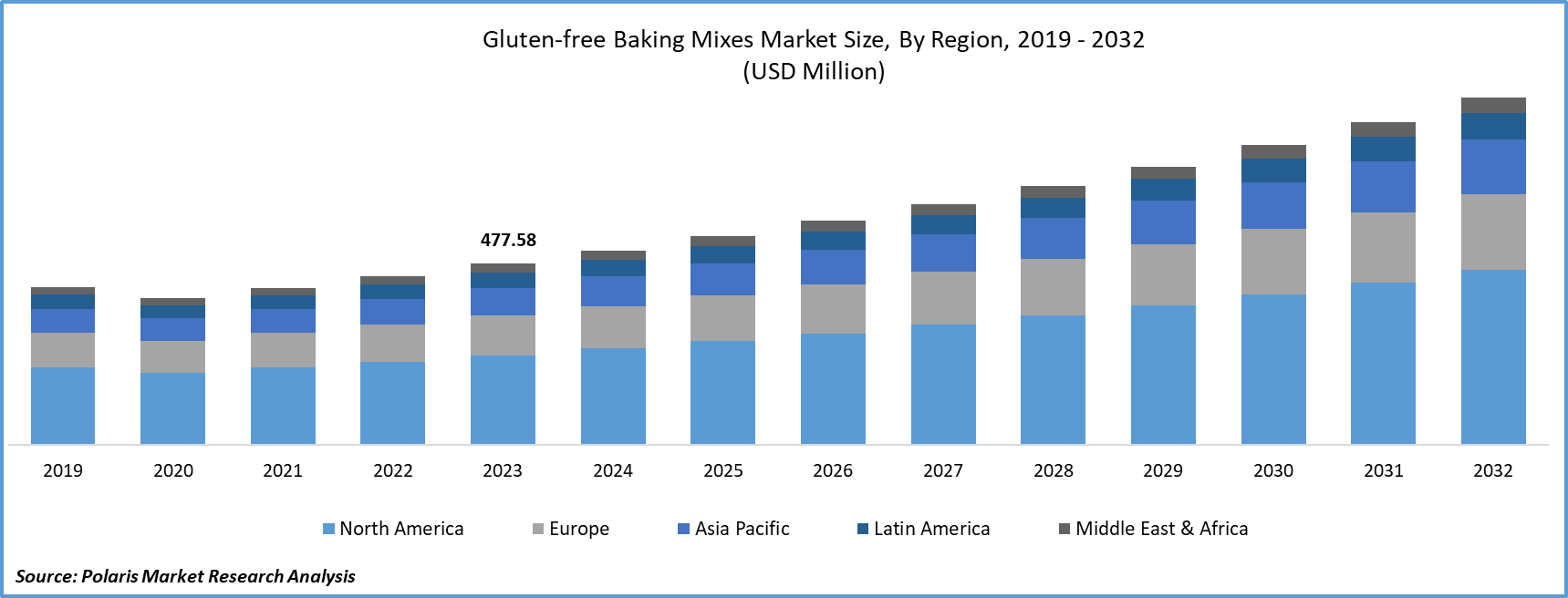
Market Dynamics
Rising Prevalence of Gluten-Related Health Conditions
Gluten-related health conditions, such as celiac disease, gluten intolerance, and non-celiac gluten sensitivity, are on the rise. This has increased the celiac disease demand for gluten-free baking mixes. Consumers are actively seeking safe and convenient alternatives that fit their dietary restrictions, as more individuals receive diagnoses and public awareness grows. A June 2021 Cleveland Clinic report indicates that approximately 6% of Americans have gluten intolerance. This is more common than celiac, which is estimated to affect 1% of the population. Gluten-free baking mixes provide an ideal solution. People with this condition can enjoy baked products without worrying about their health. The growing need for improved health care is creating sustained demand. It has encouraged gluten-free baking mixes market manufacturers to improve their product offerings and focus on value.
Growing Health Consciousness and Demand for 'Free-From' Labeled Products
Growing health consciousness and the increasing preference for 'free-from' labeled products are boosting the preference for gluten-free baking mixes. Consumers are avoiding gluten due to medical reasons. They are also going with gluten-free diets as part of their wellness lifestyle. Products labeled as “free from gluten” are often viewed as healthier. For instance, in March 2023, Dainty Rice launched a gluten-free baking line that needs minimal preparation. The new baking line has four ready-to-mix options, including chocolate cake, pancake doughnuts, brownies, and vanilla cupcakes. The collection also includes a 1:1 all-purpose gluten-free flour substitute for conventional recipes. This shift in consumer mindset is expanding the appeal of gluten-free baking mixes beyond the medically diagnosed segment to a larger audience. Clean-label preferences are also leading to increased scrutiny of food additives. As a result, manufacturers must now seek to achieve a balance between simplifying ingredients and delivering greater performance. Here, certified sourcing and labeling may be beneficial.
Regulatory Compliance and Labeling
Being compliant with regulations and gluten-free labeling requirements is a very crucial aspect, as gluten-free labeling needs strict screening and production procedures. There is an increase in the use of third-party gluten-free certification, allergen information, and tracing systems being employed by manufacturers to minimize the risk and appease the customer, who may have a medical gluten intolerance, in products.
Source: Polaris Market Research Analysis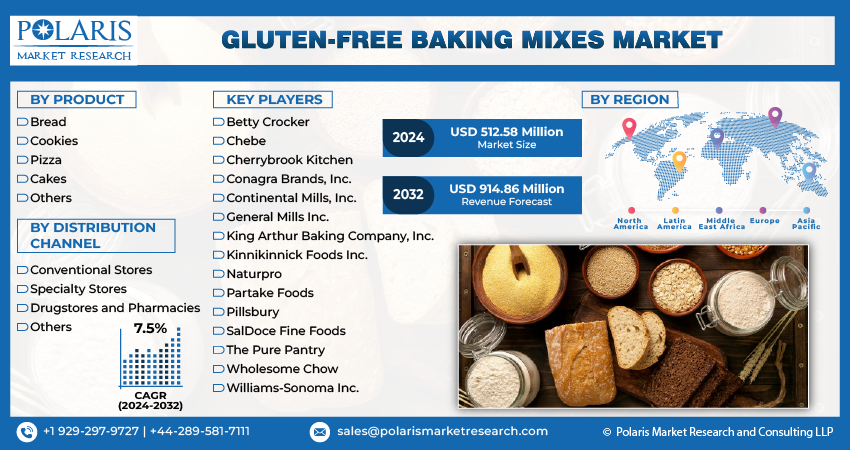
Segment Insights
Market Assessment by Distribution Channel
The global market segmentation, based on distribution channel, includes conventional stores, specialty stores, drugstores and pharmacies, and others. The conventional stores segment dominated the gluten-free baking mixes market share in 2025. This is due to their extensive reach and wide product assortment. These stores are also able to cater to everyday consumer needs. Conventional stores such as supermarkets and hypermarkets offer greater shelf visibility and convenient accessibility. They also offer frequent promotional activities. This makes gluten-free options more accessible to a larger audience. The trust associated with established retail chains has further strengthened the position of the conventional gluten-free baking mixes distribution channel.
Specialty and online retailing are significant for the premium and niche gluten-free baking mixes formats. These formats include organic, high protein, and multigrain baking mixes. Specialty and online channels help in product discovery and offer the shopper all the label details that aid the purchase decision.
Market Evaluation by Product
The global gluten-free baking mixes market segmentation, based on product, includes bread, cookies, pizza, cakes, and others. The bread segment is anticipated to have considerable growth. The gluten-free bread segment growth is attributed to bread being a staple food item across all cultures and cuisines. The demand for gluten-free bread has accelerated with consumers being more conscious about their health and with increased cases of gluten sensitivity. Gluten-free bread has emerged as a popular option across the market, allowing consumers to resort to familiar, yet healthy, food products.
Gluten-free cookie mixes and cakes remain popular for impulse and occasion-based categories, where convenience and regular-like taste are the important factors. Gluten-free pizza mixes, on the other hand, continue benefiting from the trend of home meal cooking and growing interest in premium home-cooked food.
Source: Polaris Market Research Analysis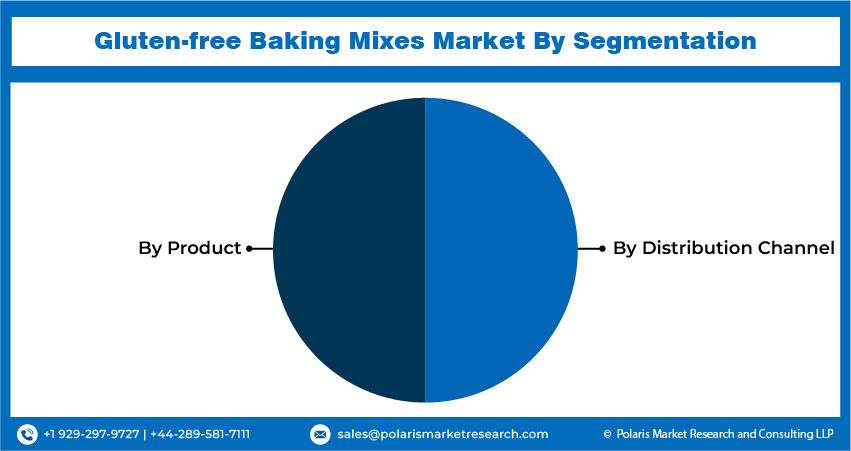
Regional Analysis
By region, the report provides the gluten-free baking mixes market insights into North America, Europe, Asia Pacific, Latin America, and the Middle East & Africa. Regional Analysis. North America accounted for the largest market revenue share in 2025. This can be attributed to a higher level of awareness among consumers regarding health issues related to gluten and a well-entrenched gluten-free food culture in this region. Additionally, there are a host of popular brands in this segment in the region. Furthermore, a March 2025 report by Auguste Escoffier School revealed that “the health and wellness foods segment in the US will grow from 250 million in 2023 to 468.9 million in 2030,” a growth rate that translates to a nearly double increase in this segment. Furthermore, the maturitity level of the North America gluten-free baking mixes market has been backed by better visibility regarding certifications as well as a heightened allocation for gluten-free products across retail shelves. All these factors have helped North America maintain its leading position in the market.
The Asia Pacific gluten-free baking mixes market is likely to experience the fastest growth. This is due to the growing health-conscious population and rising disposable incomes in the region. There has also been increased awareness about gluten-sensitive conditions. Urbanization and the rising adoption of Western culinary habits have contributed to the rising demand for niche food items, including gluten-free food. Modern retailing channels and online retailing are also improving the accessibility of the product. It also allowed gluten-free baking mixes to reach more customers, thus penetrating the emerging economies of the APAC region.
Source: Polaris Market Research Analysis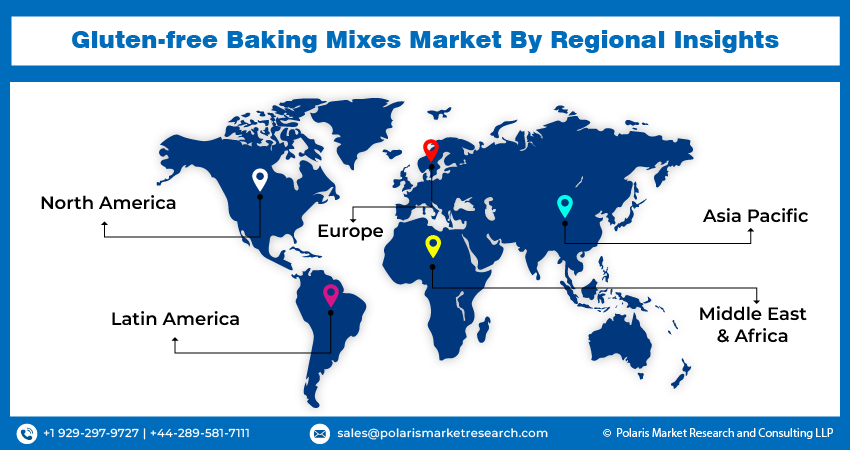
Key Players and Competitive Analysis Report
The gluten-free baking mixes market is expanding. Gluten-free baking mix companies such as Bob's Red Mill, King Arthur Flour, Betty Crocker, and others compete with emerging brands like Simple Mills, Partake Foods, and others. Established players benefit from large distribution networks. Newer entrants disrupt through innovative formulations and clean-label positioning. The key drivers for consumer demand include the rising number of health-conscious consumers, the increasing prevalence of celiac diseases, and the growing number of consumers following dietary trends. Revenue opportunities are increasing in premium organic food and beverage segments and in allergen-free product categories. Smaller brands are capturing value by selling through direct-to-consumer channels and specialty retailers. The competitive landscape is shaped by partnerships between manufacturers and ingredient suppliers to have access to alternative flours. Pricing remains a major differentiator. Premium brands are priced about 30–50% higher than average. These higher prices are supported by better taste and added nutritional benefits. In addition, economic changes are opening growth opportunities in international markets. A few key major players are Betty Crocker; Bob’s Red Mill; Cherrybrook Kitchen; Conagra Brands, Inc.; Continental Mills, Inc.; Enjoy Life Foods; General Mills Inc.; King Arthur Baking Company, Inc.; Kinnikinnick Foods Inc.; Pamela’s Products; Partake Foods; Simple Mills; The Pure Pantry; Wholesome Chow; and Williams-Sonoma Inc.
Conagra Brands, Inc. is headquartered in Chicago. The company operates within the Packaged Foods sector, with renowned brand names including Duncan Hines and Udi’s Gluten-Free.Conagra Brands, Inc. has recently ventured into the gluten-free baking mixes market to meet the rising demand for allergen-friendly and healthy food. The gluten-free product lines of Conagra Brands, Inc. include Eagle Mills All-Purpose Flour. Eagle Mills All-Purpose Flour is a gluten-free mix of brown rice, quinoa, sorghum, millet, and teff flours.This mix is formulated to resemble the appearance, texture, and flavor of regular baked food.The multi-grain flour is used in foods such as pancakes, sandwiches, and snack foods, and aided by other flours of amaranth, quinoa, millet, and teff, which are all certified by the Gluten-Free Certification Organization. The Duncan Hines brand has expanded its offerings to include mixes for cake and cookies that are gluten-free in nature. Conagra’s innovation and quality efforts help the company cater to the needs of health-oriented as well as lifestyle-oriented consumers, which gives the company a strong chance to capitalize on the opportunities presented by the market. Conagra’s robust manufacturing base and consumer-centric product development efforts continue to position the company effectively in the gluten-free baking mixes market.
Pamela’s Products was established in 1988 and is based in Golden, Colorado. It operates in the gluten-free baking mix category and has been known because of its emphasis on product quality and taste and a careful choice of ingredients. All recipes are created and approved by this company in order to ensure acceptable taste and texture in addition to adhering strictly to their gluten-free criteria.Pamela’s Products has many baking mixes, which range from their famous baking and pancake mix, artisan flour blend, oatmeal cookie mix, and sugar cookie mix roll & cut products. These mixes are free from wheat, gluten, dairy, soy, and corn and are certified by the Gluten-Free Certification Organization. The products are rich in brown rice flour, almond meal, and whole grains. The organization is also involved in sustainability activities, including energy-efficient production, local sourcing, and environmentally friendly practices. Pamela's Baking & Pancake Mix has gained significant popularity in the natural foods industry for easy gluten-free baking for those who have gluten intolerance or celiac disease.
List of Key Companies
- Betty Crocker
- Bob’s Red Mill
- Cherrybrook Kitchen
- Conagra Brands, Inc.
- Continental Mills, Inc.
- Enjoy Life Foods
- General Mills Inc.
- King Arthur Baking Company, Inc.
- Kinnikinnick Foods Inc.
- Pamela’s Products
- Partake Foods
- Simple Mills
- The Pure Pantry
- Wholesome Chow
- Williams-Sonoma Inc.
Gluten-Free Baking Mixes Industry Developments
November 2024: customer reception to the reformulated dairy-free, gluten-free flour blend was poor, as consumers expressed dissatisfaction with its taste and performance despite its improved allergy-friendly profile.
May 2024: Chips Ahoy! developed its first-ever chocolate chip gluten-free cookie after a long process that entailed more than 40 recipes and 3,000 hours of work. The product aims to replicate the brand's desired taste while meeting their dietary requirements.
Gluten-Free Baking Mixes Market Segmentation
By Product Outlook (Revenue, USD Million, 2021–2034)
- Bread
- Cookies
- Pizza
- Cakes
- Others
By Distribution Channel Outlook (Revenue, USD Million, 2021–2034)
- Conventional Stores
- Specialty Stores
- Drugstores and Pharmacies
- Others
By Nature Outlook (Revenue, USD Million, 2021–2034)
- Organic
- Conventional
By Ingredient Base Outlook (Revenue, USD Million, 2021–2034)
- Rice
- Almond
- Oat Alternatives
- Multi-grain Blends
By Regional Outlook (Revenue, USD Million, 2021–2034)
- North America
- US
- Canada
- Europe
- Germany
- France
- UK
- Italy
- Spain
- Netherlands
- Russia
- Rest of Europe
- Asia Pacific
- China
- Japan
- India
- Malaysia
- South Korea
- Indonesia
- Australia
- Vietnam
- Rest of Asia Pacific
- Middle East & Africa
- Saudi Arabia
- UAE
- Israel
- South Africa
- Rest of Middle East & Africa
- Latin America
- Mexico
- Brazil
- Argentina
- Rest of Latin America
Gluten-Free Baking Mixes Market Report Scope
| Report Attributes | Details |
| Market Size in 2025 | USD 541.57 million |
| Market Size in 2026 | USD 581.92 million |
| Revenue Forecast by 2034 | USD 1,046.17 million |
| CAGR | 7.61% |
| Base Year | 2025 |
| Historical Data | 2022–2024 |
| Forecast Period | 2026–2034 |
| Quantitative Units | Revenue in USD million, 2021–2034 and CAGR from 2026 to 2034 |
| Report Coverage | Revenue Forecast, Market Competitive Landscape, Growth Factors, and Trends |
| Segments Covered |
|
| Regional Scope |
|
| Competitive Landscape | Gluten-free Baking Mixes Industry Trend Analysis (2025) Company profiles/industry participants profiling include company overview, financial information, product/service benchmarking, and recent developments |
| Report Format | PDF + Excel |
| Customization | Report customization as per your requirements with respect to countries, regions, and segmentation. |
Source: Polaris Market Research Analysis
Gluten-free Baking Mixes Market FAQ's
The increasing prevalence of celiac disease, health consciousness, and demand for 'free-from' products lead to the expansion of the market. Market expansion is also accelerated by enlarged distribution channels coupled with product innovation.
The bread segment is expected to grow significantly because bread has been a staple in day-to-day diets worldwide for many years. Innovations in taste and texture are what make gluten-free bread equal to other conventional bread types.
The market is expected to reach USD 1,046.17 million by 2034, growing at a CAGR of 7.61% between 2026 and 2034.
North America dominates the market because of high consumer awareness, an established gluten-free culture, and decent retail infrastructure. Meanwhile, the Asia Pacific is projected to be the fastest-growing region through 2034.
Some of the key companies include Betty Crocker; Bob’s Red Mill; Cherrybrook Kitchen; Conagra Brands, Inc.; Continental Mills, Inc.; Enjoy Life Foods; General Mills Inc.; King Arthur Baking Company, Inc.; Kinnikinnick Foods Inc.; and Pamela’s Products.
The bread segment is expected to witness substantial growth during the forecast period.
Download Sample Report of Gluten-free Baking Mixes Market
Please fill out the form to request a customized copy of the research report.


