
Human Cadaveric Tissue Market Share, Size, Trends, Industry Analysis Report, 2026 - 2034
REPORT DETAILS
Human Cadaveric Tissue Market Summary
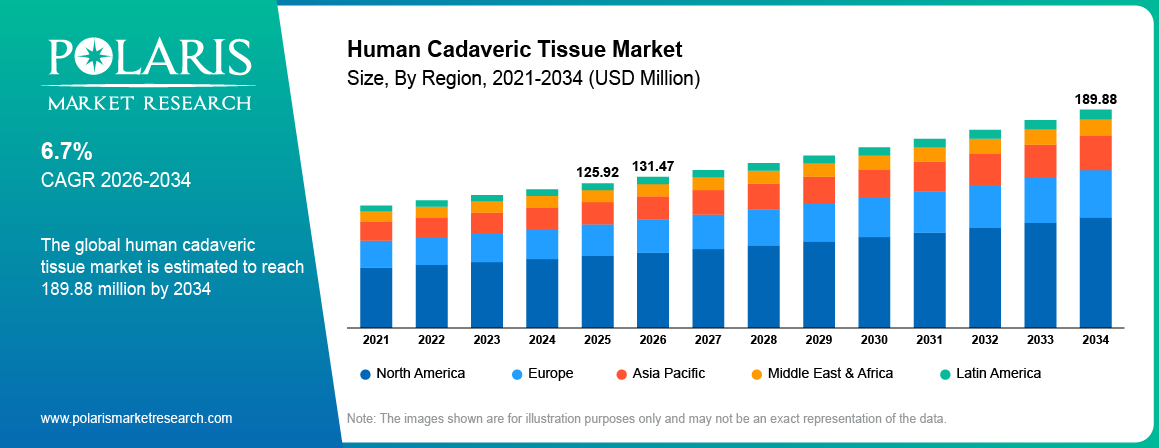
The global human cadaveric tissue market is estimated around USD 125.92 million in 2025, with consistent growth anticipated during 2026–2034. Expansion is supported by increasing transplant procedures, rising orthopedic and reconstructive surgeries, and growing adoption of biologic grafts in clinical practice. The market is projected to grow at a CAGR of 6.7% during the forecast period.
Market Statistics
Key Takeaways
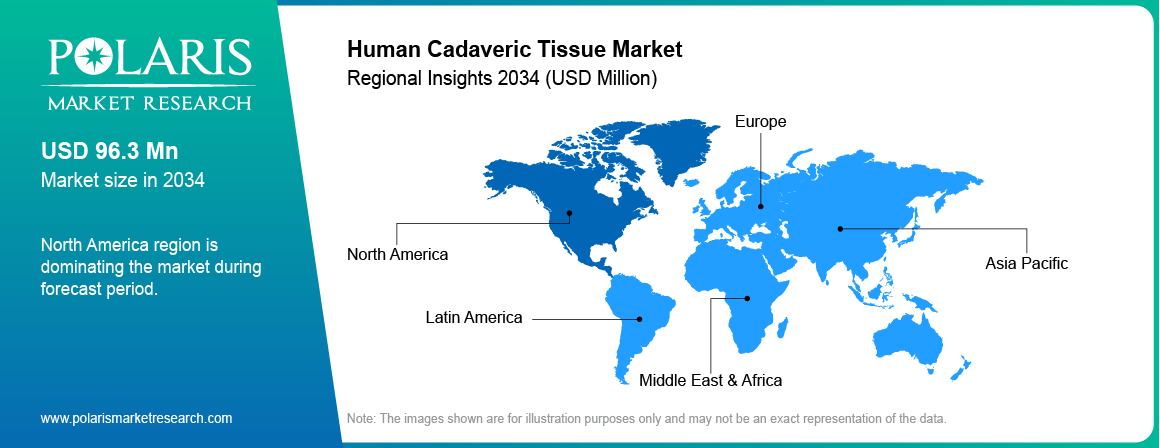
- North America dominated the market with a share of ~39% in 2025, supported by strong transplant infrastructure and high procedural volumes.
- Bone tissue grafts accounted for approximately 34% of the market share in 2025, driven by their extensive use in orthopedic and dental procedures.
- Allograft-based cadaveric tissues held around 37% of the market share in 2025, owing to high clinical acceptability and superior biological compatibility.
- Orthopedic surgery captured nearly 42% of the market share in 2025, supported by the high volume of joint reconstruction and spinal procedures.
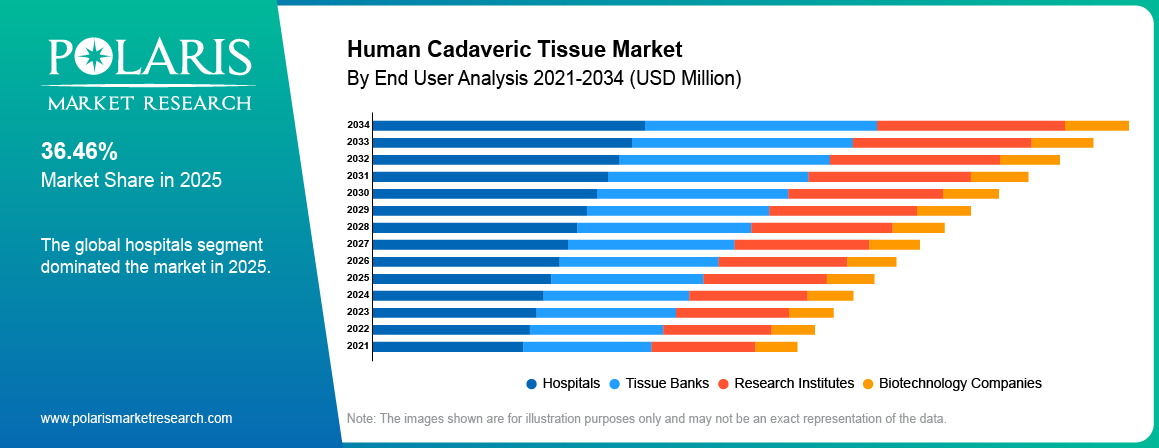
- Hospitals led the end-use segment with a share of about 45% in 2025, owing to high surgical volumes and established transplant infrastructure.
- Reconstructive surgery is expected to grow at a CAGR of approximately 9.2% during the forecast period, driven by the rising demand for advanced tissue repair solutions.
Industry Dynamics
- Rising orthopedic and trauma surgery volumes are increasing demand for cadaveric tissue grafts in clinical procedures.
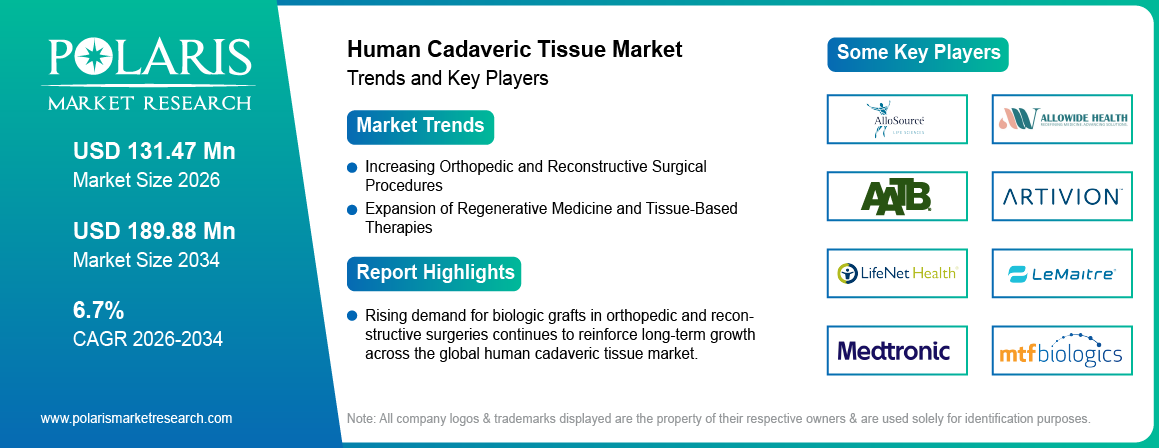
- Expansion of regenerative medicine and tissue-based therapies is strengthening demand for biologic materials.
- Regulatory complexity and ethical compliance requirements remain a challenge for market expansion.
- Advancements in biotechnology and tissue processing technologies are creating opportunities for improved preservation and scalability.
What is included in the Human Cadaveric Tissue market?
The human cadaveric tissue market includes the recovery, processing, and clinical use of tissues obtained from deceased donors for transplantation and reconstructive procedures. On the other hand, cadaveric tissue includes bones, skin, tendons, and heart valve tissues used in surgeries. In cadaveric tissue industry analysis, these tissues are referred to as allografts. This refers to cadaveric tissue and differentiates it from xenografts and synthetic grafts.
Cadaveric tissue market is expanding due to increasing number of transplant surgeries and rising number of reconstructive surgeries. The current trend suggests that the cadaveric tissue market is growing steadily. The human cadaveric tissue market has a positive growth trend in all healthcare systems across the globe.
To Understand More About this Research:Download Sample Report
Bone and musculoskeletal tissues are at the forefront as they are utilized for various surgeries, including orthopedic surgeries, wounds, and dental consumables. Continued clinical reliance on biologic grafts is shaping the future of the cadaveric tissue transplantation market.
Drivers & Opportunities
Rising orthopedic surgery demand increasing tissue utilization: The rising number of joint reconstruction surgeries, trauma cases, and spine surgeries is boosting the utilization rate of cadaveric tissue used in bone repair and ligament reconstruction surgeries. These surgeries involve allografts to ensure structural support and quick recovery. Johnson & Johnson MedTech launched digital orthopaedic solutions in March 2025, which included implants, robotic-assisted solutions such as VELYS, and data-driven surgery. This advancement reflects rising procedural complexity and precision requirements, strengthening cadaveric tissue market drivers and increasing reliance on tissue donation programs and tissue banking industry trends.
Expansion of regenerative medicine and tissue-based therapies: Advances in regenerative medicine are increasing demand for biologically derived materials used in cell therapies and tissue repair. Cadaveric tissue is used as a scaffold and a biological matrix in various clinical applications. In January 2026, Clonell Therapeutics launched a patient-specific embryonic stem cell platform that facilitates fully matched regenerative therapies based on DNA. This also contributes to the development of the regenerative medicine market and the integration of cadaveric materials in advanced regenerative medicine pipelines.
Restraints & Challenges
Regulatory Complexity and Ethical Compliance: Stringent rules for tissue procurement, processing, storage, and distribution is hindering the market growth. This has resulted in increased complexity for the cadaveric tissue industry. The need for compliance with safety, traceability, and ethical guidelines has increased approval times. The difference in regional regulations has added complexity to tissue distribution between countries.
Opportunity
Biotechnology-driven innovation in tissue processing and utilization: Advances in biotechnology are improving tissue processing efficiencies and expanding tissue utilization potential. In March 2026, New Wave Biotech and iMEAN announced an AI-driven biomanufacturing optimization solution that combines metabolic modeling and process simulation. Increasing adoption of advanced processing technologies supports tissue banking industry trends and expands opportunities across organ transplant demand and regenerative applications.
Segmental Insights
This report offers detailed coverage of the human cadaveric tissue market by tissue type, application, and end user to help readers identify the fastest expanding and most attractive demand segments.
By Tissue Type
-
Bone Tissue
Cadaveric bone graft market held the largest share due to its large usage in orthopedic and dental surgeries. Bone grafting is commonly used in fracture fixation, spinal fusion, and joint reconstruction surgeries. High surgical rates and acceptance contribute to its dominance in all cadaveric tissue transplant surgeries.
-
Skin Tissue
The cadaveric skin graft market is projected to grow at a high rate due to increasing demand in burn and reconstructive surgeries. Skin grafts support rapid wound coverage and healing in trauma and severe burn cases. Increasing adoption in advanced wound management is accelerating growth.
By Application
-
Orthopedic Surgery
Cadaveric tissue orthopedic surgery has the largest market share due to the high demand for bone and tissue grafts. Procedures like spinal fusion, joint repair, and fracture treatment involve a high number of cadaveric graft applications. Increasing aging population and orthopedic conditions sustain strong demand.
-
Reconstructive Surgery
Cadaveric tissue reconstructive surgery is the fastest-growing application segment. Skin and soft tissue grafts are used in trauma recovery, cosmetic reconstruction, and repair. The market is driven by the increasing demand for advanced tissue restoration.
By End User
-
Hospitals
Cadaveric tissue demand in hospitals accounts for the largest share owing to the high volume of surgeries and availability of transplant facilities. Most orthopedic, cardiovascular, and reconstructive surgeries are conducted in hospitals.
-
Tissue Banks
Tissue banking are projected to witness the fastest rate of growth, propelled by the rising requirement for preserved and processed cadaveric tissues. Tissue banks are a vital aspect in the supply chain.
Regional Analysis
North America Human Cadaveric Tissue Market Assessment
North America cadaveric tissue market maintained its dominance in 2025, owing to the strong transplant infrastructure. According to the United Network for Organ Sharing and Organ Procurement and Transplantation Network, over 48,149 organ transplants took place in the US during 2024. This was the first time that the number of organ transplants surpassed the 48,000-mark. This growth in the number of transplant procedures, which further fueled the use of cadaveric tissues for grafting purposes.
Europe Human Cadaveric Tissue Market Overview
Europe cadaveric tissue transplantation market has been expanded by the improvement in healthcare infrastructure and the establishment of tissue donation schemes. Hospitals in Germany, France, and the UK have shown an increase in the use of cadaveric tissues in orthopedic, cardiovascular, and reconstructive surgery. The regulatory environment and standardized schemes have helped in the quality assurance of tissues, thus enhancing their use in surgical procedures.
Asia Pacific Human Cadaveric Tissue Market Insight
The Asia Pacific cadaveric tissue industry growth accelerated due to expanding healthcare systems and increasing surgical capacity across major economies. According to the International Trade Administration healthcare market in China was valued at more than 1 trillion US dollars in 2024, and it is expected to grow even more, reaching more than 1.5 trillion US dollars by 2029. This is boosting the infrastructure, number of surgeries, and demand for cadaveric tissue products in hospitals and other research facilities, propelling the market growth.
Latin America and Middle East Human Cadaveric Tissue Market Assessment
Latin America and the Middle East showed emerging growth as healthcare investment increased and transplant capabilities improved. Expansion of hospital infrastructure and surgical services supported gradual adoption of cadaveric tissue-based procedures. Government initiatives and private sector investment contributed to rising cadaveric tissue demand by region, particularly in urban healthcare centers where advanced surgical capabilities are developing.
Key Players & Competitive Analysis Report
The competitive environment of the Human Cadaveric Tissue market is shaped by stringent regulatory compliance, quality assurance standards, and advancements in tissue processing and preservation technologies. Cadaveric tissue suppliers, and tissue bank companies, compete based on their donor tissue screening, sterilization, and processing techniques, which provide safety, traceability, as well as clinical effectiveness.
Some of the prominent players in the human cadaveric tissue industry are AlloSource, AlloWide Health Inc., American Association of Tissue Banks (AATB), Artivion, Inc., BioHorizons IPH, Inc., Community Tissue Services, Core Tissue & Mechanical Engineering, LLC, LifeNet Health, LeMaitre Vascular, Inc., Medtronic plc, MTF Biologics, NuVasive, Inc., Stryker Corporation, Zimmer Biomet Holdings, Inc., and Xtant Medical Holdings, Inc.
Key Players
- AlloSource
- AlloWide Health Inc.
- American Association of Tissue Banks (AATB)
- Artivion, Inc.
- BioHorizons IPH, Inc.
- Community Tissue Services
- Core Tissue & Mechanical Engineering, LLC
- LifeNet Health
- LeMaitre Vascular, Inc.
- Medtronic plc
- MTF Biologics
- NuVasive, Inc.
- Stryker Corporation
- Zimmer Biomet Holdings, Inc.
- Xtant Medical Holdings, Inc.
Industry Developments
- December 2025: Stratasys introduced 3D printing material that replicates the appearance of human tissue in CT scans and X-rays. This enables users to create anatomically correct 3D models for surgeries and test various medical devices.
- October 2025: Scientists at the Wake Forest Institute for Regenerative Medicine experimented with the development of human liver tissue in microgravity conditions on the International Space Station.
Regulatory Landscape & Supply Chain Analysis
Regulatory Framework
The human cadaveric tissue industry is subject to stringent regulatory requirements related to cadaveric tissues to ensure safety, traceability, and ethical practices. FDA regulations and international standards are applicable to the human cadaveric tissue industry in major markets. The compliance of tissue banking involves detailed documentation of the process, validation of the process, and compliance to quality systems.
The regulatory environment plays an important role in impacting the growth of the human cadaveric tissue industry by increasing complexity and cost. Stringent compliance standards limit entry barriers but favor established tissue banks with certified infrastructure and audit-ready systems.
Tissue Procurement and Processing
The first step of the supply chain involves donor identification and consent under tissue donation regulations. The tissue screening of the donor is a critical step that includes the evaluation of medical history, infectious disease screening, and donor eligibility.
After procurement, tissues undergo processing, sterilization, and preservation using advanced tissue preservation technology such as cryopreservation and chemical stabilization. These processes extend shelf life and maintain biological integrity for transplantation and research use.
The overall coordination of this process is of critical importance to the continuous availability of tissue materials, due to the increasing requirement for tissue materials in surgical procedures.
Premium Insights & Strategic Recommendations
The market for cadaveric tissue is witnessing growth due to the increasing number of orthopedic procedures, reconstructive procedures, and regenerative medicine procedures. The market opportunities for cadaveric tissues are growing as healthcare providers are seeking biologically compatible materials to achieve better results.
Investment in this area is concentrated on advanced tissue processing, preservation, and optimization of the supply chain. Advances in sterilization processes and storage have helped in the overall utilization of tissues.
Strategically, the future growth prospects in tissue transplantation innovation and regenerative tissues are expected to be influenced by the changing regenerative tissues market trends. Companies with investment in compliant supply networks, advanced processing, and distribution capabilities are expected to benefit from future opportunities in this area.
Human Cadaveric Tissue Market Segmentation
By Tissue Type Outlook (Revenue, USD Million, 2021-2034)
- Bone Tissue
- Skin Tissue
- Corneal Tissue
- Heart Valve Tissue
- Tendon Tissue
By Application Outlook (Revenue, USD Million, 2021-2034)
- Orthopedic Surgery
- Reconstructive Surgery
- Cardiovascular Surgery
- Dental Graft Procedures
- Trauma Surgery
By End User Outlook (Revenue, USD Million, 2021-2034)
- Hospitals
- Tissue Banks
- Research Institutes
- Biotechnology Companies
By Regional Outlook (Revenue, USD Million, 2021-2034)
- North America
- US
- Canada
- Europe
- Germany
- France
- UK
- Italy
- Spain
- Netherlands
- Russia
- Rest of Europe
- Asia Pacific
- China
- Japan
- India
- Malaysia
- South Korea
- Indonesia
- Australia
- Vietnam
- Rest of Asia Pacific
- Middle East & Africa
- Saudi Arabia
- UAE
- Israel
- South Africa
- Rest of Middle East & Africa
- Latin America
- Mexico
- Brazil
- Argentina
- Rest of Latin America
Human Cadaveric Tissue Market Report Scope
| Report Attributes | Details |
| Market Size in 2025 | USD 125.92 Million |
| Market Size in 2026 | USD 131.47 Million |
| Revenue Forecast by 2034 | USD 189.88 Million |
| CAGR | 6.7% from 2026 to 2034 |
| Base Year | 2025 |
| Historical Data | 2022–2024 |
| Forecast Period | 2026–2034 |
| Quantitative Units | Revenue in USD Million and CAGR from 2026 to 2034 |
| Report Coverage | Revenue Forecast, Competitive Landscape, Growth Factors, and Industry Trends |
| Segments Covered |
|
| Regional Scope |
|
| Competitive Landscape |
|
| Report Format |
|
| Customization | Report customization as per your requirements with respect to countries, regions, and segmentation. |
Source: Polaris Market Research Analysis
Human Cadaveric Tissue Market FAQ's
The global market size was valued at USD 125.92 million in 2025 and is projected to grow to USD 189.88 million by 2034.
North America led the market share in 2025, due to advanced transplant infrastructure, high surgical volumes, and well-established tissue banking systems.
Orthopedic surgery represents the largest application segment, followed by reconstructive surgery and wound care applications.
Key companies include AlloSource, AlloWide Health Inc., American Association of Tissue Banks (AATB), Artivion, Inc., BioHorizons IPH, Inc., Community Tissue Services, LifeNet Health, LeMaitre Vascular, Inc., Medtronic plc, MTF Biologics, NuVasive, Inc., Stryker Corporation, Zimmer Biomet Holdings, Inc., and Xtant Medical Holdings, Inc.
Growth is driven by increasing transplant procedures, rising orthopedic surgeries, expansion of regenerative medicine, and advancements in tissue processing technologies.
Human cadaveric tissue refers to tissues collected from deceased donors that are processed and preserved for medical use.
Cadaveric tissues offer high biological compatibility and structural support, which aids healing and lowers complication risks compared to some synthetic alternatives.
Download Sample Report of Human Cadaveric Tissue Market
Please fill out the form to request a customized copy of the research report.


