
Linseed Oil Market Growth, Industry Share & Forecast, 2026 – 2034
REPORT DETAILS
Linseed Oil Market Summary
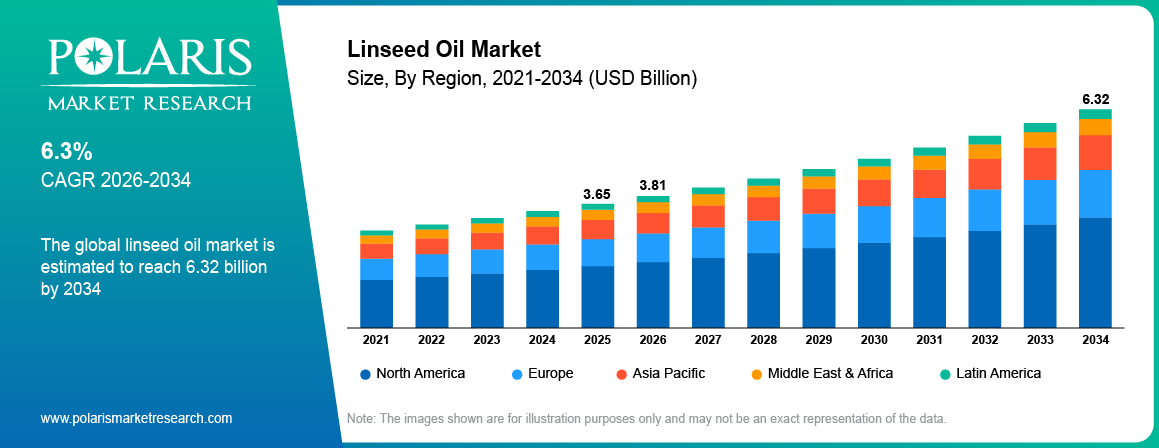
The global linseed oil market size was valued at USD 3.65 billion in 2025. The market is projected at a CAGR of 6.3% from 2026 to 2034.
Market Statistics
Linseed Oil Market Key Takeaways
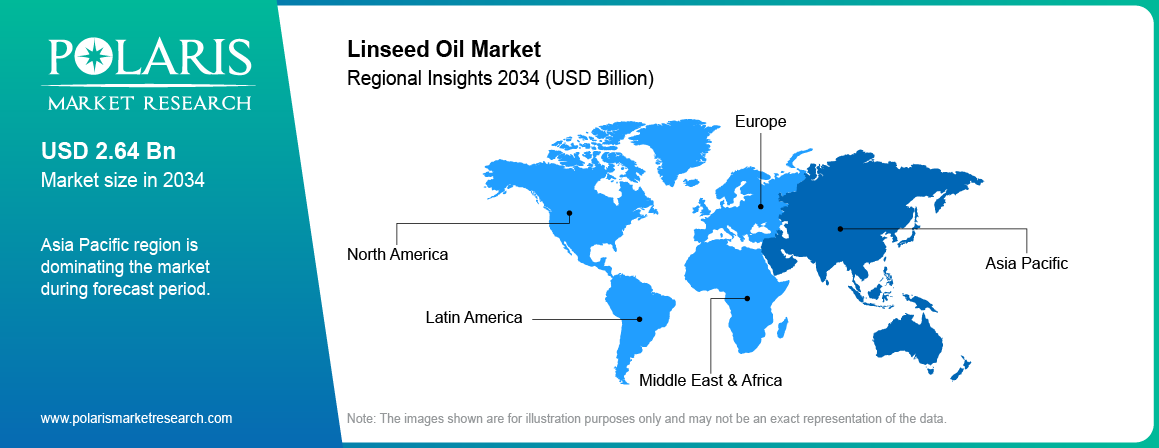
- Asia Pacific dominated with 41.8% revenue share in 2025. Rising construction spending and the presence of numerous manufacturers boost the dominance in the region.
- China led the regional market with 56.4% in 2025. This is driven by increasing investments in linseed oil production in the country, driven by rising demand for the product from other countries.
- North America is projected to register a significant CAGR of 6.8% during the forecast period. Rising infrastructure development propels the demand for wooden products in residential and commercial construction. This is driving the demand for linseed oil in the region.
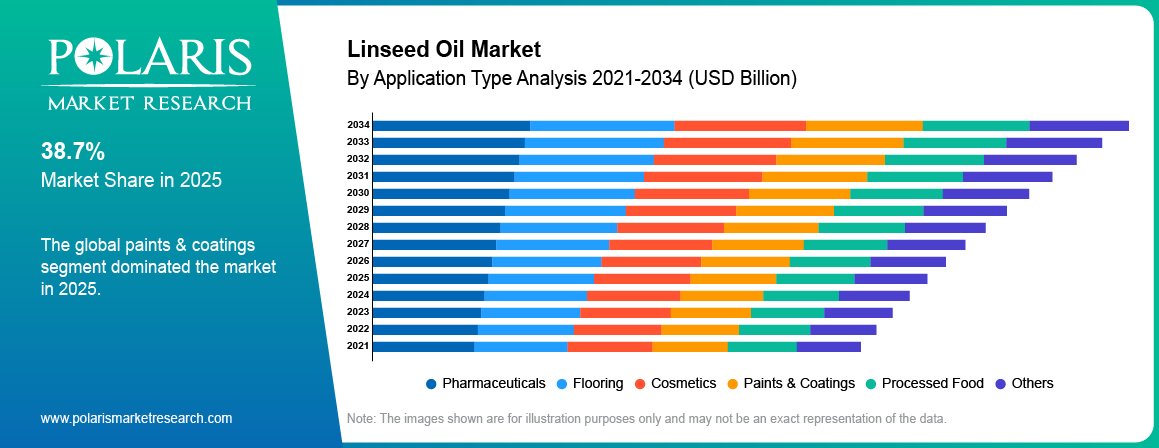
- In 2025, the paints & coatings segment held the largest share of 38.7%. The growth is attributed to the rising demand for sustainable and environmentally friendly paints and coatings.
- The solvent extraction segment led the market with 61.2% share in 2025. Rising consumption of vegetable oils and protein-rich animal feed drives the segment growth.
Note: Figures and projections outlined in this report are the result of Polaris Market Research’s proprietary analytical processes, grounded in the latest available datasets and market observations.
What is Linseed Oil?
Linseed oil, or flaxseed oil, is a versatile oil derived from flax plant seeds. Linseed oil is extracted from flax seeds via a hot, high-pressure steam method. The oil has been used for a long time, initially to treat digestive and skin issues. Paints, coatings, wood preservatives, linoleum, putty, and cosmetics are among the many applications of linseed oil. It is also used as a dietary supplement and in traditional European recipes. Linseed oil is rich in omega-3 fatty acids, including α-linolenic and oleic acid. It is also high in phenolic compounds. Linseed oil is slightly hazardous if it comes into direct contact with skin as it can irritate the respiratory tract and mucous membranes.
Difference Between Linseed Oil and Other Vegetable Oils
Linseed oil differs from many conventional vegetable oils. This is due to its excellent drying and polymerization properties. These properties make it highly suitable for industrial applications such as paints, coatings, varnishes, inks, and wood finishing products. In contrast, other vegetable oils, such as sunflower, soybean, and palm oil, are primarily used in food processing and cooking. This is because of their edible nature and lower reactivity.
Comparison Matrix: Linseed Oil Vs Other Vegetable Oils
| Parameter | Linseed Oil | Other Vegetable Oils |
| Primary Use | Industrial applications, coatings, wood finishing | Cooking, food processing, edible products |
| Drying Ability | Excellent drying and film-forming properties | Limited or slow drying characteristics |
| Polymerization | High polymerization capability | Lower polymerization efficiency |
| Source | Flaxseed | Soybean, sunflower, palm, canola, etc. |
| Industrial Usage | Widely used in paints, varnishes, inks, and sealants | Limited industrial coating applications |
| Nutritional Application | Used in dietary supplements and health products | Widely consumed as edible oils |
| Oxidation Rate | Faster oxidation for curing applications | Slower oxidation suitable for cooking |
| Market Demand Driver | Sustainable industrial materials | Rising food consumption demand |
Source: Polaris Market Research Analysis
Source: Polaris Market Research Analysis
To Understand More About this Research: Download Sample Report
Major factors such as an increase in the popularity of natural and organic products, a rise in health concerns, and an upsurge in awareness of the benefits of linseed oil for skin and hair drive the linseed oil market growth. Market growth opportunities arise as the nutraceutical and cosmetic markets expand, as does the growing demand for linseed oil as a green alternative to industrial oils.
Recent linseed oil market opportunities in the linseed oil industry include the development of functional foods and beverages fortified with linseed oil, the implementation of innovative techniques, and the growing acceptance of cold-opened linseed oil due to its health benefits. As people's desire for health and wellness grows, there is a surge in demand for organic and non-genetically modified linseed oil. Furthermore, the prevalence of chronic illnesses is increasing, and there is a greater emphasis on disease prevention through health promotion, both of which would help the market grow.
Market Dynamics
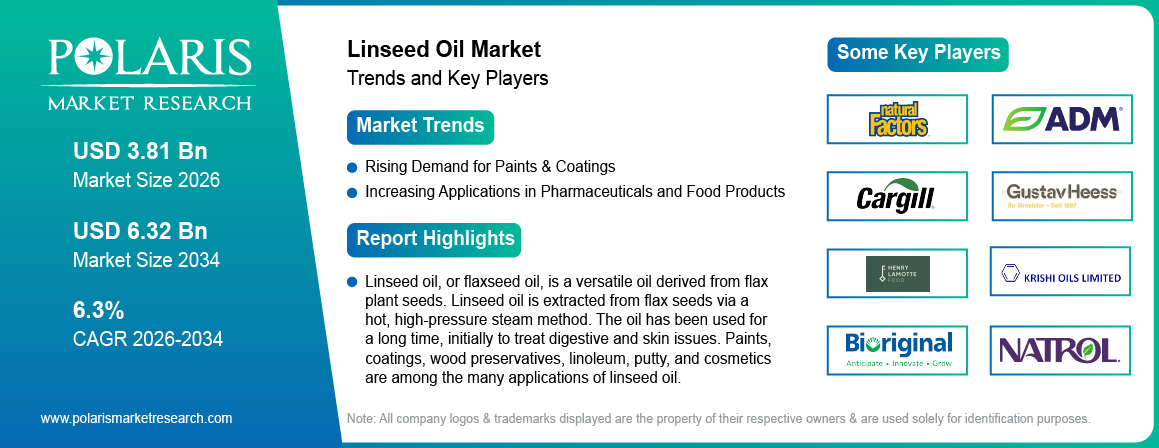
Driver: Rising Demand for Paints & Coatings
Global demand for paints and coatings is expected to rise as the demand for automobiles and consumer goods increases. Urbanization has expanded the construction industry worldwide, increasing demand for oil paints. As linseed oil has a high film-forming capacity, durability, and resistance to moisture and UV radiation, the rising demand for oil paints propels the requirement for linseed oil. The growing demand for sustainable and environmentally friendly products in the construction and automotive industries is driving the demand for linseed-oil-based paints and coatings over traditional synthetic and petroleum-based substitutes. Thus, increasing demand for paints and coatings boosts the linseed oil market development.
Driver: Increasing Applications in Pharmaceuticals and Food Products
Linseed oil and its components have a variety of health benefits. The oil is used in medication used for heart health management, constipation and diarrhea relief, weight management, inflammation reduction, rheumatoid arthritis treatment, and cancer treatment. The oil contains high levels of omega-3 fatty acids, which are essential for human health. It contains ALA, which is good for improving fat metabolism and endurance, particularly for athletes and runners. Additionally, the oil is used in traditional medicine and skincare products due to its anti-inflammatory and antioxidant properties. Therefore, the rising applications of linseed oil in pharmaceuticals and food products boost the linseed oil market expansion.
Challenges in Linseed Oil Market
- Flammability Risks: Linseed oil is highly combustible under certain conditions. This is creating storage and handling challenges for manufacturers and end users.
- Oxidation Sensitivity: Exposure to air can cause oxidation and rancidity. This adversely affects product stability, shelf life, and performance quality.
- Fluctuating Flaxseed Prices: Variations in flaxseed production, weather conditions, and supply chain disruptions increase raw material costs.
- Competition from Synthetic Alternatives: Synthetic resins and chemical-based coatings often offer faster drying times and lower costs. This factor limits market penetration for linseed oil products.
- Regulatory and Quality Compliance: Manufacturers are required to comply with stringent environmental and product quality standards. It is increasing operational complexity and costs.
Source: Polaris Market Research Analysis
Segment Insights
Market Outlook by Application Type Insights
The linseed oil market segmentation, based on application type, includes pharmaceuticals, flooring, cosmetics, paints & coatings, processed food, and others. In 2025, the paints & coatings segment held the largest share of 38.7%, and the segment is expected to continue its dominance during the forecast period. The market is expanding due to the rising demand for sustainable and environmentally friendly paints and coatings, as well as increasing construction activities worldwide. Traditional floor coverings made from linseed oil, such as linoleum and oilcloth, are becoming popular due to their strength and visual appeal.
Market Assessment by Production Process Type Insights
The linseed oil market, based on production process type, is segmented into enzyme extraction, cold-pressing, and solvent extraction. The solvent extraction segment dominates the market with 61.2% share. The solvent extraction process extracts oil from linseed using hexane or other solvents. Cold-pressing, a mechanical process that does not use solvents, preserves more nutrients and flavor in the oil while producing a lower yield. Enzyme extraction is a relatively new method that employs enzymes to degrade oil-bearing cells, resulting in higher oil yield and quality. However, it is more expensive than its counterparts.
Source: Polaris Market Research Analysis
Regional Analysis
The research report offers linseed oil market insights into North America, Europe, Asia Pacific, Latin America, and the Middle East & Africa. Asia Pacific dominated the linseed oil market with 41.8% share in 2025, owing to the continuous construction spending and increasing demand from countries such as China, India, and Indonesia and the presence of numerous manufacturers in the region. Investments in linseed oil production in China are expected to grow rapidly due to rising demand for the product from other countries through imports and exports. China, Russia, Argentina, and Kazakhstan are among the largest producers of linseed or flaxseed.
The linseed oil market statistics show that the market in North America is projected to experience steady and significant growth of CAGR 6.8% during the forecast period. The region's growing infrastructure has resulted in a significant increase in demand for wooden products in residential and commercial construction, driving the demand for linseed oil. The diets of most Americans lack adequate amounts of omega-3 fatty acids, which can be obtained by consuming linseed oil as a packaged salad or in a smoothie. Linseed oil contains a high concentration of ALA (alpha-linolenic acid), a precursor to the essential omega-3 fatty acid EPA (eicosapentaenoic acid). These benefits fuel the regional market growth.
Source: Polaris Market Research Analysis
Competitive Insights
The companies conduct extensive research and development to create innovative products that improve the quality and quantity of linseed oil. Furthermore, businesses are increasingly pursuing mergers and acquisitions and joint venture strategies to increase their market share, broaden their global reach, and improve their product offerings. A lot of businesses use investment and expansion plans to boost their output and break into emerging markets.
There is fierce competition and a fair amount of market concentration. Natural Factors, Inc.; Cargill, Inc.; Archer Daniels Midland (ADM) Company; Gustav Heess GmbH; Granovita; Natrol LLC; Krishi Oils Limited (KOL); and Henry Lamotte Oils GmbH are among the key market players.
List of Key Companies
- Natural Factors, Inc.
- Archer Daniels Midland (ADM) Company
- Cargill, Inc.
- Gustav Heess GmbH
- Henry Lamotte Oils GmbH
- Krishi Oils Limited (KOL)
- Barkeans Bioriginal Food and Science Corp.
- Natrol LLC
- Granovita
Linseed Oil Industry Developments
In May 2026, Florida International University researchers received a U.S. patent for a linseed oil polyol-derived compound that inhibited HIV, SARS-CoV-2, and bacterial infections in preclinical research. The plant-based compound demonstrated broad antimicrobial potential, supported drug delivery applications, and advanced development of affordable therapeutic technologies.(Source:fiu.edu)
Linseed Oil Market Segmentation
By Application Type Outlook
- Pharmaceuticals
- Flooring
- Cosmetics
- Paints & Coatings
- Processed Food
- Others
By Production Process Type Outlook
- Enzyme Extraction
- Cold-Pressing
- Solvent Extraction
By Form Type Outlook
- Organic
- Refined
- Raw
By Regional Outlook
- North America
- US
- Canada
- Europe
- Germany
- France
- UK
- Italy
- Spain
- Netherlands
- Russia
- Rest of Europe
- Asia Pacific
- China
- Japan
- India
- Malaysia
- South Korea
- Indonesia
- Australia
- Rest of Asia Pacific
- Middle East & Africa
- Saudi Arabia
- UAE
- Israel
- South Africa
- Rest of the Middle East & Africa
- Latin America
- Mexico
- Brazil
- Argentina
- Rest of Latin America
Linseed Oil Market Report Scope
| Report Attributes | Details |
| Market Size Value in 2025 | USD 3.65 billion |
| Market Size Value in 2026 | USD 3.81 billion |
| Revenue Forecast by 2034 | USD 6.32 billion |
| CAGR | 6.3 % from 2026 to 2034 |
| Base Year | 2025 |
| Historical Data | 2021–2024 |
| Forecast Period | 2026–2034 |
| Quantitative Units | Revenue in USD and CAGR from 2026 to 2034 |
| Report Coverage | Revenue Forecast, Market Competitive Landscape, Growth Factors, and Trends |
| Segments Covered |
|
| Regional Scope |
|
| Competitive Landscape |
|
| Report Format |
|
| Customization | Report customization as per your requirements with respect to countries, regions, and segmentation. |
Source: Polaris Market Research Analysis
Linseed Oil Market FAQ's
The linseed oil market is valued at USD 3.65 billion in 2025 and is projected to grow to USD 6.32 billion by 2034.
The linseed oil market is expected to record a CAGR of 6.3% during 2026–2034.
Asia Pacific accounted for the largest market share of 41.8% in 2025.
Natural Factors, Inc.; Cargill, Inc.; Archer Daniels Midland (ADM) Company; Gustav Heess GmbH; Granovita; Natrol LLC; Henry Lamotte Oils GmbH; and Krishi Oils Limited (KOL) are among the key market players.
The solvent extraction segment dominated the linseed oil market with 61.2% revenue share in 2025.
The paints and coating segment held the largest share of 38.7% in 2025.
Download Sample Report of Linseed Oil Market
Please fill out the form to request a customized copy of the research report.


