
Myasthenia Gravis Disease Market Size - Industry Report, 2026-2034
REPORT DETAILS
Myasthenia Gravis Disease Market Summary
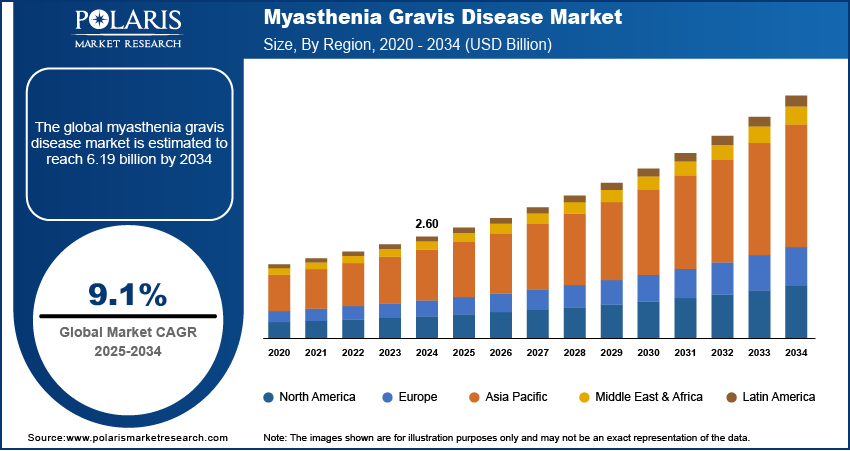
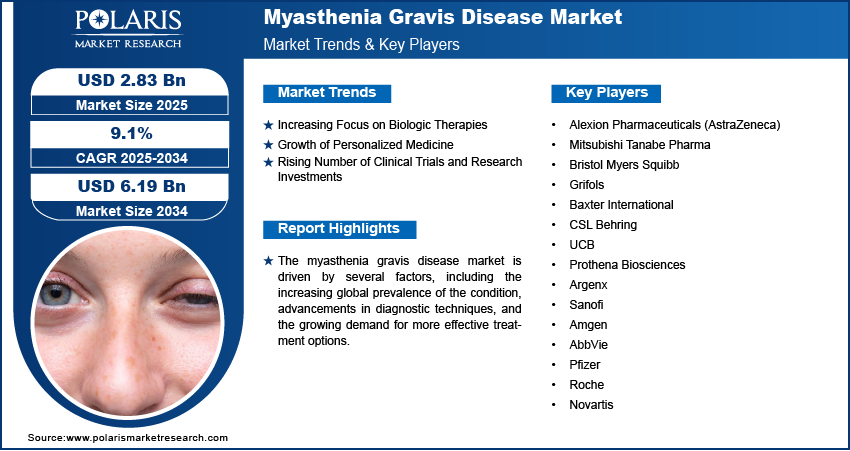
The myasthenia gravis disease market size was valued at USD 2.85 billion in 2025. The market is projected to grow from USD 3.07 billion in 2026 to USD 5.60 billion by 2034, exhibiting a CAGR of 7.80% during the forecast period.
Market Statistics
Key Takeaways
- North America held the largest market share of 46.0% in 2025. Advanced healthcare infrastructure and high awareness levels drive the regional market dominance.
- Asia Pacific is projected to witness the fastest growth at a 10.11% CAGR. This growth is primarily attributed to the expanding healthcare infrastructure and a rising patient population in emerging economies.
- The cholinesterase inhibitors segment held the largest market share of 58.0% in 2025. These drugs are considered first-line treatments for the majority of MG patients.
- The hospitals segment dominated with the largest market share of 70.0% in 2025. Hospitals serve as the primary setting for the treatment of severe or complex cases of myasthenia gravis.
- The clinics segment is projected to witness the highest growth rate of 9.66%. This is due to the shift toward outpatient care and the increasing number of specialized MG clinics.
Note: Figures and projections outlined in this report are the result of Polaris Market Research’s proprietary analytical processes, grounded in the latest available datasets and market observations.
Industry Dynamics
- The rising focus on biologic therapies, especially monoclonal antibodies, is one of the key factors driving market growth.
- The shift towards precision medicine is becoming more prevalent with advancements in genetic research and molecular profiling.
- Emerging pipeline therapies are expected to create several market opportunities.
- High costs of specialized therapies may present challenges.
AI Impact on Myasthenia Gravis Disease Market
- AI assists researchers in the analysis of clinical data to improve knowledge of myasthenia gravis.
- It is useful in early detection through pattern identification and diagnosis.
- AI helps in developing drugs and clinical tests by conducting analysis on huge amounts of data gathered during research.
- AI helps in patient monitoring and personalized treatment plans.
Myasthenia Gravis (MG) is a rare, chronic autoimmune disorder that causes weakness in the skeletal muscles, affecting voluntary movements. The myasthenia gravis disease market encompasses treatments and therapies aimed at managing the symptoms and progression of the disease. The market is primarily driven by the increasing global prevalence of MG, advancements in diagnostic techniques, and the development of innovative therapies, including biologics and immunosuppressive treatments. Growing awareness and the expansion of clinical trials for MG are also contributing to market growth. Additionally, the rising demand for personalized medicine and improved healthcare infrastructure in emerging markets are notable trends influencing the market. These factors, along with continued research and development, are expected to drive growth in the MG disease treatment market.
Source: Polaris Market Research Analysis
To Understand More About this Research: Download Sample Report
Generalized MG vs Ocular MG
| Factor | Generalized Myasthenia Gravis (gMG) | Ocular Myasthenia Gravis (OMG) |
| Parts Affected | Multiple muscle groups | Eye muscles specifically |
| Symptoms | Muscle weakness and fatigue | Drooping eyelids, double vision |
| Severity | Severe condition | Milder condition in most cases |
| Treatment | Systemic treatment is usually required | Localized treatment may be required in some cases |
| Disease Progression | Greater likelihood of complications | Can evolve into generalized MG |
Market Dynamics
Increasing Focus on Biologic Therapies
One of the major myasthenia gravis (MG) disease market driver is the growing focus on biologic therapies, particularly monoclonal antibodies. The increasing recognition of the autoimmune nature of MG has led to the development of targeted treatments that modify the immune response. The approval of drugs such as eculizumab (Soliris) and ravulizumab (Ultomiris) has significantly advanced the treatment options available for patients, offering better disease control and fewer side effects compared to traditional therapies. Biologic therapies are proving to be highly effective for patients with severe or treatment-resistant MG, driving their demand.
Growth of Personalized Medicine
The trend toward personalized medicine in the MG market is becoming more prominent as advancements in genetic research and molecular profiling allow for more tailored treatments. Personalized therapies aim to optimize the therapeutic outcomes based on the individual’s specific disease characteristics, genetic makeup, and response to previous treatments. This trend is driven by the growing understanding of the molecular mechanisms underlying MG, enabling clinicians to provide more effective and targeted interventions. The increasing use of genetic testing and biomarkers is expected to enhance the precision of treatments. The shift toward personalized medicine in MG is evidenced by the expanding clinical trials, such as those involving Zilucoplan, a complement inhibitor being evaluated for its targeted effects on MG symptoms.
Rising Number of Clinical Trials and Research Investments
The number of clinical trials targeting myasthenia gravis has been steadily increasing as pharmaceutical companies and research institutions intensify efforts to find new and more effective treatments. This surge in clinical trials is driven by the unmet need for therapies that can provide long-term disease control with fewer side effects. The growing research investment reflects the industry's recognition of MG as a significant therapeutic challenge, especially for patients with severe forms of the disease. Additionally, these trials are exploring new treatment avenues, such as gene therapy and cell-based therapies, promising further innovation in the myasthenia gravis disease market.
Emergence of FcRn Inhibitor Therapies
FcRn inhibitor treatments represent an emerging innovation in myasthenia gravis therapy. This is because these treatments operate on the principle of inhibiting the activity of the neonatal Fc receptor (FcRn), a step that assists in lowering the number of antibodies causing problems for patients. In comparison to existing treatments for the condition, the new category targets the actual biological processes behind myasthenia gravis with great precision. Encouraging performance metrics, regulatory clearances, and physician satisfaction are driving adoption among medical practitioners, thereby turning FcRn inhibitors into one of the fastest-growing treatment categories in the myasthenia gravis space.
Rare Disease Awareness and Diagnosis Expansion
The heightened awareness of autoimmune conditions has helped ensure better diagnosis and treatment of myasthenia gravis worldwide. Campaigns to raise awareness, support groups, and health education initiatives are helping detect symptoms such as muscle weakness, droopy eyelids, and fatigue, among others, associated with myasthenia gravis. Further, advancements in diagnostic techniques, such as antibody testing, electromyography, and neurological examinations, help facilitate rapid diagnosis of myasthenia gravis. With enhanced medical knowledge on the disease, neurology is supposed to be simplified.
Source: Polaris Market Research Analysis
Myasthenia Gravis Disease Market Segment Insights
Myasthenia Gravis Disease Market Assessment by Treatment Type
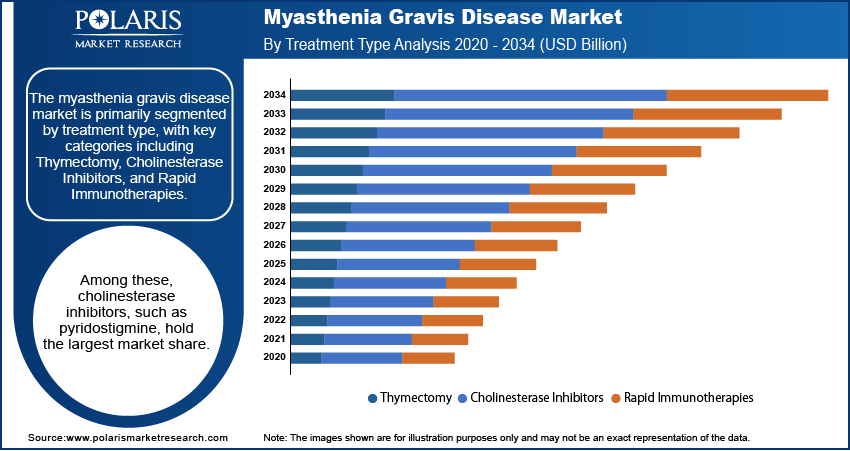
The myasthenia gravis disease market segmentation, based on treatment type, includes thymectomy, cholinesterase inhibitors, and rapid immunotherapies. Among these, cholinesterase inhibitors, such as pyridostigmine, hold the largest myasthenia gravis disease market share of 58.0%. These drugs are considered first-line treatments for the majority of MG patients, as they help improve neuromuscular transmission by inhibiting the breakdown of acetylcholine. Cholinesterase inhibitors have been widely used for years, contributing to their dominant position in the market. Their ability to alleviate symptoms, especially in mild to moderate cases, makes them a staple in the management of MG, resulting in steady demand across global markets.
Rapid immunotherapies, including intravenous immunoglobulin (IVIG) and plasmapheresis, are gaining significant traction with 12.02% CAGR due to their effectiveness in managing acute exacerbations and severe MG symptoms. This segment is also experiencing the fastest growth, as these therapies provide rapid symptom relief for patients with refractory MG who do not respond well to other treatments. The growing number of clinical studies and the approval of newer immunosuppressive agents are driving the expansion of this segment. Thymectomy, a surgical procedure often recommended for patients with thymoma or those with generalized MG, continues to hold a crucial position but remains less widespread compared to pharmacological treatments. However, its role in long-term disease management and certain subsets of MG patients ensure its steady contribution to the market.
Myasthenia Gravis Disease Market Evaluation by End Use
The myasthenia gravis disease market, segmented by end-use, includes hospitals and clinics, with hospitals holding the largest market share of 70.0% in 2025. Hospitals serve as the primary setting for the treatment of severe or complex cases of Myasthenia Gravis, where patients often require intensive care, diagnostic tests, and a multidisciplinary approach to disease management. The advanced infrastructure and availability of specialized medical professionals in hospitals make them the preferred choice for both acute exacerbations and long-term treatment management. Hospitals also provide access to cutting-edge therapies such as intravenous immunoglobulin (IVIG), plasmapheresis, and surgical interventions like thymectomy, further reinforcing their dominant position in the market.
The clinics segment, while smaller, is experiencing the highest growth rate with 9.66% CAGR. The shift toward outpatient care and the increasing number of specialized MG clinics offering tailored treatments have contributed to this growth. Clinics provide more focused care for stable or less severe cases of MG, allowing for routine follow-ups and management with medications like cholinesterase inhibitors. The growing demand for cost-effective and accessible care is driving more patients toward clinics, particularly in regions with expanding healthcare infrastructure. With the increasing prevalence of MG and the rising adoption of outpatient care models, the clinics segment is expected to continue registering robust growth.
Source: Polaris Market Research Analysis
Regional Insights
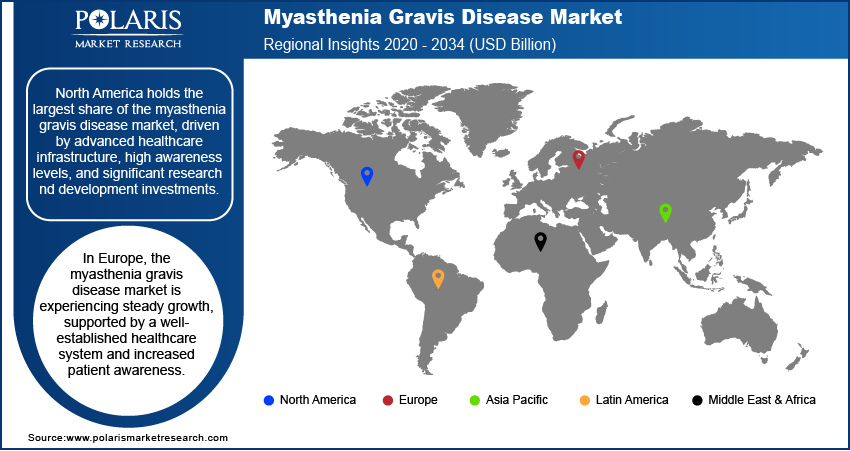
By region, the study provides myasthenia gravis disease market insights into North America, Europe, Asia Pacific, Latin America, and the Middle East & Africa. North America holds the largest market share of 46.0% in 2025, driven by advanced healthcare infrastructure, high awareness levels, and significant research and development investments. The US, in particular, leads in the adoption of new treatments such as biologics and immunotherapies, supported by a robust healthcare system and favorable reimbursement policies. Additionally, the region benefits from a large patient population and high demand for specialized care, including hospital-based myasthenia gravis disease treatments and clinical trials. The growing focus on personalized medicine and the presence of major pharmaceutical companies further contribute to North America's dominance. Other regions, such as Europe and Asia Pacific, are also expanding their market presence, but North America remains the leading contributor to market growth due to its well-established healthcare network and innovative treatment options.
The myasthenia gravis disease market in Europe is experiencing steady growth with 6.88% CAGR, supported by a well-established healthcare system and increased patient awareness. Countries such as Germany, the UK, and France are key contributors, driven by their advanced medical infrastructure and strong emphasis on research and development in rare diseases. The adoption of biologic therapies and rapid immunotherapies is rising, particularly in countries with high healthcare expenditures. Additionally, the availability of specialized centers for rare disease management and rare disease genetic testing with the growing number of clinical trials are expanding treatment options for MG patients. However, varying reimbursement policies across different European countries can create disparities in access to advanced treatments.
Asia Pacific is witnessing the fastest growth rate of 10.11% CAGR in the myasthenia gravis market. This growth is primarily attributed to the expanding healthcare infrastructure, increasing healthcare awareness, and a rising patient population in countries such as China, India, and Japan. The demand for treatment options, particularly biologics and immunotherapies, is increasing as healthcare systems in these countries are improving and expanding access to specialized care. Japan, with its advanced medical technologies, plays a significant role in the region’s market, while India and China are emerging markets where better access to healthcare services and growing awareness are expected to drive myasthenia gravis disease market expansion. Moreover, the rising trend of medical tourism and clinical trials in these countries’ further boosts market growth.
Source: Polaris Market Research Analysis
Myasthenia Gravis Disease Market – Key Market Players and Competitive Insights
Key players in the myasthenia gravis disease market include Alexion Pharmaceuticals (AstraZeneca); Amgen; Argenx; Baxter International; Cabaletta Bio; Cartesian Therapeutics; CSL Behring; Dianthus Therapeutics; Grifols; Immunovant; Johnson & Johnson; NMD Pharma; Novartis; Regeneron Pharmaceuticals; UCB.
The competitive landscape is defined by a clash between established immunology powerhouses and nimble biotech disruptors. Alexion (AstraZeneca) and CSL Behring anchor the complement and plasma-derived segments respectively, leveraging decades of clinical credibility and global reach. However, Argenx has reshaped the terrain with its FcRn inhibitor, directly challenging UCB and Immunovant, who are advancing competing candidates in the same mechanistic class. Regeneron and Amgen apply their broad immuno-science platforms, while Johnson & Johnson and Novartis deploy formidable commercial machinery. Meanwhile, Cabaletta Bio and Cartesian Therapeutics are pushing the frontier with cell-based and mRNA-engineered approaches, aiming for transformative, durable responses rather than chronic management. Dianthus Therapeutics differentiates through selective complement inhibition, contrasting with Grifols and Baxter's established IVIG franchises. The battleground centers on differentiating safety profiles, dosing convenience, and positioning in earlier treatment lines. Strategic partnerships, acquisitions, and biomarker-driven development increasingly determine competitive advantage in this rapidly evolving specialty landscape.
Key Companies in Myasthenia Gravis Disease Market
- Alexion Pharmaceuticals (AstraZeneca)
- Amgen
- Argenx
- Baxter International
- Cabaletta Bio
- Cartesian Therapeutics
- CSL Behring
- Dianthus Therapeutics
- Grifols
- Immunovant
- Johnson & Johnson
- NMD Pharma
- Novartis
- Regeneron Pharmaceuticals
- UCB
Myasthenia Gravis Disease Market Developments
- June 2026: Novartis revealed its Phase III study to evaluate remibrutinib for adult generalized myasthenia gravis (gMG). The study aims to evaluate the safety, efficacy, and tolerability of remibrutinib in gMG patients receiving stable SOC treatment. (source: novartis.com)
- January 2026: Cartesian Therapeutics, Inc. highlighted recent progress and presented the 2026 outlook across the cell therapy pipeline targeting autoimmune diseases. The company advanced its lead asset, Descartes-08, in Phase 3 clinical development as a prominent CAR-T therapy candidate for generalized myasthenia gravis (gMG). (source: cartesiantherapeutics.com)
Industry Developments
By Treatment Type Outlook
- Thymectomy
- Cholinesterase Inhibitors
- Rapid Immunotherapies
By End Use Outlook
- Hospitals
- Clinics
By Regional Outlook
- North America
- US
- Canada
- Europe
- Germany
- France
- UK
- Italy
- Spain
- Netherlands
- Russia
- Rest of Europe
- Asia Pacific
- China
- Japan
- India
- Malaysia
- South Korea
- Indonesia
- Australia
- Vietnam
- Rest of Asia Pacific
- Middle East & Africa
- Saudi Arabia
- UAE
- Israel
- South Africa
- Rest of Middle East & Africa
- Latin America
- Mexico
- Brazil
- Argentina
- Rest of Latin America
Myasthenia Gravis Disease Market Report Scope
| Report Attributes | Details |
| Market Size Value in 2025 | USD 2.85 billion |
| Market Size Value in 2026 | USD 3.07 billion |
| Revenue Forecast in 2034 | USD 5.60 billion |
| CAGR | 7.80% from 2026 to 2034 |
| Base Year | 2025 |
| Historical Data | 2021–2024 |
| Forecast Period | 2026–2034 |
| Quantitative Units | Revenue in USD billion and CAGR from 2026 to 2034 |
| Report Coverage | Revenue Forecast, Market Competitive Landscape, Growth Factors, and Industry Trends |
| Segments Covered |
|
| Regional Scope |
|
| Competitive Landscape |
|
| Report Format |
|
| Customization | Report customization as per your requirements with respect to countries, regions, and segmentation. |
Source: Polaris Market Research Analysis
Myasthenia Gravis Disease Market FAQ's
? The myasthenia gravis disease market size was valued at USD 2.85 billion in 2025 and is projected to grow to USD 5.60 billion by 2034.
? The market is projected to register a CAGR of 7.80% during the forecast period, 2026-2034.
? North America held the largest share of the market.of 46.0%.
? Notable companies in the market include Alexion Pharmaceuticals (AstraZeneca); Amgen; Argenx; Baxter International; Cabaletta Bio; Cartesian Therapeutics; CSL Behring; Dianthus Therapeutics; Grifols; Immunovant; Johnson & Johnson; NMD Pharma; Novartis; Regeneron Pharmaceuticals; UCB
? The cholinesterase inhibitors segment accounted for the largest market share of 58.0%.
? The hospitals segment accounted for the largest share of the market of 70.0%.
? Myasthenia Gravis (MG) is a chronic autoimmune disorder that causes weakness in the skeletal muscles, particularly those responsible for controlling voluntary movements like eye muscles, facial muscles, and limbs. The condition occurs when the body’s immune system produces antibodies that interfere with the communication between nerve cells and muscle cells, preventing the normal transmission of signals. This leads to muscle weakness that worsens with activity and improves with rest. The severity of the disease varies among individuals, with symptoms ranging from mild to life-threatening. Common symptoms include drooping eyelids, double vision, difficulty swallowing, and overall muscle weakness. MG is typically managed with treatments that include medications, immunotherapies, and sometimes surgical options like thymectomy.
? A few key myasthenia gravis disease market trends are described below: Increased focus on biologic therapies: Growing adoption of monoclonal antibodies and other biologics, such as eculizumab and ravulizumab, for more effective treatment of severe MG. Shift toward personalized medicine: Advances in genetic research and molecular profiling, allowing for tailored therapies based on individual patient characteristics. Rising number of clinical trials: Increasing investment in research and development, with many new therapies undergoing clinical trials for better management of MG. Expansion of immunotherapies: The growing use of intravenous immunoglobulin (IVIG) and plasmapheresis for managing acute symptoms and exacerbations in MG patients.
? A new company entering the Myasthenia Gravis market could focus on developing innovative therapies that target underserved patient populations, such as those with refractory or severe forms of the disease. Investing in biologics and personalized medicine, including monoclonal antibodies and gene therapies, would differentiate the company by addressing unmet needs in treatment efficacy. Additionally, focusing on improving patient access to medications through cost-effective solutions, along with partnerships for expanding clinical trials and research, could position the company as a leader in advancing MG care. Strengthening global distribution networks, especially in emerging markets, would also offer a competitive edge.
? Companies manufacturing, distributing, or purchasing Myasthenia Gravis Disease and related products, and other consulting firms must buy the report.
Download Sample Report of Myasthenia Gravis Disease Market Size - Industry Report, 2026-2034
Please fill out the form to request a customized copy of the research report.


