
Prostate Cancer Treatment Market Size, Share, Trends, Industry Analysis Report, 2026-2034
REPORT DETAILS
Prostate Cancer Treatment Market Summary
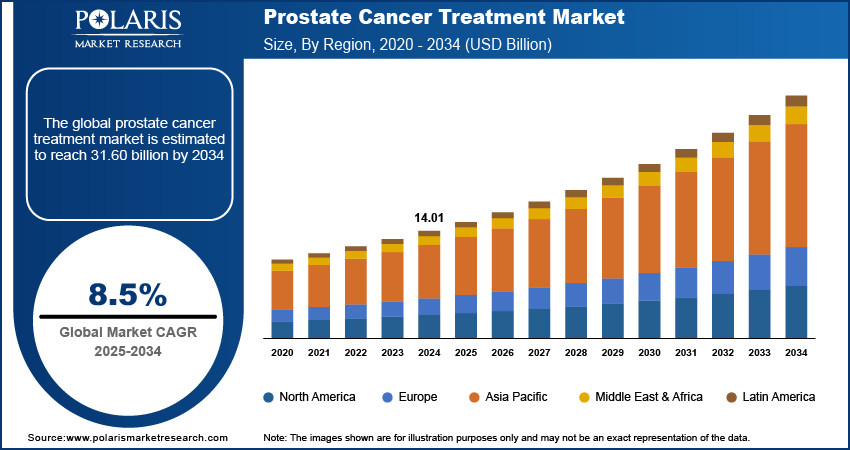
The prostate cancer treatment market size was valued at USD 18.82 billion in 2025 and is expected to register a CAGR of 10.9% from 2026 to 2034. The rising prevalence of prostate cancer and government initiatives to spread awareness regarding the disease propel the industry growth. Also, the rising investments from government and private entities in developing innovative screening and diagnostic methods will drive the market expansion in the coming years.
Market Statistics
Key Insights
- North America held the largest share of 42.0% in 2025. It is primarily driven by the high prevalence of prostate cancer and the presence of advanced healthcare infrastructure.
- Asia Pacific is projected to witness rapid growth at a 13.20% CAGR. The growth is fueled by increasing healthcare investments and improved access to medical care.
- The hormonal therapy segment held the largest revenue share of 54.0% in 2025. It is due to its widespread use as the first-line treatment for prostate cancer.
- The hospital pharmacies segment dominated with a 52.0% market share in 2025. The leadership position is attributed to their role in facilitating access to specialized oncology treatments.
- The online pharmacies segment is projected to witness the highest growth rate of 14.60%. The segment’s growth is driven by increasing digitalization and a shift toward home-based healthcare solutions.
Note: Figures and projections outlined in this report are the result of Polaris Market Research’s proprietary analytical processes, grounded in the latest available datasets and market observations.
Industry Dynamics
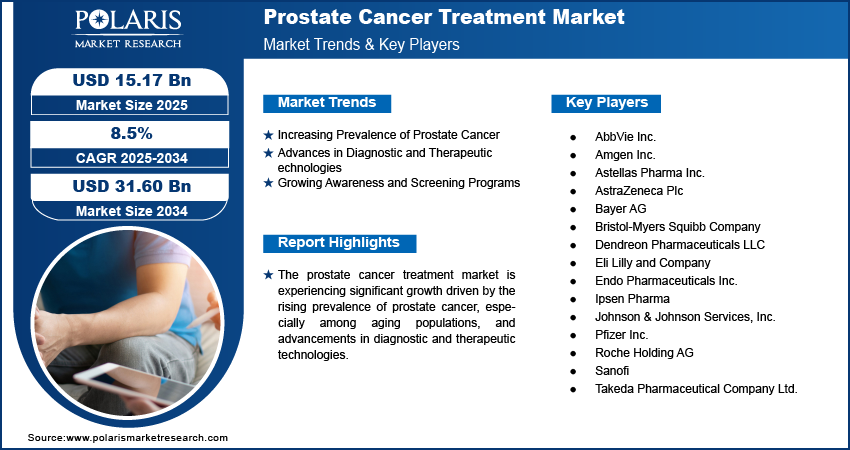
- Increasing prevalence of prostate cancer drives the demand for disease treatment.
- Advancements in diagnostic and therapeutic technologies boost the industry expansion.
- Growing awareness and screening programs are expected to create lucrative opportunities during the forecast period.
- High cost of treatments hinders the market growth.
AI Impact on Prostate Cancer Treatment Market
- Artificial intelligence (AI) tools guide targeted therapies such as transurethral ultrasound ablation and support robotic surgery precision.
- They help manage side effects, including erectile dysfunction, post-surgery, by tailoring intervention.
- AI-driven platforms integrate imaging, biomarkers, and pathology to reduce unnecessary biopsies.
- These systems are used to reduce reliance on subjective clinician judgment and normalize personalized care.
Source: Polaris Market Research Analysis
To Understand More About this Research:Download Sample Report
The prostate cancer treatment market encompasses the development, production, and distribution of therapies and interventions used to manage prostate cancer. This includes hormonal therapies, chemotherapy, radiation therapy, cancer immunotherapy, and advanced treatments such as targeted therapies and radiopharmaceuticals. Key drivers of this market include the rising prevalence of prostate cancer globally, advancements in diagnostic and therapeutic technologies, and increasing healthcare expenditures. Notable trends include the growing adoption of minimally invasive surgeries, the emergence of precision medicine, and the increasing use of combination therapies to improve treatment outcomes. Regulatory approvals for novel therapies and growing awareness about early screening are further fueling the prostate cancer treatment market demand.
Market Dynamics
Increasing Prevalence of Prostate Cancer
The prevalence of prostate cancer is rising significantly across the world, driven by population aging, increasing life expectancy, and improved disease screening and diagnosis. The growing number of patients is increasing demand for hormonal therapies, chemotherapy, targeted therapies, and other advanced treatment options. Additionally, greater awareness of prostate cancer and expanding access to healthcare services are supporting earlier diagnosis and treatment adoption, thereby driving prostate cancer treatment market growth.
Advances in Diagnostic and Therapeutic Technologies
Enhanced imaging techniques, such as multiparametric MRI and PSMA PET-CT, have improved early detection and staging accuracy of cancer. On the therapeutic front, innovations such as radiopharmaceuticals, robotic-assisted surgeries, and targeted therapies are becoming more accessible. Technological developments are assisting healthcare professionals in providing advanced and personalized treatment solutions. Therefore, technological advancements in diagnostics and therapeutics have positively impacted the prostate cancer treatment market development.
Growing Awareness and Screening Programs
Efforts by organizations such as the American Cancer Society and the European Association of Urology have emphasized early screening and regular prostrate health checks, including men aged 50 years and above. Increased awareness has led to earlier detection, which significantly improves treatment success rates. Hence, awareness campaigns and expanded prostate cancer screening programs are driving the prostate cancer treatment market growth.
Precision Medicine and Biomarker Testing
Precision medicine has started gaining prominence in prostate cancer treatment as health professionals are now relying on genomic information when making decisions regarding treatment plans. This is achieved by testing biomarkers and conducting genomic profiling to identify specific mutations and diseases that may affect how patients respond to certain therapies. Such measures can lead to better disease treatment, as health professionals will be able to determine which treatments work well for their patients. Continued progress in cancer genomics is bound to lead to further application of these techniques for treating prostate cancer.
Long-Term Survivorship and Quality-of-Life Management
Survivorship and the management of quality of life issues are gradually becoming an integral part of managing prostate cancer because many patients who have received treatment are surviving for prolonged periods. While the primary concern is controlling the progression of the illness, clinicians are increasingly concerned with helping patients cope with various health challenges associated with recovery. Programs related to survivorship can entail regular follow-ups, management of urinary and sexual function, psychological counseling, rehabilitation, and various other educational efforts. These activities ensure that patients are in good physical and psychological condition and that their quality of life is maintained at optimal levels.
Source: Polaris Market Research Analysis
Segment Insights
Market Assessment – Drug Class-Based Insights
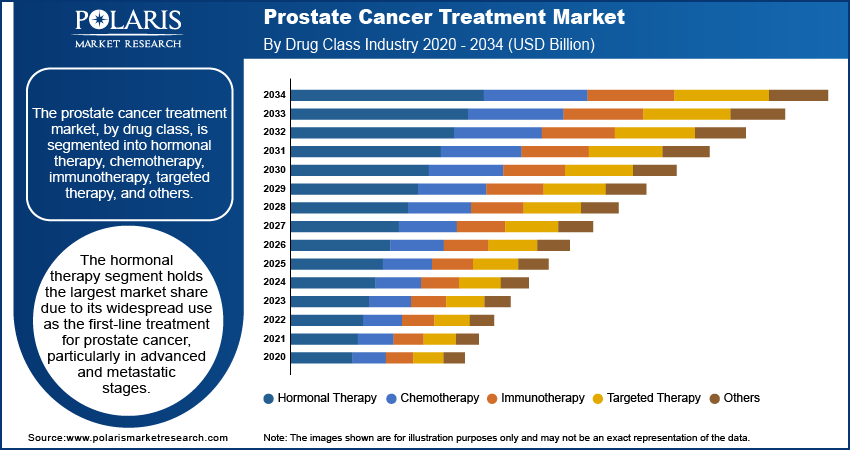
The prostate cancer treatment market, by drug class, is segmented into hormonal therapy, chemotherapy, immunotherapy, targeted therapy, and others. The hormonal therapy segment holds the largest market share of 54.0% in 2025 due to its widespread use as the first-line treatment for prostate cancer, particularly in advanced and metastatic stages. Androgen deprivation therapies (ADTs) and androgen receptor inhibitors are key components of this segment, benefiting from their established efficacy and the growing number of patients diagnosed at advanced stages. Drugs such as enzalutamide and abiraterone acetate are significant contributors to the dominance of this segment, supported by their broad adoption in clinical practice.
The targeted therapy segment is projected to register the highest growth at a CAGR of 14.10% during the forecast period, driven by advancements in precision medicine and increasing approvals of novel agents. The emergence of radiopharmaceuticals and PARP inhibitors has expanded the therapeutic options for patients suffering from specific genetic mutations or metastatic conditions. The FDA approval of Lynparza (olaparib) for BRCA-mutated metastatic prostate cancer underscores the growing importance of personalized medicine biomarker in this segment. Rising research and development activities and an increasing focus on biomarker-driven treatments are expected to fuel the demand for targeted therapies, marking a transformative shift in prostate cancer management.
Market Outlook – Distribution Channel-Based Insights
The prostate cancer treatment market, by distribution channel, is segmented into hospital pharmacies, drug stores & retail pharmacies, and online pharmacies. The hospital pharmacies segment dominates the prostate cancer treatment market with 52.0% share in 2025 due to their role in facilitating access to specialized oncology treatments. These pharmacies are integral to the administration of advanced therapies, including hormonal treatments, chemotherapy, and targeted therapies, as they ensure proper handling, storage, and dispensing of these drugs under professional supervision. Additionally, the presence of oncology departments within hospitals supports the preference for hospital pharmacies, particularly for injectable and infused therapies requiring professional administration.
The online pharmacies segment is experiencing the highest growth rate of 14.60% CAGR, driven by increasing digitalization and a shift toward convenient, home-based healthcare solutions. The ease of ordering medications online, coupled with enhanced delivery services and the availability of patient support programs, has contributed to their rising popularity. This trend has been further accelerated by the pandamic pandemic, which heightened the adoption of online pharmacy platforms. Patients undergoing prostate cancer treatment with oral medications, such as hormonal therapies or targeted drugs, increasingly rely on online channels, supported by the growing adoption of telemedicine and e-prescriptions.
Source: Polaris Market Research Analysis
Regional Insights
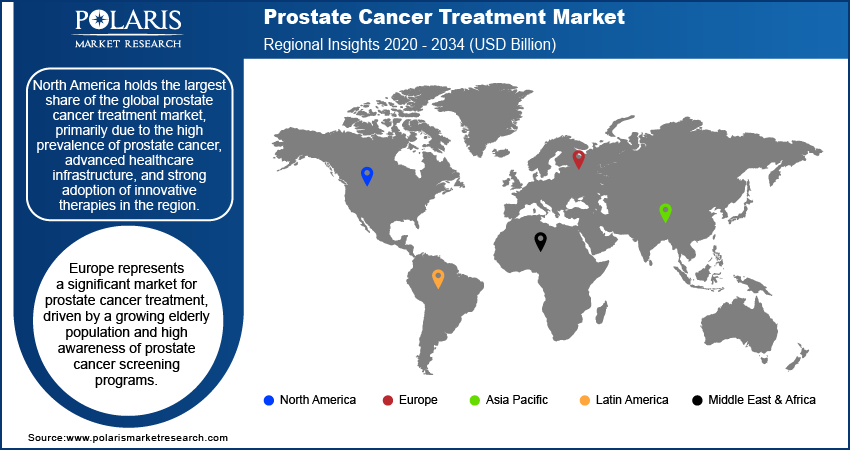
By region, the study provides prostate cancer treatment market insights into North America, Europe, Asia Pacific, Latin America, and the Middle East & Africa. North America holds the largest share of 42.0% of the prostate cancer treatment market revenue in 2025, primarily due to the high prevalence of prostate cancer, the presence of advanced healthcare infrastructure, and the strong adoption of innovative therapies in the region. According to the American Cancer Society, prostate cancer is the most common cancer among men in the US, with an estimated 288,300 new cases in 2023 alone. The region benefits from significant investments in research and development, leading to early access to novel treatments such as targeted therapies and immunotherapies. Additionally, widespread awareness campaigns and robust screening programs contribute to early diagnosis and increased treatment uptake. The presence of key market players and favorable reimbursement policies further boost the dominance of North America in the global prostate cancer treatment market.
In 2025, Europe represents 27.0% share of the market for prostate cancer treatment, driven by a growing elderly population and high awareness of prostate cancer screening programs. Countries such as Germany, the UK, and France lead the regional market due to their advanced healthcare systems and strong focus on cancer research. Government initiatives promoting early diagnosis and the availability of innovative therapies contribute to market growth. Additionally, ongoing clinical trials and collaborations between academic institutions and pharmaceutical companies further support advancements in prostate cancer management across the region.
Asia Pacific is emerging as a rapidly growing market for prostate cancer treatment at a CAGR of 13.20%, fueled by increasing healthcare investments, rising prevalence of the disease, and improved access to medical care. Countries such as China, Japan, and India are witnessing significant growth due to the expanding healthcare infrastructure and the adoption of modern diagnostic and therapeutic approaches. Rising awareness about prostate cancer, coupled with government-led health campaigns and initiatives, is driving earlier diagnosis and treatment. Asia Pacific advanced treatments such as targeted therapies and radiopharmaceuticals further propel the prostate cancer treatment market expansion in Asia Pacific.
Source: Polaris Market Research Analysis
Key Players and Competitive Insights
The prostate cancer treatment market includes active participation from companies such as AbbVie Inc.; Accord Healthcare; Amgen Inc.; Astellas Pharma Inc.; AstraZeneca Plc; Bayer AG; Dendreon Pharmaceuticals LLC; Ferring Pharmaceuticals; Ipsen Pharma; Johnson & Johnson Services, Inc.; Novartis AG; Pfizer Inc.; Sanofi; Takeda Pharmaceutical Company Ltd.; Tolmar Pharmaceuticals, Inc.
List of Key Companies:
- AbbVie Inc.
- Accord Healthcare
- Amgen Inc.
- Astellas Pharma Inc.
- AstraZeneca Plc
- Bayer AG
- Dendreon Pharmaceuticals LLC
- Ferring Pharmaceuticals
- Ipsen Pharma
- Johnson & Johnson Services, Inc.
- Novartis AG
- Pfizer Inc.
- Sanofi
- Takeda Pharmaceutical Company Ltd.
- Tolmar Pharmaceuticals, Inc.
Future Outlook
The market for prostate cancer treatment is forecasted to register steady growth owing to the progress made in precision medicine, immunotherapy, radiopharmaceuticals, and AI diagnostics. Hormone therapy may be among the prominent treatment modalities, whereas targeted drug and radioligand therapies would emerge as major growth opportunities for patients suffering from advanced and metastatic prostate cancer. Biomarker testing and personalized therapy could help in improving treatment efficacy and outcomes in patients diagnosed with prostate cancer.
Prostate Cancer Treatment Industry Developments
-
June 2026: RadioMedix announced receiving FDA approval of its Generic Ga-68 PSMA-11 radiodiagnostic for prostate cancer. The company stated that the approval expands its precision nuclear medicine portfolio. It also supports its commitment to advance diagnostic radiopharmaceuticals. (source: globenewswire.com)
-
April 2026: TOBY, Inc. announced receiving FDA Breakthrough Device Designation for its urine-based Multi-Cancer Early Detection (MCED) test. According to TOBY, the designation recognizes the potential of the test to allow for the earlier detection of multiple cancers through a urine sample. It is expected to address a large unmet requirement in cancer screening. (source: toby.health)
Prostate Cancer Treatment Market Segmentation
By Drug Class Outlook
- Hormonal Therapy
- Chemotherapy
- Immunotherapy
- Targeted Therapy
- Others
By Distribution Channel Outlook
- Hospital Pharmacies
- Drug Stores & Retail Pharmacies
- Online Pharmacies
By Regional Outlook
- North America
- US
- Canada
- Europe
- Germany
- France
- UK
- Italy
- Spain
- Netherlands
- Russia
- Rest of Europe
- Asia Pacific
- China
- Japan
- India
- Malaysia
- South Korea
- Indonesia
- Australia
- Vietnam
- Rest of Asia Pacific
- Middle East & Africa
- Saudi Arabia
- UAE
- Israel
- South Africa
- Rest of Middle East & Africa
- Latin America
- Mexico
- Brazil
- Argentina
- Rest of Latin America
Report Scope
| Report Attributes | Details |
| Market Size Value in 2025 | USD 18.82 billion |
| Market Size Value in 2026 | USD 20.83 billion |
| Revenue Forecast by 2034 | USD 47.78 billion |
| CAGR | 10.9% from 2026 to 2034 |
| Base Year | 2025 |
| Historical Data | 2021–2024 |
| Forecast Period | 2026–2034 |
| Quantitative Units | Revenue in USD billion and CAGR from 2026 to 2034 |
| Report Coverage | Revenue Forecast, Market Competitive Landscape, Growth Factors, and Trends |
| Segments Covered |
|
| Regional Scope |
|
| Competitive Landscape |
|
| Report Format |
|
| Customization | Report customization as per your requirements with respect to countries, regions, and segmentation. |
Source: Polaris Market Research Analysis
How is the report valuable for an organization?
Workflow/Innovation Strategy:
The prostate cancer treatment market has been segmented into detailed segments of drug class and distribution channels. Moreover, the study provides the reader with a detailed understanding of the different segments at both the global and regional levels.
Growth/Marketing Strategy:
The prostate cancer treatment market growth and marketing strategy focuses on expanding therapeutic portfolios through research and development, strategic partnerships, and clinical trials to introduce innovative therapies. Companies are emphasizing personalized medicine and biomarker-driven treatments to address specific patient needs. Direct engagement with healthcare professionals through educational initiatives and awareness campaigns enhances market penetration. Additionally, the adoption of digital marketing strategies, including telemedicine platforms and e-prescription systems, supports patient accessibility and strengthens brand visibility. These approaches are complemented by collaborations with healthcare providers to streamline treatment adoption.
Prostate Cancer Treatment Market FAQ's
The prostate cancer treatment market size was valued at USD 18.82 billion in 2025 and is projected to grow to USD 47.78 billion by 2034
The market is projected to register a CAGR of 10.9% during the forecast period
North America held the largest share of 42.0% of the market in 2025.
The prostate cancer treatment market includes active participation from companies such as AbbVie Inc.; Accord Healthcare; Amgen Inc.; Astellas Pharma Inc.; AstraZeneca Plc; Bayer AG; Dendreon Pharmaceuticals LLC; Ferring Pharmaceuticals; Ipsen Pharma; Johnson & Johnson Services, Inc.; Novartis AG; Pfizer Inc.; Sanofi; Takeda Pharmaceutical Company Ltd.; Tolmar Pharmaceuticals, Inc.
The hormonal therapy segment accounted for the largest share of 54.0% of the market in 2025.
The hospital pharmacies segment accounted for the largest share of 52.0% of the market in 2025.
Prostate cancer treatment refers to the medical interventions used to manage and cure prostate cancer, a type of cancer that occurs in the prostate, a small gland in the male reproductive system. Treatment options vary based on the cancer's stage, grade, and the patient's overall health. Common treatments include surgery to remove the prostate (prostatectomy), radiation therapy, hormonal therapy to block the production or action of male hormones (androgens), chemotherapy, immunotherapy, and targeted therapies. In advanced stages, treatments such as targeted therapy, which focuses on specific cancer cell markers, and radiopharmaceuticals, used to target cancer cells with radiation, are employed. The aim of prostate cancer treatment is to eliminate the cancer or control its growth, alleviate symptoms, and improve the life quality for patients.
A few key trends in the market are described below: Shift Toward Personalized Medicine: Increasing focus on precision medicine, where treatments are tailored based on genetic profiles and biomarkers. Advancements in Immunotherapy: Growing use of immunotherapies, such as checkpoint inhibitors, to stimulate the body’s immune system to target prostate cancer cells. Adoption of Minimally Invasive Procedures: Rising adoption of less invasive surgical and radiation techniques, improving recovery times and reducing complications. Use of Combination Therapies: Growing trend of combining different treatment modalities, such as hormonal therapy with chemotherapy or immunotherapy, to improve outcomes.
For a new company entering the prostate cancer treatment market, focusing on personalized medicine and biomarker-driven treatments could provide a competitive edge. By developing therapies tailored to individual genetic profiles, the company can address the growing demand for precision oncology. Additionally, exploring novel immunotherapies, radiopharmaceuticals, or combination therapies presents significant growth opportunities, as these treatment modalities are gaining traction in advanced-stage prostate cancer. Leveraging digital health platforms for patient engagement and treatment adherence can also enhance market presence. As the market continues to grow due to increasing prostate cancer incidence, improved diagnostics, and advancements in therapeutic options, focusing on these areas can help a new company stay ahead of the competition.
Companies manufacturing, distributing, or purchasing prostate cancer treatment-related products and other consulting firms must buy the report.
Download Sample Report of Prostate Cancer Treatment Market
Please fill out the form to request a customized copy of the research report.


