
Antimicrobial Resistance Diagnostics Market Size, Share, and Forecast 2026 to 2034
REPORT DETAILS
Antimicrobial Resistance Diagnostics Market Summary
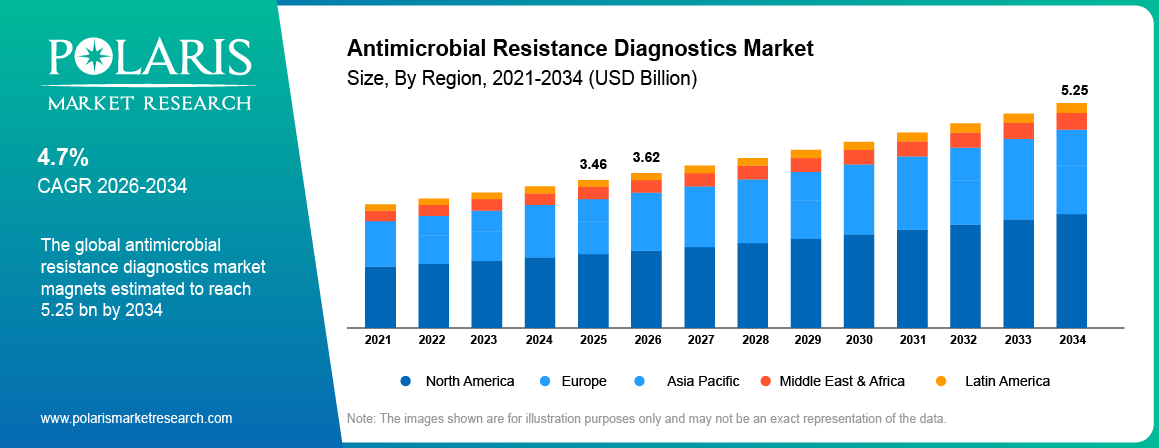
The Antimicrobial Resistance Diagnostics Market size was valued at USD 3.46 Billion in 2025. The market is expected to grow at a CAGR of 4.7% from 2026 to 2034. The market is driven by the growing need for timely identification of resistant pathogens, rising demand for rapid antimicrobial susceptibility testing (AST), expanding adoption of molecular diagnostics, and increasing emphasis on antimicrobial stewardship.
Market Statistics
Key Takeaways
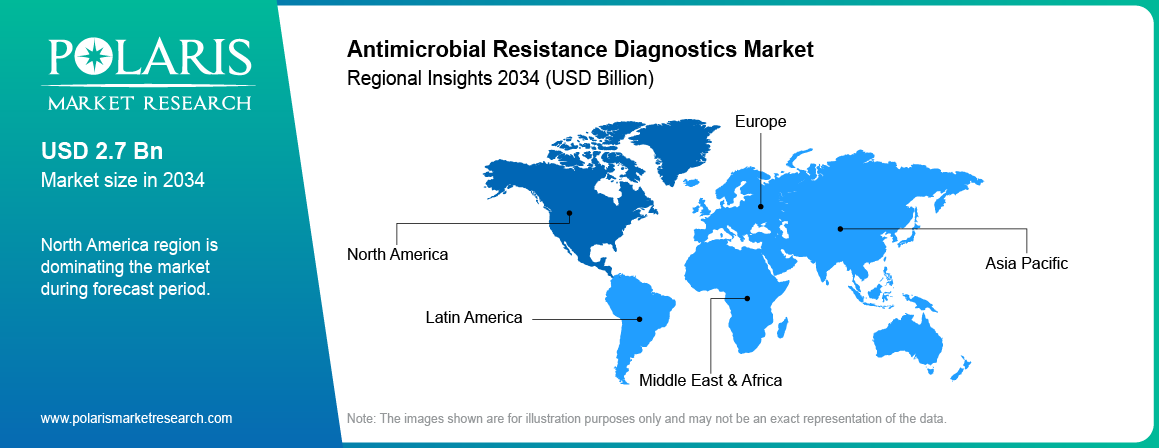
- In 2025, North America held 37.10% share of the global antimicrobial resistance diagnostics market due to the presence of established diagnostic infrastructure, clinical microbiology laboratories, and the adoption of advanced resistance testing technologies.
- The Asia Pacific is expected to witness a 5.86% CAGR during the forecast period, owing to the growing healthcare infrastructure, rising diagnostic capabilities and increasing focus on antimicrobial resistance surveillance.
- In 2025, Conventional Culture and AST comprised 51.70% of the market, indicating the entrenched role of phenotypic testing in determining antimicrobial susceptibility and minimum inhibitory concentration.
- PCR and Syndromic Panels are expected to witness a 5.76% CAGR owing to the demand for faster detection of resistance genes and combining pathogen identification with resistance marker analysis.
- In 2025, Hospital Laboratories accounted for 58.20% of the market driven by their important role in diagnosis of resistant infections, guiding appropriate antibiotic selection, and supporting hospital antimicrobial stewardship programs.
- In 2025, Resistant Enterobacterales accounted for 26.45% of the market, as WHO data show that more than 40% of E. coli and 55% of K. pneumoniae isolates are resistant to third generation cephalosporins (Source: Patient Care Online).
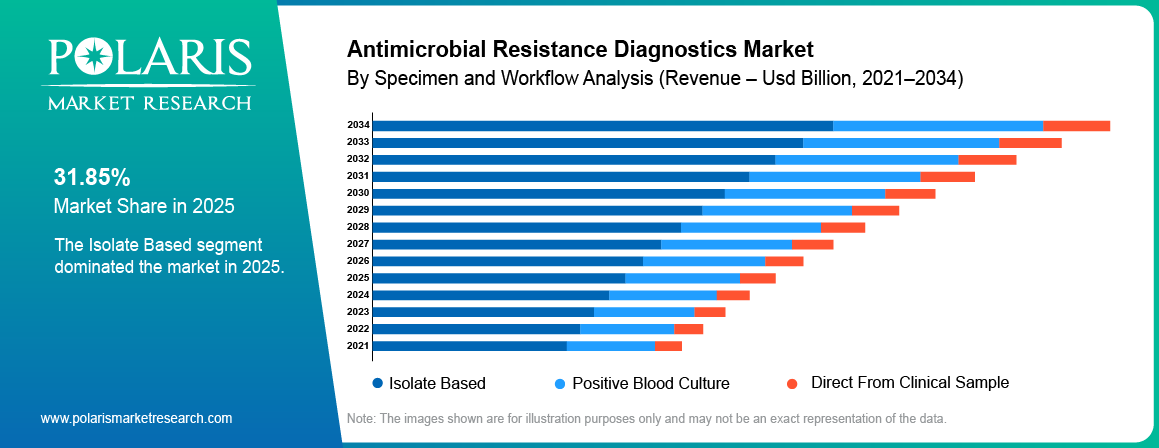
- Direct From Clinical Sample workflows are expected to witness a 6.35% CAGR, as laboratories seek resistance information earlier in the diagnostic pathway than isolate based testing allows, while Isolate Based testing held 31.85% of the market in 2025.
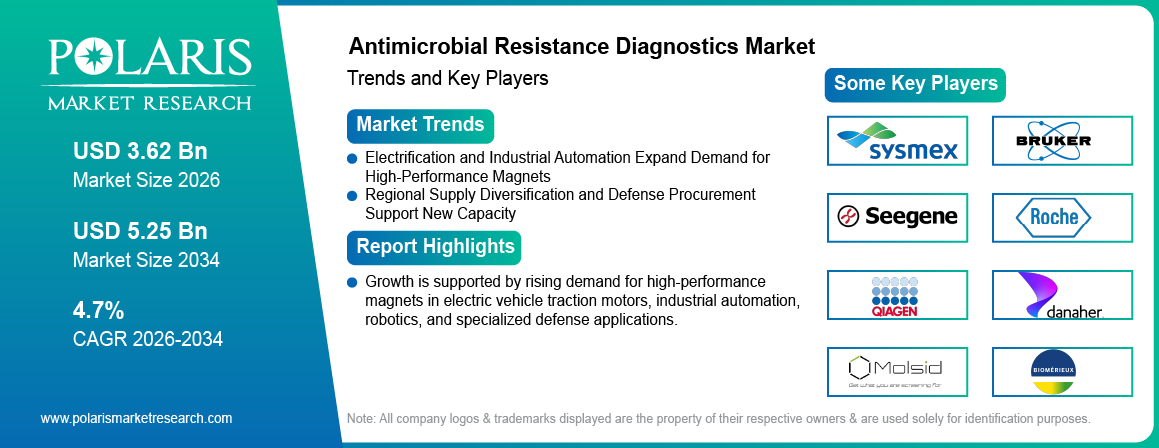
- Competition involves bioMérieux, Danaher and Thermo Fisher Scientific alongside specialists such as QIAGEN and Seegene, with Waters Corporation now holding the former BD diagnostic solutions business (Source: BD).
Note: Figures and projections outlined in this report are the result of Polaris Market Research’s proprietary analytical processes, grounded in the latest available datasets and market observations.
What Is the Antimicrobial Resistance Diagnostics Market?
The antimicrobial resistance diagnostics market includes diagnostic tests, instruments, consumables and related software to determine the resistance of bacterial pathogens to antimicrobial agents. It includes phenotypic antimicrobial susceptibility testing (AST), molecular resistance detection and selected sequencing or mass spectrometry workflows that yield an explicit resistance result. Phenotypic methods assess the response of bacteria to antimicrobial agents, including through minimum inhibitory concentration (MIC) results. Genetic methods identify genetic markers associated with resistance. For example, Thermo Fisher Scientific’s Sensititre amikacin susceptibility system supports broth microdilution testing, while Cepheid’s Xpert Carba-R detects specific carbapenemase-associated gene sequences (Source: CLP Magazine). These approaches provide different forms of evidence and are not directly interchangeable.
The market includes conventional culture-based AST, rapid phenotypic testing, PCR and syndromic panels, sequencing-based methods, mass spectrometry approaches, and other technologies that report resistance. Products focused solely on pathogen identification fall outside the defined scope, as do antibiotics, antiviral resistance tests, veterinary and food testing, standalone antimicrobial stewardship software, and blood culture bottles without resistance reporting. Combined diagnostic panels require a consistent revenue boundary. QIAGEN’s QIAstat-Dx BCID GN Plus AMR Panel, for instance, detects bacterial pathogen targets alongside antimicrobial resistance markers (Source: QIAGEN). Market estimation must therefore apply a consistent rule to determine whether the complete panel or only the resistance-related component qualifies as market revenue. The market sits within the wider microbiology testing category, and plain pathogen identification belongs to that parent market rather than to this scope. It is separate from the antibiotic resistance market, which sizes drugs rather than tests. The antimicrobial susceptibility testing market is the nearest competing phrase and is narrower than this scope, because it centers on susceptibility measurement. The boundary test is simple: a product that outputs a resistance call for a bacterial pathogen is in scope, and identification only revenue is not.
Drug Pipeline Analysis
The antimicrobial resistance diagnostics market has a product pipeline shaped by regulatory clearances, in vitro validation, clinical studies, and expansion of existing testing menus. As the candidates are diagnostic tests rather than medicines, Phase refers to the regulatory or development stage.
Antimicrobial Resistance Test Pipeline and Regulatory Status
| Candidate | Company | Mechanism | Phase / regulatory stage | Trial Identifier | Status |
| VITEK REVEAL with Gram-negative assay | bioMérieux | Rapid phenotypic AST from positive blood cultures | FDA cleared, June 2024 | Not stated | Cleared; bioMérieux recorded a partial impairment related to VITEK REVEAL in H1 2025 |
| QIAstat Dx BCID GN Plus AMR Panel | QIAGEN | Multiplex PCR syndromic panel for Gram-negative pathogens and resistance markers | CE-IVDR certified; FDA cleared September 28, 2026 | Not stated | Commercially available in Europe under the reported certification; FDA clearance reported September 28, 2026 |
| Xpert Carba R | Cepheid, part of Danaher | Nucleic acid amplification for carbapenemase markers from clinical specimens | FDA 510(k) decision dated July 2, 2026 | K261867 | Substantially equivalent |
| Sensititre amikacin MIC | Thermo Fisher Scientific | Broth microdilution susceptibility testing | FDA 510(k) decision dated August 28, 2025 | K252014 | FDA decision recorded |
| MBT FAST rapid AST workflow | Bruker Corporation | MALDI Biotyper-related workflow for rapid AST | Clinical validation reported in April 2026 | None stated | Clinical validation; AI resistance prediction identified as research use only |
| Allplex MDRO Assay | Seegene | Molecular detection of multidrug-resistant organisms | CE marking under IVDR reported in 2026 | Not stated | CE-IVDR-related commercial development reported |
| PA 100 AST System | Sysmex Corporation | Rapid urine-based UTI testing workflow | Product announcement dated April 1, 2025 | Not stated | Company-reported workflow gives a result in approximately 45 minutes |
| ResiScreen Staph | Molsid SASMolsid | Resistance-related testing workflow for staphylococcal isolates | Clinical study on 300 isolates reported in October 2025 | None stated | Study completed; Eurobio Scientific named as European commercial partner |
| PhAST BC GN Panel | PhAST Corp. | Rapid phenotypic AST directly from positive blood culture, 100 to 140 minutes | FDA 510(k) clearance, June 2026 | Not stated | Cleared; announced September 23, 2026 |
| ASTar expanded Gram negative menu | Q-linea AB | Rapid phenotypic AST from positive blood culture, about 6 hours | FDA 510(k) clearance, April 2026 | Not stated | Cleared; 215 bug drug combinations |
Sources: bioMérieux; QIAGEN; FDA K261867; FDA K252014; Bruker; Seegene; Sysmex; Molsid
The pipeline illustrates several development routes. Rapid phenotypic systems seek to shorten the interval between a positive culture and actionable susceptibility information. Molecular panels detect selected resistance markers and pathogen targets, while isolate-based tests provide measured susceptibility data under a defined laboratory protocol.
Among AMR diagnostic tests cleared by the FDA in 2026, Cepheid’s Xpert Carba R received a substantially equivalent decision under K261867 on July 2, 2026, which makes it the carbapenem resistance test most recently cleared (Source: FDA 510(k) record). QIAGEN’s QIAstat Dx BCID GN Plus AMR Panel is CE IVDR certified, and the FDA cleared it on September 28, 2026, after review was reported as underway at the July 14, 2026 European launch (Sources: CAP Today; QIAGEN). The Thermo Fisher Scientific clearance covers a single antibiotic, amikacin, so each additional drug is a separate regulatory step.
The rapid AST market carries different weights of evidence. VITEK REVEAL has FDA clearance (Source: 360Dx), Q-linea reported FDA clearance for an expanded ASTar Gram negative blood culture menu in April 2026 (Source: Q-linea), and PhAST Corp. announced FDA clearance for its blood culture Gram negative panel on September 23, 2026 (Source: GlobeNewswire). Bruker’s MBT FAST remains in clinical validation. The table shows a pipeline of clearances, not of revenue, and no launch date was found for any pending item. For stewardship teams, the practical test is whether MBT FAST, still in validation, reaches clearance, since QIAstat Dx BCID GN Plus AMR is now FDA cleared.
Healthcare-Specific Analysis
Antimicrobial resistance diagnostics operates at the intersection of laboratory medicine, infectious disease management, and antimicrobial stewardship. The purchase decision involves more than analytical performance. Laboratories evaluate specimen compatibility, the range of resistance mechanisms covered, time to result, workflow integration, quality-control requirements, instrument utilization, and the cost of running the test. Hospital clinicians also need to know whether the result arrives early enough to influence treatment selection or isolation decisions.
The healthcare setting adds a regulatory requirement to the market boundary. A test’s clinical status must be distinguished from research use, laboratory validation, CE-IVDR certification, and FDA clearance. For example, QIAGEN reported CE-IVDR certification for its QIAstat Dx BCID GN Plus AMR Panel in July 2026 and FDA clearance in September 2026, while Cepheid’s Xpert Carba R had a recorded FDA 510(k) decision dated July 2, 2026. Buyers evaluating these products must compare the authorization applicable to their jurisdiction and intended use (Sources: QIAGEN; FDA K261867).
Antimicrobial stewardship is a related but separate activity. Stewardship programmes use diagnostic evidence alongside clinical assessment, prescribing protocols, and patient-specific factors to support appropriate antibiotic use. The distinction keeps the analysis focused on tests and associated diagnostic products rather than the entire infrastructure surrounding infection management.
Market Dynamics
Driver, Restraint and Opportunity Impact Analysis
| Factor | Type | Impact | Timeframe |
| Rising resistance burden | Driver | High | Short to long term |
| Regulatory clearances and launches | Driver | Medium | Short term |
| Vendor exits and unclear payment | Restraint | High | Short to medium term |
| Direct-from-specimen workflows | Opportunity | Medium | Medium term |
| Point of care and outpatient testing | Opportunity | Medium | Medium to long term |
Source: Polaris Market Research Analysis
Driver: Rising Antimicrobial Resistance Is Increasing the Need for Timely Diagnostic Results
The growing burden of antimicrobial resistance is strengthening the need for diagnostic tests that distinguish susceptible infections from resistant ones. The World Health Organization’s GLASS surveillance results, summarized in October 2025, showed that one in six infections included in the data were resistant to standard antibiotic treatment. Resistance also increased in more than 40% of the pathogen-antibiotic combinations monitored between 2018 and 2023, by an average of 5% to 15% a year. These findings reinforce the need for stronger resistance detection and surveillance. For healthcare providers, the practical priority is obtaining reliable resistance information in time to inform treatment decisions. Rates differ by region, with about one in three infections resistant in the WHO South East Asia and Eastern Mediterranean regions and about one in five in the African Region. Testing demand in the antimicrobial resistance diagnostics market follows these surveillance findings, as carbapenemase detection and other resistance tests are a practical response to rising rates. The data are also unevenly reported, since 48% of countries did not report data to WHO GLASS in 2023, and surveillance shows need without measuring test purchases (Source: WHO).
Conventional culture and antimicrobial susceptibility testing (AST) remain important as they provide measured susceptibility results across defined antimicrobial agents. Rapid phenotypic systems and molecular assays address a different operational requirement, shortening the time needed to identify resistance or generate an actionable result. The value of these technologies depends on the specimen, suspected pathogen, resistance mechanism, and clinical decision being made. This creates demand in the antibiotic resistance testing market for multiple testing approaches rather than a single universal solution. Laboratories must strike a balance between turnaround time and target coverage, result interpretation, and the need for confirmatory testing.
Driver: Regulatory Progress and Product Innovation Are Broadening Testing Options
Recent product development reflects continued investment in targeted molecular assays and broader resistance detection panels. In July 2026, Cepheid’s Xpert Carba R received an FDA 510(k) decision, and QIAGEN introduced a CE-IVDR certified QIAstat-Dx BCID GN Plus AMR Panel with 13 Gram-negative bacterial targets and 18 resistance markers. Sensititre amikacin MIC product from Thermo Fisher Scientific also has an FDA 510(k) decision. The rapid AST market also saw FDA clearances in 2026, including an expanded Gram negative blood culture menu for Q-linea’s ASTar in April and a blood culture panel from PhAST Corp. announced in September (Sources: LabMedica; TipRanks; FDA 510(k) K261867; QIAGEN announcement; FDA 510(k) K252014).
Certification or regulatory approval gives a clear path to use the product, but does not ensure widespread use. The labs continue to evaluate intended use, workflow fit, instrument requirements, reimbursement and budget constraints. A targeted carbapenemase assay and a multiplex bloodstream infection panel also address different testing needs.
Restraint: Commercial Sustainability and Uncertain Purchasing Economics
The rapid diagnostics market has faced several commercial challenges despite strong clinical demand. Accelerate Diagnostics filed for Chapter 11 protection in May 2025, with its assets later linked to a reported USD 36.9 Billion credit bid by Indaba Capital Management. The WAVE and Arc assets acquired through that process were sold on to Bruker in November 2025 (Source: Business Wire). T2 Biosystems announced a wind-down in February 2026, while OpGen sold its Unyvero contracts for USD 218,000 in April 2024. Separately, bioMérieux reported a partial impairment related to VITEK REVEAL in the first half of 2025. These cases reflect different business circumstances, but they highlight the importance of customer demand, purchasing budgets, and sustainable operating costs in turning diagnostic innovation into a viable business (Sources: Accelerate Diagnostics; T2 Biosystems; OpGen business update; bioMérieux financial results).
Opportunity: Direct-from-Specimen Testing and Faster Diagnostic Workflows
Direct-from-specimen testing offers an opportunity to obtain resistance information earlier in the diagnostic pathway. Cepheid’s Xpert Carba R detects carbapenemase-associated markers directly from clinical specimens, while QIAGEN’s QIAstat-Dx BCID GN Plus AMR Panel combines pathogen targets with resistance markers in a bloodstream infection workflow. These products address different clinical questions, but both illustrate how molecular testing may reduce dependence on a sequence of separate laboratory steps. Reported turnaround in a positive blood culture workflow ranges from about one hour for the QIAstat Dx panel to about six hours for VITEK REVEAL, while a University of Oxford research workflow reported species results within about 3 hours 20 minutes and resistance results 20 hours earlier for the ten most common pathogens (Sources:). Antimicrobial stewardship teams value earlier results, but all timings are company or study reported and no source gives hospital outcome data (Sources: FDA 510(k) K173263; QIAGEN announcement; StreetInsider; Respiratory Therapy; PubMed).
The commercial opportunity depends on the relationship between the detected marker and the clinical decision. Target coverage, specimen suitability, analytical performance, and local resistance patterns influence the usefulness of a result. Molecular detection also does not eliminate the need for phenotypic susceptibility testing in every case. Product developers therefore need to establish where an early resistance result supports clinical action and where additional testing remains necessary.
Opportunity: Expansion of Rapid Testing in Outpatient and Point-of-Care Settings
Faster antimicrobial susceptibility testing for urinary tract infections presents an opportunity to extend resistance diagnostics beyond centralized laboratory workflows. Sysmex’s PA-100 AST System was reported to provide a urine-testing workflow with bacteriuria detection in approximately 15 minutes and an antibiotic susceptibility result in the following 30 minutes, producing a reported total turnaround time of around 45 minutes (Source: GlobeNewswire). The system won the £8 Billion Longitude Prize on AMR in 2024, although the company release did not state its regulatory status (Source: Longitude Prize). Seegene’s Allplex MDRO Assay adds a screening step for multidrug resistant organisms before culture results are available (Source: LabMedica).
Shortened turnaround times are particularly important in outpatient care, as clinicians need to have information available in a timely manner to guide treatment without delays or the need for repeat visits. Adoption depends on test accuracy, ease of sample collection, operational requirements, clinical integration, and the availability of a workable payment model. Suppliers that address these requirements have an opportunity to serve settings where conventional laboratory turnaround times create practical limitations.
Market Segmentation Analysis
The antimicrobial resistance diagnostics market is segmented by technology, pathogen, specimen and workflow, end use, and region. These categories distinguish the diagnostic methods used to identify resistance, the bacterial groups tested, the laboratory workflows involved, and the institutions purchasing these products. Region is covered in the regional analysis. Test approach, antibiotic class and country were not adopted as separate variables, because test approach overlaps technology, no public source gives values by antibiotic class, and country detail belongs to parent market reports. The AMR testing market is shaped most by specimen and workflow, since the starting point of the sample sets which products a buyer can shortlist.
Technology Insights
Conventional Culture and AST represented 51.70% of the market in 2025, due to its long-standing role in testing the susceptibility of bacteria to antimicrobial agents. Phenotypic testing gives results, such as the minimum inhibitory concentration (MIC), that allow a laboratory to know how an organism will respond to a specific antimicrobial agent. This is the approach exemplified by the Thermo Fisher Scientific Sensititre amikacin susceptibility product with its broth microdilution workflow and its documented FDA 510(k) record. The conventional AST still has an important role in clinical microbiology, as it measures susceptibility (Source: U.S. FDA 510(k) K252014).
The PCR and syndromic panels segment is anticipated to grow at a 5.76% CAGR during the forecast period, driven by the demand for targeted resistance gene detection and integrated diagnostic workflows for pathogen identification and resistance marker analysis. Cepheid’s Xpert Carba R targets markers associated with carbapenemase, and QIAGEN’s QIAstat-Dx BCID GN Plus AMR Panel combines Gram-negative bacterial targets and resistance markers in a bloodstream infection workflow, where beta lactam resistance from ESBL and carbapenemase producing organisms is a main target. Seegene also launched its Allplex MDRO Assay under IVDR framework in 2026. These products represent the continuum of molecular approaches (Sources: Xpert Carba R launch; QIAGEN; Seegene).
The rapid phenotypic AST segment includes systems designed to shorten the time required to obtain measured susceptibility results. bioMérieux's VITEK REVEAL workflow has been reported to provide results in approximately six hours from a positive blood culture. The product illustrates the commercial focus on reducing diagnostic turnaround time while retaining a phenotypic testing approach. In a comparison of rapid AST with conventional AST, the difference lies in the starting point and the time to result, since conventional testing generally reports after an isolate has been grown. Actual utility depends on the organism, antimicrobial combination, intended use, and compatibility with laboratory procedures. The category is therefore distinct from molecular panels that detect specific resistance markers without directly measuring the microorganism's response to an antimicrobial agent (Source: SelectScience).
The Sequencing Based segment covers workflows that analyse genetic material and produce an explicit antimicrobial resistance result. Research published by the University of Oxford examined nanopore metagenomics for positive blood cultures, reporting a workflow of approximately 3.5 hours in the studied setting, with resistance results 20 hours earlier than current susceptibility testing for the ten most common pathogens. The findings illustrate research interest in faster analysis of bloodstream infections and resistance-associated information (Source: medRxiv).
The mass spectrometry-based segment includes workflows that produce resistance information through mass spectrometry-based analysis. In April 2026 Bruker announced clinical validation activity for its MBT FAST workflow (Source: Business Wire). The company also said in the material cited that AI-based resistance prediction research is research use only. The difference matters because microbial identification, resistance prediction at the research stage, and a diagnostic product designed for clinical use are different levels of technical and regulatory maturity. Thus, commercial inclusion is based on the actual resistance output of the product and its relevant intended-use status (Source: Bruker).
The Immunoassay and Others segment covers immunoassay formats and other technologies that report an explicit resistance result. Revenue is included only where the test reports resistance rather than organism presence, and no public source splits revenue by technology.
Pathogen Insights
The Resistant Enterobacterales segment held 26.45% of the market in 2025, indicating the importance of resistance testing for organisms like Escherichia coli and Klebsiella pneumoniae. These bacteria are of importance for resistance surveillance and clinical diagnostic workflows, particularly when resistance to frequently used antimicrobial agents impacts treatment choice. WHO surveillance data summarized in October 2025 showed that more than 40% of E. coli isolates and 55% of K. pneumoniae isolates in the data cited were resistant to third-generation cephalosporins. Detection of ESBL and carbapenemase producing organisms is classified within this segment. (Source: Patient Care Online)
The Resistant Non Fermenters segment is expected to register 5.46% CAGR over the forecast period owing to the need to assess resistance in organisms such as Pseudomonas aeruginosa. The testing requirements are dependent upon the organism and antimicrobial agent tested. One example of a test for this group of pathogens that has been documented is Thermo Fisher Scientific’s Sensititre amikacin susceptibility product. Its regulatory record demonstrates the relevant testing parameters and describes the importance of organism coverage and antimicrobial-specific performance when laboratories select susceptibility testing products (Source: U.S. FDA 510(k) K252014).
The MRSA and Other Resistant Gram Positives segment covers diagnostics that report resistance associated with methicillin-resistant Staphylococcus aureus and other resistant Gram-positive bacteria. Molsid announced the completion of a ResiScreen Staph clinical study of 300 isolates in October 2025 and chose Eurobio Scientific as its commercial partner in Europe (Source: Lyonbiopole). This development illustrates product evaluation and commercial collaboration in resistance testing for staphylococcal organisms (Source: Molsid).
The Drug Resistant Neisseria gonorrhoeae segment includes diagnostic tests that report antimicrobial resistance associated with N. gonorrhoeae. Its inclusion reflects the need to distinguish organism detection from resistance assessment when classifying diagnostic products. Tests that identify the organism without producing a resistance result do not qualify under the market definition.
The Drug Resistant Tuberculosis segment covers in-scope diagnostics that identify resistance in Mycobacterium tuberculosis. The relevant products must report a resistance result rather than only identify the organism or establish infection status. This distinction keeps the segment focused on resistance diagnostics and avoids including the broader tuberculosis testing market. Product classification follows the defined diagnostic output and the revenue attributable to the resistance-testing component.
Specimen and Workflow Insights
The isolate based segment held a market share of 31.85% in 2025, highlighting the established role of susceptibility testing performed on isolated organisms. This workflow enables phenotypic assessment across a defined organism and antimicrobial combination. The Thermo Fisher Scientific Sensititre amikacin product is an example of broth microdilution for susceptibility testing and MIC determination. Isolate-based testing remains distinct from molecular workflows that directly detect selected resistance markers from clinical specimens (Source: U.S. FDA 510(k) K252014).
The direct from clinical sample segment is estimated to grow at 6.35% CAGR during the forecast period, due to interest in receiving resistance-related information earlier in the diagnostic pathway. Cepheid’s Xpert Carba R directly detects carbapenemase-associated markers from clinical specimens, and Sysmex’s PA-100 AST System provides a urine-testing workflow with a company-reported turnaround time of approximately 45 minutes. These products address different diagnostic questions and should not be treated as interchangeable. Specimen type, target coverage, clinical application, and the distinction between genetic marker detection and phenotypic susceptibility remain central to product selection (Sources: Wadsworth Center study; Sysmex PA-100 AST System).
The positive blood culture segment covers diagnostic workflows that produce resistance information after a blood culture becomes positive. QIAGEN’s QIAstat-Dx BCID GN Plus AMR Panel combines pathogen targets and resistance markers in a bloodstream infection workflow, and bioMérieux’s VITEK REVEAL provides a rapid phenotypic AST solution for positive blood cultures. The two products are for different testing needs, molecular detection for specific resistance markers, and phenotypic testing for susceptibility. Revenue is counted once where positive blood culture testing also appears in sepsis diagnostics (Sources: QIAGEN; VITEK REVEAL).
End Use Insights
The hospital laboratories segment held the largest market share of 58.20% in 2025, attributed to its capability to diagnose resistant infections and offer susceptibility information to inform clinical treatment decisions. Hospital laboratories use a mixture of conventional AST, rapid phenotypic systems and molecular resistance assays depending on specimen, suspected organism and testing requirements. Products for positive blood culture workflows are aimed at a different diagnostic stage than tests on isolated organisms. Procurement decisions therefore depend on the required resistance information, turnaround time, existing laboratory infrastructure, and the need for confirmatory testing.
The outpatient and point of care settings segment is projected to register a 6.12% CAGR during the forecast period, driven by demand for faster testing closer to the point of care. Sysmex’s PA-100 AST System supports this application through a urine testing workflow with a reported turnaround time of approximately 45 minutes. Wider adoption will depend on test accuracy, ease of use, sample collection, operational requirements, and affordable reimbursement options (Source: PubMed Central).
Reference and diagnostic laboratories includes companies that process specimens for multiple healthcare customers and provide testing across organisms and resistance profiles. These laboratories require reproducible results, validated methods, defined organism coverage and appropriate quality controls. The complexity of the cases they handle, testing volumes, and available technical resources all influence their product requirements. Conventional susceptibility systems and specialist molecular assays serve complementary roles within these laboratory service models.
The public health and research institutions segment is projected to register a 4.84% CAGR during the forecast period, supported by surveillance programs and academic method development. Participation in WHO GLASS rose from 25 countries in 2016 to 104 in 2023, although 48% of countries did not report data in 2023 (Source: WHO). The University of Oxford study of nanopore metagenomics on positive blood cultures is a research example, and it describes a method rather than a commercial product (Source: PubMed).
Regional Insights
The antimicrobial resistance diagnostics market regional analysis covers North America, Europe, Asia Pacific, Latin America, and the Middle East & Africa. Regional demand differs according to clinical laboratory infrastructure, access to diagnostic technologies, regulatory requirements, antimicrobial resistance surveillance, and healthcare procurement practices. WHO regions do not match Polaris regions, so WHO rates cited below are indicative. A 2024 UN political declaration set a target to reduce deaths associated with bacterial AMR by 10% by 2030 and recognized the importance of access to diagnostics (Source: WHO). Regional demand for stewardship support and point of care testing varies with laboratory capacity, and the AMR diagnostics market is therefore described using regulatory and product evidence where regional sales data are unavailable.
North America Antimicrobial Resistance Diagnostics Market Trends
In 2025, North America held 37.10% of the global antimicrobial resistance testing market. The regional market is supported by an established clinical laboratory infrastructure, regulatory pathways for diagnostic products and access to phenotypic and molecular resistance testing. In July 2026, Cepheid received an FDA 510(k) clearance for its Xpert Carba R carbapenemase marker detection assay. Regulatory activity in both genotypic and phenotypic testing is demonstrated by an additional FDA 510(k) decision for Thermo Fisher Scientific’s Sensititre amikacin susceptibility product. These developments reflect the availability of products in defined regulatory environments. No public payer rate for AMR diagnostics reimbursement was found (Sources: FDA 510(k) K261867; FDA 510(k) K252014).
Europe Antimicrobial Resistance Diagnostics Market Trends
In 2025, Europe accounted for 28.35% of the global antimicrobial resistance diagnostics market, driven by clinical microbiology services, the presence of established diagnostic suppliers, and product development under the In Vitro Diagnostic Regulation (IVDR). QIAGEN announced CE-IVDR certification for its QIAstat-Dx BCID GN Plus AMR Panel combining Gram-negative bacterial targets with resistance markers in a single blood stream infection workflow in July 2026. Seegene also launched its Allplex MDRO Assay under IVDR in 2026. These developments demonstrate activity in molecular and syndromic resistance testing where product differentiation is based on targets coverage, intended use and integration in laboratory procedures. bioMérieux reported microbiology organic sales growth of 4.3% in the first half of 2026, supported by reagent sales for BACT/ALERT bottles (Source: bioMérieux). (Sources: QIAGEN; Seegene)
Asia Pacific Antimicrobial Resistance Diagnostics Market Trends
Asia Pacific is expected to grow at a 5.86% CAGR during the antimicrobial resistance diagnostics market forecast period, propelled by opportunities associated with diagnostic capacity, healthcare infrastructure, and antimicrobial resistance surveillance. India launched its National Action Plan on Antimicrobial Resistance 2.0 in November 2025, covering the 2025–2029 period. The policy provides evidence of continued national attention to AMR management. Regional commercial development therefore depends on how policy priorities translate into laboratory investment, product adoption, and access to validated diagnostic workflows. WHO reported that about one in three infections were resistant in the South East Asia Region (Source: WHO). Seegene, based in South Korea, launched its Allplex MDRO Assay in Europe in May 2026 (Source: SelectScience), and Sysmex, based in Japan, won the Longitude Prize on AMR in 2024 with its PA 100 AST System (Source: Sysmex). (Sources: Down To Earth; PIB)
Latin America Antimicrobial Resistance Diagnostics Market Trends
Latin America accounted for 5.80% of the global antimicrobial resistance diagnostics market in 2025. Regional demand is shaped by access to clinical microbiology services, the availability of diagnostic products, laboratory purchasing capacity, and differences between public and private healthcare systems. The need to improve resistance monitoring and reporting is given a more comprehensive context by WHO's Global Antimicrobial Resistance and Use Surveillance System (GLASS). WHO reported that about one in seven infections were resistant in the Region of the Americas (Source: PAHO).
Middle East & Africa Antimicrobial Resistance Diagnostics Market Trends
The Middle East & Africa region held 4.50% of the global antimicrobial resistance diagnostics market share in 2025. Demand is associated with clinical laboratory capacity, access to diagnostic technologies, public-health surveillance, and the ability to maintain validated testing workflows. WHO GLASS reporting has revealed gaps in AMR surveillance data in member states, highlighting the need for improved resistance monitoring. These gaps provide public-health context but do not quantify commercial demand for individual diagnostic products. Market development across the region depends on country-specific healthcare investment, procurement capacity, laboratory resources, and access to suitable resistance testing systems. WHO reported that about one in five infections were resistant in the African Region (Source: WHO). (Source: WHO IRIS)
Competitive Landscape
The antimicrobial resistance diagnostics market includes established diagnostics companies, molecular testing providers, AST specialists, and firms developing newer resistance-detection workflows. Competition spans test menu breadth, organism and resistance-marker coverage, turnaround time, regulatory status, installed instruments, consumable requirements, and integration into laboratory processes. The vendor list below reflects evidence of clearances and launches, not ranked share, because antimicrobial resistance diagnostics market share is reserved for confirmed Polaris estimates. In the rapid AST market, bioMérieux, Q-linea AB and PhAST Corp. hold FDA cleared blood culture systems, Bruker is validating MBT FAST, and Accelerate Diagnostics and T2 Biosystems have exited (Sources: MPO; Q-linea; LabMedica).
Vendor Landscape Snapshot
| Company | Market Position | Focus Area | Technology | Primary Setting |
| bioMérieux | Leader | Microbiology and blood culture | Rapid phenotypic AST | Hospital laboratories |
| Danaher Corporation (Cepheid) | Leader | Resistance marker detection | PCR cartridge | Hospital laboratories |
| Thermo Fisher Scientific | Challenger | MIC panels | Broth microdilution | Reference laboratories |
| Waters Corporation | Challenger | Former BD diagnostic solutions | Not specified | Hospital laboratories |
| QIAGEN N.V. | Challenger | Bloodstream panels | Multiplex PCR | Hospital laboratories |
| Bruker Corporation | Challenger | Rapid AST and MALDI TOF | Mass spectrometry | Hospital laboratories |
| Roche Diagnostics | Challenger | Syndromic panels | Syndromic PCR | Hospital laboratories |
| Seegene Inc. | Niche Player | MDRO screening | Multiplex PCR | Reference laboratories |
| Sysmex Corporation | Niche Player | UTI susceptibility testing | Nanofluidic AST | Outpatient and point of care |
| Q-linea AB | Niche Player | Blood culture AST | Rapid phenotypic AST | Hospital laboratories |
| PhAST Corp. | Emerging Player | Blood culture AST | Computer vision AST | Hospital laboratories |
| Molsid SAS | Emerging Player | Staphylococcus resistance kit | Isolate based kit | Reference laboratories |
Source: Polaris Market Research Analysis (Market position is a Polaris classification based on portfolio breadth and dated product evidence, and it is not a ranked market share.)
Competitive Positioning
Established microbiology and AST providers bioMérieux and Thermo Fisher Scientific have documented activity in susceptibility testing. VITEK REVEAL represents a rapid phenotypic workflow starting from positive blood cultures, while Sensititre amikacin MIC is a broth microdilution product. These examples illustrate different commercial approaches, accelerating a susceptibility result within a blood culture workflow versus measuring susceptibility against a specified antimicrobial range.
Molecular and syndromic testing providers
Examples of molecular testing activity include QIAGEN, Cepheid (via Danaher) and Seegene. Their reported products or announcements have focused on resistance markers, Gram-negative bloodstream infection panels or multi-drug resistant organisms. The breadth of a panel and the number of markers it detects are relevant product attributes.
Specialist and developing technology providers
Bruker and Molsid illustrate development activity in rapid AST and resistance-related testing. Bruker reported clinical validation activity for MBT FAST, while Molsid reported completion of a ResiScreen Staph clinical study. These announcements establish development milestones, not equivalent commercial status. Regulatory clearance, routine use, procurement, and sales remain separate steps in the commercialization process (Source: Bruker, Molsid).
Technology and Innovation Landscape
Innovation in antimicrobial resistance diagnostics is directed toward earlier resistance information, broader marker coverage, and more efficient laboratory workflows. The commercial relevance of each development depends on the resistance output, specimen type, regulatory status, and fit with the intended clinical use.
Molecular resistance detection
Molecular assays identify selected genetic markers associated with antimicrobial resistance. Cepheid’s Xpert Carba R is a targeted example focused on carbapenemase markers, while QIAGEN’s QIAstat Dx BCID GN Plus AMR Panel combines bacterial targets and resistance markers in a positive blood culture workflow. These approaches provide information about specific resistance mechanisms, but marker detection and measured phenotypic susceptibility are different outputs. The QIAstat Dx BCID GN Plus AMR Panel detects 13 Gram negative targets and 18 resistance markers, with a focus on beta lactam resistance from ESBL and carbapenemase producing organisms, which makes it a blood culture AMR panel for Gram negative bloodstream infections (Source: MLO). (Sources: FDA K261867; QIAGEN)
Rapid phenotypic testing
Rapid phenotypic AST seeks to shorten the time required to obtain susceptibility information from a positive culture or other defined specimen. VITEK REVEAL is reported to return results in approximately six hours from positive blood cultures. Sysmex’s PA 100 AST System provides a separate urine-testing example with a reported workflow of about 45 minutes. Q-linea’s ASTar reports from positive blood cultures in about six hours, and PhAST Corp.’s panel reports in 100 to 140 minutes (Sources: TipRanks; CLP Magazine). (Sources: 360Dx; Sysmex)
Mass spectrometry and AI-assisted workflows
Bruker’s MBT FAST development highlights the use of MALDI-TOF mass spectrometry in rapid antimicrobial susceptibility testing (AST). The company has also explored AI-based resistance prediction, which was described as research use only in the cited announcement. Bruker also acquired AST Revolution, which holds the WAVE and Arc rapid AST systems, in November 2025 (Source: Investing.com). (Source: Bruker)
Sequencing and metagenomics
Whole genome sequencing and metagenomics are investigated for resistance analysis in complex clinical specimens. A University of Oxford study reported a nanopore metagenomics workflow that processed positive blood cultures in approximately 3.5 hours and identified resistant infections earlier than standard testing in the evaluated setting (Source: medRxiv).
Technology and Innovation Landscape Snapshot
| Technology | Example | Output | Maturity | Constraint |
| Molecular PCR | Xpert Carba R | Carbapenemase markers | FDA cleared | Marker detection only |
| Syndromic panel | QIAstat Dx BCID GN Plus AMR | 13 targets, 18 markers | CE IVDR, FDA cleared | Fixed target list |
| Rapid phenotypic AST | VITEK REVEAL, ASTar, PhAST | Susceptibility from blood culture | FDA cleared | Gram negative panels first |
| Point of care AST | PA 100 AST System | Urine susceptibility, 45 minutes | Company reported | Uncomplicated UTI focus |
| Mass spectrometry | MBT FAST | Rapid AST, AI prediction | Clinical validation | AI prediction research only |
| Sequencing | Nanopore metagenomics | Species and resistance results | Research study | Not a commercial product |
| Conventional MIC | Sensititre amikacin | MIC value | FDA decision, 2025 | One antibiotic per clearance |
Source: Polaris Market Research Analysis
Use Case Analysis
Hospital Laboratories: Earlier Resistance Information From Positive Blood Cultures
A hospital laboratory processing positive blood cultures needs to determine which organism is present and whether resistance-associated information is available in time to inform care. QIAGEN’s QIAstat Dx BCID GN Plus AMR Panel addresses this workflow through a syndromic panel with 13 Gram-negative bacterial targets and 18 resistance markers, with results reported in approximately one hour. VITEK REVEAL offers a rapid phenotypic AST workflow from positive blood cultures, with a reported turnaround of approximately six hours. The products differ in method and output, so their role in a laboratory depends on the clinical question and the place of each test in the overall workflow (Sources: QIAGEN; VITEK REVEAL).
Reference Laboratories: Standardized Susceptibility Measurements
Reference laboratories require defined test protocols and interpretable susceptibility outputs across the organisms and antimicrobials within their service range. Thermo Fisher Scientific’s Sensititre amikacin MIC product illustrates an isolate-based workflow using broth microdilution. Its recorded FDA 510(k) entry specifies a product scope that includes Acinetobacter, Enterobacterales, and Pseudomonas. This type of testing serves a different purpose from molecular assays that detect selected resistance markers without directly measuring susceptibility to an antimicrobial agent (Source: FDA K252014).
Outpatient and Point-of-Care Settings: Urine Testing
A shorter urine-testing workflow is relevant when the diagnostic result is expected to inform a decision during an outpatient encounter. Sysmex’s PA 100 AST System is described as identifying bacteriuria in approximately 15 minutes and providing the antibiotic result in the next 30 minutes. The reported total is around 45 minutes. A budget impact analysis based on modelled data projects savings in Spain, and no measured clinical outcome is stated (Source: Sysmex). (Source: Longitude Prize)
Public Health and Research: Surveillance and New Methods
Public health institutions rely on consistent resistance data to identify trends and gaps in surveillance. WHO GLASS reporting highlighted both the burden of resistance and incomplete reporting across member states. In parallel, the University of Oxford’s nanopore metagenomics study provides a research example of work intended to accelerate analysis of positive blood cultures. Surveillance data and research findings contribute to the evidence base for diagnostic development (Sources: WHO GLASS; University of Oxford).
Buyer Analysis and Barriers to Market Entry
Key Buyer Requirements
Diagnostic buyers evaluate AMR tests against a combination of clinical, technical, operational, and financial requirements.
- Resistance output and target coverage: The test must address the relevant pathogen and resistance mechanism. A targeted carbapenemase assay and a broad bloodstream infection panel serve different purposes.
- Turnaround time: Buyers consider the time from the starting point, such as a positive blood culture or direct specimen, to the reportable result. Workflows must be compared for the same timings.
- Analytical and clinical evidence: Laboratories must have evidence appropriate to the intended use, including validation, performance characteristics, quality-control procedures, and regulatory status.
- Workflow compatibility: Specimen preparation, instrument requirements, staffing, connectivity, and confirmatory testing affect implementation.
- Total cost of operation: Procurement encompasses a variety of expenses, such as instruments, consumables, maintenance, staff training, quality assurance, and workflow modifications, in addition to the test price.
- Clinical utility: The purchaser needs to understand what the result means for treatment, isolation or further testing. A faster result is not automatically a better outcome unless it supports an appropriate clinical decision.
Buyer Framework
| Buyer | Typical Need | Decision Criteria | Example Products |
| Hospital laboratories | Resistance results from positive blood cultures | Turnaround, regulatory status | VITEK REVEAL, QIAstat Dx |
| Reference laboratories | Screening and MIC confirmation | Panel breadth, IVDR or FDA status | Allplex MDRO, Sensititre |
| Outpatient and point of care sites | Same visit results | Speed, simple use | PA 100 AST System |
| Public health programs | Surveillance data | Laboratory capacity, funding | WHO GLASS data, research workflow |
Source: Polaris Market Research Analysis
Barriers to Market Entry
Regulatory and validation requirements
A new diagnostic requires evidence appropriate to its intended use and the applicable regulatory pathway. Product announcements, research-stage results, CE-IVDR certification, and FDA clearance represent different evidence categories. Companies entering the market need to define their intended claims, validate the relevant workflow, and maintain product documentation consistent with the jurisdiction in which they intend to sell. A clearance can cover a single antibiotic, as with Sensititre amikacin, so each added drug is a separate regulatory step (Source: FDA).
Clinical adoption and workflow integration
Laboratories need to fit new tests into existing sample pathways and reporting systems. A product that requires new equipment, separate training, or a distinct confirmation workflow faces implementation considerations beyond the analytical method itself. Buyers also need clarity about how a new resistance result relates to existing culture and AST processes.
Commercial sustainability
The experiences of Accelerate Diagnostics, T2 Biosystems, and OpGen highlight the importance of financial stability and reliable operations in the AMR diagnostics market. For buyers, key considerations include the continued availability of consumables, access to technical support, maintenance of installed systems, and the supplier’s ability to provide long-term service (Sources: Accelerate Diagnostics; T2 Biosystems; OpGen).
Laboratory capacity and payment
WHO reported that resistance is more common and worsening where health systems lack the capacity to diagnose or treat bacterial pathogens, which limits routine use of advanced tests (Source: ICARS). No public payer rate for AMR diagnostics reimbursement was found, and prizes such as the £8 Billion Longitude Prize on AMR support development rather than test purchases (Source: Longitude Prize).
Premium Insights and Forward Outlook
Market Direction
The market’s development is likely to reflect the balance between the need for timely resistance information and the operational requirements of routine diagnostic testing. Molecular assays provide targeted genetic evidence, phenotypic AST measures organism response to antimicrobial agents, and sequencing or mass spectrometry approaches are evaluated according to the resistance output they produce.
Product announcements in 2025 and 2026 show activity across these approaches. Cepheid’s Xpert Carba R received an FDA 510(k) decision in July 2026, QIAGEN reported CE-IVDR certification for its QIAstat Dx BCID GN Plus AMR Panel, Seegene announced an IVDR-related launch for Allplex MDRO, and Bruker reported clinical validation activity for MBT FAST (Sources: FDA K261867; QIAGEN; Seegene; Bruker).
Vendor Exits and Procurement Risk
Public sources give facts rather than causes for the failure of earlier rapid AST companies. Accelerate Diagnostics filed for Chapter 11 in May 2025, T2 Biosystems announced a wind down in February 2026 and OpGen sold its Unyvero contracts in 2024, so antimicrobial resistance diagnostics market analysis should treat vendor survival as a procurement risk, since a cleared instrument without a solvent maker leaves a laboratory with stranded consumables (Sources: Accelerate Diagnostics; T2 Biosystems). The Accelerate technology continued through the sale of its WAVE and Arc assets to Bruker (Source: BriefGlance). On AMR diagnostics reimbursement, no payer rate by test was found, so the first reimbursed carbapenemase test may set the price benchmark for later entrants.
Policy and Stewardship Context
Policy initiatives reinforce the public-health importance of resistance surveillance and appropriate antibiotic use. A 2024 United Nations political declaration set a target to reduce deaths associated with bacterial antimicrobial resistance by 10% by 2030 and recognized the importance of access to diagnostics. India’s National Action Plan on AMR 2.0 covers 2025–2029, while the PASTEUR Act was reintroduced in the US in February 2026. The reported PASTEUR Act provisions concern antibiotic payment and stewardship grants rather than a diagnostic specific funding commitment (Sources: WHO; Down To Earth; Contagion Live; CARB-X).
Key Players in the Antimicrobial Resistance Diagnostics Market
- bioMérieux SA
- Bruker Corporation
- Danaher Corporation
- Molsid SAS
- QIAGEN N.V.
- F. Hoffmann-La Roche Ltd (Roche Diagnostics)
- Seegene Inc.
- Sysmex Corporation
- Thermo Fisher Scientific Inc.
- Waters Corporation
- Q-linea AB
- PhAST Corp.
Industry Developments
- September 2026: PhAST Corp. announced FDA 510(k) clearance for its PhAST instrument and Blood Culture Gram negative Panel, which reports susceptibility results in about 100 to 140 minutes directly from positive blood cultures across 15 antimicrobials. (Source: GlobeNewswire)
- August 2026: The FDA cleared QIAGEN N.V.’s QIAstat Dx BCID GPF Plus AMR Panel, which detects 20 Gram positive bacterial and fungal targets and 10 resistance markers from positive blood cultures in about one hour. (Source: CAP Today)
- July 2026: bioMérieux reported first half 2026 sales of EUR 1,965 Billion, with microbiology organic sales growth of 4.3%. (Source: bioMérieux)
- July 2026: QIAGEN N.V. launched the CE IVDR certified QIAstat Dx BCID GN Plus AMR Panel, which detects 13 Gram negative targets and 18 resistance markers from positive blood cultures in about one hour, and the FDA cleared the panel on September 28, 2026. (Source: QIAGEN; CAP Today)
- July 2026: The FDA issued a 510(k) decision on July 2 for Cepheid’s Xpert Carba R under K261867. (Source: FDA 510(k) record)
- July 2026: Thermo Fisher Scientific received FDA 510(k) clearance for cefepime/zidebactam susceptibility discs for Enterobacterales and Pseudomonas aeruginosa, decided on July 24, 2026. (Source: 360Dx)
- July 2026: bioMérieux received FDA clearance on July 8, 2026 for an update to its VITEK REVEAL GN AST Assay that adds susceptibility testing of Pseudomonas aeruginosa with ceftazidime. (Source: 360Dx)
- June 2026: Bruker Corporation outlined a rapid AST workflow under development for positive blood cultures, combining its MALDI Biotyper CA System with the Bruker Arc sample preparation solution, at ASM Microbe 2026. (Source: SelectScience)
- May 2026: Seegene Inc. launched the Allplex MDRO Assay in Europe under IVDR to support detection of multidrug resistant organisms. (Source: PR Newswire)
- May 2026: University of Oxford researchers reported a nanopore metagenomics workflow for positive blood cultures that gave species results within about 3 hours 20 minutes and resistance results 20 hours earlier for the ten most common pathogens. (Source: PubMed)
- May 2026: SYNLAB UK & Ireland expanded its partnership with iFast Diagnostics to incorporate iFast’s rapid AST system in clinical settings and build evidence for broader NHS adoption. (Source: 360Dx)
- April 2026: Q-linea AB received FDA 510(k) clearance for an expanded ASTar Gram negative blood culture menu. (Source: Q-linea)
- February 2026: Waters Corporation completed its combination with the Biosciences and Diagnostic Solutions business of BD, which forms Waters Advanced Diagnostics. (Source: Contract Pharma)
- February 2026: T2 Biosystems announced that it would complete a wind down of operations and liquidate the company. (Source: Discoveries in Health Policy)
- February 2026: CARB-X launched its 2026 funding round with four themes, including diagnostics for neonatal sepsis. (Source: CARB-X)
- January 2026: Wellcome renewed its AMR innovation partnership with CARB-X with new funding of up to USD 60 Billion for 2026 to 2028. (Source: CARB-X)
- November 2025: Bruker Corporation acquired AST Revolution, LLC, which holds the Accelerate WAVE and Arc rapid AST systems bought through the Accelerate Diagnostics Chapter 11 process. (Source: Business Wire)
- October 2025: The World Health Organization published its Global Antibiotic Resistance Surveillance Report 2025, which found that one in six laboratory confirmed bacterial infections in 2023 were resistant to antibiotic treatment. (Source: PAHO)
Antimicrobial Resistance Diagnostics Market Report Segmentation
By Technology Outlook (Revenue, USD Billion, 2021–2034)
- Conventional Culture and AST
- Rapid Phenotypic AST
- PCR and Syndromic Panels
- Sequencing Based
- Mass Spectrometry Based
- Immunoassay and Others
By Pathogen Outlook (Revenue, USD Billion, 2021–2034)
- Resistant Enterobacterales
- Resistant Non Fermenters
- MRSA and Other Resistant Gram Positives
- Drug Resistant Neisseria gonorrhoeae
- Drug Resistant Tuberculosis
- Others
By Specimen and Workflow Outlook (Revenue, USD Billion, 2021–2034)
- Positive Blood Culture
- Direct From Clinical Sample
- Isolate Based
By End Use Outlook (Revenue, USD Billion, 2021–2034)
- Hospital Laboratories
- Reference and Diagnostic Laboratories
- Outpatient and Point of Care Settings
- Public Health and Research Institutions
By Region Outlook (Revenue, USD Billion, 2021–2034)
- North America
- US
- Canada
- Europe
- Germany
- France
- UK
- Italy
- Spain
- Netherlands
- Rest of Europe
- Asia Pacific
- China
- Japan
- India
- South Korea
- Taiwan
- Australia
- Rest of Asia Pacific
- Latin America
- Brazil
- Mexico
- Argentina
- Rest of Latin America
- Middle East & Africa
- Saudi Arabia
- UAE
- South Africa
- Rest of Middle East & Africa
Antimicrobial Resistance Diagnostics Market Report Scope
| Report Attributes | Details |
| Market Size in 2025 | USD 3.46 Billion |
| Market Size in 2026 | USD 3.62 Billion |
| Revenue Forecast by 2034 | USD 5.25 Billion |
| CAGR | 4.7% from 2026-2034 |
| Base Year | 2025 |
| Historical Data | 2021–2024 |
| Forecast Period | 2026–2034 |
| Quantitative Units | Revenue in USD Billion and CAGR |
| Report Coverage | Revenue Forecast, Growth Factors, Competitive Landscape, Industry Trends, and Strategic Analysis |
| Segments Covered | By Technology, pathogen, specimen and workflow, end use, and Region |
| Regional Scope | North America, Europe, Asia Pacific, Latin America, Middle East & Africa |
| Companies Profiled | bioMérieux SA; Bruker Corporation; Danaher Corporation; F. Hoffmann-La Roche Ltd (Roche Diagnostics); Molsid SAS; PhAST Corp.; Q-linea AB; QIAGEN N.V.; Seegene Inc.; Sysmex Corporation; Thermo Fisher Scientific Inc.; Waters Corporation |
| Competitive Landscape | Company Profiling, Product Benchmarking, Financial Analysis, Market Developments, and Strategic Initiatives |
| Report Format | PDF + Excel |
| Customization | Available by Country, Region, and Segment |
Source: Polaris Market Research Analysis
Why Choose Polaris Market Research
An effective antimicrobial resistance diagnostics market report should distinguish verified product developments from broad statements about clinical need. This report uses a defined resistance-output boundary, records product and regulatory evidence, and separates diagnostic testing from antibiotic therapeutics, general microbiology testing, and broader sepsis diagnostics. The analysis also includes a specimen and workflow segmentation that distinguishes positive blood culture, direct-from-clinical-sample, and isolate-based testing.
The competitive review considers dated product evidence and flags company-status issues that older competitor lists overlook. Regulatory decisions, company announcements, clinical studies, and public-health data are treated according to what each source establishes. Market-size, share, and CAGR fields remain reserved for confirmed Polaris internal figures rather than estimates copied from syndicated research providers.
The report also addresses buyer requirements, workflow considerations, innovation activity, and pricing evidence. Publicly documented product turnaround times are presented as reported figures, while unsupported market-wide prices and reimbursement assumptions remain unfilled. This approach provides a transparent basis for evaluating diagnostic technologies and their commercial context. The AMR diagnostics market report can be purchased through the report details module on this page.
For buyers requiring a more specific view, custom antimicrobial resistance diagnostics market research is available by specimen and workflow or by pathogen. If you need this scope cut by specimen and workflow or by pathogen, Polaris Market Research & Consulting, Inc. will build a custom study around it.
Research Methodology
Polaris Market Research & Consulting, Inc. follows a systematic process to evaluate the antimicrobial resistance diagnostics market. This process includes market definition, secondary research, estimation, validation and quality review. The approach starts by defining the revenue boundary around tests reporting resistance in bacterial pathogens. Antiviral resistance, simple pathogen identification, antibiotic treatments, and non-diagnostic stewardship software are not included. This approach also identifies overlapping categories including microbiology testing, sepsis diagnostics and blood culture testing to avoid double counting.
Secondary research uses company announcements, investor results, regulatory records, public health reporting, university research, and selected trade publications. Each source is analyzed for date, authority, and relevance to the claim. Reported capabilities and development milestones are based on product announcements, and product-status statements are verified by regulatory records. WHO surveillance data provides public-health context rather than a direct estimate of diagnostic purchases.
Research Methodology Phases
| Phase | Activity | Output |
| 1. Scope definition | Define the resistance-output boundary and review adjacent market categories | Market scope and exclusions |
| 2. Secondary research | Review company releases, regulatory records, public-health evidence, and technical research | Source log and evidence base |
| 3. Market estimation | Apply confirmed internal data to revenue sizing and forecasting | Market size, CAGR, and forecast |
| 4. Validation | Check regulatory status, product evidence, company activity, and market classifications | Validated claims and estimates |
| 5. Quality review | Review citations, scope, segment consistency, and unsupported claims | Final report and analyst sign-off |
Source: Polaris Market Research Analysis
Market estimation uses confirmed internal Polaris data for market size, forecast value, CAGR, segment shares, and regional rankings. Third-party syndicated market figures are not substituted for these internal estimates. The validation stage checks product status, test scope, regulatory milestones, and the distinction between research activity and commercial availability. A final quality review checks source links, terminology, segmentation consistency, company verification, and unsupported claims.
Antimicrobial Resistance Diagnostics Market FAQ's
The Antimicrobial Resistance Diagnostics Market was valued at USD 3.46 billion in 2025 and is projected to reach USD 5.25 billion by 2034.
North America is the leading region, with 37.10% of the global market in 2025, supported by established clinical laboratories, diagnostic suppliers, and regulatory activity in molecular resistance detection and susceptibility testing.
Conventional Culture and AST is the leading technology segment in 2025, propelled by its established role in measuring bacterial susceptibility to antimicrobial agents.
The Antimicrobial Resistance Diagnostics Market is projected to grow at a CAGR of 4.7% over the forecast period 2026-2034.
Key trends include molecular resistance panels, rapid phenotypic AST, and sequencing-based diagnostic research. FDA clearances for rapid blood culture AST systems in 2026 and the exit of Accelerate Diagnostics and T2 Biosystems also shape the outlook.
Rapid AST provides susceptibility results faster, while conventional AST generally relies on established culture-based workflows.
Phenotypic testing measures bacterial responses to antibiotics, while genotypic testing detects genetic markers linked to resistance.
Cepheid’s Xpert Carba R received an FDA 510(k) decision under K261867 on July 2, 2026. QIAGEN’s QIAstat Dx BCID GN Plus AMR Panel was FDA cleared on September 28, 2026.
Key companies include bioMérieux, Bruker, Danaher, Molsid, PhAST Corp., Q-linea, QIAGEN, Roche Diagnostics, Seegene, Sysmex, Thermo Fisher Scientific, and Waters Corporation.
It detects selected bacterial targets and resistance markers. QIAGEN’s QIAstat Dx BCID GN Plus AMR Panel covers 13 Gram-negative targets and 18 resistance markers.
Reimbursement influences test affordability, laboratory budgets, and healthcare providers’ adoption of AMR diagnostic technologies. No public payer rate for AMR diagnostics reimbursement was found.
Sysmex’s PA 100 AST System reports antibiotic susceptibility results in approximately 45 minutes.
Gaps in country reporting and comparable resistance data limit global AMR surveillance. An October 2025 summary reported 104 participating countries., while 48% of countries did not report data in 2023.
About one in six laboratory confirmed bacterial infections worldwide were resistant to antibiotic treatment in 2023, and resistance rose in over 40% of monitored pathogen and antibiotic combinations from 2018 to 2023.
Antimicrobial resistance diagnostics are tests that report whether a bacterium resists an antibiotic, using phenotypic susceptibility testing, resistance marker detection, or sequencing and mass spectrometry workflows that output a resistance result.
Download Sample Report of Antimicrobial Resistance Diagnostics Market
Please fill out the form to request a customized copy of the research report.


